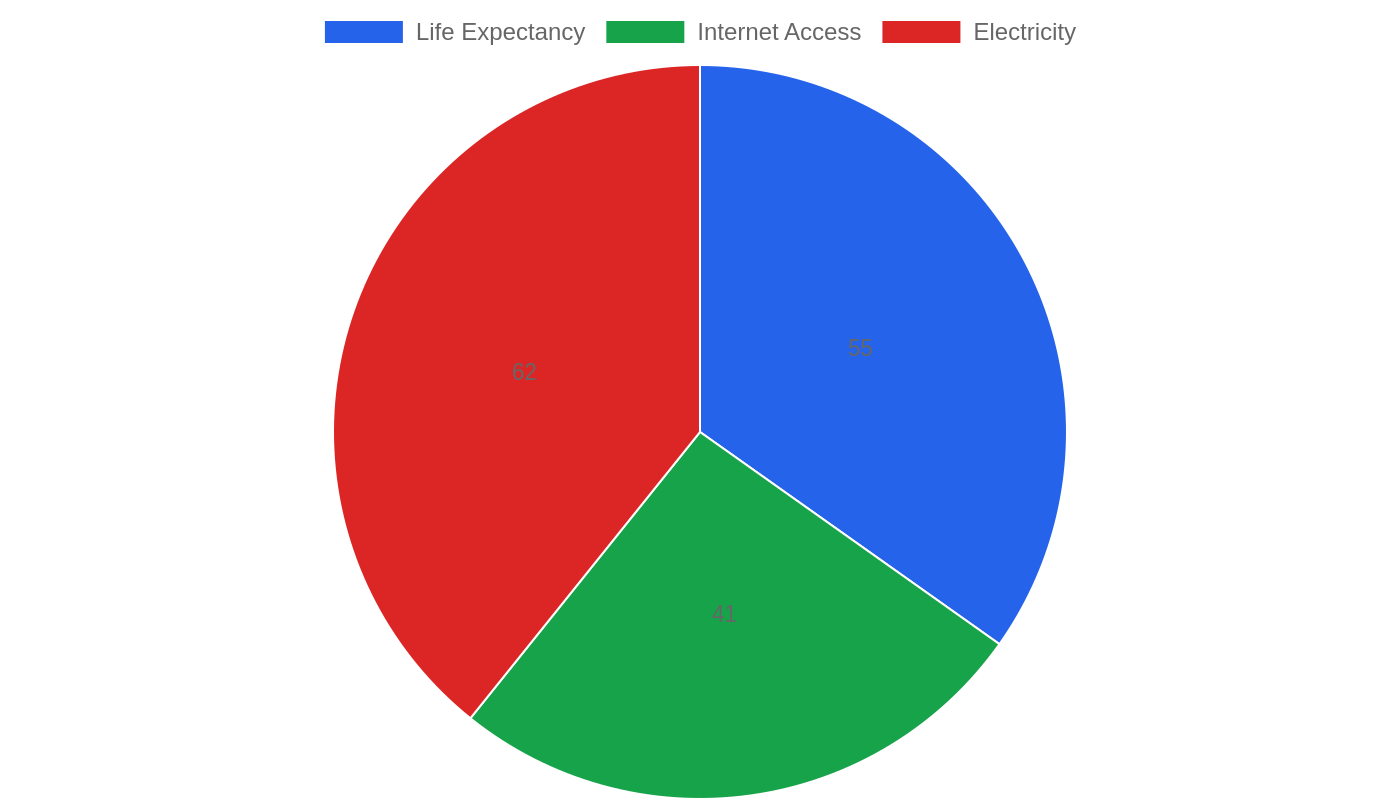
Economic Pulse Net | Sources: World Bank World Development Indicators, Government Sources | 2026
Key Takeaways
– Belarus operates as a highly centralized authoritarian state under President Alexander Lukashenko, with the political system described by multiple observers as “Europe’s last dictatorship”—a reality that fundamentally shapes every aspect of the country’s economic environment.
– The nation’s industrial backbone rests on state-owned giants like Belaruskali (potash), BelAZ (heavy mining vehicles), and Belarusian Railway, making the economy heavily dependent on industrial exports and vulnerable to geopolitical shifts.
– Telecommunications firm A1 and the Belarus High Technologies Park represent a small but notable technology sector, though the broader economy remains dominated by heavy industry and state-controlled financial institutions like Belarusbank.
– Without current World Bank data on GDP growth, inflation, or unemployment, analysts must rely on fragmented sources and political signals to assess the country’s true economic trajectory amid ongoing international isolation.
– The absence of reliable crime and safety indices, combined with opaque governance structures, makes Belarus a high-risk environment for foreign investors seeking transparency and predictable regulatory frameworks.
The Economic Engine: Heavy Industry in a Heavy Fog
Belarus presents a paradox for economic analysts: a country with clearly defined industrial strengths but virtually no publicly available World Bank data to measure their performance. The nation’s economic identity is carved from heavy industry and state-controlled enterprises. Belaruskali, one of the world’s largest potash producers, anchors the mining sector, while BelAZ manufactures some of the largest mining dump trucks on the planet.
These are not marginal players—they are global competitors in their respective niches. Yet without GDP growth figures, inflation rates, or unemployment statistics from the World Bank, painting a complete picture requires reading between the lines of what is known.
The industrial landscape extends beyond mining and machinery. Belarusian Railway operates as a critical transportation artery, linking European and Russian markets. Belkommunmash produces electric buses and trams, signaling an attempt to modernize public transport manufacturing. On the consumer services side, Belavia remains the national airline, though its operations have been constrained by European airspace closures following political tensions.
The technology sector, represented by the Belarus High Technologies Park and Aliasworlds Entertainment, shows ambition beyond heavy industry, but these remain relatively small contributors compared to the industrial behemoths.
The absence of inflation data is particularly telling. In an economy where the national currency has historically faced pressure, and where international sanctions have restricted access to global financial systems, price stability cannot be assumed. Without the World Bank’s CPI figures, economists must rely on anecdotal evidence and cross-border trade patterns to gauge whether Belarusian consumers are experiencing the same inflationary pressures seen across the region.
The lack of unemployment data further obscures whether the labor market is absorbing workers displaced by sanctions or industrial restructuring.
The Cost of Living Puzzle: Housing and Daily Expenses in a Closed Economy
Housing costs in Belarus remain a subject of speculation rather than precise measurement. Without official cost of living indices, the best available indicators come from the structure of the economy itself. In a state where major employers like Belarusbank, Belaruskali, and Belarusian Railway are government-controlled, housing markets are often influenced by state policies rather than pure supply and demand.
The rental market in Minsk, the capital, has historically been more affordable than in Moscow or Warsaw, but the gap may have narrowed as sanctions have redirected trade flows and investment.
The decision to rent versus buy in Belarus carries political as well as financial implications. Property rights in an authoritarian system are not guaranteed in the same way as in democratic countries, which may suppress demand for homeownership among those with the means to leave. Daily expenses for food, utilities, and transportation are likely influenced by the country’s reliance on Russian energy imports at subsidized rates, though the terms of those subsidies have shifted in recent years.
Without the World Bank’s cost of living data, the best assessment is that Belarus remains a lower-cost environment than Western Europe, but the gap is narrowing as the economy faces structural headwinds.
Investment and Business Climate: State Control Meets Technology Ambition
For investors considering Belarus, the landscape is dominated by two realities: the overwhelming presence of state-owned enterprises and the small but intriguing technology sector. The top companies list reads like a directory of state power—Belarusbank in financials, Belaruskali in industrials, Belavia in consumer services. These are not companies that operate independently of political will; they are instruments of state policy.
Foreign investors looking for minority stakes or joint ventures must navigate a system where the ultimate decision-maker is the presidential administration.
Yet there are pockets of opportunity. A1, the telecommunications provider, operates in a sector that requires technical expertise the state cannot easily replicate. The Belarus High Technologies Park has attracted software developers and IT service companies, creating a hub that operates somewhat independently of the broader economy. Aliasworlds Entertainment, a game developer, represents the kind of intellectual property-driven business that could thrive even in a constrained environment.
The challenge is scale—these technology firms remain small relative to the industrial giants, and their growth depends on maintaining access to international markets that may be restricted by sanctions.
The business environment is characterized by opacity. Without crime and safety indices from standard sources, assessing risk becomes a matter of political analysis rather than statistical comparison. Contract enforcement, intellectual property protection, and dispute resolution all operate in a legal system where political connections matter more than legal precedent.
For companies willing to accept these conditions, Belarus offers access to the Eurasian Economic Union market and potentially lower labor costs than Russia. For those requiring transparency and rule of law, the risks likely outweigh the rewards.
Safety, Politics, and Quality of Life: Life Under Europe’s Last Dictatorship
The political landscape of Belarus is the single most important factor shaping every other aspect of life in the country. The constitution describes a semi-presidential republic with separation of powers, but the reality—as documented by numerous media outlets, politicians, and authors—is a highly centralized authoritarian government.
President Alexander Lukashenko has been described as “Europe’s last dictator,” and the characterization sticks because it captures something essential about how power operates. The National Assembly exists, but it does not constrain executive authority in any meaningful way.
This political reality has profound implications for quality of life. Without independent courts, a free press, or competitive elections, citizens lack the mechanisms to hold their government accountable for economic mismanagement. The absence of crime and safety indices from standard sources may reflect either a genuinely low-crime environment or a system where crime statistics are politically managed.
In either case, safety in Belarus is not the same as security—physical safety from crime may coexist with political insecurity from arbitrary state power.
The quality of life in Belarus is therefore bifurcated. For those who avoid political engagement and work within state-controlled industries, daily life may be stable and predictable. For those who challenge the system, the consequences can be severe. This is not a country where happiness data would be reliable even if it were available, because expressed satisfaction with life is itself a political statement in an authoritarian context.
The best that can be said is that Belarus offers a certain kind of stability—the stability of a system that has remained unchanged for decades, for better and for worse.
Current Affairs: Belarus in the Crosscurrents of Geopolitics
The most pressing question for Belarus today is how it navigates its position between Russia and the West. The country has faced increasing international isolation following political crackdowns, with European Union sanctions restricting trade and travel. This has pushed Belarus closer to Russia economically and politically, but the relationship is not without tension.
Russia’s war in Ukraine has altered the regional security landscape, and Belarus’s role as a staging ground for Russian forces has further damaged its international standing.
On the economic front, the sanctions regime has forced Belarus to seek alternative markets for its potash exports and industrial machinery. China has emerged as a potential partner, though the scale of trade diversion remains unclear. The technology sector faces particular challenges, as IT workers and companies seek to relocate to countries with better access to global markets.
The Belarus High Technologies Park may be losing talent to Poland, Lithuania, and Georgia, creating a brain drain that will take years to reverse.
Domestically, the government continues to emphasize industrial self-sufficiency and import substitution, but these policies have historically struggled to produce competitive products. Without access to Western technology and capital, Belarusian industry risks falling further behind global competitors. The coming months will reveal whether the economy can adapt to permanent isolation or whether the costs of political repression will prove economically unsustainable.
The Bottom Line
Belarus is a country that demands attention from anyone tracking the intersection of authoritarian politics and industrial economics. For investors with high risk tolerance and a focus on heavy industry or niche technology, there may be opportunities that others overlook. For analysts and policymakers, Belarus offers a case study in how a country can maintain industrial output while becoming increasingly disconnected from global economic institutions.
For the average observer, the lesson is simpler: when political freedom disappears, economic data disappears with it, and the true state of a nation becomes impossible to measure. Watch Belarus not for its numbers, but for what the absence of numbers reveals about the cost of dictatorship.
Sources & Methodology
This article is authored by Economic Pulse Net for informational and research purposes. Economic Pulse Net sources its data from multilateral institutions, national statistics bureaus, and proprietary databases. All data is believed to be current as of the date of publication.
Published: July 20, 2026 | Category: Research — Belarus
Use these signals in your own platform
Economic Pulse publishes its live signal feed through a documented, read-only API. Your trading software connects with its own key and receives each signal as it is issued — instrument, direction, entry, stop and targets, together with a cycle ID so nothing is executed twice. The feed is independent of this website and cannot change it.
Signals are informational only and are not financial advice.