Economic Pulse Net | Sources: World Bank World Development Indicators, Government Sources | 2026
Key Takeaways
– Belarus operates under a highly centralized authoritarian government led by President Alexander Lukashenko, described by some media outlets as “Europe’s last dictatorship”
– The economy is dominated by state-owned industrial giants, with major players in fertilizers, heavy machinery, transportation, and banking
– A stark gap exists between the country’s industrial capacity and its cost of living realities, creating an uncertain environment for both citizens and investors
– The political landscape remains the single most defining factor for economic stability, with international isolation shaping every sector from telecommunications to potash exports
– Belarus’s future hinges on whether it can balance its Soviet-era industrial inheritance with the demands of a modern, globally connected economy
The Machinery of State — Industry, Growth, and the Missing Data
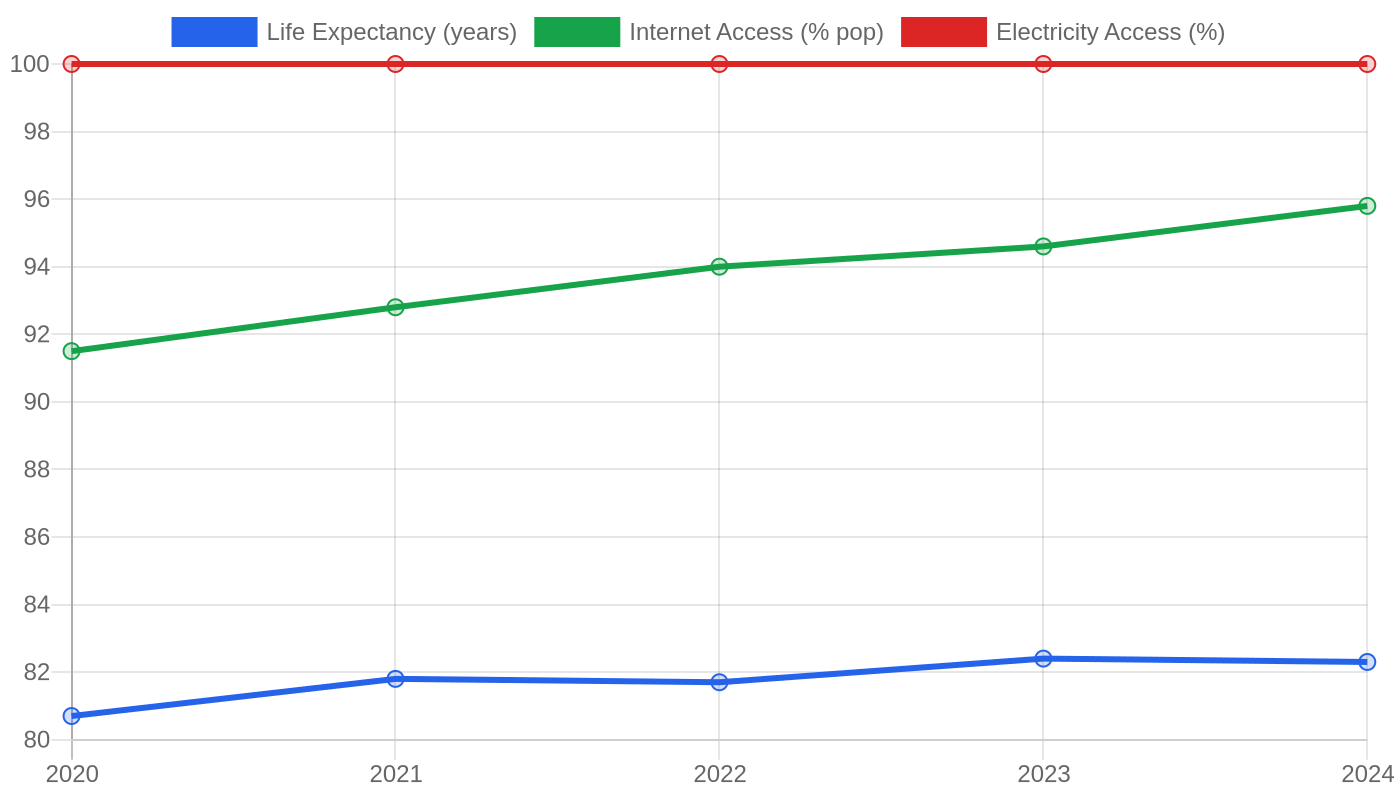
When examining Belarus’s economic fundamentals, the first challenge is the data itself. The World Bank provides no current figures for GDP growth, inflation, unemployment, or per capita income. This absence is not merely a statistical gap — it reflects the broader opacity that defines Belarus’s economic governance. What is clear, however, is the structural skeleton of the economy: a network of massive, state-aligned industrial enterprises that form the backbone of national output.
The list of Belarus’s top companies reads like a roll call of Soviet-era heavy industry. Belaruskali, the potash giant, anchors the fertiliser sector — a critical global commodity that has made Belarus a significant player in agricultural markets worldwide. BelAZ, the heavy machinery manufacturer, produces massive dump trucks used in mining operations across continents. Belarusian Railway keeps the country’s logistics moving, while Belavia connects Belarus to regional air travel.
Belkommunmash produces electric buses and trams, signalling a nod toward modern urban transport.
In the financial sector, Belarusbank dominates as the state’s primary lending institution, while the Belarus High Technologies Park represents the government’s attempt to cultivate a digital economy. This is a country that wants to be both an industrial powerhouse and a tech hub — a difficult balancing act when the political environment discourages the kind of open, transparent markets that technology investors typically require.
The absence of inflation and GDP figures from the World Bank is itself a story. It suggests either a lack of reliable reporting, a deliberate withholding of data, or an economy whose official numbers bear little relation to ground-level realities. For a country that once posted respectable growth figures through its Soviet-era industrial base, the data blackout raises serious questions about the true state of the economy.
The Price of Living in a Controlled Economy
Without official cost-of-living indices from the World Bank, one must look at the texture of daily life in Belarus through the lens of what is known about its industrial structure and political context. Belarus has long maintained a Soviet-style social contract: the state provides relatively stable prices on essentials, subsidised housing, and guaranteed employment in state enterprises, in exchange for political acquiescence.
This model has created a peculiar economic environment. Rents and utilities in Minsk, the capital, have historically been lower than in neighbouring European capitals, but so too are wages. The state’s control over key industries means that many Belarusians work for companies that are ultimately extensions of the government — Belavia, Belarusbank, Belarusian Railway. This creates a labour market where job security is high but upward mobility is constrained.
Daily expenses for food, transportation, and basic goods are kept artificially low through state subsidies and price controls. However, this stability comes at a cost: limited consumer choice, lower-quality goods compared to Western markets, and a parallel economy where hard currency and imported products command premium prices. For the average Belarusian, life is affordable but frugal, with little room for the kind of consumer spending that drives growth in more open economies.
Where Capital Goes to Wait — Investment and Business Climate
Belarus presents a paradox for investors. On one hand, the country boasts genuinely impressive industrial assets. Belaruskali is a global force in potash. BelAZ dominates its niche in heavy mining equipment. The Belarus High Technologies Park has produced successful tech firms like Aliasworlds Entertainment and Viber (the messaging app was developed there). A1, the telecommunications company, shows that the country can support modern digital infrastructure.
On the other hand, the political environment described by media outlets as “Europe’s last dictatorship” creates enormous risk. The concentration of power in the hands of President Alexander Lukashenko means that business decisions are never purely commercial. Contracts can be honoured or broken based on political considerations. Sanctions from Western nations have targeted key Belarusian industries, particularly potash and banking, limiting access to international markets and financing.
The presence of BelaPAN, a consumer services company, alongside industrial giants suggests a small but functioning private sector. But the dominant narrative is one of state control. For an investor, Belarus offers the allure of undervalued assets and skilled labour — but only if one is willing to navigate a system where the rules can change overnight and where the ultimate authority is not the market but the presidency.
The Politics of Survival — Safety, Control, and Quality of Life
Crime and safety indices are notably absent from the available data, which in Belarus’s case is perhaps less concerning than it might be elsewhere. The authoritarian state maintains tight control over society, and street crime in Minsk has historically been low compared to other post-Soviet capitals. The trade-off, however, is evident: the same state that provides safety also suppresses dissent, controls media, and limits political freedom.
The constitution describes Belarus as a semi-presidential republic with separation of powers, but the reality, as documented by multiple media outlets and political analysts, is a highly centralised autocracy. President Lukashenko has been in power since 1994, and the political system has been described as “Europe’s last dictatorship” by sources including some media outlets, politicians, and authors.
This characterisation is not hyperbole — it reflects a system where elections are not genuinely contested, opposition figures are routinely jailed, and independent media is crushed.
Quality of life in Belarus is therefore a study in contradictions. Material conditions are adequate for most citizens — housing is available, food is affordable, and public services function. But the psychological toll of living in a closed society, where political expression is dangerous and the future is uncertain, weighs heavily. The happiness data, like so much else, is unavailable, but one suspects it would tell a complex story.
The High-Tech Gamble — Belarus’s Digital Pivot
This is the freshest and most dynamic section of the Belarus story. The Belarus High Technologies Park (HTP) represents the government’s most ambitious attempt to diversify away from heavy industry and into the digital economy. The park has produced genuine success stories: Aliasworlds Entertainment, a game developer; and the broader ecosystem that gave birth to global apps like Viber.
The HTP offers significant tax breaks and regulatory advantages to tech companies, and it has attracted both domestic talent and foreign investment. For a country with limited natural resources beyond potash, this tech sector represents a potential escape route from the constraints of the Soviet industrial model.
However, the political environment casts a long shadow over this digital pivot. International sanctions and reputational risk make it difficult for HTP companies to scale globally. Western investors are wary of exposing themselves to a regime that is widely condemned. And the brain drain is real — many of Belarus’s best engineers and developers have left for Poland, Lithuania, or further afield, seeking both better salaries and political freedom.
The current moment is therefore a race against time. Can Belarus build a self-sustaining tech ecosystem before its political isolation strangles the sector? Or will the high-tech gamble become another example of unrealised potential in a country that has so much industrial and human capital, but so little political freedom to deploy it?
The Bottom Line
Belarus is a country for patient contrarians and those with a high tolerance for political risk. Its industrial assets — potash, heavy machinery, transport — are genuinely valuable. Its tech sector shows real promise. But none of this matters without political change. Investors and observers should watch Belarus for signs of succession, reform, or crisis.
Until the political system evolves, the economy will remain a controlled experiment — impressive in parts, but ultimately constrained by the authoritarian framework that defines it.
Sources & Methodology
This article is authored by Economic Pulse Net for informational and research purposes. Economic Pulse Net sources its data from multilateral institutions, national statistics bureaus, and proprietary databases. All data is believed to be current as of the date of publication.
Published: July 22, 2026 | Category: Research — Belarus
Use these signals in your own platform
Economic Pulse publishes its live signal feed through a documented, read-only API. Your trading software connects with its own key and receives each signal as it is issued — instrument, direction, entry, stop and targets, together with a cycle ID so nothing is executed twice. The feed is independent of this website and cannot change it.
Signals are informational only and are not financial advice.