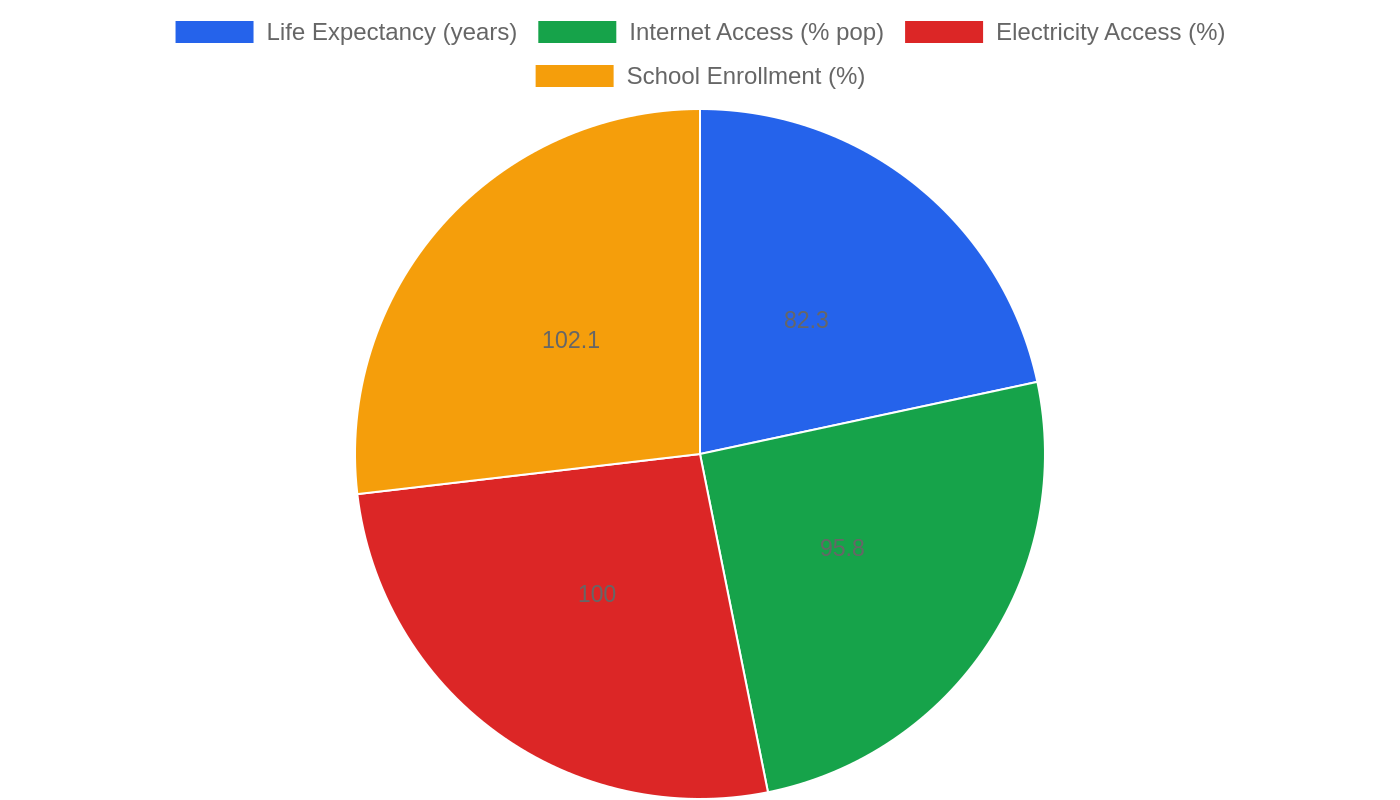
Economic Pulse Net | Sources: World Bank World Development Indicators, Government Sources | 2026
In the heart of Eastern Europe, Belarus presents one of the continent’s most paradoxical economic landscapes. It is a country with world-class industrial giants, a booming tech sector, and yet a political system that keeps it firmly isolated from Western investment flows. As the region’s geopolitical tensions simmer, Belarus finds itself navigating a precarious path between Moscow’s orbit and its own sovereign ambitions.
For investors, analysts, and policymakers, understanding Belarus means understanding a nation that has built a unique—and often contradictory—economic model. Here is what you need to know about the country’s current standing, its industrial backbone, and the challenges that lie ahead.
Key Takeaways
– Industrial Heaviness: Belarus’s economy is anchored by massive state-owned industrial players, particularly in potash (Belaruskali), heavy vehicles (BelAZ), and rail transport (Belarusian Railway), making it a critical link in Eurasian supply chains.
– Political Isolation: Classified by many international observers as an autocracy, the country’s political landscape remains the single largest variable affecting its economic stability and access to global capital.
– Tech Paradox: Despite political isolation, Belarus hosts a significant High Technology Park, signaling a genuine attempt to diversify beyond its traditional Soviet-era industrial base.
– Data Transparency Gaps: The World Bank currently lists core economic indicators (GDP growth, inflation, and unemployment) as unavailable, reflecting a broader opacity in official statistics that analysts must account for.
– Strategic Dependency: The country’s economic survival is deeply intertwined with its eastern neighbor, making it sensitive to regional geopolitical shifts.
The Industrial Core: A Soviet Legacy That Still Works
Belarus’s economic narrative begins with its industrial sector, a direct inheritance from the Soviet planning system that remains largely intact. The country’s economic structure is not driven by consumer markets or financial services, but by a handful of colossal state enterprises that function as the pillars of national employment and export revenue. Belaruskali, one of the world’s largest potash producers, is a critical player in the global fertilizer market.
Similarly, **BelAZ**, known for producing some of the largest dump trucks on the planet, anchors the mining and construction sectors across Eurasia. These are not merely companies; they are national champions that define the country’s industrial identity.
The transportation sector adds another layer of strategic importance. Belarusian Railway serves as a vital land bridge connecting European and Asian markets, a role that has become even more pronounced as continental supply chains shift. Alongside these heavyweights, **Belavia** connects the country to regional air travel, while **Belkommunmash** produces electric public transport vehicles, signaling a nod toward modernization.
The presence of **Belarusbank** as a financial anchor indicates that the state controls the credit levers necessary to sustain these industries. However, the reliance on heavy industry makes the economy vulnerable to global commodity price cycles. Without current World Bank data on GDP or inflation, analysts are left to infer that the country operates under a cloud of economic opacity, where official figures may not fully capture the pressures of sanctions and market volatility.
The true health of the economy likely hinges on the ability of these industrial giants to maintain export flows and secure new markets.
The Cost of Living: Between State Subsidies and Market Pressure
Understanding the cost of living in Belarus requires a look at the state’s heavy hand in price regulation. The government has historically maintained a policy of subsidizing basic goods—from housing utilities to staple foods—to keep social peace in a country where wages are relatively modest. This means that while headline inflation figures are not currently reported by the World Bank, the government routinely intervenes to smooth out price spikes, often at the expense of producer margins.
For the average citizen, this translates into a lower cost of living compared to Western European standards, but it also masks inefficiencies in the economy.
Housing, in particular, remains a state-influenced sector. While private ownership exists, the state still controls a significant portion of the housing stock and manages construction through state programs. Renters in major cities like Minsk face a market that is less expensive than Moscow or Warsaw, but the quality of housing stock can vary. Daily expenses for food and transport are kept artificially low through state-owned retail chains and subsidized public transit.
However, this model creates a “subsidy trap”: the government must continually spend to keep prices low, which limits fiscal space for other investments. For the casual observer, the cost of living appears manageable, but it is a stability purchased through state control rather than market efficiency.
Investment & Business Climate: The Two-Track Economy
The business environment in Belarus is a tale of two distinct tracks. On one side, there is the traditional, state-dominated economy where political connections are paramount, and the state acts as the primary customer and regulator. On the other, there is a surprising and vibrant tech sector, centered around the Belarus High Technologies Park. This park offers a special legal and tax regime that has attracted IT companies like **Aliasworlds Entertainment**, allowing them to export software services globally.
This track operates with a degree of modern efficiency that starkly contrasts with the rest of the economy.
Telecommunications is another bright spot, with A1 providing a competitive edge in the mobile and internet market. **BelaPAN** offers consumer services, though its presence is more localized. For foreign investors, the climate is heavily skewed toward those willing to navigate the political landscape. The dominance of state-owned entities in financials (Belarusbank) and industrials means that private investment is often crowded out, except in the tech enclave.
The legal framework is evolving, but the rule of law is often perceived as secondary to state interests. The key opportunity lies in the tech sector and in niche manufacturing where Belarusian engineering prowess can be leveraged. However, the overarching business climate remains a high-risk, high-reward proposition, heavily dependent on the country’s political trajectory.
Safety, Politics & Quality of Life: The Price of Stability
Belarus is often described in stark terms by international media and political scientists. The constitution defines it as a semi-presidential republic with a separation of powers, but the reality, as noted by numerous political analysts, is a highly centralized and authoritarian government. President Alexander Lukashenko, in power for decades, has been labeled “Europe’s last dictator” by various media outlets and politicians.
This political reality permeates every aspect of daily life, creating a climate of caution among citizens and a significant barrier to international cooperation.
In terms of safety, the absence of a reported Crime Index from the World Bank suggests a lack of standardized data, but anecdotal reports and regional comparisons often indicate that street-level crime is relatively low, a common feature of tightly controlled societies. The quality of life is a trade-off: citizens enjoy a degree of physical safety and predictable public services, but at the cost of political freedoms and economic dynamism.
The public sphere is subdued, and civil society operates under strict constraints. For the average Belarusian, life is stable but static, with limited opportunities for upward mobility outside of the state apparatus. The country’s social fabric is resilient, but it is stretched thin by the pressures of isolation and the constant need to navigate a restrictive political environment.
Current Affairs: The Waiting Game
Right now, Belarus is in a holding pattern, caught between the ongoing effects of Western sanctions and its deepening integration with Russia. The economy is operating in a wartime-like footing, with state media emphasizing industrial output and import substitution. The government is actively courting investment from non-Western countries, particularly in Asia and the Middle East, to offset the loss of European markets.
The tech sector, while still functioning, faces brain-drain pressures as skilled workers seek opportunities abroad. The political atmosphere remains frozen, with no signs of internal reform or dialogue with the opposition.
The most pressing issue on the ground is the management of the economy under external pressure. With the World Bank unable to provide current GDP or inflation figures, the true state of the economy is difficult to gauge, but the government’s focus on maintaining control over prices and currency suggests significant underlying stress. There are whispers of increased domestic production of previously imported goods, a move toward self-sufficiency that is both a patriotic rallying cry and a necessity.
For the international community, the question remains whether the current trajectory is sustainable or if a breaking point is approaching. The country is not in crisis, but it is not thriving; it is simply enduring, waiting for a shift in the geopolitical winds.
The Bottom Line
Belarus is a country that investors and strategists should watch closely, but only with a clear understanding of the risks. The nation’s industrial assets—particularly in potash and heavy machinery—are globally significant, and its tech sector proves that Belarusian talent can compete on the world stage. However, the political system remains an immovable object, preventing the kind of structural reforms needed to unlock the country’s full potential.
For those willing to operate within the constraints, there are opportunities, especially in sectors that serve the state’s priorities. For the broader international community, Belarus is a reminder that in the 21st century, political stability and economic prosperity are not always synonymous. The country will remain a vital, yet troubled, piece of the European puzzle.
Sources & Methodology
This article is authored by Economic Pulse Net for informational and research purposes. Economic Pulse Net sources its data from multilateral institutions, national statistics bureaus, and proprietary databases. All data is believed to be current as of the date of publication.
Published: July 31, 2026 | Category: Research — Belarus
Use these signals in your own platform
Economic Pulse publishes its live signal feed through a documented, read-only API. Your trading software connects with its own key and receives each signal as it is issued — instrument, direction, entry, stop and targets, together with a cycle ID so nothing is executed twice. The feed is independent of this website and cannot change it.
Signals are informational only and are not financial advice.