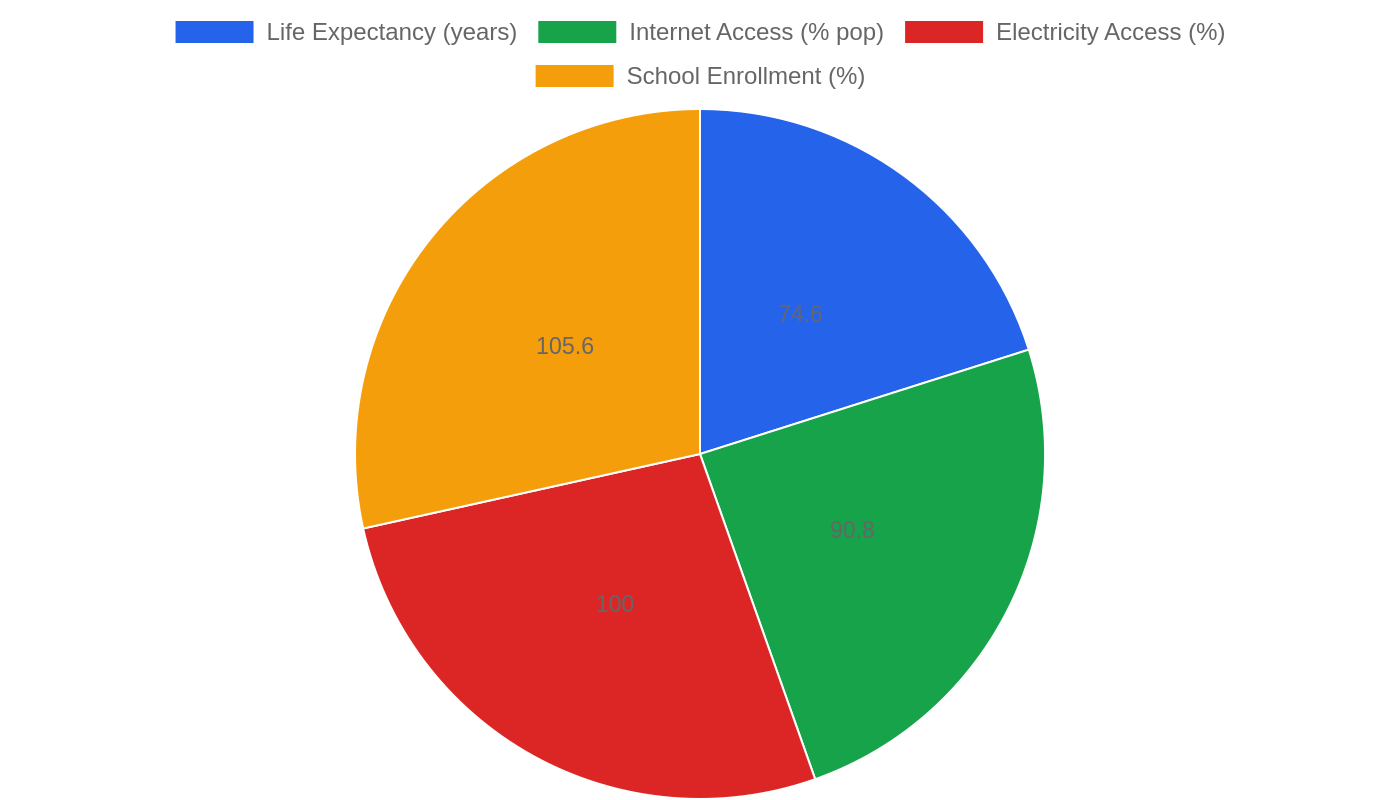
Economic Pulse Net | Sources: World Bank World Development Indicators, Government Sources | 2026
Key Takeaways
– Azerbaijan’s economy remains dominated by state-linked industrial giants, with the Azerbaijan Caspian Shipping Company and Azerbaijan Railways forming the backbone of transport infrastructure, while financial institutions like AccessBank and AtaBank signal a developing, if tightly controlled, banking sector.
– The political landscape is defined by the Aliyev family’s uninterrupted rule since 1993, with the New Azerbaijan Party maintaining a grip on power through elections that international observers, including Freedom House, describe as marred by fraud and unfair practices.
– Despite the absence of specific GDP or inflation figures in the available World Bank data, the country’s corporate landscape reveals a strong state presence in utilities, construction, and consumer services, suggesting an economy where public and private interests are deeply intertwined.
– Safety and crime indices are not provided, but the political classification as “not free” by Freedom House, with a score of 7 out of 100 on the Global Freedom index, paints a picture of a society where political dissent faces significant constraints.
– The country’s strategic location on the Caspian Sea, combined with its major industrial and shipping assets, positions it as a critical node in Eurasian trade routes, though the lack of recent economic data makes precise assessment challenging.
The Petro-State Paradox — Growth Without Transparency
Azerbaijan’s economy presents a puzzle for analysts, not because of complexity, but because of opacity. The World Bank’s latest data set offers no GDP growth figure, no inflation rate, no unemployment number—gaping holes that would be alarming for most developing economies but are almost characteristic for a country where information flows are tightly managed. What we do know is that the nation’s industrial backbone is unmistakably state-centric.
The Azerbaijan Caspian Shipping Company dominates maritime trade across the inland sea that gives the country its name, while Azerbaijan Railways connects Baku to regional markets in Georgia, Russia, and Iran. These are not merely companies; they are strategic national assets that move oil, gas, and goods.
The absence of inflation data is particularly telling. In a region where currency volatility and price shocks have become familiar companions—neighbouring Turkey has battled runaway inflation for years—Azerbaijan’s silence on consumer prices raises legitimate questions. Is the government shielding uncomfortable truths, or has the economy truly achieved a stability that renders such metrics unremarkable? Without the World Bank’s numbers, we cannot know.
What we can observe is the corporate ecosystem: Azersu Open Joint Stock Company manages the nation’s water supply, a utility that touches every citizen’s daily life, while Akkord Industry Construction Investment Corporation builds the infrastructure that keeps the economy moving. These are not Silicon Valley startups; they are heavy-industry pillars of a command-and-control economic model.
The financial sector, represented by AccessBank Azerbaijan and AtaBank, suggests a banking system that is operational but likely constrained by the political environment. In authoritarian systems, banks rarely function as independent arbiters of credit; they serve state priorities.
The presence of AF Holding and AF Hotel Group in the consumer services sector indicates that tourism and hospitality have room to grow, though the political climate may deter the kind of mass-market tourism that fills hotel rooms year-round. Azerbaijan’s economy, in short, is a managed machine—not a free-market dynamo, but not a failed state either. It hums along on hydrocarbon revenues and state-directed investment, with the private sector playing a supporting role rather than leading the charge.
Baku’s Balancing Act — Housing, Costs, and the Caspian Dream
Housing costs in Azerbaijan, particularly in the capital Baku, reflect a tale of two cities. The available data does not provide specific price points, but regional context offers clues. Baku’s oil boom has created a class of wealthy elites who drive demand for luxury apartments along the Caspian waterfront, while ordinary citizens face a very different market.
Rent versus buy calculations in Azerbaijan likely mirror patterns seen across the post-Soviet space: those with access to hard currency or connections can secure prime real estate, while younger workers and rural migrants find themselves priced out of desirable neighbourhoods.
Daily expenses—food, transport, utilities—probably remain manageable for those employed in the state sector or the oil industry, but the lack of inflation data makes it impossible to say whether purchasing power is eroding. The Azersu utility company’s presence in the top companies list underscores how essential services are state-controlled, which can mean subsidised prices for loyal citizens but also vulnerability to political whims.
Compared to regional averages, Baku likely sits somewhere between Tbilisi’s relative affordability and the soaring costs of cities like Istanbul or Moscow. The city’s skyline, dotted with gleaming new towers, tells one story; the lived experience of the average Azerbaijani may tell quite another.
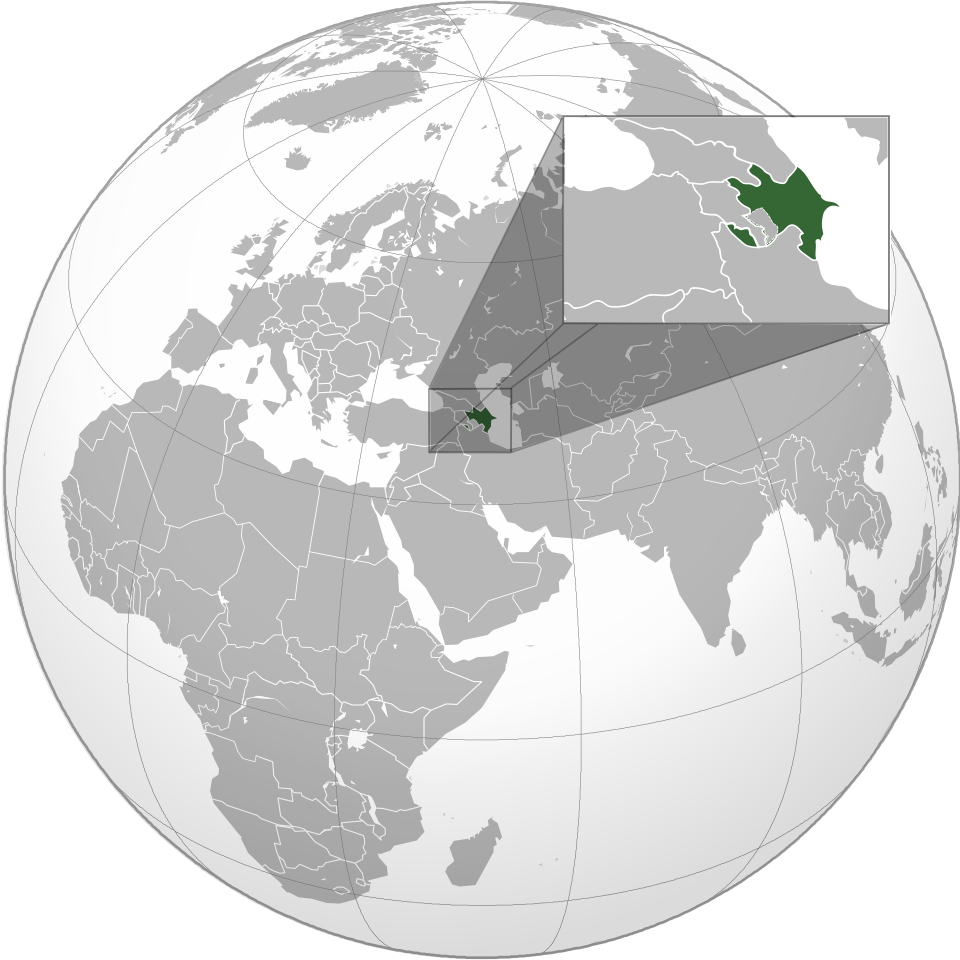
Where Capital Meets Control — The Business Climate Decoded
For international investors eyeing Azerbaijan, the message is mixed. The top companies list reads like a who’s who of state-linked entities: shipping, railways, water utilities, construction. This is not an economy where a foreign entrepreneur can easily disrupt incumbents. AccessBank Azerbaijan and AtaBank provide the financial plumbing, but in a system where the Aliyev family has ruled continuously since 1993, credit flows are rarely apolitical.
The sectors to watch are infrastructure—Akkord Industry Construction Investment Corporation is well-positioned for any government-led building spree—and consumer services, where AF Hotel Group and ANS Group of Companies cater to domestic and regional demand.
The business environment is shaped by the political reality described by Freedom House: a country ranked 7 out of 100 on global freedom, categorised as “not free.” Contracts may be honoured, but rule of law is selective. The conglomerate AF Holding’s presence across multiple sectors suggests that diversification is possible for those with the right connections, but the barriers to entry for outsiders remain high.
For investors comfortable with political risk and focused on energy-adjacent industries or government contracts, Azerbaijan offers opportunity. For those seeking transparent, market-driven growth, the picture is far less appealing.
Freedom’s Price — Safety, Politics, and Daily Life
Azerbaijan’s crime and safety indices are absent from the available data, which itself is a kind of statement. In many authoritarian states, crime statistics are either state secrets or manipulated to project an image of control. What we can say with certainty is that the political landscape, as documented by Freedom House, is one of entrenched authoritarianism.
The Aliyev family and the New Azerbaijan Party have held power for over three decades, with elections described by multiple sources as “marred by electoral fraud and other unfair election practices.” The government is classified as “not free,” a designation that carries real consequences for quality of life.
Daily existence in such a system means navigating a society where political expression is constrained, media is controlled, and dissent carries personal risk. Safety from street crime may be high—authoritarian states are often effective at maintaining public order—but safety from state overreach is a different matter entirely.
The absence of happiness or well-being data in the provided materials leaves a gap, but the political science literature is clear: citizens in “not free” countries often report lower life satisfaction, even when material conditions are adequate. Azerbaijan’s quality of life is thus a paradox: physically safe, politically constrained, economically mixed.
The Silence of the Data — What We Don’t Know About Azerbaijan Today
The most striking feature of Azerbaijan’s current affairs section is what is missing. There are no recent news items, no live indicators, no inflation trends, no policy shifts, no reform announcements in the provided data. This silence is itself newsworthy. In a world where economic data flows constantly, Azerbaijan’s information vacuum suggests either a deliberate strategy of opacity or a period of unusual stasis.
The country’s last major geopolitical event was the 2020 Nagorno-Karabakh war, which reshaped regional dynamics and boosted nationalistic sentiment. Since then, Baku has focused on reconstruction and consolidating its gains.
What might be happening now, based on the available corporate data, is a continued emphasis on infrastructure and state-led development. Akkord Industry Construction Investment Corporation’s prominence suggests ongoing building projects, while the shipping and railway companies point to efforts to position Azerbaijan as a transit hub between Europe and Asia.
The absence of any mention of inflation or monetary policy could indicate that the central bank has kept prices stable, or it could mean that the government simply does not publish the numbers. For a country that sits on significant hydrocarbon reserves and controls key trade routes, the lack of transparency is a missed opportunity to attract the very foreign investment it likely needs to diversify beyond oil and gas.
The Bottom Line
Azerbaijan is a country to watch for those with high risk tolerance and a focus on energy, infrastructure, and Eurasian trade corridors. The state-controlled economy, dominated by the Aliyev family’s political machine, offers stability of a certain kind—but not the transparency that most international investors demand. For journalists, researchers, and policy analysts, the gaps in the data are as revealing as the numbers themselves: this is a nation that prefers to be seen on its own terms.
Anyone considering engagement with Azerbaijan should enter with eyes wide open, understanding that the country’s economic story is inseparable from its political reality, and that the absence of information is itself a form of information.
Sources & Methodology
This article is authored by Economic Pulse Net for informational and research purposes. Economic Pulse Net sources its data from multilateral institutions, national statistics bureaus, and proprietary databases. All data is believed to be current as of the date of publication.
Published: July 23, 2026 | Category: Research — Azerbaijan
Use these signals in your own platform
Economic Pulse publishes its live signal feed through a documented, read-only API. Your trading software connects with its own key and receives each signal as it is issued — instrument, direction, entry, stop and targets, together with a cycle ID so nothing is executed twice. The feed is independent of this website and cannot change it.
Signals are informational only and are not financial advice.