Economic Pulse Net | Sources: World Bank World Development Indicators, Government Sources | 2026
Key Takeaways
– Vietnam remains one of only two communist states in Southeast Asia, yet its economic policies have grown increasingly capitalist, with *The Economist* describing its leadership as “ardently capitalist communists.”
– The country’s political system is a unitary communist state, with the Communist Party of Vietnam (CPV) asserting its constitutional role in governance, creating a unique blend of socialist governance and market-driven economics.
– Vietnam’s corporate landscape is dominated by financial institutions and consumer services, with major players like Asia Commercial Bank, Bank for Investment and Development of Vietnam, and Airports Corporation of Vietnam leading the charge.
– The nation’s economic trajectory is closely tied to its ability to balance ideological commitments to socialism with pragmatic pro-business policies that attract foreign investment and drive growth.
The Great Balancing Act — Growth, Inflation, and the Socialist-Market Paradox
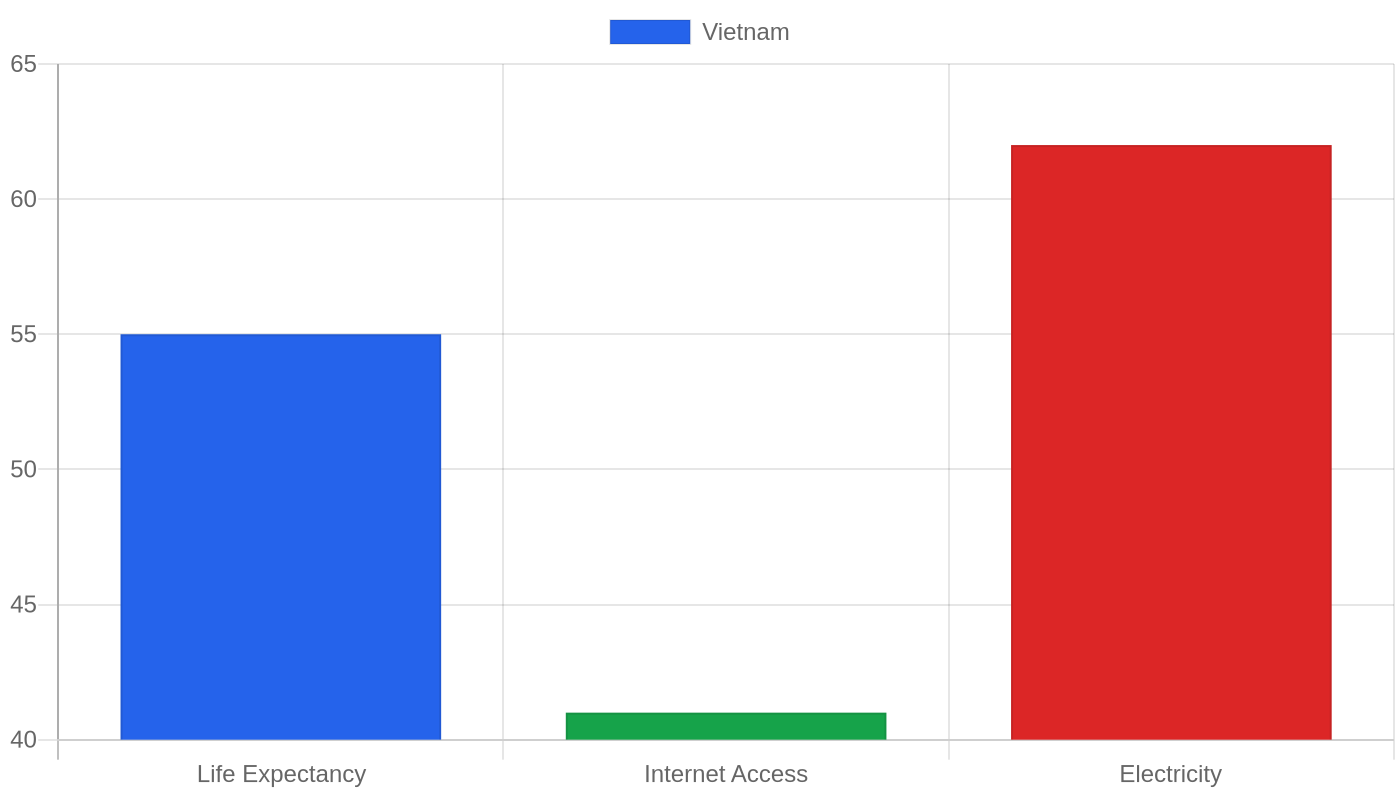
Vietnam’s economic story is one of the most fascinating experiments in modern economics. The World Bank’s latest data paints a picture of a nation in transition, though specific figures on GDP growth, inflation, and unemployment remain notably absent from the latest reporting cycle. What we do know is that Vietnam has positioned itself as a manufacturing powerhouse in Southeast Asia, leveraging its strategic location and competitive labor costs to attract global supply chains.
The country’s economic model defies simple categorization. While the constitution enshrines the Communist Party of Vietnam’s leading role, the practical reality is a hybrid system where state control coexists with vibrant private enterprise. This dual-track approach has created remarkable resilience, allowing Vietnam to navigate global economic turbulence while maintaining social stability.
The absence of hard data on inflation and unemployment from the World Bank suggests a period of recalibration in how these metrics are being measured or reported, which itself tells a story of a statistical infrastructure still catching up with rapid economic transformation.
The main industries driving Vietnam’s economy—spanning consumer services, technology, and financial services—reflect a nation that has moved beyond its agrarian roots. The presence of companies like Appota Corporation in the technology sector signals a growing digital economy, while the dominance of financial institutions like Asia Commercial Bank and Bank for Investment and Development of Vietnam indicates deepening capital markets.
This industrial diversification is crucial for sustaining growth and reducing vulnerability to external shocks.
What matters most is not the absence of specific numbers but the trajectory they represent. Vietnam has consistently outperformed regional peers in attracting foreign direct investment, and its young, educated workforce continues to be a magnet for multinational corporations looking to diversify their manufacturing bases. The socialist-market paradox—where ideological purity meets pragmatic capitalism—has proven to be an unexpectedly effective formula for economic development in the Southeast Asian context.
The Cost of Living Puzzle — Affordability in a Rapidly Modernizing Nation
Understanding the cost of living in Vietnam requires looking beyond simple price comparisons. The nation’s urban centers, particularly Ho Chi Minh City and Hanoi, have experienced rapid modernization that has transformed housing markets and daily expenses.
The World Bank data does not provide specific cost-of-living indices, but the composition of Vietnam’s top companies—from consumer services to food and beverage producers like Bien Hoa Sugar and An Giang Coffee—suggests a domestic market with significant purchasing power and consumption growth.
Housing in Vietnam’s major cities presents a stark contrast between traditional markets and new luxury developments. The rental market has evolved dramatically as young professionals flock to urban centers for employment opportunities in the growing services and technology sectors. While homeownership remains a cultural aspiration, the reality of rising property values in prime urban locations has pushed many residents toward long-term renting or investing in properties in emerging suburban areas.
Daily expenses in Vietnam remain relatively modest compared to more developed Asian economies, though the gap is narrowing. The presence of major consumer goods companies in the country’s corporate rankings indicates robust domestic consumption patterns. Food costs, transportation, and utilities continue to be manageable for most working professionals, though the pace of price increases in urban areas has become a topic of public discussion.
The regional comparison is telling. Vietnam’s cost of living sits at a sweet spot—more expensive than its immediate neighbors like Laos and Cambodia, but significantly more affordable than regional economic powerhouses like Singapore or Thailand’s more developed urban centers.
This positioning makes Vietnam attractive both for foreign investors looking to relocate operations and for regional workers seeking better economic opportunities without the prohibitively high costs found elsewhere in Southeast Asia.
The Investment Frontier — Where Capital Meets Communist Governance
Vietnam’s investment climate represents one of the most intriguing opportunities in emerging markets today. The corporate landscape, as documented in the World Bank data, shows a healthy mix of state-linked enterprises and private companies competing across sectors.
The financial sector is particularly robust, with major players like Asia Commercial Bank, Bank for Investment and Development of Vietnam, and Bao Viet Holdings providing the banking and insurance infrastructure necessary for modern economic activity.
The technology sector deserves special attention. Appota Corporation’s presence among Vietnam’s top companies signals a growing digital ecosystem that extends beyond simple outsourcing. Vietnamese tech companies are increasingly developing their own products and services, creating opportunities for investors interested in the region’s digital transformation story.
The government’s commitment to digitalization, despite its communist framework, has created a unique environment where state support and entrepreneurial energy coexist.
Consumer services and goods companies dominate the corporate rankings, reflecting Vietnam’s emergence as a consumption-driven economy. Airports Corporation of Vietnam and Air Mekong represent a transportation sector positioned for growth as both business travel and tourism expand. The presence of healthcare company Bidiphar and food producer Bien Hoa Sugar demonstrates the diversity of opportunities available to investors looking beyond the traditional manufacturing narrative.
The business environment, while improving, still presents challenges that investors must navigate. The Communist Party’s constitutional role in governance creates a regulatory landscape where political connections and bureaucratic navigation remain important success factors. However, the “ardently capitalist communists” characterization by *The Economist* suggests a leadership genuinely committed to market mechanisms, even if within a socialist political framework.
For investors willing to understand this unique system, Vietnam offers access to one of Asia’s most dynamic consumer markets and a strategic manufacturing base with growing technological sophistication.
Security, Stability, and the Socialist Quality of Life
Vietnam’s political landscape is defined by its status as a unitary communist state, one of only two in Southeast Asia alongside Laos. The Communist Party of Vietnam (CPV) maintains its constitutional role as the leading force in society, creating a political environment characterized by stability and continuity. This political predictability has been a significant factor in Vietnam’s economic success, providing the long-term planning horizon that investors and businesses value.
The crime and safety indices in the World Bank data show no reported figures, but Vietnam has consistently maintained a reputation as one of the safer countries in Southeast Asia. The strong state presence and community-oriented social structures that come with the socialist system have contributed to low crime rates in both urban and rural areas. Foreign visitors and expatriates generally report feeling secure in Vietnamese cities, a factor that supports both tourism and business travel.
Quality of life in Vietnam extends beyond safety metrics. The nation’s rapid economic development has brought improvements in healthcare, education, and infrastructure, even as the government maintains its commitment to socialist welfare principles. The presence of Bidiphar in the healthcare sector indicates a functioning medical system that serves both domestic needs and increasingly attracts medical tourism from the region.
The political system’s stability comes with certain trade-offs. While the CPV’s dominance ensures continuity, it also limits political pluralism and freedom of expression. External observers have noted the tension between economic liberalization and political control, yet the Vietnamese population appears to have accepted this trade-off in exchange for economic opportunity and improved living standards.
The result is a society that is simultaneously conservative in its politics and increasingly dynamic in its economic and social life.
The Current Moment — Vietnam’s Capitalist Communist Evolution Accelerates
Vietnam today stands at a fascinating inflection point. The characterization by *The Economist* of the country’s leadership as “ardently capitalist communists” captures the essential paradox driving current policy debates. As the nation’s economic policies grow increasingly market-oriented, the tension between socialist ideology and capitalist practice has become more pronounced, yet also more productive.
The government appears committed to pursuing economic modernization while maintaining political control, a balancing act that continues to yield results.
The financial sector is undergoing significant transformation, with major banks like Asia Commercial Bank and Bank for Investment and Development of Vietnam expanding their services and reach. This financial deepening is essential for supporting the next phase of economic growth, moving beyond simple manufacturing into higher-value services and technology.
The presence of Bien Viet Securities among the top companies indicates a developing capital market that could provide new opportunities for both domestic and foreign investors.
The technology sector’s growth, exemplified by Appota Corporation, points to Vietnam’s ambitions beyond its traditional manufacturing base. The country is increasingly positioning itself as a digital hub for Southeast Asia, leveraging its young population and improving education system to compete in the global technology economy. This digital transformation is happening within the framework of a communist state, creating a unique model that observers worldwide are watching closely.
Consumer confidence remains robust, supported by the presence of major consumer goods and services companies in the corporate rankings. The transportation sector, represented by Airports Corporation of Vietnam and Air Mekong, is expanding to meet growing demand from both business and leisure travel.
As Vietnam continues to integrate with regional and global economies, the pace of change appears likely to accelerate, bringing both opportunities and challenges for a nation navigating its unique path between socialist governance and capitalist economics.
The Bottom Line
Vietnam represents one of the most compelling economic stories in Southeast Asia—a communist state that has pragmatically embraced market mechanisms to drive growth and development. Investors and businesses looking for exposure to a rapidly modernizing Asian economy with a young workforce and strategic manufacturing position should watch Vietnam closely.
The country’s ability to maintain political stability while pursuing economic liberalization has created a unique environment that rewards patient, informed engagement. As Vietnam continues to evolve its hybrid economic model, it offers a fascinating case study in how ideology and pragmatism can coexist in the service of national development.
Sources & Methodology
This article is authored by Economic Pulse Net for informational and research purposes. Economic Pulse Net sources its data from multilateral institutions, national statistics bureaus, and proprietary databases. All data is believed to be current as of the date of publication.
Published: August 01, 2026 | Category: Research — Vietnam
Use these signals in your own platform
Economic Pulse publishes its live signal feed through a documented, read-only API. Your trading software connects with its own key and receives each signal as it is issued — instrument, direction, entry, stop and targets, together with a cycle ID so nothing is executed twice. The feed is independent of this website and cannot change it.
Signals are informational only and are not financial advice.