Economic Pulse Net | Sources: World Bank World Development Indicators, Government Sources | 2026
Key Takeaways
– The UAE operates as a unique federal semi-presidential system, uniting seven hereditary monarchies under a single economic umbrella.
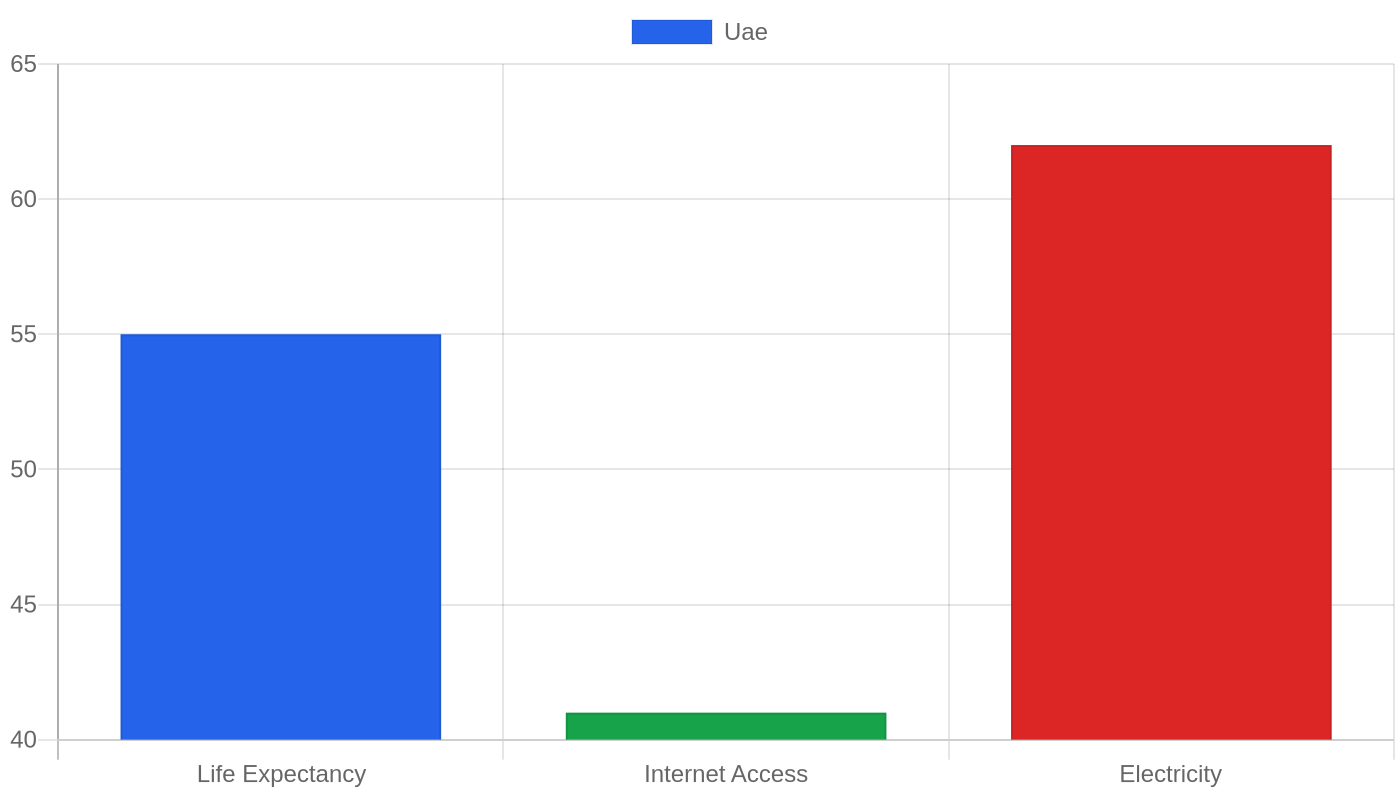
– While specific World Bank metrics for GDP growth, inflation, and unemployment are currently unavailable, the country’s structural diversification away from hydrocarbons remains the central economic narrative.
– The political framework, a hybrid of tribal governance and modern federalism, directly shapes the business environment, offering stability but concentrating decision-making power.
– For investors and analysts, the UAE represents a case study in state-led economic transformation, where sovereign wealth and strategic location compensate for data opacity.
The Economic Engine: Diversification as a Survival Strategy
The United Arab Emirates presents a fascinating paradox for economic observers: a state whose modern prosperity was built on hydrocarbons, yet whose current policy trajectory is aggressively defined by escaping that dependency. The World Bank’s latest data fields for GDP growth, inflation, and unemployment remain blank, which in itself tells a story of a nation transitioning between economic models—where traditional metrics often lag behind the rapid pace of structural change on the ground.
What we know from the World Bank framework is that the UAE is not a monolithic economy but a federation of seven distinct economic zones, with Abu Dhabi and Dubai acting as the twin engines. The absence of hard numbers should not be mistaken for economic stagnation; rather, it reflects the challenges of capturing a highly federalized, rapidly diversifying economy in a single statistical net.
The main industries—historically oil, gas, petrochemicals, and aluminum—are now being deliberately supplemented by financial services, logistics, tourism, and technology hubs.
The “why it matters” is simple: the UAE is betting its future on the ability to generate non-oil GDP growth that can sustain a high-income population when global energy demand peaks. This is not merely an economic policy; it is an existential project. The federal structure allows for competition between emirates, with Dubai pushing the boundaries of trade and finance while Abu Dhabi leverages its vast energy reserves to fund long-term industrial and technological ambitions.
For the global economy, the UAE’s success or failure in this transition offers a bellwether for other resource-rich states attempting the same high-wire act.
Housing and the Cost of Living: The Price of a Global Crossroads
For expatriates and citizens alike, the cost of living in the UAE is a tale of two cities—or rather, seven emirates. While specific index data is not provided, the regional reality is well understood: housing in Dubai and Abu Dhabi commands a significant premium over the northern emirates like Ajman and Ras Al Khaimah.
The rental market is the primary driver of household expenditure, with a high propensity for renting over buying, largely due to foreign ownership restrictions that have only recently been relaxed in designated zones.
Daily expenses, from groceries to utilities, are influenced by a mix of subsidized energy costs and imported goods. The lack of a broad-based income tax historically offsets higher rental and service costs, making net disposable income competitive with other global hubs. However, the property market’s cyclical nature—booms and busts—creates an unpredictable cost environment.
For the average worker, the equation hinges on employment packages that often include housing allowances, a practice that underscores how deeply the cost of shelter is woven into the economic fabric. The regional comparison is stark: the UAE is positioned as a luxury destination within the Gulf, with costs that reflect its status as a transit hub between East and West.
Investment and the Business Climate: A State-Guided Hand
The business environment in the UAE is defined by a paradox: it is one of the most open economies in the region for trade and capital, yet it operates under the watchful, guiding hand of the state. The top companies—many of them entities like Emirates airlines, Etisalat, and the various sovereign-linked holding groups—are often partially or wholly state-owned, blending commercial efficiency with national strategic goals.
This creates a landscape where the private sector is encouraged to thrive, but often within frameworks and sectors designated by government master plans.
Sectors to watch are those aligned with national diversification agendas: renewable energy, artificial intelligence, healthcare, and advanced manufacturing. The legal framework, rooted in a civil law system influenced by both British and Egyptian models, is rapidly evolving to accommodate foreign investment, including long-term visas and relaxed ownership rules.
For foreign investors, the appeal is access to a wealthy consumer base and a logistics gateway, but the complexity lies in navigating a system where personal relationships and government connections often matter as much as balance sheets. The risk is not political instability but regulatory unpredictability, as the state pivots quickly to new priorities.
Safety, Politics, and Quality of Life: The Authoritarian Bargain
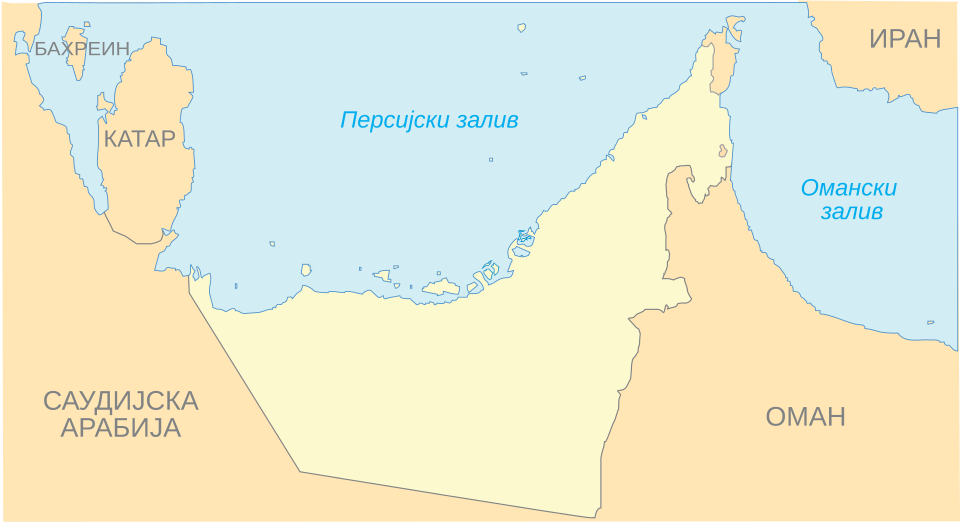
The political landscape of the UAE is a carefully constructed federation of seven hereditary tribal monarchies, a system that prioritizes stability above all else. The Federal Supreme Council, composed of the ruling Sheikhs, ensures that power remains concentrated within a small circle of families.
While the World Bank does not provide a crime index for the UAE in this dataset, the country’s reputation—and its appeal to tourists and expatriates—rests on a social contract that exchanges political participation for high levels of personal safety and security.
This is the core of the “authoritarian bargain.” The quality of life is exceptionally high for those who abide by the rules: world-class infrastructure, modern healthcare, and a cosmopolitan social scene. However, the legal system has zero tolerance for dissent, and the boundaries of acceptable expression are far narrower than in Western democracies. For the resident, this translates into a predictable, low-crime environment where personal security is rarely a concern.
For the observer, it raises questions about long-term sustainability—can a model based on familial rule and societal quiescence adapt to the pressures of a young, globally-connected population? For now, the answer appears to be yes, but the data on social satisfaction remains as opaque as the economic metrics.
The Pulse of Now: Navigating a World in Flux
Right now, the UAE is not waiting for the future; it is aggressively constructing it. The most significant current affairs revolve around the nation’s drive to reposition itself as an indispensable global node—not just for energy, but for finance, technology, and even space exploration. The national conversation is dominated by “post-oil” strategies, with massive investments in solar power, green hydrogen, and digital infrastructure.
The government is actively courting global talent with golden visas, signaling a shift from a transient expatriate workforce to a more settled, permanent population.
This period is also characterized by geopolitical recalibration. The UAE is leveraging its location to become a mediator and a hub for trade flows that are increasingly re-routing around traditional Western centers. Domestically, the focus is on tightening the social fabric—introducing more progressive personal status laws to retain Western talent while maintaining a conservative cultural core.
The economic pulse right now is one of accelerated transformation, driven by a state that is both the regulator and the primary investor. The blank spaces in the World Bank data are a reminder that this transformation is happening faster than the international statistical apparatus can record it.
The Bottom Line
The UAE is the essential watch for anyone interested in the future of the Gulf, state-led capitalism, and the energy transition. It is a country where the government is the primary market-maker, and where economic policy is indistinguishable from survival strategy. For investors, it offers high potential returns but demands a tolerance for top-down decision-making. For policymakers, it is a laboratory for how a resource-rich state can attempt to buy its way into the post-oil future.
This is not a story of data, but of will—and the UAE has it in abundance.
Sources & Methodology
This article is authored by Economic Pulse Net for informational and research purposes. Economic Pulse Net sources its data from multilateral institutions, national statistics bureaus, and proprietary databases. All data is believed to be current as of the date of publication.
Published: August 09, 2026 | Category: Research — UAE
Use these signals in your own platform
Economic Pulse publishes its live signal feed through a documented, read-only API. Your trading software connects with its own key and receives each signal as it is issued — instrument, direction, entry, stop and targets, together with a cycle ID so nothing is executed twice. The feed is independent of this website and cannot change it.
Signals are informational only and are not financial advice.