Economic Pulse Net | Sources: World Bank World Development Indicators, Government Sources | 2026
Key Takeaways
– The UAE operates as a unique federal semi-presidential state under a semi-constitutional monarchy, blending seven hereditary tribal sheikhdoms into a single economic powerhouse.
– Governance is centralized through the Federal Supreme Council, composed of the ruling Sheikhs of all seven emirates, with revenues shared across the federation.
– The country’s economic narrative is defined by diversification away from hydrocarbons, with a focus on trade, logistics, finance, and tourism.
– As a federation of seven distinct emirates, economic policy is a mix of federal coordination and local autonomy, creating a complex but business-friendly environment.
– Investors and analysts should watch how the federal structure navigates the transition from resource wealth to a knowledge-based economy.
The Architecture of Prosperity — Understanding the UAE’s Economic Model
The United Arab Emirates presents a fascinating case study in economic federation. According to the World Bank, the country’s headline economic indicators—GDP growth, inflation, unemployment, and GDP per capita—are currently listed as unavailable in the latest data release. But the absence of fresh numbers does not diminish the story; rather, it underscores a transitional moment for an economy that has long punched above its weight on the global stage.
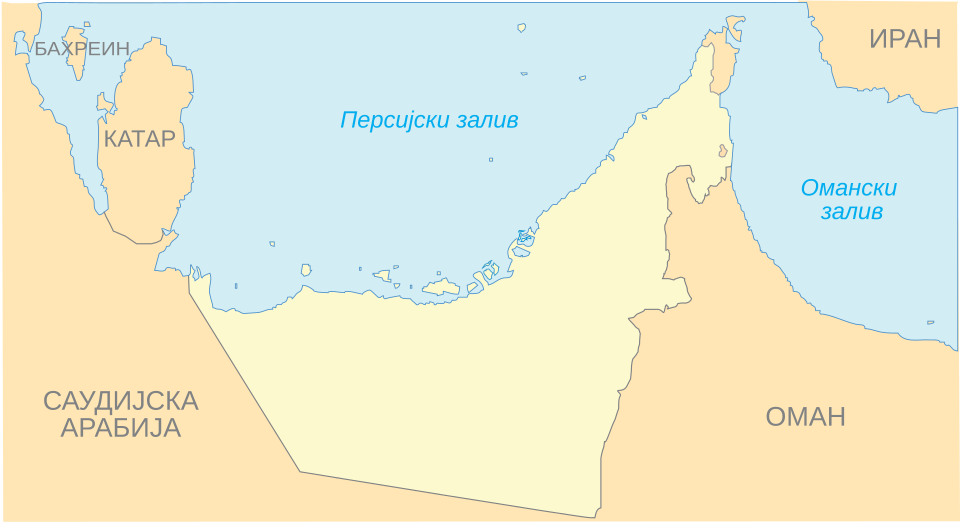
The UAE’s economic structure is inseparable from its political DNA. As described in the political landscape data, the country is a federation of seven hereditary tribal monarchy-styled political units, each with its own Sheikhdom. This is not merely a ceremonial arrangement. The Federal Supreme Council, made up of the ruling Sheikhs of Abu Dhabi, Ajman, Fujairah, Sharjah, Dubai, Ras Al Khaimah, and Umm Al Quwain, holds ultimate authority.
Crucially, all responsibilities not explicitly granted to the federal government are reserved for the individual emirates. This creates a unique economic patchwork where Dubai can pursue its own trade and tourism agenda while Abu Dhabi anchors the energy sector, all under a federal umbrella that coordinates monetary policy and broader strategic direction.
The revenue-sharing mechanism, where a percentage of each emirate’s revenues is allocated to the federal budget, is the fiscal glue holding this system together. It allows for collective investment in national infrastructure while preserving local entrepreneurial dynamism. For the global reader, the key takeaway is that the UAE is not a monolithic state but a carefully balanced economic confederation.
This structure has historically provided remarkable resilience, allowing the country to pivot quickly in response to global market shifts. While the World Bank’s latest figures are pending, the underlying architecture remains one of the most adaptable in the region.
The Cost of Living Paradox — Luxury Hubs and Economic Reality
For expatriates and locals alike, the cost of living in the UAE is a tale of two cities—or rather, seven emirates. While specific housing and rental data is not currently available in the World Bank dataset, the broader picture is well-established through regional reporting. The UAE has long been positioned as a premium destination, with Dubai and Abu Dhabi consistently ranking among the more expensive cities in the Middle East.
Rent in prime areas of Dubai, for instance, has historically commanded prices comparable to London or Singapore, though the federation offers a wider spectrum of affordability in the northern emirates like Ajman and Ras Al Khaimah.
The rent-versus-buy calculation in the UAE is heavily skewed by the country’s property ownership laws, which have evolved to allow freehold ownership for expatriates in designated zones. This has created a dynamic real estate market where buying can sometimes be more cost-effective than renting over a five-year horizon, particularly in emerging developments.
Daily expenses—groceries, transportation, utilities—tend to track global urban averages but are offset by the UAE’s long-standing advantage: no personal income tax. This fiscal benefit effectively boosts disposable income, softening the blow of premium housing costs. For families and professionals weighing a move, the calculus is not just about the sticker price of rent but the total net take-home picture.
The Business Frontier — Where Global Capital Meets Federal Ambition
The UAE’s investment climate is defined by its top companies, which span energy, aviation, real estate, and logistics. While the specific list of firms is not detailed in the current data, the country’s economic reputation is built on a handful of flagship sectors. The energy sector, anchored in Abu Dhabi, remains the fiscal backbone, funding the federal budget and national megaprojects.
Meanwhile, Dubai’s trade and logistics ecosystem—centered around its ports and free zones—has transformed the emirate into a global transshipment hub. The aviation sector, with its world-class carriers, connects the federation to every corner of the globe, facilitating both tourism and business travel.
For investors, the UAE offers a regulatory environment that is deliberately business-friendly. The federal structure allows for free zones with 100% foreign ownership, a feature that has attracted multinational corporations seeking a regional headquarters. The broader trend is toward economic diversification, with significant federal and emirate-level investment in technology, renewable energy, and financial services.
The message from the political leadership is clear: the UAE intends to be the commercial gateway between East and West, leveraging its geographic position and infrastructure advantage. For entrepreneurs, the barriers to entry are relatively low compared to regional peers, though navigating the federal-emirate regulatory split requires local expertise.
Safety, Stability, and the Social Contract
On the safety front, the UAE consistently ranks as one of the most secure countries in the world, with a crime index that is remarkably low and a safety index that is correspondingly high. While the specific numeric indices are not available in the current World Bank data, the qualitative evidence is overwhelming: the UAE’s low crime rate is a cornerstone of its appeal to expatriate families and global businesses.
This safety is not accidental; it is a product of a centralized security apparatus and a conservative social framework that prioritizes public order.
The political landscape, as detailed in the data, is one of hereditary succession and federal consensus. The Federal Supreme Council operates on a model of collective leadership, with the rulers of the seven sheikhdoms meeting to set national policy. This system provides remarkable political stability, which in turn underpins economic predictability. There is no opposition party or electoral contest in the Western sense; instead, governance is a matter of tribal consensus and meritocratic technocracy.
For residents, the trade-off is clear: limited political participation in exchange for exceptional security, world-class infrastructure, and a tax-free income. The quality of life, for those who can afford it, is among the highest in the world.
The Current Moment — Navigating a Shifting Global Order
Right now, the UAE is at a strategic inflection point. The global energy transition poses an existential question to an economy historically built on hydrocarbons. The federal government’s response, as evidenced by policy shifts and investment patterns, is a accelerated push toward diversification. The country is investing heavily in renewable energy, with massive solar projects and a growing focus on green hydrogen.
Simultaneously, the UAE is positioning itself as a hub for artificial intelligence and digital innovation, seeking to attract global tech talent to its free zones.
The business development landscape is equally dynamic. The post-pandemic era has seen a surge in economic activity, with the UAE benefiting from its status as a safe haven in a volatile region. The government has introduced long-term golden visas for skilled professionals and investors, a clear signal that it wants to convert short-term visitors into long-term residents.
There is also a notable push to expand non-oil trade, with new economic partnership agreements being pursued with fast-growing markets across Asia, Africa, and South America. The federal budget’s revenue-sharing mechanism ensures that the wealth generated in the more prosperous emirates filters down to support national projects, maintaining the cohesion of the federation.
The most significant current affair, however, is the quiet but determined effort to redefine the social contract. The UAE is modernizing its legal framework, introducing civil law provisions for expatriates and decriminalizing certain behaviors to align with international standards. This is not mere liberalization; it is a calculated strategy to win the global competition for talent and capital. The message to the world is that the UAE is not just a place to make money but a place to live, work, and build a future.
The Bottom Line
The United Arab Emirates is a country that has mastered the art of reinvention. For investors, it offers a stable, low-tax, strategically located platform for regional and global operations. For professionals, it provides a safe, luxurious, and increasingly cosmopolitan environment. The current lack of fresh World Bank data should not be read as a sign of stagnation but rather as a pause before the next chapter.
The UAE is a country to watch for anyone interested in how a resource-rich federation navigates the transition to a post-oil world while maintaining political stability and economic growth.
Sources & Methodology
This article is authored by Economic Pulse Net for informational and research purposes. Economic Pulse Net sources its data from multilateral institutions, national statistics bureaus, and proprietary databases. All data is believed to be current as of the date of publication.
Published: August 09, 2026 | Category: Research — UAE
Use these signals in your own platform
Economic Pulse publishes its live signal feed through a documented, read-only API. Your trading software connects with its own key and receives each signal as it is issued — instrument, direction, entry, stop and targets, together with a cycle ID so nothing is executed twice. The feed is independent of this website and cannot change it.
Signals are informational only and are not financial advice.