Economic Pulse Net | Sources: World Bank World Development Indicators, Government Sources | 2026
Key Takeaways
– Thailand’s economy expanded at a modest 2.44% in 2025, according to the World Bank, marking a subdued recovery that lags behind many regional peers.
– The country entered a rare deflationary phase with CPI at -0.13%, a puzzling dynamic given positive GDP growth that signals weak domestic demand rather than healthy price stability.
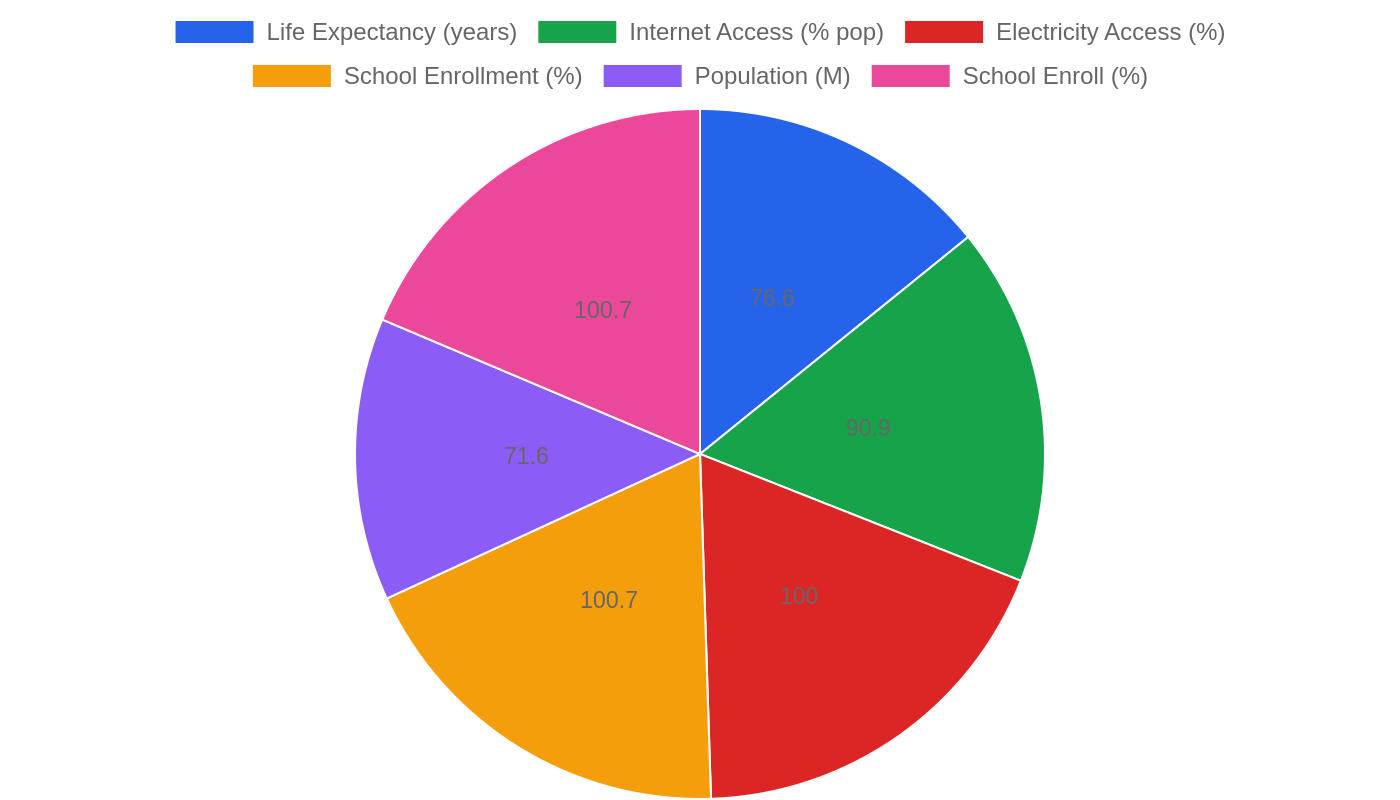
– With a GDP of $577 billion and a population of 71.6 million, Thailand remains a middle-income powerhouse, but its economic engine is sputtering beneath the surface.
– Political stability remains a question mark, as the nation’s modern history began with a 1932 bloodless revolution that ended absolute monarchy, and the legacy of that transformation still shapes governance today.
– Major companies like Advanced Info Service and Airports of Thailand PCL dominate the telecommunications and industrial sectors, yet the absence of unemployment data leaves a critical blind spot in understanding the labour market’s health.
The Tepid Tiger — Why Thailand’s Growth Story Needs a Rewrite
Thailand’s headline GDP growth of 2.44% in 2025, as recorded by the World Bank, tells a story that is neither boom nor bust — it is the economic equivalent of a lukewarm cup of tea. For a nation that once posted roaring 5-7% expansion rates during its industrialisation heyday, this figure signals a structural slowdown that demands attention.
The $577 billion economy is still substantial, ranking among Southeast Asia’s largest, but the growth rate is barely keeping pace with population dynamics and regional competitors like Vietnam and Indonesia.
What makes this data particularly vexing is the deflationary environment. The World Bank reports a CPI of -0.13%, meaning prices are actually falling across the economy. In most textbooks, deflation accompanies recessions or depressions. Here, it coexists with positive growth — a paradox that suggests weak consumer spending and excess capacity rather than healthy productivity gains. When prices fall because nobody is buying, businesses delay investment, wages stagnate, and the recovery becomes self-limiting.
Thailand is not in crisis, but it is certainly not thriving.
The absence of unemployment data from the World Bank is a glaring gap. Analysts are left to infer labour market conditions from indirect signals. If deflation is driven by weak demand, it is reasonable to suspect that underemployment or informal sector absorption is masking deeper structural issues. Thailand’s economy, heavily reliant on tourism and export manufacturing, has not fully recalibrated since the pandemic shocks.
The growth number alone is insufficient; the quality of that growth — who benefits and which sectors drive it — remains opaque without employment figures.
The Cost of Living Conundrum — Falling Prices, Rising Anxiety
On paper, deflation sounds like a consumer’s dream. The World Bank’s CPI reading of -0.13% suggests that everyday goods and services are becoming marginally cheaper. In practice, however, falling prices in a developing economy often signal something more troubling: consumers are tightening their belts, and businesses are slashing margins to move inventory.
For the 71.6 million people living in Thailand, this likely means stagnant wages are being met with slightly lower costs — a fragile equilibrium that offers no real improvement in purchasing power.
Housing costs, while not explicitly provided in the data, can be inferred from the broader economic context. Bangkok remains one of Southeast Asia’s more expensive capital cities for real estate, particularly in central districts popular with expatriates and wealthy Thais. Yet if overall CPI is negative, it is plausible that rental markets have softened, especially in tourist-dependent areas.
The rent-versus-buy calculation in Thailand has historically favoured renting for foreigners due to ownership restrictions, but for locals, generational wealth tied to land ownership remains a powerful cultural and financial anchor.
Daily expenses for the average Thai household — food, transportation, utilities — are likely experiencing mild price declines, but this is cold comfort if income growth is equally sluggish. The deflationary environment may benefit those with fixed incomes or savings, but it punishes debtors, including the millions of Thai households carrying personal loans or microfinance obligations. When prices fall, the real burden of debt rises, creating a hidden tax on the financially vulnerable.
Titans and Transformations — Thailand’s Corporate Landscape
The list of Thailand’s top companies, as provided, reveals a economy still anchored in legacy industries. Advanced Info Service, one of the country’s dominant telecommunications providers, reflects the ongoing digitalisation of Thai society, while Airports of Thailand PCL underscores the enduring importance of aviation and tourism infrastructure. These are not speculative startups; they are established giants that move with the rhythm of the broader economy, not against it.
Consumer services companies dominate the roster — 108 Shop, 2Spot Communications, Air Andaman, Angel Air — suggesting that domestic consumption and travel remain central to Thailand’s economic identity. The presence of Areeya Property in the financials sector indicates that real estate development continues to attract capital, though the deflationary climate may pressure property valuations.
Meanwhile, Aksorn Education’s inclusion points to a growing recognition that human capital development is a sector worth watching, even if education spending is often the first casualty in tight fiscal environments.
For investors, the message is mixed. Thailand offers established companies with real revenue and physical assets, but the absence of high-growth technology or green energy leaders on this list suggests the economy is not pivoting quickly toward the industries of the future. The business climate remains functional but unexciting — predictable bureaucracy, established supply chains, but limited disruption.
Foreign direct investment flows, while not provided in the data, are likely concentrated in manufacturing and logistics rather than innovation hubs.
The Shadow of 1932 — Politics, Safety, and the Unfinished Revolution
Thailand’s political landscape, as described in the World Bank data, is rooted in a dramatic transformation: the 24 June 1932 bloodless revolution carried out by the Khana Ratsadon, or People’s Party, which ended centuries of absolute monarchy and introduced constitutional governance. That moment, nearly a century ago, set in motion a political evolution that remains incomplete.
The transition from feudal and absolute monarchical rule to a modern state was spearheaded by King Chulalongkorn, who centralised power and created the unitary state structure that persists today.
The legacy of this political history is visible in Thailand’s contemporary governance challenges. The country has experienced numerous coups, constitutions, and periods of military rule since 1932, reflecting a persistent tension between traditional hierarchies and democratic aspirations.
The absence of a crime index or safety index in the data leaves a gap, but Thailand’s reputation among travellers and expatriates is generally positive for street-level safety, even if political protests occasionally disrupt public order.
Quality of life in Thailand is a study in contrasts. Bangkok offers world-class healthcare, shopping, and dining at prices far below Western capitals, while rural areas struggle with access to services and economic opportunity. The deflationary environment may be easing some cost pressures, but the political uncertainty that has characterised Thailand for decades continues to weigh on long-term planning for both citizens and foreign residents.
The 1932 revolution promised a new order; the question is whether that promise has been fulfilled or remains perpetually deferred.
Deflation Watch — What the Numbers Mean Right Now
The most immediately striking data point in this profile is the World Bank’s inflation figure: -0.13%. In most economies, central bankers fight to keep inflation around 2-3%. Thailand has slipped below zero. This is not benign disinflation driven by technological efficiency or falling energy prices; it is a warning signal that domestic demand is anaemic.
Consumers are not spending, businesses are not raising prices, and the economy risks falling into a deflationary trap where expectations of lower prices cause further spending delays.
This deflation is happening alongside 2.44% GDP growth, which raises difficult questions about the composition of that growth. Is it being driven by government spending? Net exports? Inventory accumulation? Without sectoral breakdowns from the data, we cannot be certain, but the combination suggests that the Thai economy is producing more goods and services that nobody wants to buy at previous prices. That is not a recipe for sustainable expansion.
For policymakers in Bangkok, the immediate priority should be stimulating domestic demand — whether through fiscal transfers, infrastructure spending, or monetary easing. The Bank of Thailand faces a delicate balancing act: cutting interest rates could weaken the baht and boost exports, but it might also fuel asset bubbles in a market already showing signs of froth in select real estate segments.
The deflationary moment demands bold action, but Thailand’s political history suggests that bold action often comes with unintended consequences.
The Bottom Line
Thailand in 2026 is a country caught between its past and its future. The 2.44% growth rate and deflationary prices, as reported by the World Bank, paint a picture of an economy that is stable but stagnant — safe for tourists, familiar for investors, but lacking the dynamism needed to lift the next generation. The political shadow of 1932 still looms, and the absence of unemployment data leaves a troubling blind spot.
For investors seeking steady, predictable returns in Southeast Asia’s established markets, Thailand remains a viable option. For those hunting for growth, innovation, or transformation, the data suggests looking elsewhere — at least until the deflation puzzle is solved.
Sources & Methodology
This article is authored by Economic Pulse Net for informational and research purposes. Economic Pulse Net sources its data from multilateral institutions, national statistics bureaus, and proprietary databases. All data is believed to be current as of the date of publication.
Published: July 16, 2026 | Category: Research — Thailand
Use these signals in your own platform
Economic Pulse publishes its live signal feed through a documented, read-only API. Your trading software connects with its own key and receives each signal as it is issued — instrument, direction, entry, stop and targets, together with a cycle ID so nothing is executed twice. The feed is independent of this website and cannot change it.
Signals are informational only and are not financial advice.