Economic Pulse Net | Sources: World Bank World Development Indicators, Government Sources | 2026
🇹🇭 Thailand 2026 — The Paradox of Resilience: Navigating Deflation and Structural Shifts
Thailand stands at a complex juncture in its economic trajectory, characterized by a unique blend of historical stability and modern structural challenges. As the world’s second-largest economy in Southeast Asia, it serves as a critical barometer for regional health, yet its current metrics suggest a nation in transition rather than expansion. With GDP growth moderating to 2.44% in 2025 and inflation dipping slightly into negative territory, the Thai economy is displaying signs of cautious consolidation.
This feature explores how a population of over 71 million is navigating an environment where price pressures are receding, but growth momentum requires careful management. From its feudal roots to its current status as a global manufacturing and tourism hub, Thailand’s story is one of adaptation, where ancient governance structures meet the demands of a digital, service-oriented future.
Key Takeaways
* Moderate Growth Amidst Deflationary Pressures: GDP growth is projected at 2.44% for 2025, while CPI inflation has turned slightly negative at -0.13%, indicating weak domestic demand or oversupply in certain sectors.
Tight Labor Market: Unemployment sits at a remarkably low 0.78%, suggesting a labor shortage that could constrain productivity despite high employment rates.
Service-Led Corporate Landscape: Major listed entities are heavily concentrated in consumer services, telecommunications, and industrials, reflecting a shift away from pure commodity dependence.
Historical Political Continuity: The political landscape remains deeply influenced by the 1932 transition from absolute monarchy to constitutionalism, creating a stable but evolving governance framework.
Economic Dynamics: A Tale of Two Rates
The macroeconomic picture for Thailand in 2025 presents a fascinating divergence between output and price levels. According to World Bank data, the country’s GDP is valued at approximately $577 billion USD, with per capita PPP standing at roughly $26,250. However, the growth rate of 2.44% signals a slowdown compared to previous boom years, likely driven by external headwinds and internal consumption patterns.
Simultaneously, the Consumer Price Index (CPI) has registered a decline of -0.13%, a rare occurrence that suggests deflationary tendencies. This negative inflation rate is significant; while lower prices can benefit consumers, persistent deflation often discourages investment and spending, potentially trapping the economy in a cycle of low demand. Furthermore, the unemployment rate of just 0.78% indicates an extremely tight labor market.
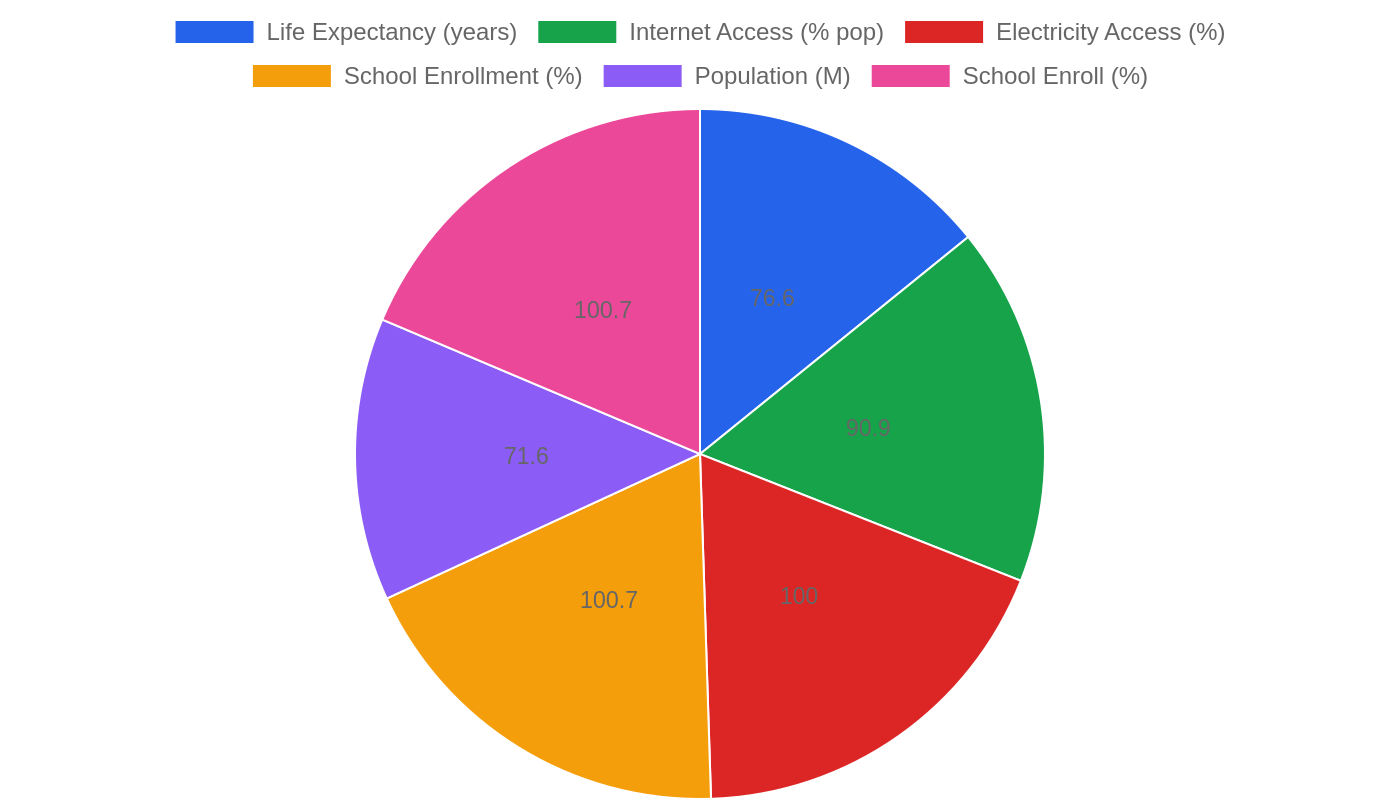
While this sounds positive, such low figures can sometimes mask underemployment or indicate that businesses are struggling to find workers rather than workers struggling to find jobs. These numbers collectively paint a picture of an economy that is stable but lacks vigorous upward momentum, relying on its large population base of nearly 71.6 million to sustain aggregate demand.
Cost of Living and Housing Realities
For residents and expatriates alike, the cost of living in Thailand is undergoing subtle shifts amidst the broader deflationary trend. With inflation effectively flat or slightly negative, daily expenses for goods and services may be stabilizing or decreasing, providing some relief to household budgets. However, housing costs remain a critical component of the national expenditure mix.
While specific rental indices are not detailed in the provided datasets, the presence of major players like Areeya Property in the financial sector highlights the importance of real estate development in the national economy. The disparity between GNI per capita ($7,690) and GDP per capita (PPP) ($26,250) suggests that purchasing power parity adjustments significantly alter the perceived affordability of life in Thailand compared to nominal income measures.
This implies that while local wages may appear modest in global terms, the actual cost of living—particularly for imported goods or luxury services—may vary drastically depending on location and lifestyle. For the average citizen, the combination of low unemployment and stable prices offers a baseline of security, even if wage growth appears constrained by the overall economic slowdown.
Investment and Business Climate
The corporate landscape in Thailand is dominated by service-oriented and industrial conglomerates, reflecting the country’s evolution into a post-industrial economy. Top companies such as Advanced Info Service in telecommunications and Airports of Thailand PCL in industrials underscore the importance of connectivity and infrastructure in driving business activity. The prominence of consumer services firms like 108 Shop and 2Spot Communications indicates a vibrant retail and digital engagement sector.
Meanwhile, specialized industrial entities like 3K Battery point to niche manufacturing capabilities that support broader supply chains. For investors, the business environment is shaped by these key pillars: telecommunications infrastructure, tourism-related services, and specialized industrial production. The low unemployment rate suggests that human capital is readily available, though the slight negative inflation might encourage businesses to delay price hikes, squeezing margins.
Companies operating in this space must navigate a delicate balance between maintaining volume in a stagnant price environment and leveraging technological advancements to improve efficiency. The presence of education-focused firms like Aksorn Education also hints at a growing emphasis on human capital development as a long-term investment strategy.
Safety, Politics, and Quality of Life
Thailand’s political architecture is deeply rooted in history, having transitioned from absolute monarchy to a constitutional system following the bloodless revolution of June 24, 1932, led by the Khana Ratsadon (People’s Party). This pivotal moment established the modern state structure, moving away from the decentralized tributary systems of the Sukhothai era toward a unitary state modeled after Western frameworks.
Today, the legacy of King Chulalongkorn’s centralization efforts continues to influence governance, ensuring a degree of administrative coherence across the kingdom. In terms of safety, specific crime and safety indices are marked as N/A in the current dataset, making direct comparative analysis difficult. However, the general perception of Thailand as a tourist-friendly destination often correlates with maintained public order in key economic zones.
The quality of life is further nuanced by the cultural concept of *dharma*, which historically framed the king’s rule as moral stewardship, a value system that subtly persists in social expectations and civic duty. This historical continuity provides a backdrop of stability, even as political dynamics evolve in response to modern democratic pressures.
Current Affairs and Policy Shifts
Right now, Thailand is grappling with the implications of its mild deflationary environment. The negative CPI reading of -0.13% is likely prompting policymakers to consider stimulus measures to boost consumption, as falling prices can signal weak demand. With GDP growth holding at 2.44%, the government faces the challenge of reigniting momentum without triggering excessive debt or inflation.
The ultra-low unemployment rate of 0.78% means that labor shortages may be a bottleneck for expansion, forcing industries to invest in automation or higher wages to attract talent. Recent developments in the corporate sector, such as the continued dominance of telecom and airport operators, suggest that infrastructure and connectivity remain priority areas for private investment.
Additionally, the focus on consumer services by top firms like 108 Shop indicates that domestic retail and digital platforms are adapting to changing consumer behaviors. As the year progresses, the interplay between fiscal policy and monetary tools will be crucial in determining whether Thailand can break out of this moderate growth phase into a more robust recovery.
The Bottom Line
Thailand represents a case study in economic resilience, balancing historical political stability with modern macroeconomic complexities. Investors and analysts should watch this country closely due to its unique position as a service and industrial hub in Southeast Asia, despite the headwinds of deflation and slow growth. The extremely low unemployment rate and stable political framework offer a foundation for long-term planning, even if short-term gains are muted.
For those seeking exposure to emerging markets with deep historical roots and evolving corporate landscapes, Thailand remains a compelling, albeit cautious, prospect.
Sources & Methodology
This article is authored by Economic Pulse Net for informational and research purposes. Economic Pulse Net sources its data from multilateral institutions, national statistics bureaus, and proprietary databases. All data is believed to be current as of the date of publication.
Published: October 28, 2026 | Category: Research — Thailand
Use these signals in your own platform
Economic Pulse publishes its live signal feed through a documented, read-only API. Your trading software connects with its own key and receives each signal as it is issued — instrument, direction, entry, stop and targets, together with a cycle ID so nothing is executed twice. The feed is independent of this website and cannot change it.
Signals are informational only and are not financial advice.