Economic Pulse Net | Sources: World Bank World Development Indicators, Government Sources | 2026
Key Takeaways
* Robust Economic Expansion: Despite global headwinds, South Korea’s GDP is projected to grow by approximately 1.0% in 2025, supported by a massive total GDP of nearly $1.87 trillion.
Tight Labor Market: With an unemployment rate hovering at just 2.68%, the country faces a structural challenge of labor scarcity despite high economic output.
Stable Price Environment: Inflation remains well-controlled at roughly 2.1%, offering consumers predictability in an otherwise volatile global market.
Corporate Dominance: Key industries are anchored by major entities like Amorepacific, Asiana Airlines, and Aju Group, driving both domestic consumption and international trade.
Democratic Institutional Framework: The nation operates under a stable constitutional democracy with clearly separated executive, legislative, and judicial branches, providing political continuity for investors.
Economic Engines: Navigating Growth Amidst Constraints
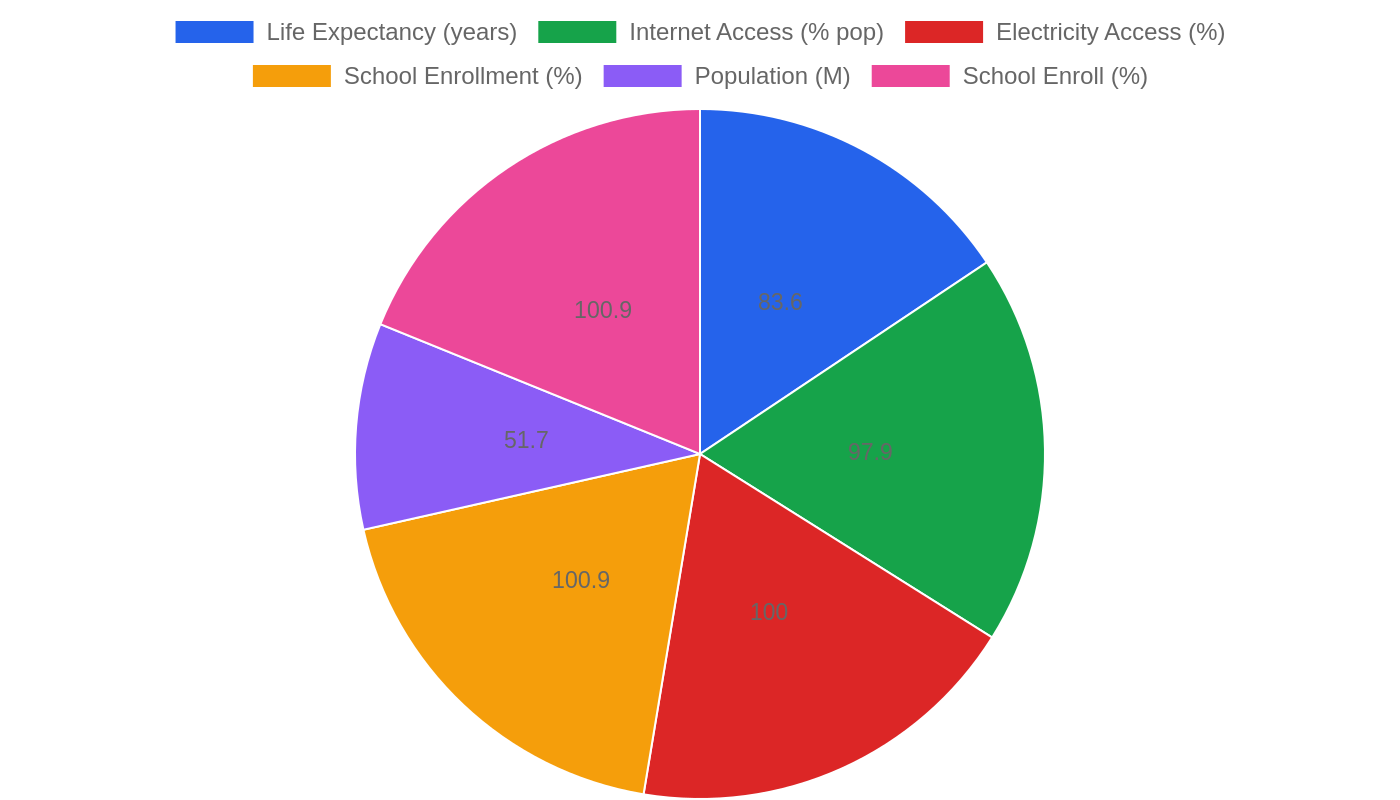
South Korea stands as a testament to resilient economic engineering, currently boasting a Gross Domestic Product (GDP) valued at approximately $1.87 trillion USD, according to World Bank data. This substantial economic footprint supports a population of over 51.6 million people, resulting in a GDP per capita measured in purchasing power parity (PPP) terms at around $63,125.
While the projected GDP growth for 2025 sits at a modest 1.007%, this figure reflects a mature economy adjusting to new global realities rather than stagnation. The labor market presents a unique dynamic; with unemployment sitting exceptionally low at 2.683%, the economy is operating near full employment, which often signals strong consumer confidence but also highlights potential labor shortages that could constrain future expansion.
Meanwhile, inflation, measured by the Consumer Price Index (CPI), has stabilized at 2.123%, indicating that the central bank’s monetary policies are effectively balancing price stability without stifling demand. These metrics collectively suggest an economy that is not merely surviving but maintaining a high standard of living while navigating complex structural adjustments.
Living Standards: Affordability and Daily Realities
For residents and expatriates alike, the cost of living in South Korea is shaped by its status as a highly developed nation with a GNI per capita of $37,880. This income level suggests that while daily expenses can be significant, particularly in metropolitan hubs, the average citizen possesses considerable purchasing power compared to global averages.
However, specific housing costs and rent-to-buy ratios remain opaque in current datasets, requiring individuals to rely on local market intelligence for precise budgeting. Generally, the low inflation rate of 2.123% provides a buffer against sudden spikes in essential goods, allowing families to plan their finances with greater certainty.
The interplay between high national income and controlled inflation creates an environment where quality of life is prioritized, even if the initial entry costs for housing or premium services may seem steep. Ultimately, the financial experience in South Korea is defined by stability, where predictable pricing allows households to focus on long-term savings and investment rather than day-to-day survival.
Corporate Landscape: Giants of Industry and Innovation
The business ecosystem in South Korea is dominated by a diverse array of powerful corporations that drive both domestic innovation and global export. Prominent players such as Amorepacific Corporation have established themselves as leaders in the beauty and personal care sectors, leveraging advanced R&D to capture international markets. In the transportation and logistics sector, Asiana Airlines serves as a critical connector, facilitating both tourism and cargo movement across borders.
Other key entities like Aju Group and Binggrae contribute significantly to local manufacturing and consumer goods, ensuring a robust internal supply chain. Additionally, financial institutions such as BC Card and Busan Bank play pivotal roles in supporting digital transactions and regional development. Even specialized firms like Asia Cement and AKOM highlight the breadth of industrial activity, ranging from construction materials to media production.
This concentration of corporate strength indicates a business climate that favors large-scale operations with deep roots in technology, manufacturing, and service delivery.
Governance and Security: A Stable Democratic Foundation
South Korea’s political landscape is anchored by the Constitution of the Republic of Korea, which establishes a clear separation of powers among the executive, legislative, and judicial branches. This democratic structure ensures that governance is not centralized in a single authority but distributed across institutions that check and balance one another.
The executive and legislative branches operate primarily at the national level, though various ministries extend their influence into local functions, creating a semi-autonomous yet coordinated system of governance. The judicial branch maintains oversight at both national and local levels, providing a legal framework that protects property rights and enforces contracts.
Regarding safety, specific crime and safety indices are currently listed as N/A, meaning precise statistical comparisons cannot be made at this moment. However, the institutional stability provided by this tripartite government structure generally correlates with lower societal volatility and a secure environment for daily life. Citizens benefit from a political system that prioritizes procedural legitimacy and continuous reform.
Current Affairs: Policy Shifts and Future Outlook
In the immediate present, South Korea is focusing on sustaining its economic momentum through careful management of its tight labor market and stable inflation rates. Policymakers are likely addressing the implications of a 2.683% unemployment rate, which, while positive for workers, may necessitate immigration reforms or automation investments to sustain productivity.
The moderate GDP growth of 1.007% suggests that the government is prioritizing quality of growth over rapid expansion, possibly investing in high-value sectors like technology and green energy. With inflation held at 2.123%, monetary policy remains cautious, avoiding aggressive tightening that could dampen consumer spending. Companies like Amorepacific and Asiana Airlines are adapting to global travel and consumption trends, signaling that private sector innovation continues to complement public policy goals.
The semi-autonomous nature of local governments allows for regional adaptations to these national trends, fostering a flexible approach to economic development. As the year progresses, the interplay between corporate performance and governmental regulation will define the trajectory of the Korean economy.
The Bottom Line
South Korea offers a compelling case for observers seeking a blend of high-income stability and structured democratic governance. Investors should watch the country closely due to its massive GDP base and the resilience of its major corporations in global markets. While specific safety indices are unavailable, the strong constitutional framework provides a reliable backdrop for long-term planning.
For those interested in mature economies with controlled inflation and high purchasing power, South Korea remains a critical market to monitor.
Sources & Methodology
This article is authored by Economic Pulse Net for informational and research purposes. Economic Pulse Net sources its data from multilateral institutions, national statistics bureaus, and proprietary databases. All data is believed to be current as of the date of publication.
Published: October 08, 2026 | Category: Research — South Korea
Use these signals in your own platform
Economic Pulse publishes its live signal feed through a documented, read-only API. Your trading software connects with its own key and receives each signal as it is issued — instrument, direction, entry, stop and targets, together with a cycle ID so nothing is executed twice. The feed is independent of this website and cannot change it.
Signals are informational only and are not financial advice.