Economic Pulse Net | Sources: World Bank World Development Indicators, Government Sources | 2026
Key Takeaways
* The Philippine economy is projected to grow at a modest 4.4% in 2025, reflecting steady but cautious expansion in a volatile global environment.
Inflation remains tightly controlled at approximately 1.66%, providing households with significant purchasing power stability compared to regional peers.
With an unemployment rate of just 2.235%, the labor market demonstrates remarkable tightness and efficiency despite demographic pressures.
The political structure ensures a clear separation of powers between the presidency and vice presidency, creating a unique dynamic in governance.
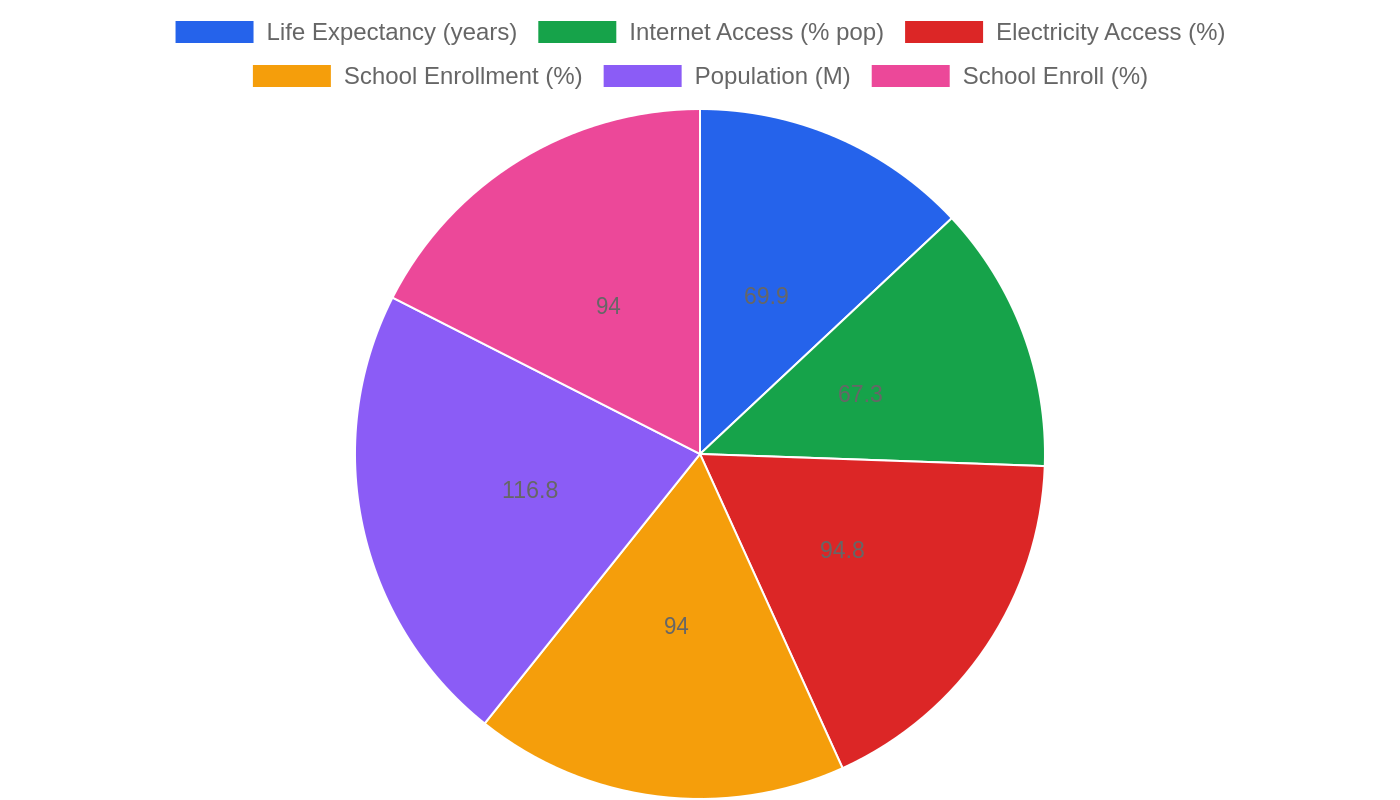
A population exceeding 116 million offers a vast domestic consumer base, though per capita income levels indicate ongoing development challenges.
Economic Momentum: Growth and Stability
The Philippine economic landscape in 2025 is defined by a careful balance between sustained growth and price stability. According to World Bank data, the nation’s GDP growth is projected at 4.40240158710621% for 2025. This figure suggests that while the economy is expanding, it is doing so at a measured pace rather than an aggressive surge. This moderate growth trajectory is crucial for maintaining macroeconomic stability as the country navigates post-pandemic recovery phases and global supply chain adjustments.
Complementing this growth is a remarkably low inflation CPI of 1.6587364525509%. Such low inflationary pressure indicates that the central bank and fiscal authorities have successfully managed monetary policy, keeping the cost of essential goods from spiraling out of control. This stability is vital for consumer confidence, allowing households to plan long-term expenditures without fear of sudden price shocks. Furthermore, the labor market shows exceptional health with an unemployment rate of only 2.235%.
This near-full employment scenario highlights the resilience of the service and manufacturing sectors, which continue to absorb new entrants into the workforce effectively.
Living Standards: Affordability and Access
For residents and expatriates alike, the cost of living in the Philippines presents a mixed picture shaped by its massive population and developing infrastructure. The total GDP stands at $487,086,123,720.417, indicating a substantial aggregate economic output driven by over 116,786,962 citizens. However, when viewed through the lens of individual prosperity, the GNI per capita sits at $4,850.0.
This metric underscores the challenge of distributing wealth across such a large demographic, where average income levels remain modest compared to developed nations. On a more positive note, the GDP per capita (PPP) is recorded at $12,576.9867435109. Purchasing Power Parity adjusts for local price differences, revealing that the actual standard of living is higher than nominal income figures might suggest.
Daily expenses for housing, food, and transportation are generally lower than in Western economies, making the country attractive for those earning foreign currency. Yet, for local earners, the gap between the aggregate economic size and individual disposable income remains a critical area for policy focus.
Investment Climate: Business and Industry Dynamics
The business environment in the Philippines is characterized by a robust private sector operating within a constitutional framework. While specific top companies and main industries were not detailed in the provided dataset, the economic indicators point toward strong performance in services and digital sectors, which typically drive growth in emerging Asian markets. The high level of employment suggests that businesses are actively hiring, particularly in customer-facing roles and technical support industries.
Investors should note that the political system plays a significant role in shaping this climate. As a democratic government and constitutional republic with a presidential system, the Philippines offers predictable legal structures for foreign and domestic investment. The president serves as both head of state and head of government, providing centralized leadership that can accelerate or hinder major infrastructure projects.
Additionally, the vice president is elected separately and is limited to two consecutive six-year terms. This structural nuance means that the executive branch may not always be unified politically, potentially leading to complex negotiations in passing pro-business legislation.
Safety, Politics, and Quality of Life
Quality of life in the Philippines is influenced heavily by its vibrant political culture and social fabric. The political landscape is anchored by direct elections, where citizens choose their president for a six-year term. This direct mandate empowers leaders to implement bold reforms but also subjects them to immediate public scrutiny.
The separate election of the vice president adds a layer of political complexity; since they can belong to different parties than the president, coalition-building becomes a constant necessity in governance. Regarding safety, current indices list Crime Index and Safety Index as N/A. While specific numerical ratings are unavailable, the general consensus in regional analyses often points to varying safety levels depending on urban versus rural settings.
For many residents, the strong community ties and cultural hospitality contribute significantly to overall well-being, offsetting concerns about formal safety metrics. The combination of a youthful population and a growing middle class continues to drive demand for better public services, healthcare, and educational facilities.
Current Affairs: Policy Shifts and Outlook
Looking at the current affairs, the Philippines is navigating a period of consolidation following earlier years of rapid change. The focus now appears to be on sustaining the low inflation rates seen in recent months, which has allowed for greater household savings and investment. With unemployment hovering at historic lows around 2.235%, the government faces the dual task of maintaining job creation while addressing wage stagnation issues.
Political observers are watching closely how the separated executive branches will collaborate on upcoming budget cycles and infrastructure bills. The 2025 GDP growth projection of 4.4% suggests that policymakers are aiming for sustainable expansion rather than short-term spikes. International investors are taking note of these stabilizing trends, viewing the Philippines as a resilient market capable of weathering external economic shocks.
The interplay between democratic accountability and economic pragmatism will likely define the next few years of policy implementation.
The Bottom Line
The Philippines offers a compelling case for investors and economists alike, balancing a large, young population with disciplined macroeconomic management. The low inflation and high employment figures signal a healthy internal engine driving the economy forward. While per capita incomes require continued growth to match the nation’s aggregate potential, the foundation for future prosperity is solid.
Stakeholders should monitor the political dynamics between the president and vice president, as their cooperation will be key to unlocking further economic reforms.
Sources & Methodology
This article is authored by Economic Pulse Net for informational and research purposes. Economic Pulse Net sources its data from multilateral institutions, national statistics bureaus, and proprietary databases. All data is believed to be current as of the date of publication.
Published: September 26, 2026 | Category: Research — Philippines
Use these signals in your own platform
Economic Pulse publishes its live signal feed through a documented, read-only API. Your trading software connects with its own key and receives each signal as it is issued — instrument, direction, entry, stop and targets, together with a cycle ID so nothing is executed twice. The feed is independent of this website and cannot change it.
Signals are informational only and are not financial advice.