Economic Pulse Net | Sources: World Bank World Development Indicators, Government Sources | 2026
Key Takeaways
* Moderate Growth Trajectory: Pakistan’s economy is projected to grow by approximately 3.7% in 2025, signaling a stabilization phase after years of volatility.
Inflation Cooling: Consumer price inflation has dropped significantly to roughly 3.5%, offering relief to households and improving purchasing power stability.
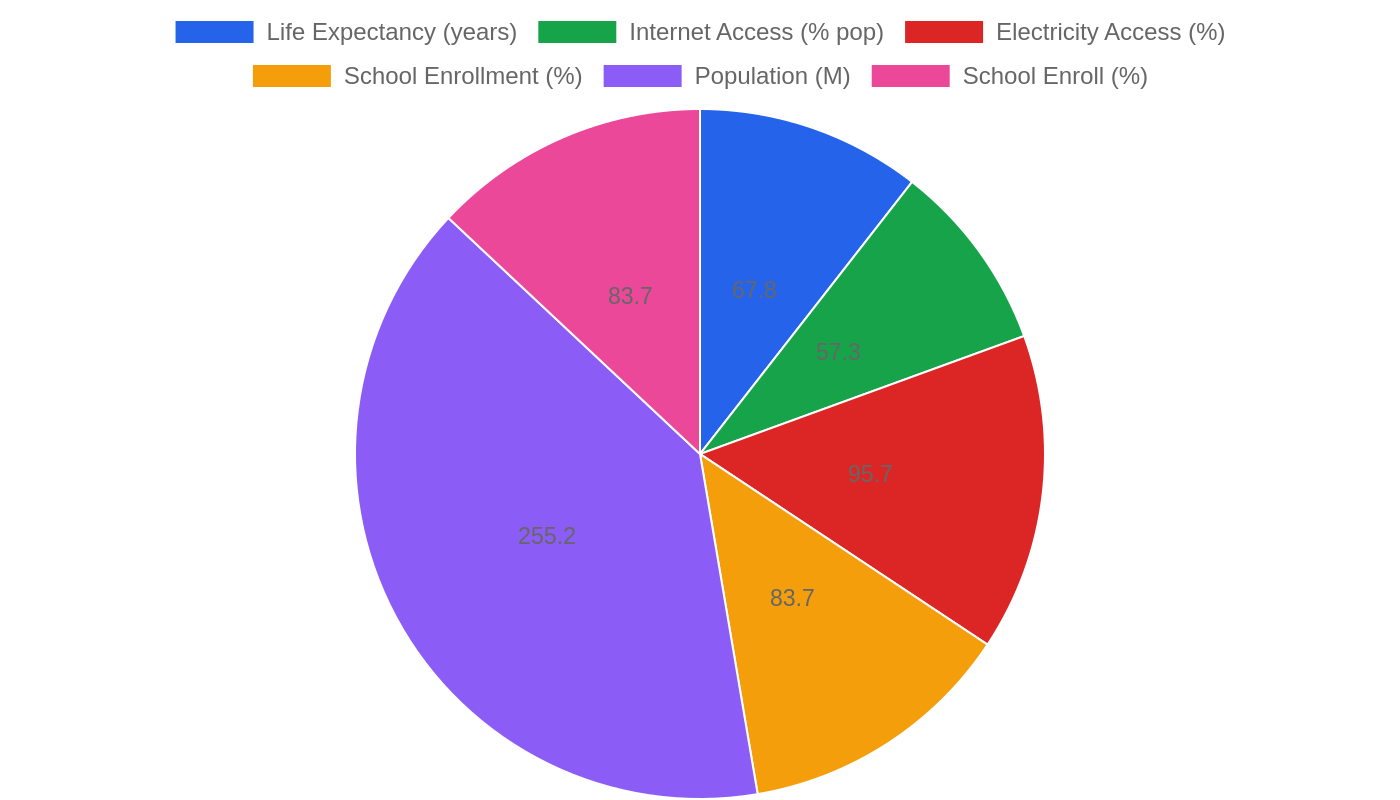
Labor Market Resilience: With an unemployment rate of 5.42%, the labor market remains relatively tight despite a massive population base of over 255 million.
Political Continuity with Military Influence: The country operates as a democratic parliamentary federal republic, though historical military interventions continue to shape the political landscape.
Diverse Corporate Sector: Major business activity is concentrated in financial services, conglomerates, and consumer aviation, reflecting a diversified but service-heavy industrial base.
Economic Pulse: Navigating Moderate Growth
Pakistan’s economic outlook for 2025 presents a picture of cautious optimism anchored by modest but steady expansion. According to World Bank data, the nation’s GDP growth is projected at 3.698%, a figure that suggests the economy is expanding at a sustainable pace without overheating. This growth occurs against a backdrop of significant demographic pressure; with a population exceeding 255 million, even small percentage gains translate into substantial absolute economic activity.
The total GDP stands at approximately $407.3 billion USD, creating a large aggregate market that attracts foreign interest. However, individual prosperity metrics reveal a different story. While the GDP per capita in PPP terms is recorded at roughly $6,573, the GNI per capita remains lower at $1,500, highlighting a gap between productive output and average income distribution. Crucially, the macroeconomic environment is stabilizing.
Inflation, measured by the CPI, has cooled to 3.545%, a dramatic improvement from previous highs that were eroding household savings. This disinflationary trend is vital because it allows the central bank to maintain monetary policies that support investment rather than just crisis management.
For a developing economy, this combination of low single-digit inflation and steady growth creates a more predictable environment for long-term planning, even if per-capita wealth levels remain modest compared to global averages.
Cost of Living: Affordability in a Growing Market
The daily economic reality for residents in Pakistan is increasingly defined by affordability, driven largely by the recent deceleration in inflation. With the CPI hovering around 3.5%, the rapid erosion of purchasing power seen in earlier periods has slowed, allowing consumers to plan budgets with greater certainty. For the average citizen, the cost of living is heavily influenced by the disparity between urban centers and rural areas, though specific housing data is not currently provided in the dataset.
However, we can infer that with a GNI per capita of $1,500, basic necessities likely consume a significant portion of household income, making the drop in inflation particularly meaningful for low-to-middle-income families. Daily expenses, including food and utilities, are now rising at a manageable rate, which helps sustain domestic demand. Unlike regions experiencing hyperinflation, Pakistan’s current price stability suggests that the worst of the cost-of-living crisis may be behind us.
This stabilization is critical for social cohesion, as high inflation often correlates with civil unrest. While detailed rent versus buy comparisons are unavailable, the broader economic context suggests that asset prices may be adjusting to reflect this new, lower-inflation reality, potentially opening doors for first-time buyers who were previously priced out by speculative bubbles.
Investment & Business Climate: A Service-Led Economy
The corporate landscape in Pakistan is characterized by a strong presence of conglomerates and service-oriented enterprises, particularly in the financial and aviation sectors. Top companies such as A. F. Ferguson & Co. dominate the financials space, indicating that banking and insurance remain pillars of the commercial infrastructure.
Meanwhile, the aviation sector is highly competitive, featuring multiple carriers including Aero Asia, Air Indus, Airblue, and AirSial, which points to robust domestic travel demand and connectivity needs. Industrial and manufacturing interests are represented by entities like Al-Ghazi Tractors and Aisha Steel Mills, suggesting that agriculture-support machinery and basic materials remain key areas of production.
Conglomerates like Adamjee Group and AKD Group provide diversification across various industries, offering investors exposure to mixed portfolios. For foreign and local investors alike, these companies represent entry points into a market that is gradually stabilizing. The presence of consumer goods players like Al Haj FAW Motors also highlights a growing middle class with disposable income for automobiles.
As inflation cools, these firms are likely to see improved margins and increased consumer spending, making the current period an attractive window for strategic investments in established brands with strong market shares.
Safety, Politics & Quality of Life: Governance and Security
Pakistan’s political structure is complex, operating as a democratic parliamentary federal republic with Islam designated as the state religion. This framework provides a formal system of governance, yet the military’s influence has been a consistent feature throughout the nation’s history, impacting policy continuity and civil-military relations.
Historical constitutional shifts, from the 1956 constitution to the suspended iterations under Ayub Khan and Zia-ul-Haq, underscore a turbulent path toward stable democracy. The 1973 constitution, established under Zulfikar Ali Bhutto, laid the groundwork for the current parliamentary system, although its implementation has faced periodic interruptions. Regarding safety, specific crime and safety indices are listed as N/A in the available data, preventing a precise quantification of security risks.
However, the political narrative suggests that internal stability remains a priority for both the government and international partners. The interplay between democratic institutions and traditional power structures continues to define the quality of life for citizens, influencing everything from economic policy to social freedoms.
Understanding this political nuance is essential for anyone assessing long-term risk in the region, as policy shifts can occur rapidly depending on the balance of power between civilian leadership and the military establishment.
What’s Happening Now: Stabilization and Reform Momentum
The current economic narrative in Pakistan is dominated by the successful containment of inflation and the maintenance of moderate growth. With inflation falling to 3.545%, policymakers appear to have gained control over price stability, a prerequisite for sustained economic health. This achievement allows the government to focus on structural reforms rather than emergency measures. The GDP growth rate of 3.698% indicates that the economy is not stalling, providing a platform for further development initiatives.
Unemployment at 5.42% suggests that the labor market is absorbing workers, albeit within the constraints of a large population. These indicators point to a period of consolidation where the immediate threats of economic collapse have receded. International observers and domestic stakeholders are likely watching closely to see if this stability can be translated into higher job creation and improved per-capita incomes.
The cooling inflation environment also reduces the burden on debt servicing, potentially freeing up fiscal space for public investment. As the country moves through 2025, the focus is shifting from crisis management to building resilient institutions that can withstand future shocks.
The Bottom Line
Pakistan represents a compelling case study in economic stabilization, demonstrating how moderate growth and controlled inflation can create a foundation for recovery. Investors should watch this country for opportunities in its diversified service sector, particularly in finance and aviation, where established players are benefiting from a more predictable macroeconomic environment.
While political complexities and security data gaps require careful due diligence, the improving inflation metrics and steady GDP growth offer a positive signal for long-term engagement. For those seeking exposure to emerging markets with a large consumer base, Pakistan’s current trajectory offers a balanced risk-reward profile.
Sources & Methodology
This article is authored by Economic Pulse Net for informational and research purposes. Economic Pulse Net sources its data from multilateral institutions, national statistics bureaus, and proprietary databases. All data is believed to be current as of the date of publication.
Published: October 29, 2026 | Category: Research — Pakistan
Use these signals in your own platform
Economic Pulse publishes its live signal feed through a documented, read-only API. Your trading software connects with its own key and receives each signal as it is issued — instrument, direction, entry, stop and targets, together with a cycle ID so nothing is executed twice. The feed is independent of this website and cannot change it.
Signals are informational only and are not financial advice.