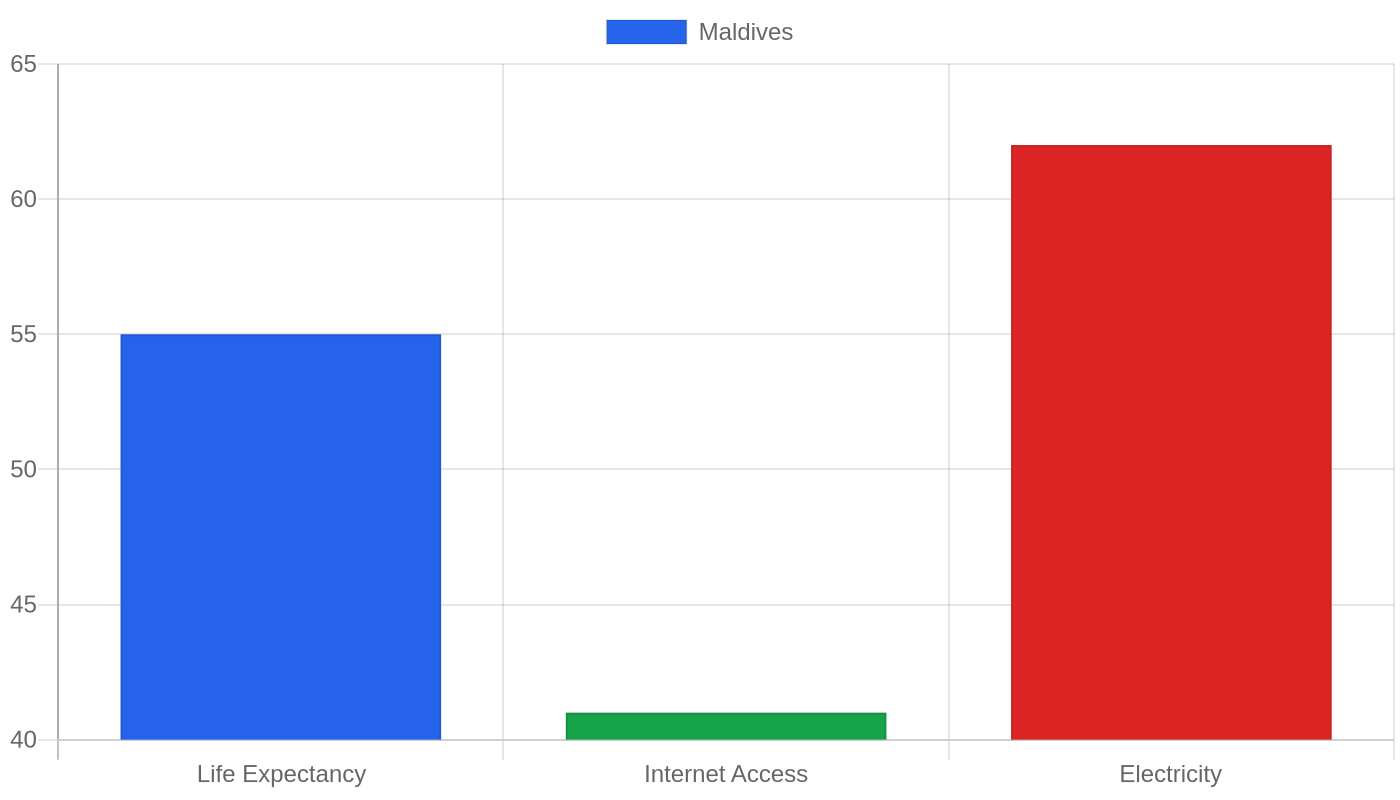
Economic Pulse Net | Sources: World Bank World Development Indicators, Government Sources | 2026
The Maldives has long sold the world a vision of turquoise lagoons and overwater villas, but beneath the postcard surface lies a more complicated story. As the Indian Ocean nation navigates a delicate balance between tourism dependence, political transition, and the looming pressures of climate change, its economic identity is being tested.
With the World Bank currently reporting no active growth, inflation, or employment figures for the country, the Maldives presents a unique challenge for analysts — a nation whose economic narrative is being written in real time, without the usual statistical scaffolding. This feature examines what we know, what we don’t, and why this tiny archipelago still matters enormously to the global economy.
Key Takeaways
– Tourism remains the undisputed economic engine of the Maldives, though the World Bank currently provides no official GDP, inflation, or unemployment figures to quantify its impact.
– A new political era began in November 2023, with President Mohamed Muizzu taking office and reshaping the executive branch, cabinet appointments, and the country’s foreign and economic policy direction.
– The Maldives operates as a presidential constitutional republic, where the president holds significant power as both head of state and head of government, controlling the armed forces and wielding extensive influence over the cabinet.
– The country’s economic data gap is itself a story, highlighting challenges in data collection, reporting, and international statistical integration that investors and policymakers must navigate.
– Political stability and economic diversification are the twin challenges facing the archipelago as it seeks to secure its long-term prosperity beyond the resort industry.
Paradise’s Ledger: The Economic Landscape Beneath the Surface
The absence of fresh World Bank data on the Maldives’ GDP growth, inflation rate, and unemployment figures creates an unusual analytical vacuum — but it does not mean the economy is standing still. Rather, it signals a moment of transition, where the mechanisms for measuring economic health may be catching up to a rapidly evolving reality. The Maldives has historically relied on a narrow economic base, with tourism accounting for the vast majority of foreign exchange earnings and government revenue.
The sector’s performance has ripple effects across every other industry, from construction and transportation to fisheries and retail.
Without current inflation data, it is difficult to assess the purchasing power of the Maldivian rufiyaa or the pressure on household budgets. Similarly, the absence of unemployment figures leaves a critical gap in understanding the domestic labor market, particularly for young Maldivians entering the workforce.
What can be said with confidence is that the Maldives’ economic model — heavily reliant on high-end tourism and imported goods — makes it acutely sensitive to global economic shocks, shifts in travel patterns, and geopolitical developments in the broader Indian Ocean region. The country’s economic resilience will depend on its ability to diversify beyond the resort industry, develop its blue economy potential, and create sustainable employment opportunities for its citizens.
The World Bank’s silence on key indicators may also reflect broader challenges in statistical infrastructure, data collection methodologies, or reporting delays that are common in small island developing states. For economists and investors, this means relying on alternative sources of information, including tourism arrival numbers, fiscal reports from the Ministry of Finance, and assessments from regional development banks.
The Maldives’ economic story is not one of decline — it is one of transformation, where the old certainties of tourism-led growth are being questioned, and new models of sustainable development are still being forged.
The Price of Paradise: Housing and Daily Life in the Archipelago
Living in the Maldives has always carried a premium, driven by the country’s geography and its dependence on imports for nearly everything. The capital, Malé, is one of the most densely populated cities in the world, with land scarcity pushing property prices to levels that would be unthinkable in most regional capitals. The vast majority of Maldivians are renters rather than homeowners, a reality that reflects both the high cost of land and the challenges of developing housing on small, dispersed islands.
For the average Maldivian household, daily expenses are shaped by the need to import food, fuel, and consumer goods, with prices that are significantly higher than regional averages in South Asia.
The cost of living in the Maldives is further complicated by the divide between the tourist economy and the domestic economy. Prices in resort areas are set in dollars and cater to international visitors, while local communities face a different, though still challenging, economic reality.
The government’s efforts to develop housing solutions, including land reclamation projects and the development of new urban centers like Hulhumalé, represent attempts to address the chronic shortage of affordable accommodation. However, these projects require significant investment and time to deliver results.
For expatriates and foreign workers — who make up a substantial portion of the Maldives’ workforce, particularly in construction, hospitality, and domestic services — the cost of living is a critical consideration. The gap between what workers earn and what they must spend on basic necessities has been a persistent source of social tension.
The Maldives’ cost of living story is not merely a matter of statistics; it is a daily reality that shapes the lives of its citizens, influences migration patterns, and affects the country’s ability to attract and retain talent.
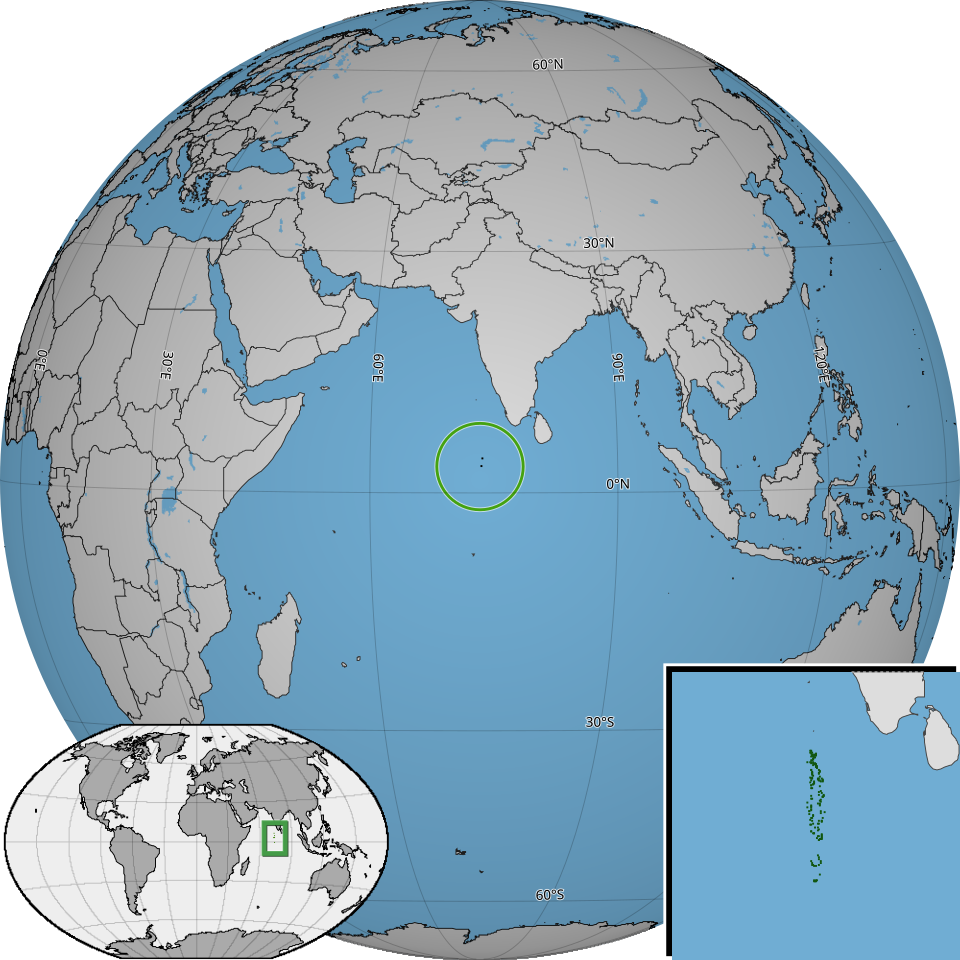
Business in the Blue: Investment Climate and Corporate Landscape
The Maldives’ investment climate is defined by its dual economy: a sophisticated, internationally integrated tourism sector and a more traditional domestic economy rooted in fishing and small-scale trade. The country’s top companies are predominantly concentrated in tourism, with resort operators, travel groups, and related services dominating the corporate landscape.
These businesses have weathered global shocks before, and their resilience is a testament to the enduring appeal of the Maldives as a luxury destination.
For investors, the Maldives offers a unique value proposition: pristine natural assets, a strategic location along major shipping routes, and a government that, under President Mohamed Muizzu, has signaled its openness to foreign investment, particularly in infrastructure and tourism development. The new administration has emphasized the importance of economic partnerships, and its cabinet appointments reflect a focus on attracting capital while maintaining national control over key sectors.
However, the investment climate is not without its challenges. The Maldives’ small market size, its vulnerability to climate change, and its dependence on imported goods and services all create risks that investors must weigh carefully. The country’s legal and regulatory framework, while improving, still presents bureaucratic hurdles that can deter smaller investors.
The sectors to watch are those that align with the government’s development priorities: renewable energy, sustainable tourism, fisheries modernization, and digital infrastructure. The Maldives is also exploring opportunities in the blue economy — the sustainable use of ocean resources for economic growth, improved livelihoods, and ocean ecosystem health.
Democracy in the Lagoons: Politics, Safety, and the Quality of Life
The Maldives is a presidential constitutional republic, a system that concentrates significant power in the hands of the president, who serves as both head of state and head of government. President Mohamed Muizzu, who took office on 17 November 2023, leads the executive branch, appoints the cabinet with the approval of the People’s Majlis (Parliament), and commands the armed forces.
This concentration of authority means that the president’s vision and priorities have an outsized impact on the country’s direction. The unicameral Majlis, whose members serve five-year terms alongside the president, provides a check on executive power, though the dynamics between the two branches are often contentious.
The Maldives has a relatively low crime rate, particularly when compared to regional neighbors, and the country is generally considered safe for both residents and tourists. The safety index, while not currently quantified in the available data, reflects a society where violent crime is rare and community ties remain strong.
The quality of life in the Maldives is a study in contrasts: the natural beauty and cultural richness of the islands offer an enviable lifestyle, but the challenges of climate change, rising sea levels, and environmental degradation cast a long shadow over the future.
Political life in the Maldives is vibrant and often heated, with a history of democratic transitions, coalition politics, and occasional institutional friction. The Muizzu administration’s approach to governance, economic management, and international relations will shape the country’s trajectory for years to come.
The president’s leadership style and policy choices are being closely watched, both domestically and by international partners who have a stake in the stability of this strategically located nation.
Shifting Tides: The Muizzu Era and the Road Ahead
The political landscape of the Maldives has entered a new chapter under President Mohamed Muizzu, whose administration is defining itself through a series of policy shifts and strategic initiatives. Since assuming office in November 2023, Muizzu has moved to consolidate his authority, appointing a cabinet that reflects his priorities and navigating the complex dynamics of the People’s Majlis.
The president’s approach to economic management, infrastructure development, and international relations is taking shape, though the full contours of his agenda are still emerging.
The Maldives finds itself at a crossroads, where the decisions made today will determine its economic resilience, political stability, and environmental sustainability for decades. The government’s ability to address the country’s economic vulnerabilities, manage its debt burden, and diversify its revenue streams will be critical tests of leadership.
At the same time, the Maldives must navigate an increasingly complex geopolitical environment, balancing relationships with regional powers while maintaining its sovereignty and independence.
The coming months will bring the 2024 budget cycle, negotiations with international financial institutions, and continued efforts to attract foreign investment. The Maldives’ engagement with climate finance, its participation in regional economic forums, and its response to global economic headwinds will all be indicators of its direction. The world is watching this small nation with outsized strategic importance, and the choices made in the next several years will echo far beyond the shores of its islands.
The Bottom Line
The Maldives is a nation of extremes — extraordinary beauty and extreme vulnerability, economic opportunity and structural fragility. For investors, policymakers, and observers of global affairs, the country represents a case study in how small island states navigate the turbulent waters of the 21st century. The data gaps identified by the World Bank are not merely statistical inconveniences; they are indicators of deeper challenges in governance, transparency, and economic management.
Yet the Maldives’ story is far from finished. For those willing to look beyond the surface, the archipelago offers lessons in resilience, adaptation, and the enduring human capacity to build a future in the most challenging of circumstances.
Sources & Methodology
This article is authored by Economic Pulse Net for informational and research purposes. Economic Pulse Net sources its data from multilateral institutions, national statistics bureaus, and proprietary databases. All data is believed to be current as of the date of publication.
Published: July 31, 2026 | Category: Research — Maldives
Use these signals in your own platform
Economic Pulse publishes its live signal feed through a documented, read-only API. Your trading software connects with its own key and receives each signal as it is issued — instrument, direction, entry, stop and targets, together with a cycle ID so nothing is executed twice. The feed is independent of this website and cannot change it.
Signals are informational only and are not financial advice.