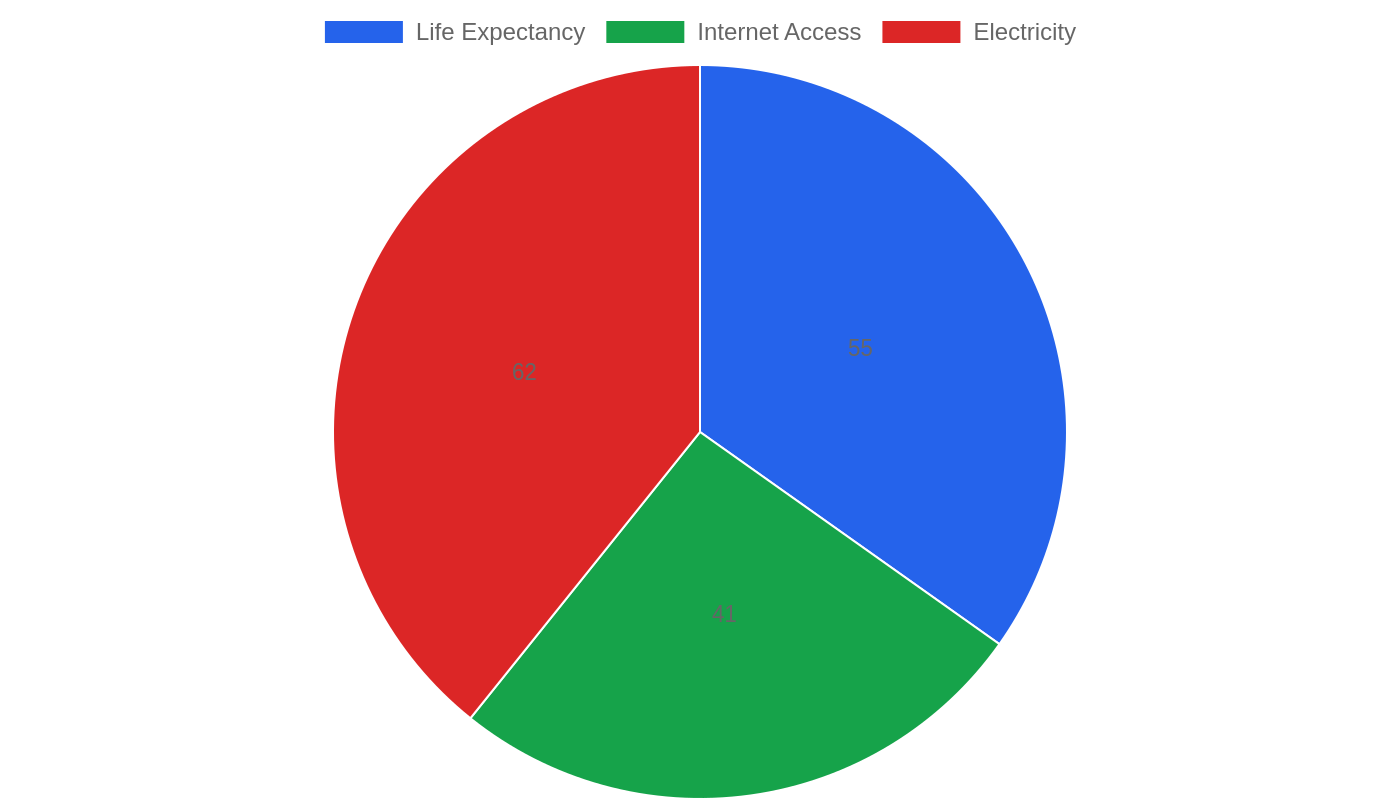
Economic Pulse Net | Sources: World Bank World Development Indicators, Government Sources | 2026
Key Takeaways
– Equatorial Guinea’s economy remains overwhelmingly dependent on hydrocarbon extraction, with state-linked giants GEPetrol, EG LNG, and Sonagas dominating the landscape.
– President Teodoro Obiang continues to wield near-absolute power under the 1982 constitution, controlling every lever of government from cabinet appointments to decree-making.
– The country’s aviation sector is a surprising bright spot, with five airlines — including Ceiba Intercontinental and Cronos Airlines — operating in a market most outsiders assume is closed.
– Despite its status as one of sub-Saharan Africa’s largest oil producers, comprehensive economic data from the World Bank remains sparse, making independent analysis challenging.
– Human Rights Watch has characterized the Obiang administration as a dictatorship that has leveraged oil revenues to consolidate control rather than diversify the economy.
The Hydrocarbon Paradox — Growth Without Development
Equatorial Guinea presents one of Africa’s most puzzling economic narratives. The country sits on substantial oil and gas reserves, yet the World Bank’s latest data release offers no GDP growth figures, no inflation rate, and no employment statistics. That absence is itself a story. When a petro-state stops publishing economic fundamentals, it is rarely because the numbers are encouraging.
What we do know is that the economy is built around three state-controlled hydrocarbon entities: GEPetrol, the national oil company; EG LNG, which operates the country’s gas liquefaction plant; and Sonagas, which manages the gas sector. These are not minor players — they are the entire game. The oil and gas sector has historically accounted for the overwhelming majority of government revenue, export earnings, and GDP.
This is a classic resource curse scenario, where a single commodity dominates every aspect of national life.
The absence of reliable employment data is particularly telling. In oil-dependent economies, formal sector jobs are scarce because extraction is capital-intensive, not labor-intensive. The infrastructure — pipelines, processing facilities, tanker terminals — requires engineers and technicians, but the broader population is often left outside the formal economy. This creates a stark divide between the hydrocarbon enclave and the everyday economy where most citizens actually live.
Until Equatorial Guinea diversifies beyond hydrocarbons, its economic story will remain hostage to global oil prices and the whims of international energy markets.
The Cost of Living in a Petro-State
Without official cost of living data from the World Bank, we must reason from the country’s economic structure. Equatorial Guinea is a place where the price of a basic basket of goods is likely distorted by the oil economy. Import dependency is extreme — when your primary export is crude oil, almost everything else must be brought in from abroad. That means food, clothing, vehicles, machinery, and consumer goods all carry significant import costs, which are passed directly to consumers.
Rent and housing in Malabo, the capital, are notoriously expensive for a Central African city. The presence of expatriate oil workers, international consultants, and diplomatic personnel drives up prices for quality housing, creating a two-tier market. Locals with connections to the oil sector can afford modern apartments, while those without face a brutal squeeze.
The comparison to regional averages is stark: Equatorial Guinea’s GNI per capita has historically been far higher than its neighbors, but that wealth is concentrated in very few hands. For the average citizen, the cost of living likely consumes most of their income, with little left for savings or investment. This is the paradox of petro-wealth — the money is there, but it does not trickle down.
Business Climate — State Power and the Aviation Anomaly
The corporate landscape in Equatorial Guinea reveals a fascinating contradiction. On one hand, you have the predictable state-owned hydrocarbon giants — GEPetrol, EG LNG, Sonagas. On the other, there is an unexpectedly vibrant aviation sector, with five airlines operating: Ceiba Intercontinental Airlines, Cronos Airlines, Ecuato Guineana, Guinea Ecuatorial Airlines, and the flag carrier. For a country of roughly 1.6 million people, that is a remarkable number of carriers.
It suggests either genuine demand for air travel, strategic positioning as a regional hub, or a mix of both.
For foreign investors, the business climate is challenging. The 1982 constitution gives President Obiang control over essentially every aspect of governance, including the power to dissolve parliament and rule by decree. That means contracts, licenses, and approvals ultimately flow through a single political authority. There is no independent judiciary to adjudicate disputes, no transparent regulatory framework, and no meaningful separation of powers.
The utility sector, represented by Segesa, is state-controlled, meaning even basic infrastructure services are subject to political influence.
The sectors to watch remain hydrocarbons and aviation. The oil and gas industry will continue to attract international energy companies seeking access to reserves, but they must navigate a political landscape where the rules can change at the president’s discretion. The aviation sector, meanwhile, suggests that there is at least some appetite for regional commerce and connectivity. For investors willing to accept political risk, there are opportunities — but they come with significant strings attached.
Politics, Safety, and the Reality of Daily Life
The political situation in Equatorial Guinea is unambiguous. President Teodoro Obiang has ruled since 1979, making him one of the longest-serving heads of state in the world. The 1982 constitution grants him sweeping powers: he names and dismisses cabinet members, makes laws by decree, dissolves the Chamber of Representatives, negotiates treaties, and commands the armed forces. Human Rights Watch has described his rule as a dictatorship, one that has used oil revenues to maintain its grip on power.
Crime and safety indices are not available from the provided data, but in a state with such centralized control, public security is typically maintained through a heavy security presence rather than community policing. The quality of life for ordinary citizens is difficult to assess without reliable data, but the absence of published economic indicators suggests a lack of transparency that rarely accompanies strong social welfare programs.
The constitution defines the nation as a unitary state, which in practice means power flows from Malabo outward, with little regional autonomy.
The political landscape has profound implications for daily life. When the state controls the economy, the security apparatus, and the legal system, there is little room for independent civil society, opposition politics, or press freedom. The oil wealth that should have transformed Equatorial Guinea into a middle-income success story has instead entrenched a ruling elite.
For the average citizen, the trade-off is stark: stability in exchange for liberty, and even that stability is dependent on oil prices remaining high enough to fund the patronage networks that keep the system afloat.
The Succession Question and the Search for Diversification
The most pressing current issue in Equatorial Guinea is the question of succession. President Obiang is now in his eighties, and while the constitution gives him absolute power, it does not guarantee immortality. The jockeying for position among potential successors is likely already underway, though it remains hidden from public view. A transition — whether orderly or chaotic — would reshape the country’s political and economic landscape overnight.
There are also signs of economic strain. With global energy markets shifting toward renewable sources and increased production elsewhere, Equatorial Guinea’s hydrocarbon revenues are under pressure. The country has made some noise about diversification, but the state’s grip on the economy makes genuine private sector development difficult. The aviation sector’s growth suggests some entrepreneurial energy exists, but it operates in the shadow of state power.
The government’s relationship with international financial institutions appears strained, given the lack of current data published through the World Bank. This is not a country that is actively courting foreign investment with transparent statistics and clear regulations. It is a country hunkering down, hoping that oil prices hold up long enough to finance the next phase of political transition. The question is whether that transition will open the economy or further entrench the current system.
The Bottom Line
Equatorial Guinea is a country that should be wealthy but remains underdeveloped — a classic case of resource wealth without institutional maturity. The concentration of power in President Obiang’s hands, combined with the dominance of state-owned hydrocarbon companies, means the country’s future hinges on political decisions, not market forces. Investors with a high tolerance for political risk and a long time horizon might find opportunities in the energy sector or the emerging aviation market.
But for those seeking transparency, rule of law, and reliable data, this is not the place. Watch Equatorial Guinea for the succession question — when Obiang leaves the stage, the country will either finally diversify or descend further into the resource curse.
Sources & Methodology
This article is authored by Economic Pulse Net for informational and research purposes. Economic Pulse Net sources its data from multilateral institutions, national statistics bureaus, and proprietary databases. All data is believed to be current as of the date of publication.
Published: July 31, 2026 | Category: Research — Equatorial Guinea
Use these signals in your own platform
Economic Pulse publishes its live signal feed through a documented, read-only API. Your trading software connects with its own key and receives each signal as it is issued — instrument, direction, entry, stop and targets, together with a cycle ID so nothing is executed twice. The feed is independent of this website and cannot change it.
Signals are informational only and are not financial advice.