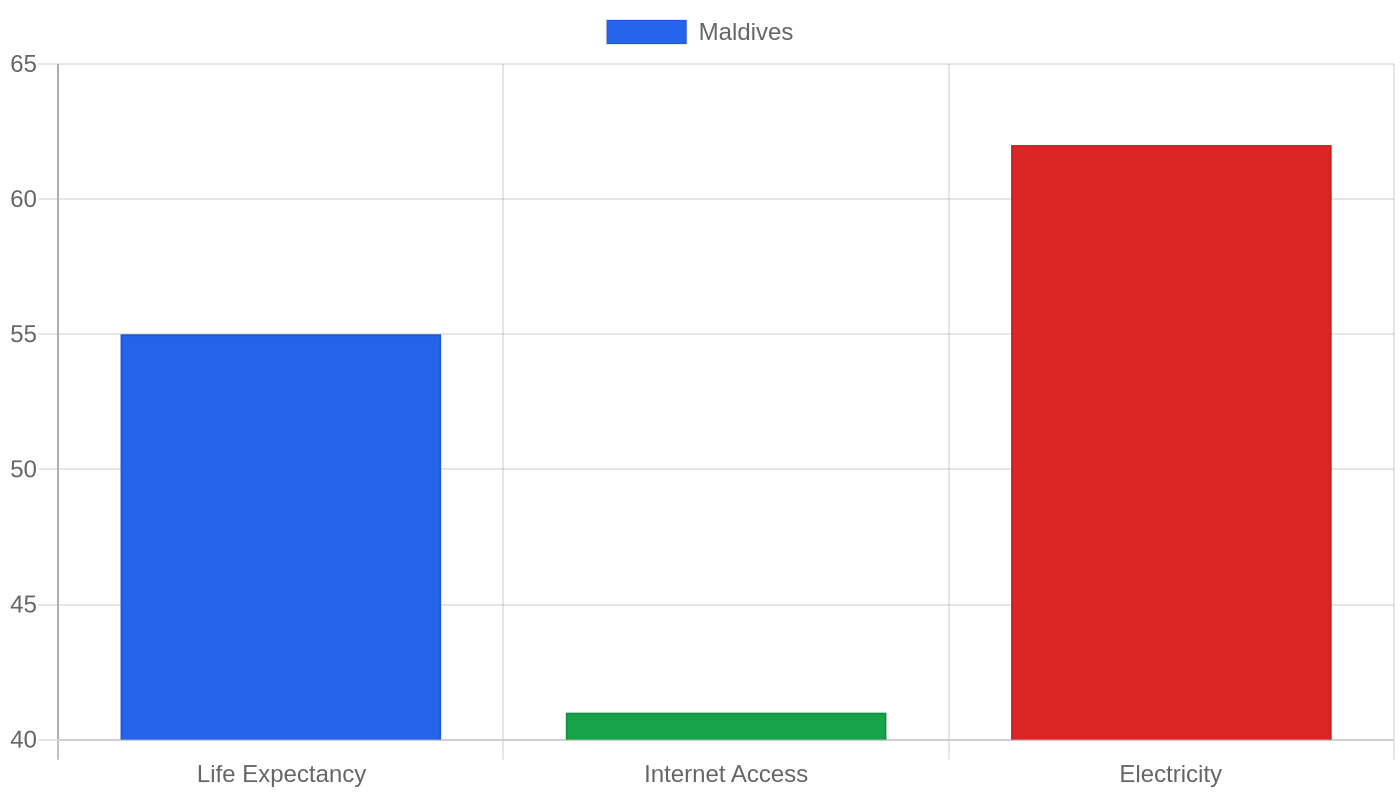
Economic Pulse Net | Sources: World Bank World Development Indicators, Government Sources | 2026
Key Takeaways
* The Maldives has entered a new political era with Mohamed Muizzu assuming the presidency in November 2023, marking a significant shift in executive leadership.
Current economic indicators, including GDP growth, inflation, and unemployment rates, are listed as unavailable by the World Bank, highlighting a gap in standardized data reporting for this specific period.
The nation operates as a presidential constitutional republic where the president holds extensive power over the executive branch, cabinet appointments, and the armed forces.
While detailed cost of living and crime indices are currently marked as N/A, the structural stability of the state remains anchored in its unicameral parliamentary system.
Investors and observers must navigate an environment where political continuity is established, but precise macroeconomic metrics require careful interpretation due to missing data points.
A New Chapter in Executive Leadership
The political landscape of the Maldives is defined by a strong central authority within a democratic framework. As a presidential constitutional republic, the country’s governance structure places substantial power in the hands of the head of state and government. This system allows the president to lead the executive branch and appoint the cabinet, a process that requires approval from the People’s Majlis, or Parliament.
This concentration of power ensures decisive leadership but also places significant responsibility on the individual holding the office. The current president, Mohamed Muizzu, took office on 17 November 2023, bringing a fresh mandate to the island nation. His tenure represents a pivotal moment for the country’s internal politics, as he assumes control over both civil administration and the armed forces.
The structural integrity of this system relies on five-year terms for both the President and members of the unicameral Majlis, providing a predictable cycle for political transitions. However, the exact composition of the parliament is dynamic, with the total number of members determined by the population density of each atoll. This demographic linkage ensures that representation is tied directly to local community sizes, adding a layer of complexity to national governance.
For international partners, understanding this power dynamic is crucial, as policy shifts often originate from the executive suite before reaching legislative debate. The stability of this arrangement depends heavily on the balance between presidential initiative and parliamentary oversight. As Muizzu settles into his role, the focus will remain on how his administration navigates the delicate balance of power within this unique constitutional setup.
Navigating the Data Void
When analyzing the economic health of the Maldives, one encounters a significant challenge: the absence of key statistical benchmarks from major global institutions. According to the latest data from the World Bank, critical indicators such as GDP growth, inflation CPI, and unemployment rates are listed as “N/A” (not available). Similarly, hard figures for GDP in USD, GDP per capita in PPP, GNI per capita, and total population are not currently provided in the dataset.
This lack of quantifiable data makes it difficult to assess the velocity of economic expansion or the purchasing power of the average citizen through standard comparative models. In many emerging economies, these metrics serve as the primary compass for investors assessing risk and potential return; their absence here creates a fog around the economic horizon. Without concrete numbers on inflation, it is challenging to determine if consumers are facing price pressures or enjoying stable costs.
Likewise, the lack of unemployment data obscures the labor market’s health, leaving analysts unable to gauge workforce participation or underemployment issues. This data gap does not necessarily imply economic stagnation, but rather a limitation in transparent reporting or data collection methodologies at this specific time. Consequently, any assessment of the Maldivian economy must rely on qualitative observations and sector-specific insights rather than aggregate macroeconomic trends.
The reliance on incomplete datasets forces journalists and economists to look beyond the headlines and examine the underlying structures of trade, tourism, and local production. It is a reminder that in some regions, the story is told through anecdotal evidence and industry reports rather than official statistics. Therefore, the narrative of the Maldives’ economy is currently one of inferred activity rather than measured performance.
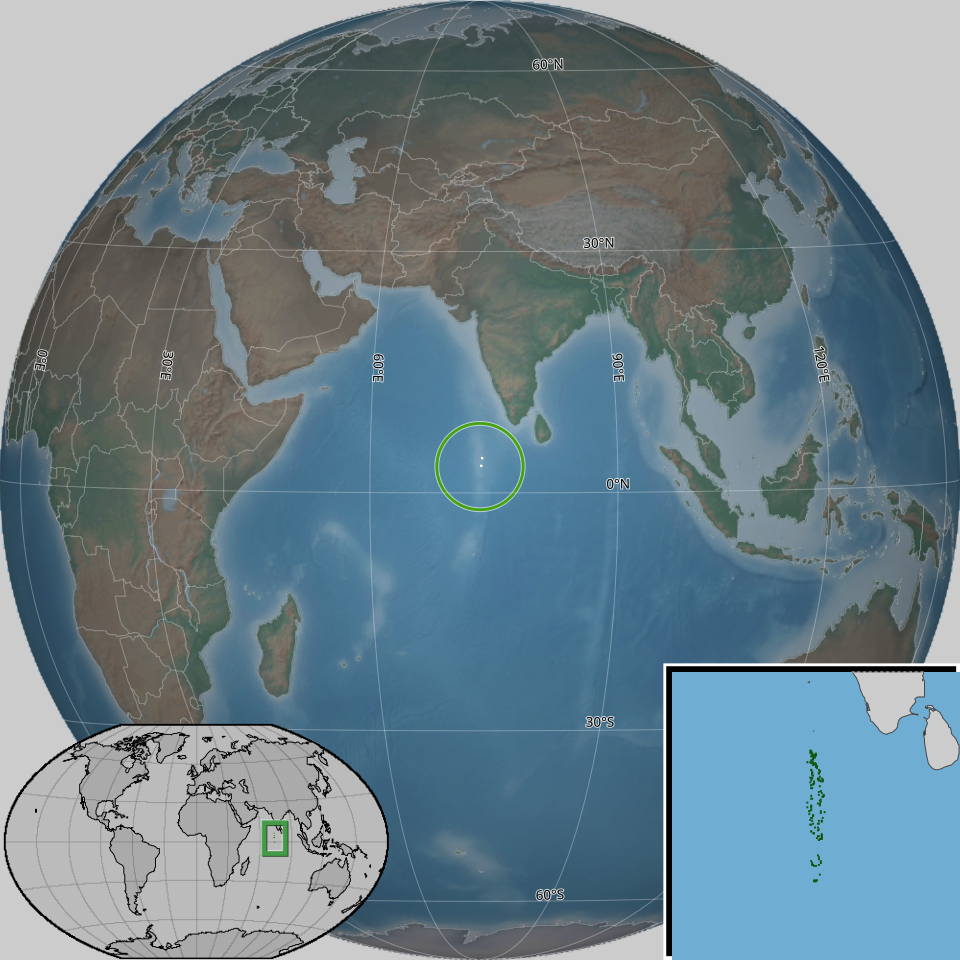
Living Standards and Urban Dynamics
Understanding the daily reality of life in the Maldives requires looking beyond national aggregates to the lived experience of its residents. Currently, specific data regarding the cost of living, housing markets, and rent versus buy ratios are marked as unavailable. This absence of granular financial data means that prospective expatriates or long-term visitors cannot easily benchmark expenses against regional averages using standard calculators.
Typically, island nations face unique logistical challenges that drive up the cost of imported goods, yet without explicit figures, the extent of this premium remains unclear. The lack of crime index and safety index scores further complicates the picture of quality of life, leaving general impressions to fill the void left by missing statistics. In the absence of hard numbers, the perception of safety and affordability often becomes the primary metric for evaluating livability.
This situation highlights a disconnect between global data standards and local realities, where the day-to-day experience may be distinct from what aggregated reports suggest. Residents likely navigate a complex web of local pricing influenced by import dependencies and seasonal tourism fluctuations. These factors create a volatile environment for household budgeting that is not captured in broad national surveys.
The uncertainty surrounding these personal finance metrics adds a layer of caution for those considering relocation or long-term stays. It suggests that while the political structure is well-defined, the socioeconomic fabric is less visible to outside observers. Potential residents must therefore rely on localized knowledge and direct inquiry rather than published indices to understand their financial footing.
This gap in information underscores the need for more robust data collection efforts to support informed decision-making by individuals and businesses alike.
Business Environment and Corporate Landscape
The commercial sector in the Maldives presents a mix of established industries and evolving opportunities, though specific corporate profiles remain unlisted in the current dataset. Major companies and top-tier enterprises are not identified in the provided information, making it difficult to pinpoint dominant market players or competitive landscapes. This lack of detail on the business climate leaves sectors such as tourism, construction, and fisheries largely unexamined in terms of corporate hierarchy.
Typically, the Maldivian economy is heavily reliant on tourism, which drives foreign exchange earnings and creates employment across various service-related industries. However, without data on top companies, it is unclear which entities hold significant market share or influence policy directions. The investment climate is shaped by this opacity, as potential investors seek clarity on regulatory frameworks and market entry barriers.
The absence of crime indices also impacts the security assessment for business operations, particularly regarding asset protection and employee safety. In such an environment, due diligence becomes even more critical, requiring direct engagement with local stakeholders rather than reliance on public databases. The political transition under President Muizzu may introduce new policies affecting foreign investment, but the specifics of these changes are not detailed in the current overview.
Businesses must therefore operate with a degree of flexibility and adaptability, ready to adjust strategies based on real-time developments. The focus for entrepreneurs should be on building relationships and understanding local nuances rather than relying on static data points. This approach allows for better navigation of the informal networks that often drive commerce in smaller island economies.
Ultimately, the business landscape is one of potential and uncertainty, requiring keen observation and agile management practices.
Stability Amidst Statistical Gaps
The intersection of political stability and missing data creates a unique paradox for observers of the Maldives. While the political landscape is clearly defined—with Mohamed Muizzu leading a powerful executive branch—the economic and social metrics remain shrouded in ambiguity. This contrast means that while the government’s direction is known, its impact on the ground is harder to measure.
The lack of crime and safety indices leaves the physical security of residents and visitors to general assumptions rather than verified statistics. Similarly, the absence of happiness or well-being data prevents a holistic view of societal satisfaction beyond political affiliation. This gap in quality-of-life metrics is significant for a country that prides itself on high-end tourism and natural beauty.
It suggests that the narrative of the Maldives is currently driven more by its geopolitical positioning and political leadership than by comprehensive social statistics. For the average citizen, the daily struggle with cost of living and employment is real, even if it is not reflected in national reports. The political structure provides a stable container for these daily challenges, but it does not automatically solve them.
Observers must recognize that stability in governance does not equate to transparency in data. This distinction is vital for accurate analysis and avoids conflating political order with economic clarity. The coming years will likely see increased pressure for better data reporting as the country seeks deeper international integration. Until then, the Maldives remains a case study in how political narratives can overshadow statistical realities.
Stakeholders must tread carefully, respecting the knowns while acknowledging the unknowns.
What’s Happening Now
The most immediate development in the Maldives is the recent change in presidential leadership, which sets the tone for all subsequent policy directions. Mohamed Muizzu assumed office on 17 November 2023, initiating a new term that will last until the next election cycle in five years. This transition marks a definitive end to the previous administration and introduces fresh dynamics to the relationship between the executive and the People’s Majlis.
With the president now firmly in control of the armed forces and the cabinet, there is a heightened focus on implementing his campaign promises and strategic vision. The appointment of the cabinet, subject to parliamentary approval, signals the beginning of active governance and potential policy shifts. This period is characterized by a consolidation of power and a redefinition of priorities within the executive branch.
International relations may also see adjustments as the new president establishes his diplomatic stance, potentially altering existing partnerships. The lack of current economic data during this transition period means that the tangible effects of these political changes are yet to be fully realized. However, the timing coincides with a critical phase for economic planning, as the government prepares its agenda for the coming fiscal years.
Stakeholders are watching closely to see how the new administration handles the pressing issues of inflation, tourism recovery, and infrastructure development. The next few months will be crucial in determining whether the political transition leads to swift economic action or prolonged deliberation. As the dust settles on the election, the focus will shift from who is in charge to what they will deliver. This period of anticipation defines the current affairs landscape in the Maldives.
The Bottom Line
The Maldives stands at a crossroads where clear political leadership meets ambiguous economic data. Investors and observers should watch this country closely, not for its statistical transparency, but for its political trajectory under President Muizzu. The strong executive branch offers a predictable governance structure, but the lack of GDP, inflation, and crime data poses significant risks for decision-making.
Those interested in the region must prioritize direct engagement and qualitative research over reliance on traditional economic indicators. The opportunity lies in navigating the uncertainties of a transitioning administration with a cautious, informed approach.
Sources & Methodology
This article is authored by Economic Pulse Net for informational and research purposes. Economic Pulse Net sources its data from multilateral institutions, national statistics bureaus, and proprietary databases. All data is believed to be current as of the date of publication.
Published: October 14, 2026 | Category: Research — Maldives
Use these signals in your own platform
Economic Pulse publishes its live signal feed through a documented, read-only API. Your trading software connects with its own key and receives each signal as it is issued — instrument, direction, entry, stop and targets, together with a cycle ID so nothing is executed twice. The feed is independent of this website and cannot change it.
Signals are informational only and are not financial advice.