Economic Pulse Net | Sources: World Bank World Development Indicators, Government Sources | 2026
Malaysia enters 2026 as one of Southeast Asia’s most intriguing economic stories. As the only federal constitutional elective monarchy in the region, this nation of diverse industries and ambitious conglomerates is navigating a complex global environment.
With a political system modelled on the Westminster parliamentary tradition and a corporate landscape dominated by household names from AirAsia to Axiata, the country presents a study in contrasts — modern consumer dynamism against a backdrop of traditional institutional structures.
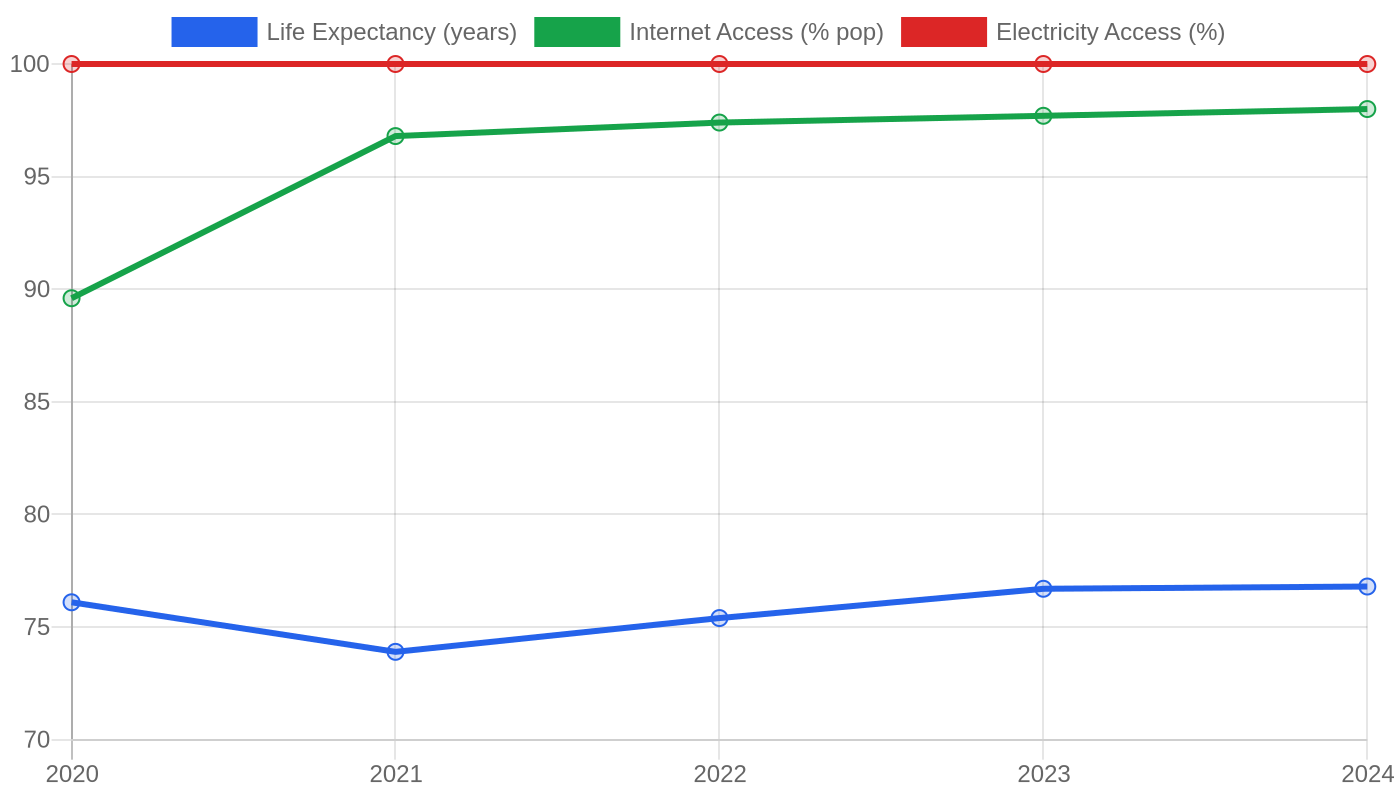
While specific macroeconomic figures from the World Bank remain incomplete for the latest reporting period, the structural picture that emerges from the available data tells a story of a nation with significant industrial breadth and a business environment that continues to attract both domestic and international attention. The question on every investor’s mind is whether Malaysia can leverage its institutional stability and corporate strength to power through the coming years.
Key Takeaways
– Malaysia operates as a federal constitutional elective monarchy, uniquely combining hereditary rulership with a Westminster-style parliamentary democracy — a system that provides distinctive political continuity.
– The corporate landscape is dominated by consumer services and telecommunications giants, including AirAsia, Astro Malaysia Holdings, and Axiata, signalling a services-led economic model.
– The country’s top companies span diverse sectors — from healthcare (Adventa) to financials (AmBank) and conglomerates (Boustead Holdings) — indicating a broadly diversified economic base.
– Consumer goods and services companies represent the largest cluster among major firms, highlighting the importance of domestic consumption and regional tourism to economic vitality.
– Malaysia’s political system features a King elected to five-year terms from among nine hereditary rulers, a distinctive governance arrangement that shapes the nation’s stability narrative.
Economic Landscape — Services Powerhouse Seeking Its Next Growth Gear
The Malaysian economy, as reflected in the composition of its leading corporations, presents a clear profile of a services-oriented nation. The World Bank’s most recent data does not provide a complete GDP growth figure, but the absence of hard numbers should not obscure the structural realities evident from the corporate and industrial data available.
Consumer services companies dominate the top-tier business landscape, with AirAsia revolutionising regional air travel, Astro Malaysia Holdings and Astro Radio commanding the media and entertainment space, and Berjaya Group operating across multiple consumer-facing industries. This concentration suggests that domestic consumption, tourism, and regional connectivity are critical engines for the economy.
The financial sector, represented by AmBank, provides the credit infrastructure necessary for continued expansion, while Axiata’s telecommunications operations underscore the importance of digital connectivity in a modernising economy. Notably, the presence of Adventa in healthcare and BSA Manufacturing in consumer goods points to developing capabilities beyond pure services.
The inclusion of Boustead Holdings as a conglomerate signals that traditional, diversified business models remain viable in the Malaysian context. Bonia’s presence in the fashion and retail segment further emphasises the consumer orientation of the economy.
For analysts, the key concern is whether Malaysia can maintain momentum in value-added services while developing its manufacturing and technology capabilities — a transition that will determine whether the country moves up the economic value chain or remains dependent on consumption-led growth.
Cost of Living and Housing — The Urban Consumer’s Balancing Act
Malaysia’s cost of living landscape is intrinsically tied to its consumer-driven corporate sector. With major companies like Bonia serving the retail fashion market and Berjaya Group operating across hospitality and consumer services, the economy clearly caters to a population with meaningful purchasing power. The prominence of consumer services among the nation’s top companies suggests that Malaysian households maintain spending capacity across entertainment, travel, and retail categories.
Astro’s dominance in pay television and AirAsia’s ubiquity in budget travel both point to a middle class that prioritises connectivity and mobility.
However, without specific World Bank figures on income distribution or housing costs, a precise picture of affordability remains elusive. What can be inferred from the corporate landscape is that Malaysia has developed an ecosystem where consumer choice is abundant — from budget airlines to premium retail — which typically indicates a stratified but active consumer market.
The presence of both mass-market and premium consumer companies suggests that Malaysian cities accommodate a range of lifestyles, though pressures on urban housing and daily expenses likely mirror regional patterns seen across Southeast Asia’s developing economies. The balance between wages in the services sector and the costs of urban living will remain a critical factor in sustaining the domestic consumption that powers so many of the nation’s leading firms.
Investment and Business Climate — A Diversified Corporate Arena
For investors, Malaysia offers exposure to a remarkably broad range of sectors through its publicly prominent companies. The telecommunications infrastructure provided by Axiata positions the country for digital economy growth, while AmBank’s financial services create channels for capital deployment across the economy. AirAsia’s regional footprint makes the airline a proxy for Southeast Asian travel demand, and Astro’s media platforms offer insight into consumer engagement trends.
This diversity is arguably Malaysia’s greatest investment attraction — the ability to gain exposure to multiple economic drivers through a single market.
The business environment benefits from the country’s political stability, anchored by its unique constitutional monarchy system. The Westminster parliamentary model provides familiar governance structures for international investors, while the elective monarchy adds a layer of continuity that has helped maintain institutional stability.
The presence of conglomerates like Boustead Holdings suggests that cross-sector synergies remain viable, and the mix of consumer goods companies like BSA Manufacturing indicates a manufacturing base that supports domestic brands. However, the concentration of top companies in consumer services raises questions about the depth of the industrial and technological sectors.
Investors watching Malaysia will be looking for signs that the economy is developing new engines of growth beyond consumption, particularly in higher-value manufacturing and digital services, to complement the established strengths of its corporate champions.
Safety, Politics, and Quality of Life — Stability Through Unique Governance
Malaysia’s political framework is genuinely distinctive in Southeast Asia. As a federal constitutional elective monarchy, the nation selects its King to a five-year term from among the nine hereditary rulers of the Malay states, while the other four states with titular Governors do not participate in the selection process.
This system, closely modelled on the Westminster parliamentary tradition as a legacy of British rule, creates a dual structure of ceremonial leadership and parliamentary governance that has provided remarkable political continuity. The informal agreements and conventions that underpin this arrangement have helped Malaysia navigate political transitions that have challenged other nations in the region.
The quality of life in Malaysia is substantially influenced by the consumer amenities that dominate its corporate sector. The strong presence of media companies like Astro Malaysia Holdings and Astro Radio indicates a population with access to diverse entertainment options, while the healthcare sector’s representation through Adventa suggests developing medical infrastructure.
The consumer services orientation of the economy means that Malaysians have access to a wide range of retail, hospitality, and travel options, which contributes to a relatively high quality of life for those participating in the formal economy. The stability provided by the political system, combined with the amenities of a consumer society, positions Malaysia as a notable option for expatriates and investors seeking a balance of opportunity and livability in Southeast Asia.
Current Affairs — Charting the Course Through Uncertain Waters
Malaysia in 2026 is navigating a period of significant economic recalibration. The World Bank’s incomplete data for the latest period reflects the challenges of capturing real-time economic activity in a volatile global environment, but the structural indicators from the corporate sector suggest continued resilience.
The telecommunications and digital infrastructure investments represented by Axiata are positioning Malaysia for the next wave of technological development, while the ongoing operations of major consumer companies indicate that domestic demand remains relatively robust. AirAsia’s continued prominence suggests that regional travel and tourism flows are maintaining their importance to the Malaysian economy.
The political landscape remains focused on the functioning of the country’s distinctive governance system, with the elective monarchy continuing to provide the ceremonial and constitutional stability that underpins the business environment. The financial sector, represented by AmBank, is likely navigating regional monetary conditions while supporting domestic credit needs. The healthcare and consumer goods sectors are adapting to evolving consumer preferences and demographic shifts.
For businesses and investors, the key watch-points are whether Malaysia can translate its corporate strengths into broader economic development, whether the services sector can continue to drive growth, and whether the political system can maintain the stability that has been its hallmark. The answers to these questions will determine Malaysia’s trajectory through the remainder of this decade.
The Bottom Line
Malaysia deserves close attention from investors and businesses seeking exposure to Southeast Asia’s consumer-driven economies. Its unique political system provides a stability that is rare in the region, and its corporate landscape offers diversified access to telecommunications, finance, aviation, media, and consumer goods.
The country’s strengths lie in its services sector and the resilience of domestic consumption, though the path forward will require developing new engines of growth beyond consumer services. For those willing to look past the incomplete macroeconomic data, the structural story of Malaysia is one of a nation with solid institutional foundations and significant corporate firepower — a combination that warrants a place on any serious observer’s watchlist.
Sources & Methodology
This article is authored by Economic Pulse Net for informational and research purposes. Economic Pulse Net sources its data from multilateral institutions, national statistics bureaus, and proprietary databases. All data is believed to be current as of the date of publication.
Published: August 12, 2026 | Category: Research — Malaysia
Use these signals in your own platform
Economic Pulse publishes its live signal feed through a documented, read-only API. Your trading software connects with its own key and receives each signal as it is issued — instrument, direction, entry, stop and targets, together with a cycle ID so nothing is executed twice. The feed is independent of this website and cannot change it.
Signals are informational only and are not financial advice.