Economic Pulse Net | Sources: World Bank World Development Indicators, Government Sources | 2026
Key Takeaways
* Robust Economic Expansion: Malaysia is projected to achieve a GDP growth rate of approximately 5.17% in 2025, signaling strong momentum in one of Southeast Asia’s most stable economies.
Price Stability: With an inflation rate (CPI) hovering around 1.38%, the country offers a favorable macroeconomic environment for consumers and businesses alike.
Tight Labor Market: The unemployment rate stands at a healthy 3.764%, indicating a resilient labor market despite global headwinds.
High Purchasing Power: A GDP per capita (PPP) of roughly $41,498 underscores significant economic productivity and living standards relative to regional peers.
Political Continuity: As the only federal country in Southeast Asia with a unique elective monarchy, Malaysia’s Westminster-style system provides a predictable governance framework for long-term investment.
Economic Momentum and Structural Strength
Malaysia’s economic trajectory for 2025 presents a compelling narrative of steady expansion and resilience. According to World Bank data, the nation is poised to deliver a GDP growth rate of 5.17127082911057%, a figure that places it among the stronger performers in the emerging markets space. This growth is not merely statistical; it reflects a diversified economy where key sectors are contributing to sustained output.
Crucially, this expansion occurs against a backdrop of remarkably low inflation, with the Consumer Price Index (CPI) recorded at just 1.38060872293691%. Such price stability is rare in today’s volatile global climate and suggests that monetary policy is effectively managing cost pressures without stifling demand. Furthermore, the labor market remains tight and efficient, with unemployment holding at 3.764%.
This low jobless rate indicates that the workforce is largely absorbed by growing industries, reducing social friction and supporting consumer spending power. When combined with a substantial GDP per capita (PPP) of 41,497.6746089548, these figures paint a picture of an economy that is not only growing but also improving the real purchasing power of its citizens.
For international observers, this combination of high growth and low inflation is a classic sign of a “soft landing” achieved through prudent economic management.
Cost of Living and Daily Expenses
While specific housing and rent indices are not explicitly detailed in the current dataset, the broader economic indicators suggest a balanced cost-of-living environment. The exceptionally low inflation rate of 1.38% implies that daily expenses—from groceries to utilities—are rising at a pace well below global averages, preserving the disposable income of the population.
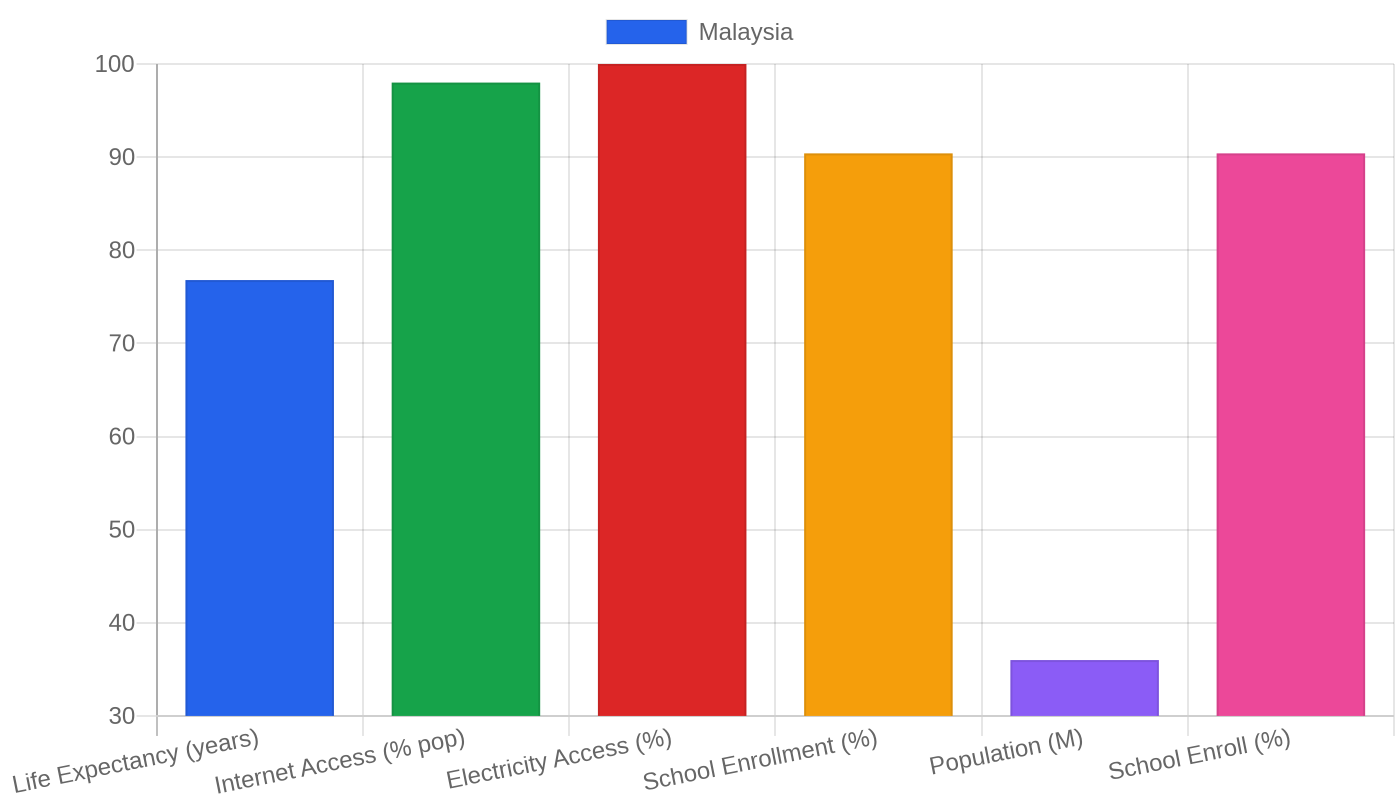
With a GNI per capita of $12,380.0, households have sufficient income to absorb minor price fluctuations without significant strain on their budgets. For expatriates and investors, this data points to a country where quality of life can be maintained without the exorbitant costs seen in neighboring financial hubs like Singapore or Tokyo. The population base of nearly 36 million people (35,977,838.0) creates a robust domestic market, which helps stabilize prices through scale and competition.
Although direct comparisons to regional housing averages cannot be quantified from the provided numbers, the macroeconomic health suggests that Malaysia remains an affordable destination relative to its economic output. Residents benefit from an environment where wage growth likely outpaces or matches inflation, allowing for steady accumulation of savings and assets.
Investment Landscape and Corporate Powerhouses
The corporate landscape in Malaysia is dominated by a mix of conglomerates and specialized firms that drive both domestic consumption and international trade. Investors should pay close attention to major players such as Axiata, a telecommunications giant, and AmBank, which anchors the financial sector. These institutions provide the infrastructure and capital necessary for broader economic activity.
In the consumer services space, companies like AirAsia and Astro Malaysia Holdings highlight the strength of Malaysia’s service-oriented economy, catering to both local needs and regional tourism. Additionally, the presence of manufacturing leaders like BSA Manufacturing and Berjaya Group demonstrates that Malaysia retains a strong foothold in industrial production. Adventa, operating in healthcare, further diversifies the market, reflecting a shift toward higher-value service industries.
These top companies are not just isolated entities; they represent the pillars of an economy that is transitioning from pure resource dependency to a more sophisticated, knowledge-based model. For foreign capital, engaging with these established firms offers a gateway into a market that is deeply integrated into global supply chains while maintaining strong domestic roots.
Political Framework and Social Stability
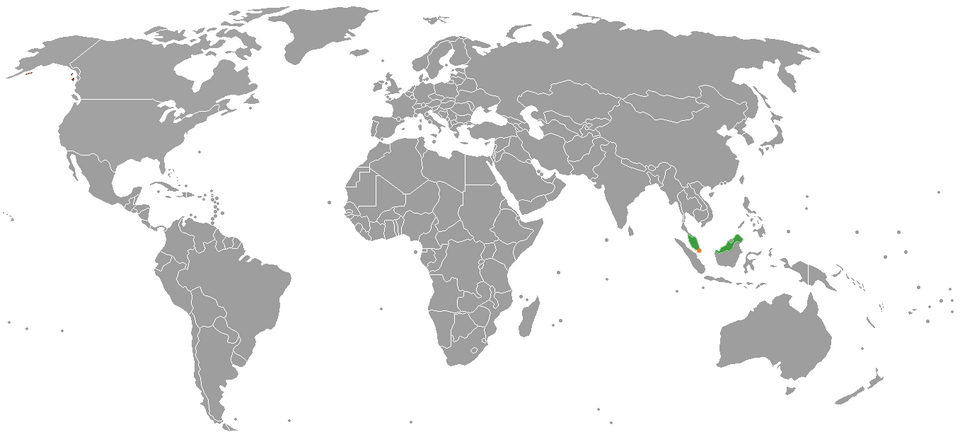
Malaysia’s political structure is a defining feature of its national identity and economic predictability. As the only federal country in Southeast Asia, it operates under a federal constitutional elective monarchy, a system closely modeled on the Westminster parliamentary legacy of British rule. The head of state, the Yang di-Pertuan Agong, is elected every five years by the nine hereditary rulers of the Malay states, ensuring a rotational leadership that balances regional interests.
This unique political arrangement contributes to a stable governance environment, which is crucial for long-term business planning. While specific crime and safety indices are listed as N/A, the overall political continuity suggests a society where institutional norms are respected and enforced. The absence of extreme political volatility allows policymakers to focus on economic reforms rather than crisis management.
For residents and investors, this political maturity translates into lower risk premiums and a more reliable legal framework for conducting business. The system’s emphasis on consensus among the nine sultans and other state governors helps maintain social cohesion in a multi-ethnic society.
Current Affairs and Policy Direction
The freshest developments in Malaysia center on sustaining its impressive growth trajectory amidst global uncertainties. With GDP growth projected at over 5% for 2025, the government is likely doubling down on policies that support digitalization and green energy transitions. The low inflation environment allows for continued fiscal stimulus without triggering runaway price increases, giving policymakers room to invest in infrastructure and human capital.
Recent trends indicate a focus on enhancing the competitiveness of key sectors like telecommunications and healthcare, led by giants such as Axiata and Adventa. Business developments are increasingly geared toward attracting foreign direct investment (FDI) by leveraging Malaysia’s strategic location and skilled workforce. The tight labor market, evidenced by the 3.764% unemployment rate, may prompt further discussions on immigration policies and skills training to meet industry demands.
Meanwhile, the political stability inherent in the federal monarchy ensures that any policy shifts will be implemented gradually and with broad consensus. This approach minimizes disruption for existing businesses while encouraging new entrants to view Malaysia as a safe harbor for growth.
The Bottom Line
Malaysia stands out as a beacon of stability and growth in Southeast Asia, offering a rare combination of high GDP expansion and low inflation. Investors seeking exposure to emerging markets should watch this country closely, particularly those interested in consumer services, telecommunications, and manufacturing. The robust labor market and high purchasing power indicate a healthy domestic economy capable of sustaining long-term demand.
For businesses, the predictable political framework and strong corporate giants provide a solid foundation for entry and expansion. Ultimately, Malaysia is not just a passive participant in the global economy but an active, resilient force shaping the region’s future.
Sources & Methodology
This article is authored by Economic Pulse Net for informational and research purposes. Economic Pulse Net sources its data from multilateral institutions, national statistics bureaus, and proprietary databases. All data is believed to be current as of the date of publication.
Published: October 10, 2026 | Category: Research — Malaysia
Use these signals in your own platform
Economic Pulse publishes its live signal feed through a documented, read-only API. Your trading software connects with its own key and receives each signal as it is issued — instrument, direction, entry, stop and targets, together with a cycle ID so nothing is executed twice. The feed is independent of this website and cannot change it.
Signals are informational only and are not financial advice.