Economic Pulse Net | Sources: World Bank World Development Indicators, Government Sources | 2026
Key Takeaways
– Japan’s economy stands at a critical inflection point, with GDP exceeding $4.4 trillion and a population of over 123 million, making it one of the world’s largest economies despite decades of demographic pressure.
– Inflation has returned to Japan at 3.17%, a significant shift for a country long accustomed to deflationary pressures, forcing both policymakers and households to adapt to a new pricing environment.
– Unemployment remains remarkably low at 2.45%, reflecting a tight labor market that is reshaping traditional Japanese employment practices and corporate behavior.
– A political battle is brewing over consumption tax policy, with a ruling party revolt emerging over proposals to cut the food tax rate to 1%, signaling potential fiscal policy shifts ahead.
– Japan’s corporate landscape remains dominated by financial institutions and manufacturers, with companies like Advantest and Aisin Seiki positioning themselves as global leaders in their respective sectors.
The Long Climb Back — Growth, Prices, and the Labor Market
Japan’s economic story has always defied simple narratives, and the latest World Bank data paints a picture of a nation that has learned to prosper in an era of limits. With a GDP of approximately $4.44 trillion, Japan remains a top-tier global economy, though its growth trajectory has moderated considerably compared to the high-speed expansion of the postwar decades.
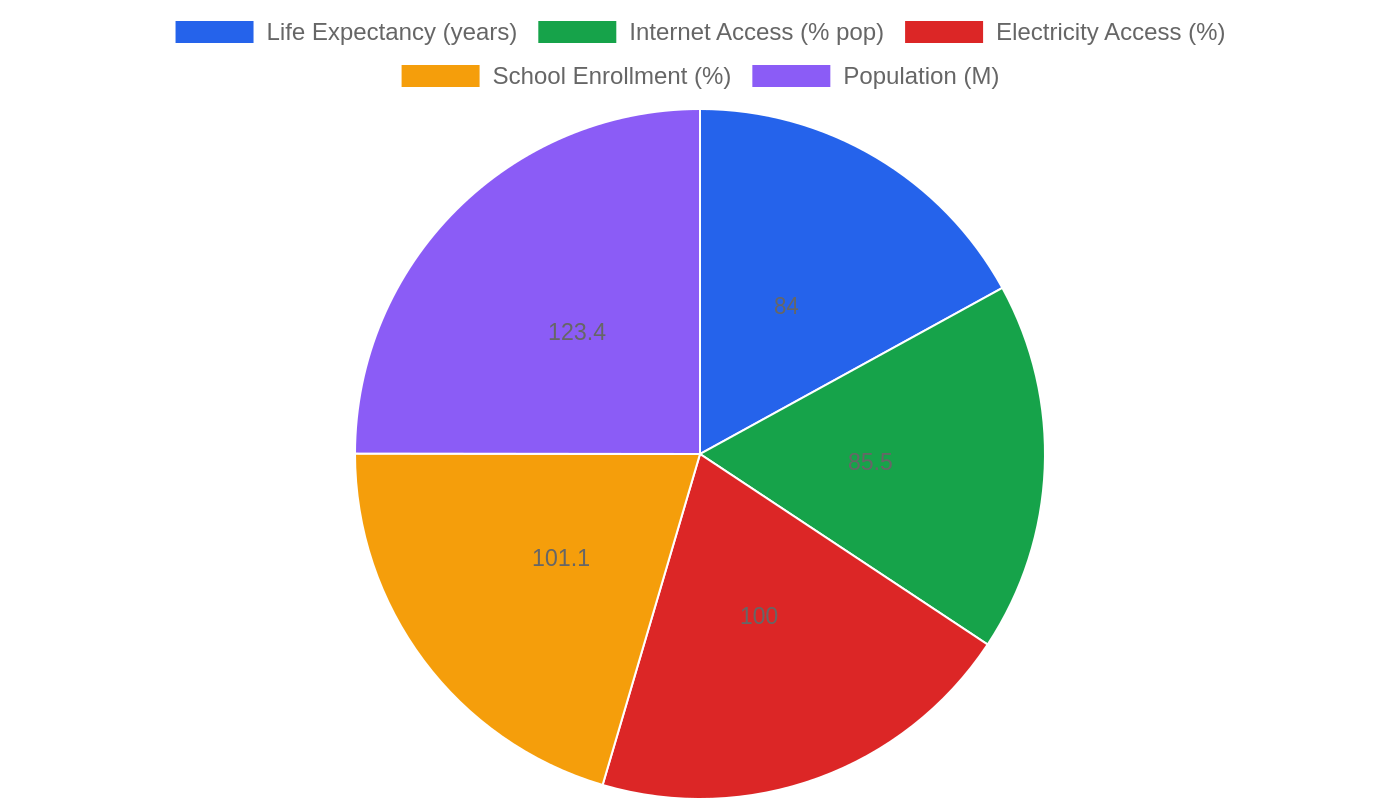
The population of 123.4 million people supports a GDP per capita of $55,422 on a purchasing power parity basis, placing Japanese living standards firmly within the ranks of advanced economies. What makes this particularly notable is that Japan has achieved this level of prosperity while managing a demographic decline that would have crippled lesser economies.
The most striking development in Japan’s recent economic history has been the return of inflation. For nearly three decades, Japan was the world’s foremost case study in deflation — falling prices that discouraged spending, delayed investment, and created a psychology of waiting for tomorrow. The current CPI reading of 3.17% represents a fundamental break from that pattern.
While this figure would seem modest to economies accustomed to higher inflation, for Japan it represents a profound psychological and structural shift. Households that spent years expecting prices to fall are now making purchasing decisions in a world where waiting might mean paying more. This transition has implications for everything from wage negotiations to corporate pricing power, and it explains why the Bank of Japan’s policy normalization has become such a closely watched development.
The labor market tells a similarly transformative story. Unemployment at 2.45% represents what economists would call full employment, and arguably beyond it. Japanese companies, long known for their lifetime employment systems, are now competing fiercely for workers in a demographic environment where the pool of young labor continues to shrink. This scarcity of workers has begun to force changes in corporate behavior — from greater willingness to raise wages to more flexible employment arrangements.
The tight labor market also creates a political dynamic where workers feel empowered to demand more, adding to the inflationary pressures that are already reshaping the Japanese economy. For a nation that has spent decades worrying about economic stagnation, the current combination of low unemployment and rising prices represents a new and unfamiliar set of challenges.
The Price of Living — Housing, Daily Costs, and the New Inflation Reality
For Japanese households, the return of inflation has transformed the calculus of daily life. After years of stable or falling prices, the 3.17% inflation rate means that grocery bills, utility costs, and transportation expenses are all rising in ways that many Japanese consumers have never experienced in their adult lives.
The political sensitivity of this shift was immediately evident in the ruling party revolt over proposals to cut the consumption tax on food to 1% — a policy proposal that reflects the deep anxiety among politicians about the impact of rising food costs on household budgets. That such a proposal would gain traction within the conservative Liberal Democratic Party, traditionally committed to fiscal discipline, speaks volumes about the political pressure created by the new inflationary environment.
Housing markets in Japan present a complex picture that differs significantly from many Western economies. Japan’s major metropolitan areas, particularly Tokyo, have historically maintained more stable housing prices than global peers, partly due to a robust rental market and a construction industry that rebuilds housing stock with remarkable efficiency.
The GNI per capita of $38,340 provides context for housing affordability, though Japanese housing markets have traditionally been characterized by smaller living spaces and higher density than Western counterparts. The cost of living in Japan’s major cities remains substantial, but the country’s excellent public transportation infrastructure means that many households can choose to live further from city centers without sacrificing access to employment and amenities.
The new inflation dynamic, however, is beginning to affect housing costs as well, with construction materials and labor becoming more expensive in an economy operating at full employment.

Corporate Powerhouses and the Investment Landscape
Japan’s corporate sector continues to demonstrate remarkable resilience and adaptability, anchored by institutions that have shaped the nation’s economic development for over a century. The 77 Bank, Aichi Bank, and other regional financial institutions represent the backbone of Japan’s banking system, providing credit to businesses and households across the country.
Consumer finance companies like Acom and Aiful serve the retail lending market, while AGC (formerly Asahi Glass) and Aichi Steel represent Japan’s continued strength in advanced materials and manufacturing inputs. Perhaps most notably, Advantest has positioned itself as a critical player in the semiconductor testing industry, benefiting from the global expansion of electronics and artificial intelligence technologies that require sophisticated testing equipment.
The presence of companies like Aeon, one of Japan’s largest retail groups, underscores the importance of domestic consumption to the Japanese economy. Aisin Seiki, meanwhile, represents the automotive supply chain that remains one of Japan’s most important industrial sectors, even as the global transition to electric vehicles reshapes the competitive landscape.
For investors, Japan offers a unique combination of established industrial powerhouses and emerging technology companies, all operating within a political system that has historically prioritized stability and consensus. The tight labor market and rising inflation create both challenges and opportunities for these companies — wage pressures may squeeze margins, but the return of pricing power offers the potential for improved profitability.
Safety, Stability, and the Political Order
Japan’s political system remains one of the world’s most stable, characterized by a constitutional monarchy in which Emperor Naruhito’s role is ceremonial, with executive power vested in the prime minister and Cabinet. The current political landscape is dominated by the Liberal Democratic Party, which has governed Japan for most of the postwar period, though the recent revolt over food tax policy suggests that internal tensions are simmering beneath the surface of apparent consensus.
The fact that a significant faction within the ruling party supports cutting the food consumption tax to 1% indicates that the political establishment is acutely aware of the pressures facing ordinary households as inflation erodes purchasing power.
Japan’s quality of life metrics reflect a society that prioritizes safety, order, and public services. The country’s low unemployment rate of 2.45% contributes to social stability, while the absence of available crime data in current reporting should not obscure Japan’s longstanding reputation as one of the safest developed nations in the world.
The combination of political stability, low crime, and high-quality public infrastructure has made Japan an attractive destination for both tourists and expatriate workers. The ceremonial role of the emperor provides cultural continuity and national identity, even as the country navigates the challenges of demographic decline and economic transformation.
The Battle Over the Food Tax — Japan’s Political Crossroads
The most immediate political drama in Japan centers on the proposal to cut the consumption tax on food to 1%, a policy that has sparked open revolt within the ruling Liberal Democratic Party. According to reporting from asia.nikkei.com, the LDP revolt over this proposal represents a significant challenge to the party leadership and to the fiscal orthodoxy that has guided Japanese economic policy for decades.
The consumption tax, which was raised in stages over recent years to address Japan’s substantial public debt, has long been politically unpopular, but the current inflationary environment has intensified pressure on lawmakers to provide relief to households struggling with rising food costs.
The proposal to reduce the food tax to just 1% would represent a dramatic shift in Japanese fiscal policy, potentially reducing government revenue at a time when the country faces significant fiscal challenges. That such a proposal has gained traction within the LDP suggests that the political calculus around inflation has fundamentally changed.
Meanwhile, Japan’s business community is watching these developments closely, recognizing that fiscal policy shifts could have significant implications for consumer spending and economic growth. The outcome of this internal party battle will likely shape Japan’s economic trajectory for years to come, determining whether the country embraces a more expansionary fiscal stance or maintains its traditional commitment to fiscal consolidation.
The Bottom Line
Japan is entering a new economic era, one defined by the return of inflation, persistent labor shortages, and a political system grappling with how to respond to these unprecedented conditions. For investors, Japan offers exposure to world-class manufacturing and technology companies operating in an environment of political stability and social cohesion.
For policymakers in other nations, Japan’s experience provides valuable lessons about managing demographic decline, the challenges of escaping deflation, and the political pressures that arise when prices begin to rise after decades of stability. The world should watch Japan closely — this nation of 123 million is writing the playbook for how mature economies adapt to the realities of the 21st century.
Sources & Methodology
This article is authored by Economic Pulse Net for informational and research purposes. Economic Pulse Net sources its data from multilateral institutions, national statistics bureaus, and proprietary databases. All data is believed to be current as of the date of publication.
Published: August 01, 2026 | Category: Research — Japan
Use these signals in your own platform
Economic Pulse publishes its live signal feed through a documented, read-only API. Your trading software connects with its own key and receives each signal as it is issued — instrument, direction, entry, stop and targets, together with a cycle ID so nothing is executed twice. The feed is independent of this website and cannot change it.
Signals are informational only and are not financial advice.