Economic Pulse Net | Sources: World Bank World Development Indicators, Government Sources | 2026
In the global economic landscape, Japan has long been the enigma—a nation of staggering technological prowess and cultural influence, yet one that has spent three decades wrestling with deflation and demographic decline. As the latest data from the World Bank paints a picture for 2025, Japan finds itself at a fascinating inflection point. Inflation has finally stirred from its slumber, unemployment sits at remarkably low levels, and the economy is growing, albeit modestly.
This is not the Japan of the “Lost Decades” headlines, nor is it the hyper-charged growth story of its Asian neighbors. It is a recalibration—a mature, complex society navigating a new economic reality with characteristic precision.
Key Takeaways
– Modest Growth, Persistent Inflation: The World Bank reports GDP growth of 1.19% for 2025, a positive but unspectacular figure, while inflation has climbed to 3.17%, signaling a significant shift away from the deflationary pressures that have defined the economy for decades.
– A Tight Labor Market: With unemployment at an ultra-low 2.45%, Japan’s labor market is exceptionally tight, creating both wage pressures and unique challenges for a shrinking workforce.
– A Massive, Stable Economic Base: Despite the narrative of stagnation, Japan’s GDP stands at a colossal $4.43 trillion, cementing its position as one of the world’s largest economies with a high GDP per capita (PPP) of over $55,000.
– A Political System in Stasis: As a constitutional monarchy with a ceremonial emperor, Naruhito, political power rests with the prime minister and cabinet, providing a backdrop of stability amid economic transition.
– Corporate Giants Adapting: From financial institutions like Acom to industrial powerhouses like Aisin Seiki and Advantest, major corporations are navigating the new economic currents of rising costs and technological change.
The Great Reflation: Understanding Japan’s New Economic Math
For years, the central challenge for Japanese policymakers was a lack of inflation. Consumers delayed purchases, businesses held back on investment, and the economy stagnated in a deflationary trap. The World Bank’s 2025 data suggests this era may be over. An inflation rate of 3.17% is a significant departure from the near-zero or negative readings of the past. While this can squeeze household budgets, it also signals a healthier demand dynamic and gives businesses the pricing power they have long lacked.
This reflation is occurring against a backdrop of 1.19% GDP growth—a figure that, while seemingly modest, represents a solid performance for a mature economy of Japan’s scale, especially when compared to its own recent history.
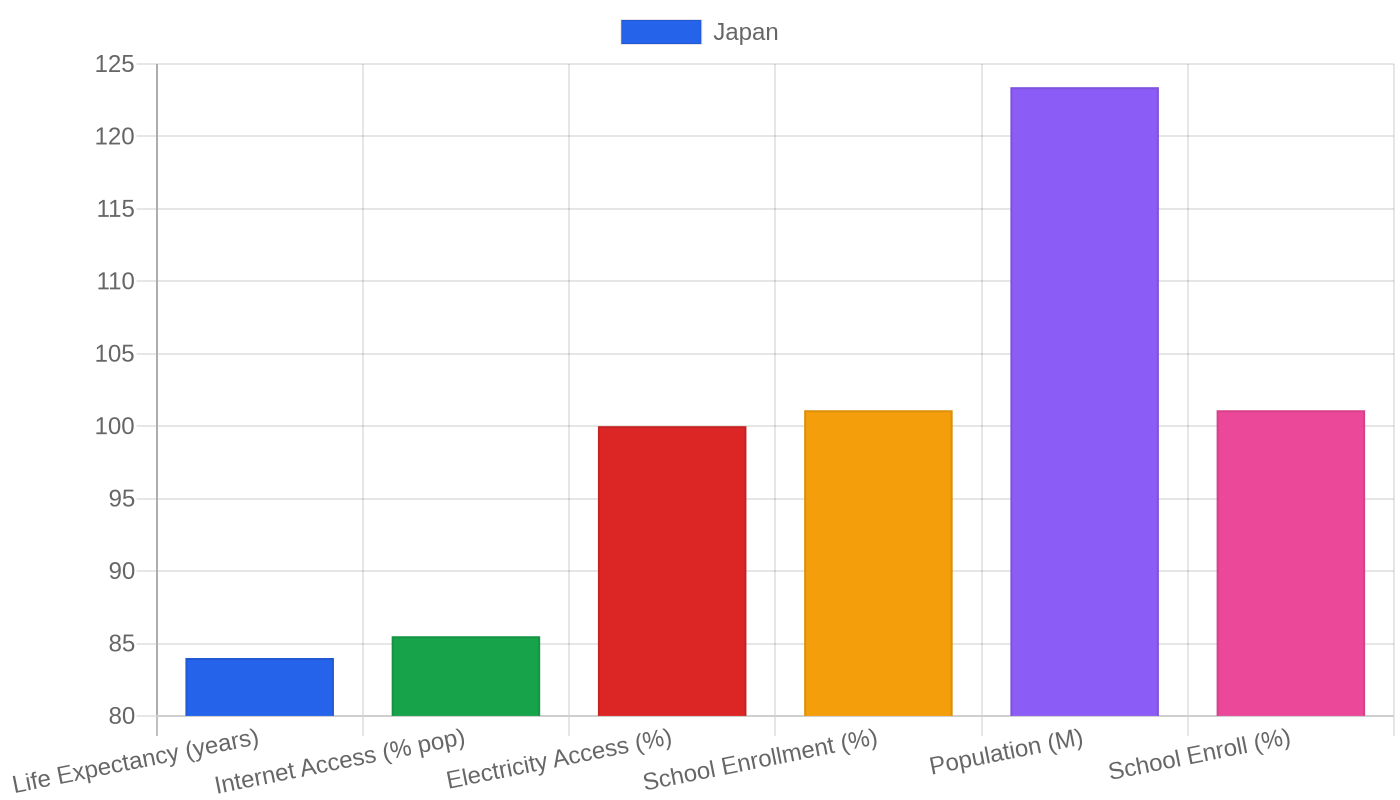
The employment picture is perhaps the most striking element of this economic puzzle. An unemployment rate of 2.45% is effectively full employment. It reflects a structural reality of a rapidly aging and declining population. With a population of approximately 123.3 million, Japan is seeing a shrinking pool of working-age individuals.
This scarcity of labor is a double-edged sword: it empowers workers and drives wage growth, but it also constrains the economy’s capacity for expansion and places immense pressure on social security systems. The GDP per capita (PPP) figure of $55,421, as cited by the World Bank, underscores that the average Japanese citizen enjoys a high standard of living, with the nation’s immense $4.43 trillion GDP generating significant national wealth.
The Cost of Living: The Price of Stability
With inflation now running at 3.17%, the cost of living in Japan is undergoing a notable transformation. For decades, prices in Japan were famously static, and even falling. The current inflationary environment, driven by global energy costs and a weaker yen, has made everyday expenses—from food to utilities—more expensive for the average household. This marks a psychological shift as much as an economic one, as a generation of consumers accustomed to deflation now contends with rising prices.
Housing costs, however, remain a more complex story. In major metropolitan centers like Tokyo, Osaka, and Nagoya, the cost of living and housing remains significantly higher than in rural areas, though this is a long-standing trend. The dynamic of buying versus renting is still heavily influenced by cultural norms and low interest rates, which have historically made mortgages accessible.
While the World Bank data does not provide a specific cost-of-living index, the combination of rising inflation and a high per-capita GDP suggests that while incomes are relatively robust, the purchasing power of the yen is being tested. The tight labor market, however, provides a buffer, as wage growth is beginning to accelerate in response to the labor shortage, offering some relief to households navigating these new price levels.

Investment and Business Landscape: Titans of Industry
Japan’s corporate sector remains a formidable force, anchored by a diverse array of global leaders. The top companies list reveals a deep bench of financial institutions, such as the 77 Bank and Acom, which are critical to domestic credit and savings. But it is the industrial and technological giants that define Japan’s global footprint. Advantest, for instance, is a world leader in semiconductor testing equipment, a sector that is booming amid the global AI and chip race.
Similarly, Aisin Seiki is a Tier-1 auto parts supplier, while AGC is a major player in glass and advanced materials.
For investors, Japan offers a unique proposition. The business climate is characterized by political stability and a highly skilled workforce. However, the “Japan discount”—a term used to describe the lower valuations of Japanese companies compared to global peers—remains a persistent issue, often attributed to corporate governance practices and a lack of aggressive growth strategies. Yet, this is changing.
The tight labor market is forcing companies to invest in automation and efficiency, and there is increasing pressure from the government and shareholders for reforms. The presence of financial groups like Aichi Bank and consumer credit firms like Aiful indicates a deep and sophisticated financial market, ready to support both corporate and consumer activity in this new economic phase.
Stability and Security: The Social Contract
Japan is renowned for its social order and safety, and while specific crime and safety indices are not available in the current data set, the country’s reputation for low crime is a cornerstone of its quality of life. This sense of security contributes significantly to the nation’s social fabric, making cities like Tokyo consistently rank among the safest in the world. This stability is mirrored in the political landscape.
As a unitary state and constitutional monarchy, Japan’s political system provides a strong sense of continuity. Emperor Naruhito, who ascended to the Chrysanthemum Throne in 2019, serves a purely ceremonial role, while democratic sovereignty is vested in the people, exercised through the Prime Minister and the Cabinet.
This political framework ensures that economic policy, while debated, is rarely subject to radical upheaval. The challenges facing the nation are well-understood: an aging population, a shrinking workforce, and the need to maintain social security systems. The quality of life in Japan is exceptionally high, supported by world-class infrastructure, healthcare, and public services, all underpinned by the nation’s considerable economic output.
The social contract remains intact, but it is being stretched by demographic pressures, making the economic decisions made today critical for preserving this stability for the future.
The Current Pulse: Navigating a New Era
The most immediate story unfolding in Japan right now is the transition from a deflationary mindset to one of managed inflation. As reported by *The Japan Times* and *Nikkei Asia*, the business environment is buzzing with activity as companies adapt to this new reality. The Bank of Japan has been a major focus, as it navigates the delicate path of normalizing monetary policy after years of ultra-loose measures.
The corporate world is responding to the changing climate, with *Nikkei Asia* tracking a flurry of business deals and market data that reflect a more dynamic, if uncertain, economic environment.
The recent news from these sources points to a nation actively recalibrating its economic strategy. The focus is on sustainable growth, wage increases that outpace inflation, and enhancing corporate value to attract global investment. The government is under pressure to implement structural reforms to boost productivity, while businesses are grappling with rising input costs and a labor market that offers little slack.
The narrative is no longer about fighting stagnation, but about managing a transition to a new equilibrium where growth is steady, prices are rising, and the economy is finally moving forward after decades of inertia. This is the quiet giant’s most significant test yet.
The Bottom Line
Japan is not a story of boom or bust, but of a deliberate, complex evolution. For investors, it offers a stable, high-tech market with improving corporate governance and a potential for upside as the economy reflates. For policymakers in other developed nations, it provides a case study in managing demographic decline and monetary transition. And for the casual observer, it is a nation proving that economic maturity does not have to mean stagnation.
Japan is a country to watch for its resilience, its technological leadership, and its quiet determination to rewrite its economic narrative for the 21st century.
Sources & Methodology
This article is authored by Economic Pulse Net for informational and research purposes. Economic Pulse Net sources its data from multilateral institutions, national statistics bureaus, and proprietary databases. All data is believed to be current as of the date of publication.
Published: August 24, 2026 | Category: Research — Japan
Use these signals in your own platform
Economic Pulse publishes its live signal feed through a documented, read-only API. Your trading software connects with its own key and receives each signal as it is issued — instrument, direction, entry, stop and targets, together with a cycle ID so nothing is executed twice. The feed is independent of this website and cannot change it.
Signals are informational only and are not financial advice.