Economic Pulse Net | Sources: World Bank World Development Indicators, Government Sources | 2026
Key Takeaways
– Indonesia’s economy continues to post resilient 5.1% GDP growth in 2025, according to the World Bank, a rare bright spot in a sluggish global environment.
– Inflation is remarkably low at just 1.9%, giving policymakers unusual room to maneuver without crushing consumer purchasing power.
– Unemployment has fallen to 3.24%, a figure that suggests the labor market is absorbing new entrants, though the quality of jobs remains a question.
– The country’s financial sector is dominated by a handful of massive state-linked banks, but a new state-owned investment holding company called Danantara is being tested by the financial troubles of Pos Indonesia, as reported by *The Jakarta Post*.
– A bold proposal to offer a 50-year tax holiday for a new financial center signals Jakarta’s ambition to compete with Singapore and Dubai, though investment growth remains subdued across the broader economy.
Growth With a Pulse — But Where’s the Heat?
Indonesia’s economy is doing something many emerging markets would envy: growing steadily without overheating. The World Bank reports GDP growth of 5.1% for 2025, a number that, while not spectacular by the country’s own pre-pandemic standards, represents a solid foundation in a world where recession fears are never far away. What makes this growth more interesting is the inflation picture.
At just 1.9%, consumer price increases are well within the central bank’s target range and far below the double-digit nightmares seen in other large developing economies. This combination — decent growth with low inflation — is the macroeconomic equivalent of a perfect soufflé. It gives the government room to spend, the central bank room to keep rates supportive, and households room to consume without feeling squeezed.
The unemployment rate of 3.24% is strikingly low. To put that in perspective, many European economies would celebrate such a figure. However, labor market data in a country as vast and informal as Indonesia needs to be read with caution. A low unemployment rate can mask underemployment — people working fewer hours than they’d like, or toiling in low-productivity jobs in the sprawling informal sector. The World Bank’s GNI per capita figure of $5,120 tells a more sobering story.
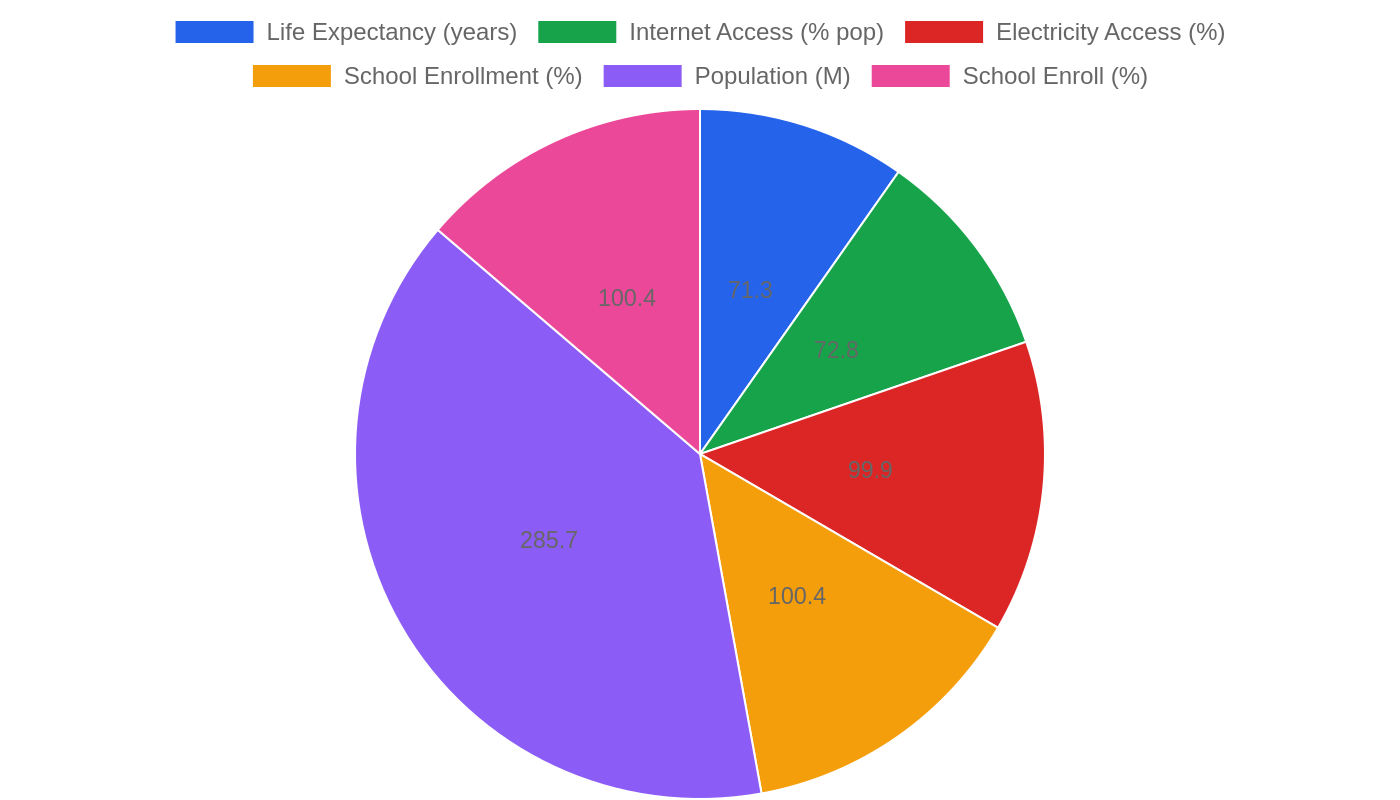
While GDP per capita on a purchasing power basis reaches $17,660 — reflecting the relatively lower cost of goods and services in Indonesia — the nominal income figure places the average Indonesian firmly in lower-middle-income territory. The economy is growing, but the distribution of that growth, and the quality of the jobs it creates, will determine whether the 5.1% number translates into genuinely rising living standards for the country’s 285 million people.
The Cost of Living — A Tale of Two Indonesias
For the millions of Indonesians living in Jakarta, Surabaya, or Bandung, the cost of living has become an increasingly pressing concern, even as headline inflation remains tame. Housing in the capital, in particular, has seen prices climb far faster than official inflation figures suggest. A modest apartment in a decent part of Jakarta can easily consume half of a middle-class salary.
The rent-versus-buy calculation is heavily skewed toward renting for most young professionals, given that mortgage rates remain relatively high and down payment requirements are steep for a population where formal banking penetration is still incomplete.
Outside the major cities, the picture is starkly different. In rural Java, Sumatra, or the eastern islands, the cost of living is significantly lower, but so are incomes. The gap between urban and rural Indonesia is one of the defining features of the country’s economic landscape. The GNI per capita figure of $5,120, when spread across a population of 285 million, underscores the reality that while Indonesia has built a sizable middle class, a huge portion of the population still lives on a few dollars a day.
Daily expenses for staples like rice, cooking oil, and kerosene are closely watched by policymakers — any spike in these prices can trigger political unrest, which is precisely why the 1.9% inflation figure is such a political asset for the government.
Banking Behemoths and the Danantara Experiment
Indonesia’s corporate landscape is dominated by a familiar cast of characters. The top companies list reads like a who’s who of state-linked and family-controlled conglomerates. Bank Mandiri, Bank Rakyat Indonesia, Bank Central Asia, Bank Negara Indonesia, and Bank Tabungan Negara — these five financial institutions alone form the backbone of the country’s credit system.
Astra International, the sprawling conglomerate with interests from cars to plantations, sits alongside state-owned enterprises like Angkasa Pura (which runs the country’s airports) and Badak LNG (a giant in the liquefied natural gas sector). This is an economy where the state and a handful of private dynasties still call the shots.
The most interesting business story right now, however, involves a new state-owned investment holding company called Danantara. According to *The Jakarta Post*, the financial troubles at Pos Indonesia — the state postal service — are serving as an early test of Danantara’s rescue strategy.
If Danantara can successfully restructure Pos Indonesia without blowing a hole in the state’s finances, it will signal that Indonesia’s approach to managing its sprawling state-owned enterprise sector is maturing. If it fails, the consequences could ripple through the entire state-owned ecosystem. Separately, *The Jakarta Post* reports that the government is mulling over a proposal to offer no tax for 50 years as an incentive to establish a new international financial center.
This is a bold, even audacious, move — a direct challenge to Singapore’s dominance as Southeast Asia’s financial hub. Whether it will attract the necessary investment and talent, however, remains an open question, especially given that overall investment growth in the country remains subdued.
Politics, Safety, and the Pancasila Paradox
Indonesia’s political system is a study in stability and contradiction. Since the fall of Suharto’s New Order in 1998, the country has held direct presidential elections, created new state institutions, and granted significant autonomy to its regions. The 1945 Constitution, amended four times after the reformasi era, enshrines the five principles of Pancasila as the basis of citizenship.
In practice, this means Indonesia is a functioning democracy with regular elections, a lively civil society, and a freewheeling press — but it is also a country where the military retains significant institutional power, where corruption remains endemic, and where religious conservatism has been on the rise in parts of the archipelago.
Crime and safety data for Indonesia is not available in the provided figures, which itself is a telling gap. Anecdotally, major cities like Jakarta and Bali’s tourist hubs are generally safe for residents and visitors, with violent crime being relatively rare compared to many other large developing nations. Petty crime, particularly pickpocketing and scams, is more common. The broader quality of life in Indonesia is heavily dependent on where you live and how much you earn.
For the urban middle class, life can be comfortable, with access to good schools, private healthcare, and modern amenities. For the rural poor, life remains a daily struggle for basic services. The political stability that Indonesia has enjoyed for the past two decades is a genuine achievement, but it has not yet translated into the kind of inclusive prosperity that would lift all 285 million citizens.
The Danantara Test and the Tax-Free Gambit
Right now, all eyes in Jakarta’s business and political circles are on two stories that will shape the country’s economic trajectory for years to come. The first is the Danantara rescue of Pos Indonesia. As *The Jakarta Post* reports, this is a high-stakes test. Pos Indonesia is not a small enterprise — it is a state-owned behemoth with a vast network of post offices across the archipelago, many of which also function as informal banks for rural communities.
If Danantara can turn it around, it will validate the entire concept of a state-owned holding company designed to professionalize and rationalize the SOE sector. If Pos Indonesia defaults, it will be a black eye for the government and a warning sign for investors who have been betting on Indonesia’s state-led development model.
The second major story is the government’s proposal for a 50-year tax holiday to attract a new financial center. This is the kind of headline-grabbing policy that signals ambition. Fifty years without tax is an extraordinary offer, one that would put Indonesia in direct competition with the most aggressive tax havens in the world. But *The Jakarta Post* also notes that investment growth remains subdued.
Tax holidays alone do not create financial centers — they require rule of law, skilled labor, infrastructure, and political stability. Indonesia has some of these ingredients, but not all. The coming months will reveal whether the government can turn this bold proposal into reality, or whether it remains a talking point at conferences while capital continues to flow to Singapore.
The Bottom Line
Indonesia is not a flashy story — it is a steady one. For investors and businesses looking for scale, demographic heft, and political stability in a volatile region, the country deserves serious attention. The 5.1% growth, low inflation, and falling unemployment provide a solid macroeconomic backdrop. But the real action is in the micro: whether Danantara can fix Pos Indonesia, whether the 50-year tax holiday can lure global finance, and whether the quality of jobs can match the quantity.
Watch Indonesia if you believe in the long-term potential of Southeast Asia’s largest economy. Just do not expect miracles overnight.
Sources & Methodology
This article is authored by Economic Pulse Net for informational and research purposes. Economic Pulse Net sources its data from multilateral institutions, national statistics bureaus, and proprietary databases. All data is believed to be current as of the date of publication.
Published: July 16, 2026 | Category: Research — Indonesia
Use these signals in your own platform
Economic Pulse publishes its live signal feed through a documented, read-only API. Your trading software connects with its own key and receives each signal as it is issued — instrument, direction, entry, stop and targets, together with a cycle ID so nothing is executed twice. The feed is independent of this website and cannot change it.
Signals are informational only and are not financial advice.