Economic Pulse Net | Sources: World Bank World Development Indicators, Government Sources | 2026
Key Takeaways
* Unique Constitutional Status: Hong Kong operates under the “one country, two systems” principle with its own Basic Law, maintaining a distinct executive-led governing system inherited from its colonial past while remaining a Special Administrative Region of China.
Corporate Landscape Shifts: The local business environment is defined by major players in financial services and consumer goods, including Bank of China (Hong Kong), Bank of East Asia, AS Watson, and Café de Coral, reflecting a mature but evolving market structure.
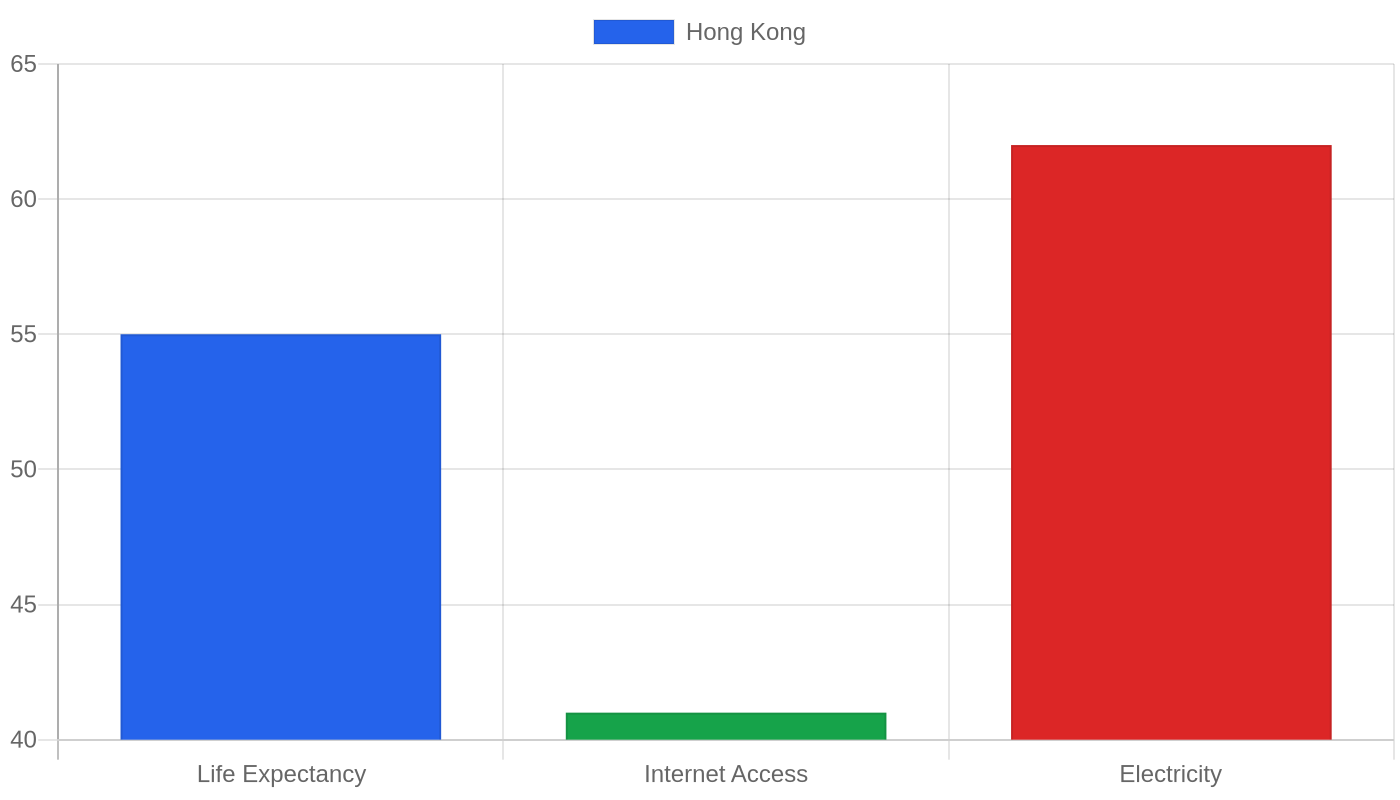
Data Transparency Challenges: Current macroeconomic indicators such as GDP growth, inflation rates, and unemployment figures are not currently available from standard World Bank datasets, necessitating a focus on structural and political analysis rather than quantitative trends.
Political Continuity: The Sino-British Joint Declaration ensured administrative continuity through the handover, resulting in a governance model that balances regional autonomy with national oversight, shaping the long-term economic stability of the territory.
Structural Foundations and Industrial Profile
The economic architecture of Hong Kong is deeply intertwined with its political status as a Special Administrative Region, where executive, legislative, and judicial powers are devolved from the national government. This unique setup, governed by the Basic Law which serves as the regional constitution, allows for an executive-led system that has largely retained characteristics from its history as a British colony.
While specific GDP figures and per capita income metrics remain unavailable in current World Bank records, the territory’s industrial base remains robust and diversified. Key sectors include consumer services, financials, technology, and industrials, supported by prominent entities such as Animoca Brands in the tech space and Ampd Energy in the industrial sector.
The presence of major financial institutions like Bank of East Asia and Bank of China (Hong Kong) underscores the city’s enduring role as a global financial hub, even as broader macroeconomic data points require careful contextual interpretation. Understanding this landscape requires looking beyond missing statistical aggregates to the institutional frameworks that continue to drive commercial activity and investment flows within the region.
Cost of Living and Housing Dynamics
For residents and expatriates alike, the cost of living in Hong Kong presents a complex picture shaped by high-density urban planning and limited land availability. Although precise CPI inflation numbers and detailed housing indices are not currently listed in the provided datasets, the general economic consensus suggests that daily expenses and rental costs remain significant factors in quality of life assessments.
The absence of explicit cost-of-living metrics does not diminish the importance of understanding how households manage their budgets in one of the world’s most compact metropolitan areas. Consumers must navigate a market where essential services and retail offerings are dominated by large-scale operators like AS Watson and Amoy Food, indicating a consolidated retail environment that can influence pricing dynamics.
Furthermore, the interplay between rent and purchase prices is critical for long-term settlement decisions, though specific comparative data against regional averages is not explicitly quantified here. Ultimately, the financial burden on individuals is likely driven by structural constraints inherent to the territory’s geography and its status as a premium global business center.
Investment Climate and Corporate Ecosystem
The investment landscape in Hong Kong is characterized by a mix of established financial giants and emerging technology firms, creating a dynamic environment for capital allocation. Major companies such as Baleno, Asia Pacific Vision, and Aji Ichiban highlight the strength of the consumer services and goods sectors, which continue to attract both domestic and foreign interest.
Meanwhile, the technology sector is represented by innovators like Animoca Brands, signaling a gradual diversification away from traditional finance into digital and creative industries. For investors, the business climate is heavily influenced by the regulatory framework established under the “one country, two systems” principle, which provides a degree of legal certainty crucial for international commerce.
The dominance of financial institutions in the top company listings reflects the sector’s pivotal role in sustaining economic liquidity and facilitating cross-border trade. However, potential investors must also consider the operational realities faced by companies in industrials and energy, such as Ampd Energy, which operate within a broader national economic strategy.
This ecosystem offers opportunities for growth but requires a nuanced understanding of the regulatory and geopolitical context that defines the territory’s commercial boundaries.
Safety, Politics, and Quality of Life
Quality of life in Hong Kong is deeply affected by its political landscape and safety indices, which provide a backdrop to daily existence. While specific crime and safety index scores are not currently available in the provided data, the political environment remains a central theme in public discourse and policy-making.
The territory’s status as a Special Administrative Region means that governance is derived from the Sino-British Joint Declaration, ensuring economic and administrative continuity while aligning with national interests. This political framework influences social stability and the overall sense of security among residents, although precise statistical measures of safety are not detailed in the current dataset.
The executive-led governing system, inherited from colonial times, continues to shape public administration and civic engagement in ways that impact everyday life. Residents navigate a society where the rule of law, enshrined in the Basic Law, plays a critical role in maintaining order and protecting rights. Consequently, the interplay between political stability and personal safety remains a key consideration for anyone assessing the long-term livability of the region.
What’s Happening Now: Navigating Policy Shifts
Current affairs in Hong Kong are dominated by the ongoing implementation of the “one country, two systems” principle and its implications for regional autonomy. The recent political developments have reinforced the executive-led nature of the government, with powers devolved from the national government continuing to shape legislative priorities.
While specific economic reforms or election results are not detailed in the immediate data snapshot, the broader trend points toward greater integration with the national economy while maintaining distinct legal and administrative structures. Businesses are adapting to this evolving landscape, with major corporations like Café de Coral and Bank of China (Hong Kong) navigating new regulatory environments.
The absence of real-time inflation or GDP data does not detract from the significance of these structural shifts, which redefine how the territory interacts with global markets. Stakeholders are closely monitoring how the Basic Law is interpreted in practice, as these interpretations will determine the future trajectory of economic freedom and political expression.
This period represents a critical juncture for Hong Kong, balancing its historical identity with its integrated role within China’s broader development strategy.
The Bottom Line
Hong Kong remains a critical node in the global economy, distinguished by its unique constitutional status and strong corporate foundation. Investors and analysts should focus on the structural resilience of its financial and consumer sectors, despite gaps in standard macroeconomic reporting. The territory’s future success hinges on how effectively it navigates the complexities of its political relationship with mainland China.
For those willing to engage with its specific regulatory and cultural context, Hong Kong offers significant opportunities amidst a rapidly changing geopolitical landscape.
Sources & Methodology
This article is authored by Economic Pulse Net for informational and research purposes. Economic Pulse Net sources its data from multilateral institutions, national statistics bureaus, and proprietary databases. All data is believed to be current as of the date of publication.
Published: September 25, 2026 | Category: Research — Hong Kong
Use these signals in your own platform
Economic Pulse publishes its live signal feed through a documented, read-only API. Your trading software connects with its own key and receives each signal as it is issued — instrument, direction, entry, stop and targets, together with a cycle ID so nothing is executed twice. The feed is independent of this website and cannot change it.
Signals are informational only and are not financial advice.