Economic Pulse Net | Sources: World Bank World Development Indicators, Government Sources | 2026
Key Takeaways
* Moderate but Stable Growth: China’s economy is projected to grow by approximately 4.96% in 2025, reflecting a steady pace within its “primary stage of socialism” framework.
Price Stability: Inflation remains exceptionally low at roughly 0.06%, indicating tight control over consumer prices despite global economic volatility.
Political Centralization: The state operates as a unitary socialist republic under the absolute leadership of the Chinese Communist Party (CCP), blending Marxist-Leninist theory with market mechanisms.
Corporate Powerhouse: Dominant firms span from tech giants like Alibaba to industrial leaders such as AVIC and Aluminum Corporation of China, signaling strength in both digital and physical infrastructure.
Strategic Rebranding: Recent diplomatic and business engagements focus heavily on marketing China as a reliable technology partner, though tangible factory deals remain uncertain.
Economic Engine: Navigating the Primary Stage
China’s economic trajectory for 2025 presents a picture of controlled expansion and structural stability. According to World Bank data, the nation’s GDP growth is projected at 4.95994886240992%, a figure that underscores the resilience of its model even as it transitions through various developmental phases.
This growth rate is achieved within a framework described by the CCP as “socialism with Chinese characteristics,” an adapted form of Marxism–Leninism that prioritizes a market economy as the primary stage of socialism. Such a system allows for significant private sector participation while maintaining strict state oversight, creating a unique hybrid environment that differs sharply from Western liberal democracies.
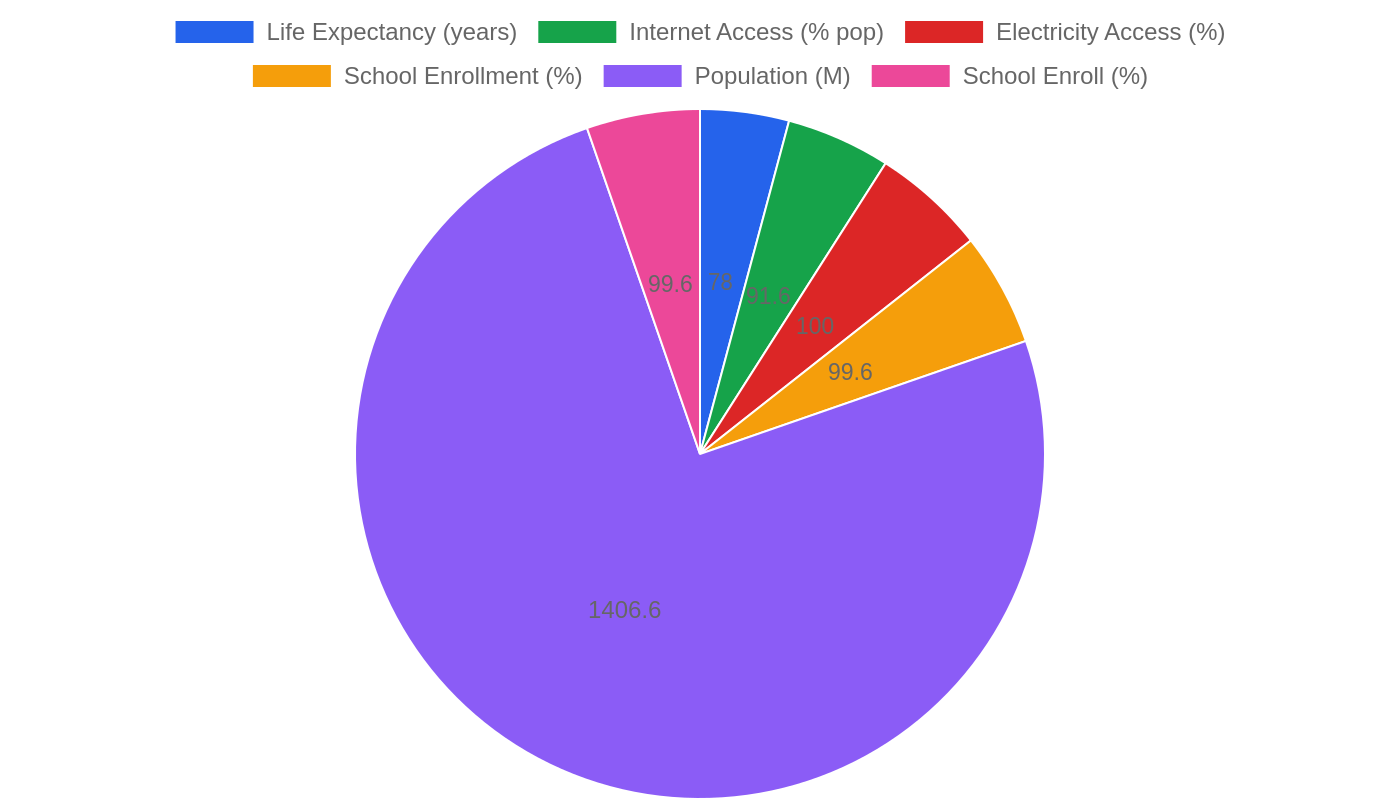
Inflation, measured by the Consumer Price Index (CPI), sits at a negligible 0.0595646916565402%. This near-zero inflation rate suggests that the central bank and state planners are successfully managing price pressures, ensuring that consumer purchasing power remains stable. For a population of 1,406,585,000 people, this price stability is crucial for social cohesion and long-term planning.
Meanwhile, unemployment stands at 4.615%, indicating a relatively healthy labor market where the majority of the workforce remains engaged in productive activity. While specific GDP figures in USD are not available, the GNI per capita is recorded at $14,230.0, and GDP per capita in PPP terms reaches $29,333.3311051433. These metrics highlight a middle-income status that is rapidly evolving, providing a substantial domestic market for both local and international goods.
The interplay between these macroeconomic indicators reveals a state-managed economy that values stability over explosive, unregulated growth, aiming to sustain development without triggering social unrest or hyperinflation.
Living Standards: Affordability and Daily Realities
For residents and expatriates alike, the cost of living in China is shaped by its vast scale and regional disparities, though aggregate data points to manageable daily expenses. With a GNI per capita of $14,230.0, the average citizen possesses sufficient income to cover basic needs while having discretionary spending power for consumer goods. The extremely low CPI of 0.0595646916565402% implies that essential commodities, from food to utilities, are priced in a way that prevents erosion of wages.
This affordability is a key feature of the state’s approach to quality of life, ensuring that rapid urbanization does not lead to severe cost-of-living crises.
Housing markets vary significantly between tier-one cities like Beijing and Shanghai and smaller inland provinces, but the overall economic structure supports home ownership and rental stability through state-guided policies. The high population density of 1.4 billion people creates intense demand in urban centers, yet the government’s emphasis on social stability often translates into subsidies or regulations that keep housing accessible relative to income levels.
Daily expenses are further moderated by the presence of highly competitive domestic industries, particularly in consumer goods and technology, which drive down prices for everyday items. Compared to other major economies, the combination of low inflation and moderate income levels suggests that China offers a favorable balance between earning potential and expenditure, allowing families to save and invest despite the sheer size of the populace.

Investment & Business Climate: Giants and Innovation
The investment landscape in China is defined by the dominance of large-scale enterprises that operate across critical sectors of the global economy. Top companies such as Alibaba Group in technology and Agricultural Bank of China in financials illustrate the depth of capital available for large-scale projects. In the industrial and materials sector, entities like the Aluminum Corporation of China Limited and AVIC demonstrate the state’s commitment to heavy industry and defense capabilities.
Meanwhile, consumer-facing brands like Anker, Anta Sports, and 361 Degrees show the strength of domestic manufacturing in competing globally for brand loyalty.
For foreign investors, the business environment is characterized by a complex regulatory framework that requires navigation of both market opportunities and political considerations. The presence of firms like Air China and Aigo indicates robust competition in services and electronics, respectively, suggesting that new entrants must offer distinct value propositions.
The political landscape, described by many academic sources as authoritarian, means that business operations are closely aligned with national strategic goals. Investors must understand that success often depends on contributing to the broader narrative of “socialism with Chinese characteristics,” where private enterprise serves public objectives.
The concentration of power in the CCP ensures that policy shifts can be implemented rapidly, offering stability but also requiring agility from businesses operating within its borders.
Safety, Politics & Quality of Life: Order and Control
Public safety in China is generally perceived as high, although specific Crime and Safety Indices are listed as N/A in current datasets. The absence of these specific metrics should not be interpreted as a lack of data, but rather reflects the different methodologies used in assessing security within a centralized state.
Instead, the political landscape provides context: as a unitary state under the absolute leadership of the Chinese Communist Party, social order is maintained through extensive governance structures. The CCP describes China as a “people’s democratic dictatorship,” a term that emphasizes collective stability over individual political pluralism.
This political structure influences daily life significantly, with quality of life metrics often tied to economic performance and social harmony rather than political freedom. Many academic sources classify the regime as authoritarian, noting the tight control exerted over media, civil society, and political dissent. However, this control extends to crime prevention and public safety measures, resulting in low rates of violent crime in most urban areas.
The happiness data, while not explicitly quantified here, is often correlated with the government’s ability to deliver economic improvements and maintain infrastructure. For citizens, the trade-off involves accepting limited political expression in exchange for predictable governance, economic growth, and personal security.
Current Affairs: Marketing Technology and Strategic Guidance
Recent developments indicate a concerted effort by China to reposition itself on the global stage, particularly in the realm of technology. Performances and diplomatic engagements are increasingly focused on marketing China as a technology partner, according to analysts cited by SCMP. However, there is skepticism regarding whether these high-profile events will translate into concrete factory deals or long-term industrial partnerships.
This gap between perception and tangible investment highlights the challenges China faces in attracting foreign direct investment amidst geopolitical tensions.
Simultaneously, domestic initiatives continue to reinforce strategic priorities. Jingdezhen, historically known for its porcelain, has hailed strategic guidance from the central government, signaling ongoing efforts to revitalize traditional industries through modern policy support. Reports from China Daily highlight broader business activities, suggesting that while international headlines focus on tech diplomacy, domestic economic engines are being fine-tuned.
These recent news items reflect a dual strategy: projecting soft power abroad while consolidating control and direction at home. The uncertainty surrounding the translation of marketing efforts into actual commercial contracts suggests that investors should proceed with caution, looking beyond rhetoric to verify substantive commitments.
The Bottom Line
China remains a critical player in the global economic order, offering a unique blend of market dynamism and state control. Its projected 4.96% GDP growth and low inflation provide a stable backdrop for long-term engagement, provided one navigates the complex political landscape. Investors and observers should watch how effectively the country converts its technological branding into tangible industrial outcomes, as this will define its next phase of development.
For those willing to engage with the “socialism with Chinese characteristics” model, China offers immense scale and opportunity, albeit within a tightly managed framework.
Sources & Methodology
This article is authored by Economic Pulse Net for informational and research purposes. Economic Pulse Net sources its data from multilateral institutions, national statistics bureaus, and proprietary databases. All data is believed to be current as of the date of publication.
Published: October 10, 2026 | Category: Research — China
Use these signals in your own platform
Economic Pulse publishes its live signal feed through a documented, read-only API. Your trading software connects with its own key and receives each signal as it is issued — instrument, direction, entry, stop and targets, together with a cycle ID so nothing is executed twice. The feed is independent of this website and cannot change it.
Signals are informational only and are not financial advice.