Economic Pulse Net | Sources: World Bank World Development Indicators, Government Sources | 2026
Key Takeaways
* Hydrocarbon Dominance: The economy remains heavily anchored in oil and gas, with major state-linked entities like Brunei Shell Petroleum and Brunei LNG driving the primary industrial output.
Financial Hub Status: A robust financial sector is led by institutions such as Baiduri Bank, Bank Islam Brunei Darussalam, and the sovereign wealth vehicle, the Brunei Investment Agency.
Unique Governance Model: The political landscape is defined by the Malay Islamic Monarchy (MIB) philosophy, where a parliament exists but members are appointed by the Sultan rather than elected.
Legal Dualism: The legal framework operates on English common law traditions, though Islamic law (sharia) holds supremacy in specific jurisdictions, creating a distinct regulatory environment for businesses.
The Hydrocarbon Anchor
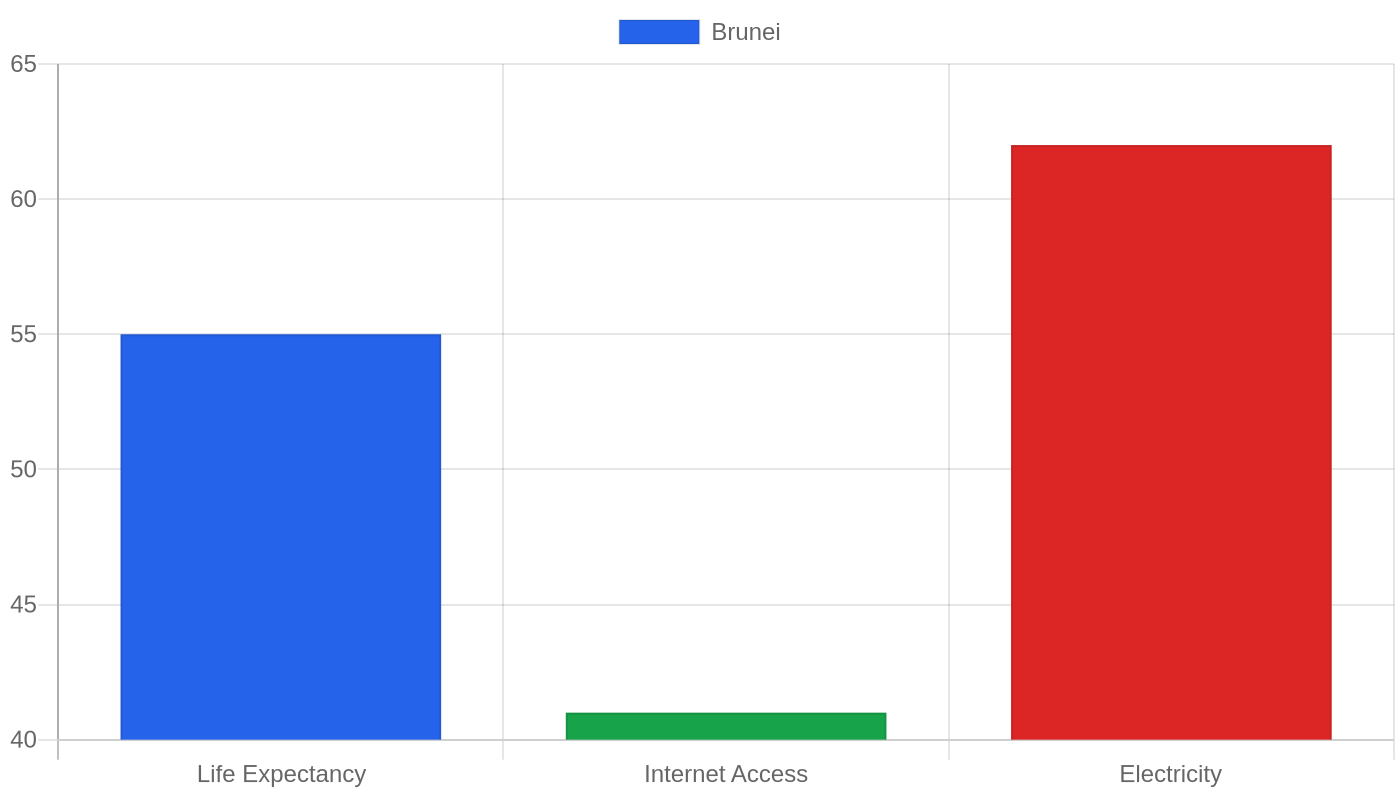
Brunei’s economic identity is inextricably linked to its vast natural resources, specifically within the oil and gas sectors. While specific GDP growth figures and inflation rates are currently listed as unavailable from the World Bank, the structural backbone of the nation’s wealth is clear through its industrial composition. Major players such as Brunei Shell Petroleum, Brunei Energy Services and Trading, and Brunei LNG form the core of this energy-centric ecosystem.
These entities do not merely extract resources; they process them into high-value products, evidenced by the presence of Brunei Fertilizer Industries and Brunei Methanol Company in the industrials and petrochemical categories. This vertical integration suggests that Brunei aims to capture more value downstream rather than relying solely on crude exports. Consequently, the national economy is likely highly sensitive to global energy price fluctuations, making diversification efforts critical for long-term stability.
The absence of reported unemployment data further hints at a labor market that may be tightly controlled or heavily reliant on foreign expertise within these capital-intensive industries. Understanding Brunei requires looking past standard macroeconomic metrics and recognizing the sheer scale of its state-controlled energy infrastructure.
Cost of Living and Daily Expenses
For residents and expatriates alike, navigating the cost of living in Brunei involves understanding a market shaped by state subsidies and limited local production. Detailed consumer price index data is currently absent, yet the presence of Hua Ho Department Store indicates a developed retail sector catering to both local needs and tourism.
Housing costs and rental markets in such hydrocarbon-rich nations often reflect the disparity between local and expatriate wages, though specific rent-to-buy ratios are not provided in the current dataset. Daily expenses are likely influenced by the import dependency of the country, meaning that goods not produced domestically—such as certain foods and manufactured items—carry premium price tags.
Without concrete inflation numbers, it is difficult to gauge short-term purchasing power erosion, but the general economic model suggests that basic necessities may be subsidized to maintain social stability. Consumers should anticipate a lifestyle that balances high-end services with a reliance on imported goods, creating a unique expenditure profile compared to regional neighbors.
The overall affordability of the nation is thus a complex equation involving government policy, import logistics, and the strength of the local currency against international trade partners.
Investment and Business Climate
The business environment in Brunei is characterized by strong state involvement and a growing financial services sector. Investors looking at the kingdom will find a cluster of influential companies that dominate their respective niches. In the financial space, Baiduri Bank and Bank Islam Brunei Darussalam provide essential banking services, while the Brunei Darussalam Central Bank oversees monetary policy and stability.
For those interested in the real economy, the Brunei Investment Agency stands as a pivotal entity, managing the country’s substantial sovereign wealth reserves. Beyond finance and energy, the industrial base includes Brunei Fertilizer Industries and Brunei Methanol Company, offering opportunities in chemical manufacturing and distribution.
The legal system, rooted in English common law, provides a familiar framework for international contracts, although investors must remain vigilant regarding the superseding nature of Islamic law in certain cases. This dual legal structure requires careful navigation for foreign entities seeking to establish operations or partnerships. The concentration of key industries among a few large firms suggests that building relationships with state-linked enterprises is often a prerequisite for successful market entry.
Safety, Politics, and Quality of Life
Brunei offers a unique blend of high safety standards and a rigid political structure that shapes daily life. Crime and safety indices are currently marked as unavailable, but the country is generally perceived as stable and secure due to its small population and strict governance. Politically, the nation operates under the Malay Islamic Monarchy (MIB), which integrates Malay culture, Islamic religion, and monarchical authority into the national identity.
This framework influences everything from public behavior to corporate ethics, creating a cohesive but conservative social environment. The legal system reflects this duality, with English common law serving as the foundation, yet Islamic law taking precedence in specific matters. There is a parliament, but it serves an advisory role with members appointed by the Sultan, meaning there are no competitive elections to drive political change.
This lack of electoral pressure contributes to policy continuity, which can be attractive for long-term investors but limits political dynamism. For quality of life, the interplay of religious observance and royal tradition creates a predictable, albeit restrictive, social atmosphere for both locals and foreigners.
What’s Happening Now: Navigating Tradition and Transition
Currently, Brunei is navigating its position in a rapidly changing global economy while maintaining its traditional governance structures. Recent developments highlight the ongoing tension between modernization and adherence to the MIB philosophy. The appointment of parliamentary members by the Sultan continues to define the political landscape, ensuring that the monarchy retains ultimate control over legislative processes.
Meanwhile, the energy sector remains the focal point of economic activity, with companies like Brunei LNG and Brunei Shell Petroleum adapting to shifting global energy demands. The financial sector, bolstered by the Brunei Investment Agency, continues to play a crucial role in stabilizing the economy and funding development projects. Although specific recent news events or live indicators are not detailed in the current data snapshot, the overarching narrative is one of cautious stewardship.
The government appears focused on leveraging its sovereign wealth to mitigate the risks associated with volatile oil prices. As global markets fluctuate, Brunei’s strategy seems to prioritize internal stability and gradual economic evolution over rapid, disruptive reforms. This approach ensures that the nation remains a steady, if quiet, player in Southeast Asian affairs, relying on its financial reserves and energy assets to weather external storms.
The Bottom Line
Brunei presents a niche investment case defined by stability, resource wealth, and a unique cultural-legal framework. It is best suited for investors seeking exposure to Southeast Asian energy markets and financial services who prioritize political continuity over democratic dynamism. Stakeholders must navigate a business environment where state-linked entities hold significant sway and where Islamic law intersects with common law practices.
For those willing to engage with this distinctive model, Brunei offers a secure, albeit specialized, opportunity in a volatile region.
Sources & Methodology
This article is authored by Economic Pulse Net for informational and research purposes. Economic Pulse Net sources its data from multilateral institutions, national statistics bureaus, and proprietary databases. All data is believed to be current as of the date of publication.
Published: October 30, 2026 | Category: Research — Brunei
Use these signals in your own platform
Economic Pulse publishes its live signal feed through a documented, read-only API. Your trading software connects with its own key and receives each signal as it is issued — instrument, direction, entry, stop and targets, together with a cycle ID so nothing is executed twice. The feed is independent of this website and cannot change it.
Signals are informational only and are not financial advice.