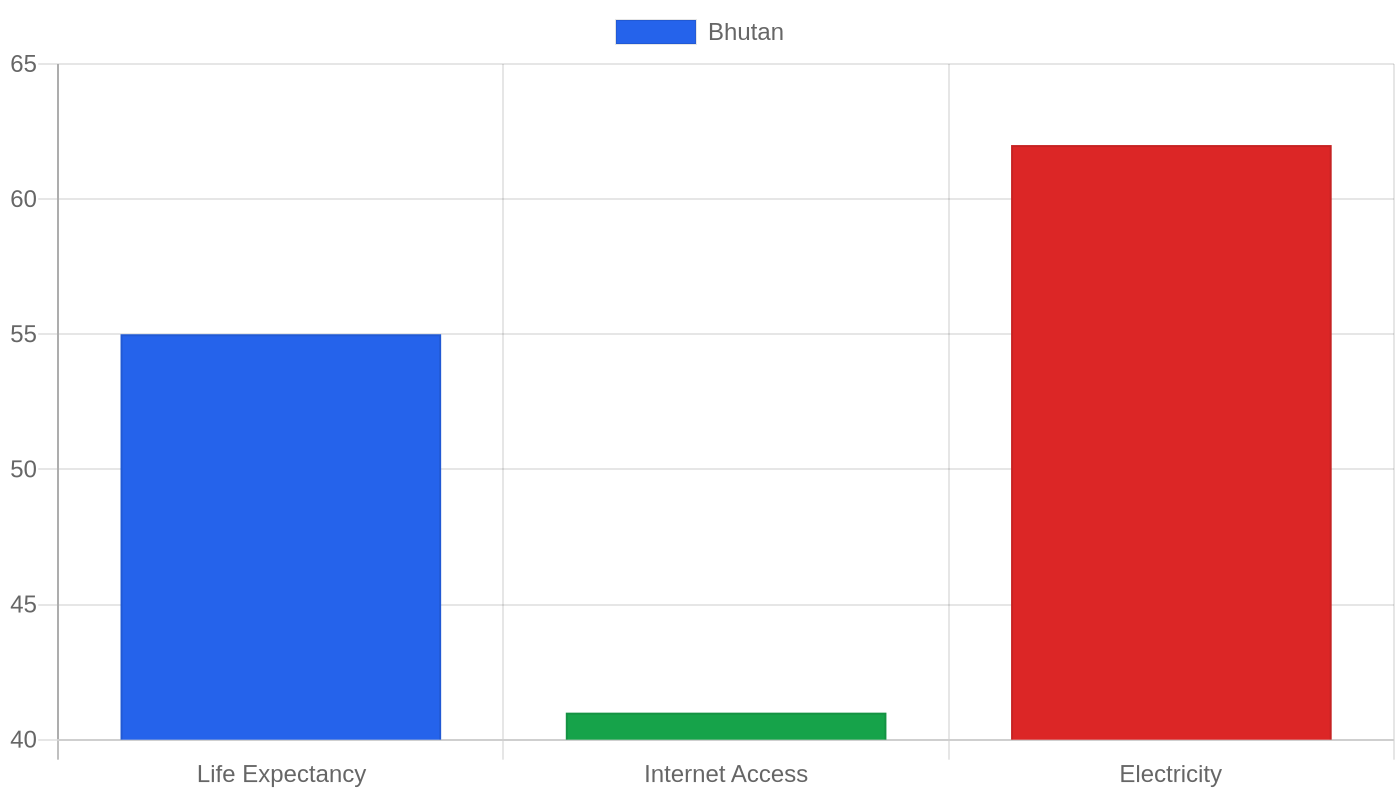
Economic Pulse Net | Sources: World Bank World Development Indicators, Government Sources | 2026
Key Takeaways
* Bhutan operates as a constitutional monarchy with a parliamentary system, having transitioned to democracy in 2008 under King Jigme Khesar Namgyel Wangchuck.
The political landscape is defined by the People’s Democratic Party and Prime Minister Tshering Tobgay, marking a significant evolution from the social contract established in 1907.
Major domestic industries are dominated by consumer services and media entities, including Druk Air, Bhutan Airlines, and several prominent news outlets like Kuensel and The Bhutan Times.
While specific macroeconomic indicators such as GDP growth, inflation, and unemployment rates are currently listed as unavailable by the World Bank, the nation remains classified as an electoral democracy in 2024.
Business operations are concentrated within a few key state-linked or major private corporations, highlighting a market that is stable but potentially limited in its corporate diversity compared to larger regional economies.
Economic Structure and Industrial Base
The economic architecture of Bhutan presents a unique case study in development, characterized by a distinct industrial profile that diverges significantly from traditional manufacturing hubs. According to data sourced from the World Bank, specific metrics regarding GDP growth, inflation (CPI), and unemployment rates are currently listed as N/A, indicating either a lack of recent standardized reporting or a statistical gap in these particular datasets for the latest period.
Similarly, absolute figures for GDP in USD, GDP per capita based on purchasing power parity (PPP), GNI per capita, and total population remain unreported in the provided international database snapshot. However, the structural composition of the economy offers critical insight into how the nation functions. The main industries are heavily skewed toward service-oriented sectors, with no significant heavy industry or large-scale export manufacturing highlighted in the current dataset.
This suggests an economy driven by internal consumption, tourism, and perhaps hydropower exports, though the latter is not explicitly detailed in the available text. The absence of hard numerical data does not negate the importance of understanding this service-led model; it implies that wealth creation is tied closely to human capital, hospitality, and digital or media services rather than commodity extraction.
For investors and analysts, this means that standard comparative models using GDP multiples may be less effective than qualitative assessments of sectoral stability and government policy direction. The focus on consumer services as the primary industrial output underscores a society where daily life, communication, and transportation form the backbone of economic activity.
Understanding Bhutan requires looking beyond aggregate numbers to the operational realities of its dominant firms, which serve as the primary engines of employment and value addition in a constrained geographic and demographic environment.
Cost of Living and Housing Dynamics
Navigating the cost of living in Bhutan requires an appreciation for its isolated geography and small market size, factors that inherently influence pricing structures across housing and daily essentials. While precise inflation rates and consumer price indices are not currently quantified in the provided World Bank data, the general economic principle of a small, landlocked Himalayan nation suggests that import-dependent goods likely carry premium costs due to logistical challenges.
Housing markets in such environments often reflect high construction costs and limited land availability, leading to a scenario where rent versus buy decisions are heavily influenced by long-term security rather than speculative investment gains. Daily expenses for residents are likely shaped by the dominance of local consumer services, meaning that costs for communication, transport, and media are directly tied to the efficiency and competition among a few key players.
Without specific regional averages for direct comparison, one must infer that the cost structure is stable but potentially rigid, given the limited number of major companies operating in the consumer services sector. This concentration can limit price competition, potentially keeping baseline costs for essential services higher than in more diversified regional markets.
Furthermore, the quality of life and associated costs are deeply intertwined with the national philosophy of Gross National Happiness, which may prioritize sustainable living over rapid urbanization and commercial density. Consequently, expatriates and businesses should anticipate a cost environment that values stability and sustainability, even if it lacks the dynamic price fluctuations seen in larger, more volatile emerging markets.
The housing and living expense profile is thus best understood as a function of national policy and geographic constraint rather than purely market-driven supply and demand shocks.
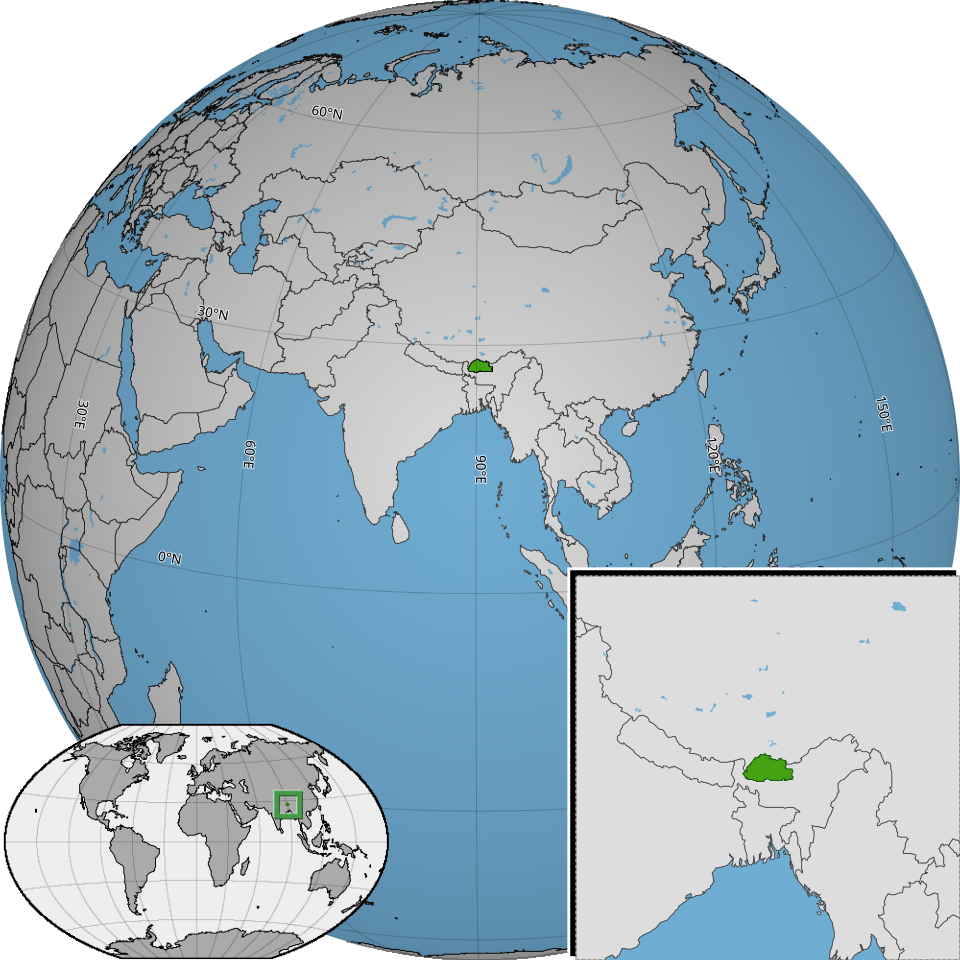
Investment and Business Climate
The business landscape in Bhutan is defined by a handful of prominent entities that dominate the consumer services and industrial sectors, creating a market that is accessible but highly consolidated. A review of top companies reveals a strong presence in aviation, media, and postal services, with key players including Druk Air and Bhutan Airlines in the transportation sector, and a robust array of media organizations such as Kuensel, The Bhutan Times, Bhutan Today, and Business Bhutan.
These entities illustrate a business environment where communication and connectivity are central to commercial activity, suggesting that any foreign investment would likely need to engage with these established networks to gain traction. The inclusion of Bhutan Postal Corporation in the industrials category highlights the ongoing modernization of logistics and distribution channels within the country.
For potential investors, the dominance of these specific firms indicates that opportunities may lie in partnerships or technology integration rather than greenfield entry into saturated consumer markets. The media sector, in particular, appears vibrant and diverse, with multiple outlets ranging from daily newspapers to specialized business publications, signaling a well-informed public sphere that values transparency and information flow.
This media richness can be a positive indicator for regulatory clarity and public discourse, which are crucial for long-term business planning. However, the concentration of major economic actors also suggests that barriers to entry for new competitors might be high, requiring strategic alliances with existing leaders like Bhutan Broadcasting Service or Druk Yoedzer.
The business climate, therefore, rewards those who understand the local institutional landscape and can navigate relationships with these cornerstone enterprises. It is a market where reputation and compliance with national standards are likely as valuable as capital injection.
Safety, Politics, and Quality of Life
Bhutan’s political and social fabric provides a stable backdrop for both residents and external observers, anchored by a successful democratic transition that has evolved since the establishment of the monarchy in 1907. The country is currently governed as a constitutional monarchy with a parliamentary form of government, led by Prime Minister Tshering Tobgay of the People’s Democratic Party, while King Jigme Khesar Namgyel Wangchuck serves as the reigning monarch.
This dual structure ensures continuity and change, balancing traditional authority with modern representative governance. In 2024, Bhutan was classified as an electoral democracy according to the V-Dem Democracy Indices in the Regimes of the World classification, a testament to the resilience of its democratic institutions established in 2008.
Regarding safety, specific crime and safety indices are listed as N/A in the provided data, but the political stability and low-profile nature of the region generally contribute to a secure environment. The absence of reported violent crime trends in standard databases often correlates with tight-knit communities and strong social cohesion, which are hallmarks of Bhutanese society.
Quality of life is further enhanced by the national emphasis on cultural preservation and environmental conservation, which are integral to the concept of Gross National Happiness. This holistic approach to development means that policy decisions are often evaluated through the lens of social well-being and environmental impact, not just economic output.
For individuals considering relocation or long-term engagement, the combination of political stability, clear democratic processes, and a focus on communal harmony creates a predictable and safe living environment. The political landscape is not static, however, with active party politics providing a mechanism for public accountability and civic participation.
Current Affairs and Policy Direction
The current affairs in Bhutan are centered on the consolidation of its democratic framework and the management of its evolving social contract between the monarchy and the populace. As the nation continues to operate under the leadership of Prime Minister Tshering Tobgay, the focus remains on sustaining the democratic gains made since 2008 while addressing contemporary economic challenges.
The classification as an electoral democracy in 2024 by V-Dem underscores the international recognition of Bhutan’s political maturity, suggesting that policy shifts will likely occur through established legislative channels rather than abrupt changes. Recent developments appear to be focused on strengthening the institutions that support this democratic model, including the media and civil society, as evidenced by the robust presence of independent news outlets like Kuensel and Business Bhutan.
There is an ongoing dialogue about balancing economic modernization with cultural and environmental preservation, a tension that defines much of the current policy debate. The role of state-linked or major private companies like Druk Air and Bhutan Postal Corporation suggests that infrastructure development and connectivity remain key priorities for the government.
Additionally, the visibility of business-focused media indicates a growing interest in fostering a more dynamic private sector within the constraints of the national philosophy. While specific economic reforms or election outcomes are not detailed in the immediate data snapshot, the trajectory points toward incremental progress and institutional strengthening.
The political landscape remains active, with the People’s Democratic Party playing a central role in shaping the national agenda and responding to public needs. This environment fosters a sense of predictability for stakeholders who align their strategies with the long-term vision of the state.
The Bottom Line
Bhutan represents a niche but compelling case for observers interested in the intersection of traditional governance and modern democratic practices. While hard economic data is currently sparse, the political stability and clear institutional framework provide a reliable foundation for long-term engagement. Investors and researchers should view Bhutan not through the lens of rapid growth metrics, but as a model of sustainable, happiness-centric development.
The country is worth watching for those interested in how small nations can maintain sovereignty and cultural integrity while integrating into the global community.
Sources & Methodology
This article is authored by Economic Pulse Net for informational and research purposes. Economic Pulse Net sources its data from multilateral institutions, national statistics bureaus, and proprietary databases. All data is believed to be current as of the date of publication.
Published: October 29, 2026 | Category: Research — Bhutan
Use these signals in your own platform
Economic Pulse publishes its live signal feed through a documented, read-only API. Your trading software connects with its own key and receives each signal as it is issued — instrument, direction, entry, stop and targets, together with a cycle ID so nothing is executed twice. The feed is independent of this website and cannot change it.
Signals are informational only and are not financial advice.