Economic Pulse Net | Sources: World Bank World Development Indicators, Government Sources | 2026
Key Takeaways
– The Turks and Caicos Islands operate as a British Overseas Territory, with King Charles III as sovereign and a governor appointed by the UK Foreign Office, creating a unique political framework that blends local governance with colonial oversight.
– The islands adopted their first constitution on 30 August 1976, a milestone celebrated annually as Constitution Day, reflecting a gradual evolution toward self-governance.
– While comprehensive economic data from the World Bank is currently unavailable, the territory’s status as a high-end tourism and offshore financial centre suggests significant economic activity driven by luxury travel and international finance.
– The political landscape is defined by the territory’s relationship with the United Kingdom, with local governance led by a Chief Minister—a position first held by J. A. G. S. McCartney.
The Economic Engine: Tourism, Finance, and the Data Gap
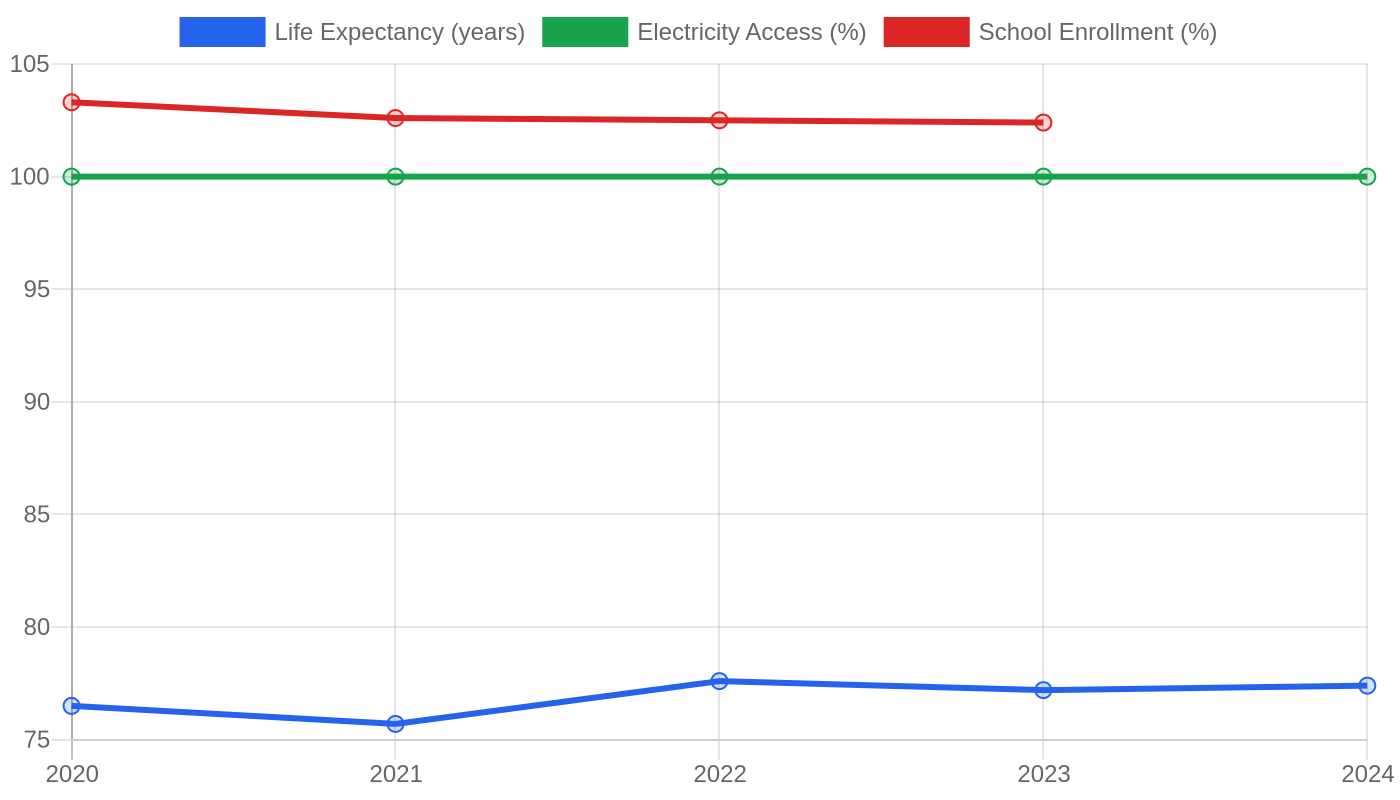
The Turks and Caicos Islands present a curious challenge for economic analysts. The World Bank currently reports no data on GDP growth, inflation, unemployment, GDP per capita, or GNI per capita for this British Overseas Territory. This absence of official statistics does not mean the economy is dormant—rather, it reflects the challenges of collecting comprehensive data in a small island territory with a population that remains unrecorded in the World Bank’s latest figures.
What we do know about the economic structure comes from the territory’s established reputation. The Turks and Caicos Islands have long positioned themselves as a premier destination for luxury tourism, drawing visitors to their pristine beaches and world-class diving spots in Providenciales and Grand Turk. The tourism sector forms the backbone of the economy, supporting hotels, restaurants, water sports operators, and a network of service providers that cater to an affluent international clientele.
Alongside tourism, the islands have developed a significant offshore financial services sector. The territory offers a tax-neutral environment with no corporate or income taxes, making it attractive for international businesses, trusts, and investment vehicles. This dual economic model—luxury tourism meeting offshore finance—creates a distinct economic profile that differs markedly from other Caribbean nations that rely more heavily on agriculture or manufacturing.
The absence of inflation data from the World Bank is particularly notable. In an island economy that imports most consumer goods, inflation pressures typically come from global supply chains and shipping costs. Without official figures, observers must rely on anecdotal evidence from tourism operators and importers to gauge price trends. The unemployment picture remains similarly opaque, though the seasonal nature of tourism employment likely creates fluctuations between high and low seasons.
Paradise Pricing: The Cost of Island Living
Living in the Turks and Caicos Islands carries a premium that reflects the territory’s remote location and luxury orientation. The cost of living data from the World Bank is not currently available, but the territory’s economic model offers clear signals. As a high-end tourism destination, daily expenses for food, transportation, and utilities tend to run significantly above Caribbean averages.
Import duties on consumer goods, combined with the logistical challenges of shipping to a small island chain, push prices upward.
Housing costs in the Turks and Caicos Islands present a stark divide between the local population and the expatriate community. Providenciales, the commercial hub, commands premium prices for beachfront villas and condominiums aimed at wealthy second-home buyers and vacation renters. For local residents, housing affordability has become an increasing concern as tourism development drives up land values and rental rates.
The rental market in Grand Turk, the capital, offers more modest options, though inventory remains limited.
For visitors and temporary residents, the cost of a hotel room or vacation rental in peak season can rival prices in Miami or the Hamptons. Grocery costs reflect the import-heavy nature of the islands’ supply chain, with fresh produce and dairy products carrying particularly high price tags. Utilities, especially electricity generated from imported fuel, add another layer to the cost burden.
These economic realities shape daily life in ways that official statistics, when they become available, will likely confirm.
Investing in Island Ambition: Business Climate and Key Players
The Turks and Caicos Islands offer a business environment that prioritises simplicity and tax efficiency. With no corporate income tax, no capital gains tax, and no property tax on owner-occupied homes, the territory has positioned itself as a jurisdiction of choice for international businesses and wealthy individuals.
The top companies operating in the islands are not publicly listed in the data provided, but the dominant sectors—tourism development, financial services, and real estate—define the commercial landscape.
The tourism sector attracts significant foreign investment in hotel and resort development. International hotel chains and luxury resort operators have established properties across the islands, particularly in Providenciales, driving construction and employment. The financial services sector operates through licensed banks, trust companies, and insurance firms that serve international clients seeking asset protection and wealth management solutions.
For entrepreneurs and small business owners, the regulatory environment benefits from the territory’s British legal framework, which provides familiarity and stability. Company formation is straightforward, and the absence of direct taxation reduces compliance burdens. However, the small size of the domestic market limits growth potential for businesses focused solely on local customers. Success often depends on tapping into the tourism economy or serving the expatriate community.
The political stability provided by the British Overseas Territory status adds a layer of security that investors value, even as the territory navigates its evolving relationship with London.
Crown, Constitution, and Community: The Political Fabric
The Turks and Caicos Islands operate under a political system that blends local democracy with British oversight. As a British Overseas Territory, the islands recognise King Charles III as sovereign, represented by a governor appointed by the monarch on the advice of the Foreign Office. This arrangement creates a dual structure where the governor handles external affairs, defence, and internal security, while a locally elected government manages domestic policy.
The territory’s constitutional journey began on 30 August 1976, when the islands adopted their first constitution following the election of J. A. G. S. McCartney as the first Chief Minister. This date is now celebrated annually as Constitution Day, a national holiday that marks the territory’s political evolution. The constitution has undergone revisions since then, reflecting ongoing negotiations between local leaders and the UK government over the balance of powers.
The crime and safety indices from the World Bank are not currently available, but the territory generally maintains a reputation as a safe destination for tourists and residents. The presence of the Royal Turks and Caicos Islands Police Force, supported by UK resources when needed, contributes to public safety. The political landscape remains focused on development issues—tourism growth, infrastructure investment, and the management of the territory’s relationship with the United Kingdom.
Debates over constitutional reform and the degree of self-governance continue to shape local politics, with some voices calling for greater autonomy while others value the security and stability of British ties.
Weathering the Waves: Current Affairs in a Changing World
The Turks and Caicos Islands are navigating a period of global uncertainty that tests the resilience of small island economies. While the data provided does not include recent news reports or live indicators, the territory faces the same headwinds affecting tourism-dependent Caribbean nations: shifting travel patterns, climate change impacts, and evolving international financial regulations.
The tourism industry, which forms the economic core, continues to adapt to changing visitor preferences. The rise of remote work has created opportunities for extended-stay tourism, with some visitors spending weeks or months in the islands rather than the traditional week-long holiday. This trend could reshape the territory’s tourism model, encouraging investment in longer-term accommodation and co-working spaces alongside traditional resorts.
On the financial services front, the territory must navigate increasing international pressure for transparency and tax information exchange. The UK’s relationship with the islands includes commitments to meet international standards on beneficial ownership registers and anti-money laundering measures. Compliance with these standards while maintaining the territory’s competitive edge in the offshore sector represents an ongoing balancing act for local policymakers.
The political relationship with London remains a live issue. Periodic reviews of the constitutional arrangements provide opportunities for local leaders to push for expanded powers, while the UK government maintains its oversight responsibilities. The outcome of these negotiations will shape the territory’s trajectory for years to come, influencing everything from investment flows to the daily lives of residents.
The Bottom Line
The Turks and Caicos Islands deserve attention from investors, travellers, and policy analysts interested in the intersection of luxury tourism, offshore finance, and constitutional politics in a small island setting. The territory’s unique status as a British Overseas Territory provides stability that many independent Caribbean nations lack, while its tax-neutral environment continues to attract international capital.
For those watching the evolution of small island economies, the Turks and Caicos Islands offer a case study in how a territory with limited natural resources can build prosperity through strategic positioning—and how that prosperity depends on navigating the complex relationship between local ambition and colonial legacy.
Sources & Methodology
This article is authored by Economic Pulse Net for informational and research purposes. Economic Pulse Net sources its data from multilateral institutions, national statistics bureaus, and proprietary databases. All data is believed to be current as of the date of publication.
Published: July 20, 2026 | Category: Research — Turks And Caicos Islands
Use these signals in your own platform
Economic Pulse publishes its live signal feed through a documented, read-only API. Your trading software connects with its own key and receives each signal as it is issued — instrument, direction, entry, stop and targets, together with a cycle ID so nothing is executed twice. The feed is independent of this website and cannot change it.
Signals are informational only and are not financial advice.