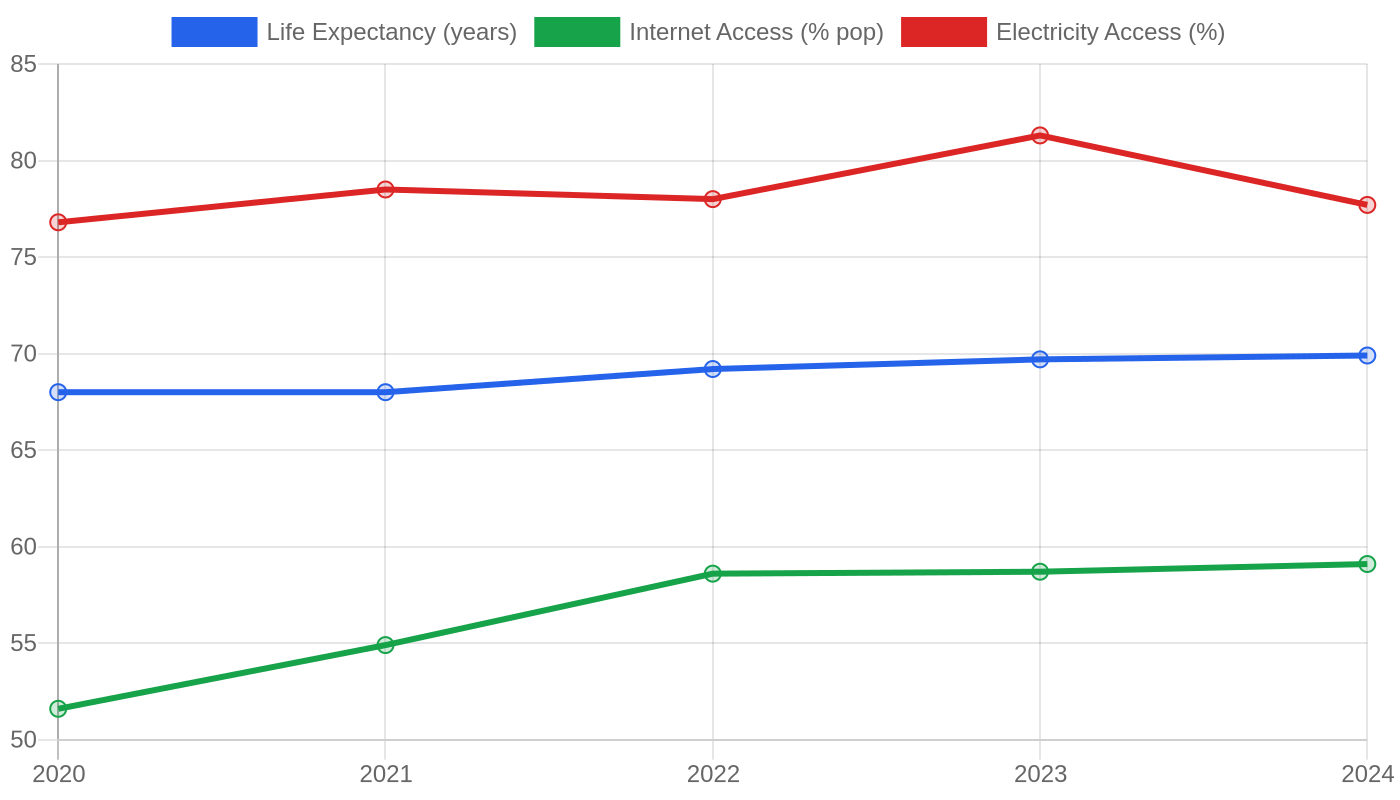
Economic Pulse Net | Sources: World Bank World Development Indicators, Government Sources | 2026
Key Takeaways
– St Vincent and the Grenadines is navigating a complex economic landscape where detailed macroeconomic indicators remain limited, yet the nation’s resilience in the face of natural disasters and global economic shifts continues to define its trajectory.
– The country’s economy is fundamentally shaped by its geography — a multi-island nation in the Eastern Caribbean where tourism, agriculture, and remittances form the backbone of daily life and commercial activity.
– As a small island developing state, St Vincent and the Grenadines faces structural challenges including vulnerability to climate-related shocks, limited diversification, and the ongoing need to balance development with environmental preservation.
– The nation’s economic outlook is closely tied to regional dynamics within the Caribbean Community (CARICOM) and its ability to leverage its strategic position in the Eastern Caribbean.
– For investors and observers, the country represents a case study in how small economies adapt to global pressures while maintaining distinct local character and resilience.
The Economic Canvas — A Nation Shaped by Its Islands
The economic story of St Vincent and the Grenadines is one that cannot be told through numbers alone, particularly when the most recent World Bank data on GDP growth, inflation, unemployment, and per capita income remain unpublished.
This absence of fresh figures is itself telling — it reflects the reality of a small island economy where data collection is often delayed and where economic activity is dispersed across dozens of inhabited islands, from the main island of St Vincent to the Grenadines chain that stretches south toward Grenada.
What we do know is that this is an economy built on a foundation of tourism, agriculture, and services, with the World Bank identifying these as the main industries driving economic activity. The tourism sector has long been the crown jewel, attracting visitors to the white-sand beaches of the Grenadines, the luxury yachting harbours of Bequia and Mustique, and the volcanic landscapes of St Vincent itself.
Agriculture, particularly the cultivation of bananas, has historically been a significant employer and export earner, though the sector has faced mounting pressures from global trade liberalisation and the increasing frequency of extreme weather events. The services sector, including financial services and government administration, rounds out the economic base, providing employment across the islands.
The absence of precise GDP figures from the World Bank should not be misread as a lack of economic activity. Rather, it underscores the measurement challenges inherent in tracking an economy where informal trade, subsistence farming, and seasonal tourism flows play substantial roles.
The country’s economic performance is closely intertwined with the health of the Caribbean region as a whole, and its fortunes rise and fall with international visitor numbers, commodity prices, and the flow of remittances from Vincentians abroad.
Inflation, too, remains a pressing concern even without official CPI data. Like many Caribbean nations, St Vincent and the Grenadines imports the vast majority of its food, fuel, and manufactured goods, making it highly susceptible to global price shocks. When international food and energy prices surge, the effects ripple quickly through local markets, squeezing household budgets and complicating the work of policymakers who must balance price stability against the need for economic growth.
The true economic picture, therefore, is one of a nation working diligently within the constraints of its geography and global position, striving to build resilience in an environment of profound uncertainty.
Housing and the Cost of Daily Life — The Price of Island Living
Living in St Vincent and the Grenadines carries a cost structure that reflects both the beauty and the isolation of island life. While comprehensive cost-of-living data is not readily available, the fundamental economics of the country are clear: nearly everything must be imported, and that reality drives prices upward. Food, building materials, vehicles, and consumer goods all arrive by sea, with shipping costs and import duties adding layers to the final price consumers pay.
For residents, this means that everyday expenses — a basket of groceries, a tank of fuel, a repair part for a car — can carry a premium compared to larger, more industrialised nations.
Housing presents a particularly significant challenge. The country’s mountainous terrain and limited flat land constrain development, pushing property prices upward in desirable coastal areas and in the capital, Kingstown. The rental market serves a mix of local workers, expatriates, and returning nationals, with demand fluctuating seasonally in line with tourism cycles.
Homeownership remains a deeply held aspiration for many Vincentians, and the government has historically supported housing programmes aimed at expanding access to affordable homes. However, the destruction wrought by hurricanes — most notably the devastating impact of storms in recent years — has placed enormous strain on the housing stock and highlighted the urgent need for climate-resilient construction.
Compared to regional neighbours in the Eastern Caribbean, the cost of living in St Vincent and the Grenadines is broadly in line with the average for small island states, where import dependence and limited economies of scale keep prices elevated. For families, the monthly budget must stretch to cover not just food and housing but also utilities, transportation, and education costs.
The reality is that island living offers an extraordinary quality of environment but demands financial discipline and resilience from those who call it home.
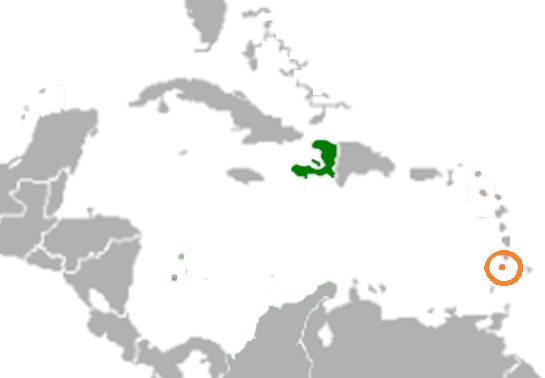
Investment and Enterprise — Opportunities in Paradise
The business landscape of St Vincent and the Grenadines is defined by its scale, with the World Bank identifying the country’s main industries as tourism, agriculture, and services. For investors, this creates a focused — if limited — set of opportunities. The tourism sector remains the most visible and dynamic area of the economy, encompassing hotels, villas, restaurants, and the yachting industry that thrives in the Grenadines.
The country has sought to position itself as a premium destination, attracting visitors seeking exclusivity and natural beauty rather than mass-market tourism. This strategy has supported the development of high-end properties and associated services, though it also creates a degree of dependence on the spending patterns of affluent travellers.
Agriculture, while facing structural challenges, continues to offer opportunities in niche and value-added products. The banana industry, long the backbone of the agricultural sector, has had to reinvent itself in the face of global competition, with growers increasingly turning to organic certification and specialty markets. Beyond bananas, there is potential in root crops, tropical fruits, and spices, as well as in agro-processing ventures that could capture more value locally before export.
The services sector, meanwhile, encompasses financial services, telecommunications, and the public sector, with the government playing a central role in economic activity.
The investment climate is shaped by the country’s legal and regulatory framework, which is based on English common law and offers a degree of familiarity and stability for investors. The government has expressed commitment to improving the ease of doing business, though the realities of small-island administration — limited capacity, distance from major markets, and vulnerability to external shocks — remain persistent hurdles.
For businesses willing to navigate these challenges, the rewards include access to a pristine environment, a welcoming population, and the potential to grow alongside a nation that is determined to chart its own course in the global economy.
Governance, Safety, and the Quality of Island Life
The political landscape of St Vincent and the Grenadines, while not detailed in available data, operates within the framework of a parliamentary democracy and a constitutional monarchy, with the British monarch as head of state and a prime minister as head of government. The country has a long tradition of peaceful democratic elections and orderly transfers of power, providing a degree of political stability that is valued by residents and investors alike.
This stability is a significant asset for a small nation, offering predictability in governance and a foundation for long-term planning.
On matters of safety and crime, the available data does not provide specific indices for St Vincent and the Grenadines, leaving observers to rely on general regional patterns. The Caribbean as a whole faces challenges related to crime, with some islands experiencing higher rates of violent crime than others.
St Vincent and the Grenadines is generally considered to have lower crime levels than some of its larger regional neighbours, though like all countries, it is not immune to the social and economic pressures that can drive criminal activity. The close-knit nature of island communities, combined with a visible police presence, contributes to a sense of safety that is important for both residents and the tourism industry.
Quality of life in St Vincent and the Grenadines is shaped by factors that defy easy measurement. The natural environment is extraordinary — volcanic mountains, black-sand beaches, coral reefs, and the turquoise waters of the Grenadines. The pace of life is slower, community ties are strong, and the cultural heritage reflects a rich blend of African, European, and indigenous influences.
These intangibles are the true currency of island life, and they explain why so many Vincentians who leave for education or work ultimately return, and why visitors so often become repeat guests or even residents.
Current Affairs — Navigating the Present, Building for the Future
Right now, St Vincent and the Grenadines is focused on the twin imperatives of recovery and resilience. The country continues to rebuild from the volcanic eruptions of 2021, when the La Soufrière volcano displaced thousands of residents and caused widespread damage to homes, agriculture, and infrastructure in the northern part of St Vincent. The recovery effort has been a test of national resolve, requiring significant investment in housing, road repair, and the restoration of livelihoods.
The government has worked with international partners to secure funding and technical assistance, while local communities have demonstrated remarkable fortitude in returning to normal life.
At the same time, the nation is positioning itself for the future through investments in infrastructure and economic diversification. Improvements to the international airport have expanded connectivity, making it easier for tourists to reach the islands and for businesses to move goods and people. The government has also signalled interest in expanding the country’s role in renewable energy, seeking to reduce dependence on imported fossil fuels and to build a more sustainable energy base.
These efforts are complemented by ongoing work to strengthen the regulatory environment for business and to attract investment in sectors with growth potential.
The economic outlook for St Vincent and the Grenadines is one of cautious optimism, tempered by awareness of the risks ahead. Climate change poses an existential threat to low-lying coastal areas, and the frequency of extreme weather events is a constant concern. Global economic conditions, including inflation and supply chain disruptions, present ongoing challenges for a nation so dependent on imports.
Yet there is also a sense of momentum — a determination to learn from past shocks and to build a more diversified, resilient economy that can provide opportunity for future generations.
The Bottom Line
St Vincent and the Grenadines is a country that rewards patience and perspective. The absence of comprehensive economic data should not obscure the reality of a nation that is actively rebuilding, innovating, and positioning itself for a more secure future. For investors, the opportunities lie in tourism, renewable energy, and value-added agriculture — sectors where the country’s natural advantages can be leveraged.
For travellers and observers, the islands offer a window into the resilience and spirit of small-island nations navigating a complex global landscape. This is a country to watch, not for dramatic headlines, but for the steady, determined work of building a sustainable future in one of the world’s most beautiful corners.
Sources & Methodology
This article is authored by Economic Pulse Net for informational and research purposes. Economic Pulse Net sources its data from multilateral institutions, national statistics bureaus, and proprietary databases. All data is believed to be current as of the date of publication.
Published: July 31, 2026 | Category: Research — St Vincent And The Grenadines
Use these signals in your own platform
Economic Pulse publishes its live signal feed through a documented, read-only API. Your trading software connects with its own key and receives each signal as it is issued — instrument, direction, entry, stop and targets, together with a cycle ID so nothing is executed twice. The feed is independent of this website and cannot change it.
Signals are informational only and are not financial advice.