Economic Pulse Net | Sources: World Bank World Development Indicators, Government Sources | 2026
Key Takeaways
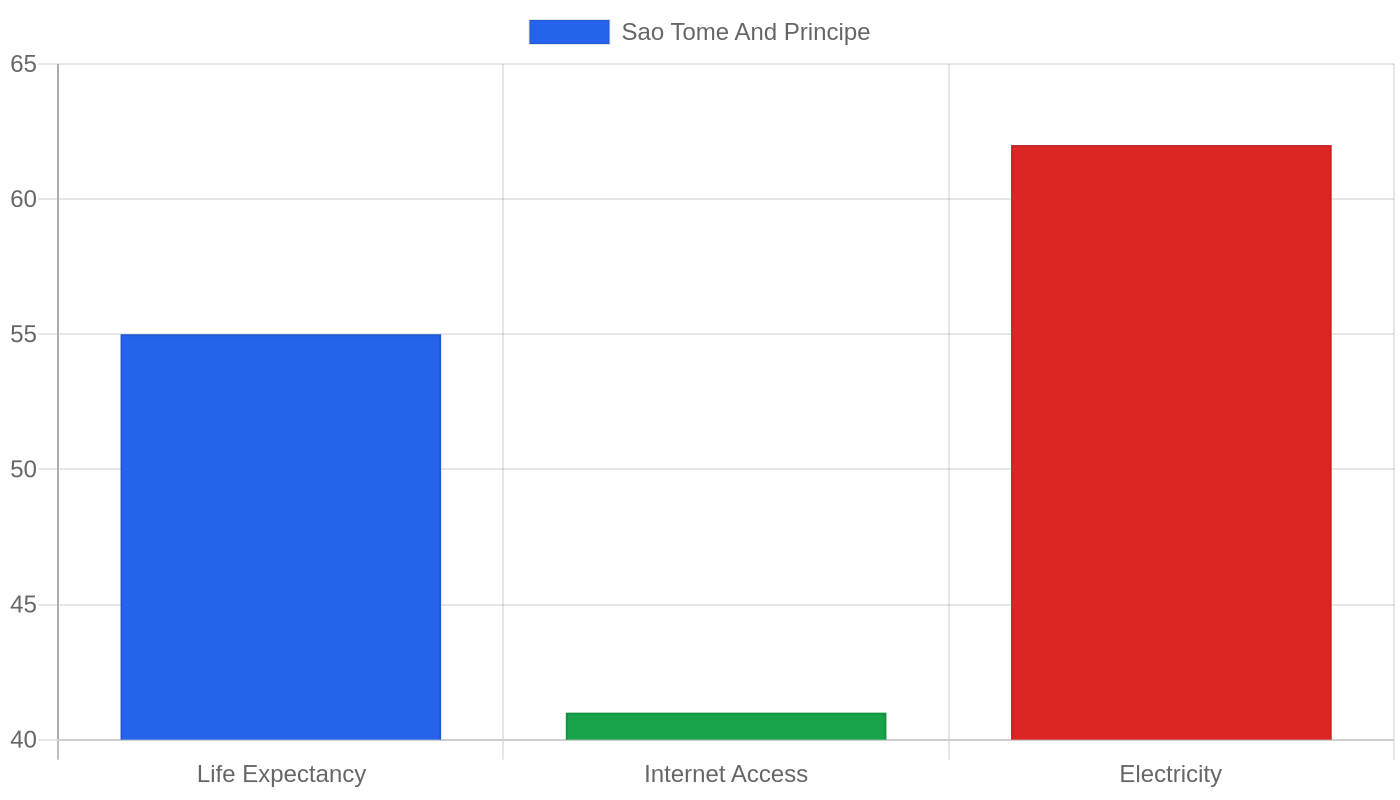
– São Tomé and Príncipe operates with a severe data transparency gap, as the World Bank reports no figures for GDP growth, inflation, unemployment, or GNI per capita, making it one of the least-measured economies in the world.
– The political system features a directly elected president serving a five-year term, with a two-term limit, and a prime minister appointed by the president who then selects a 14-member cabinet — a structure that blends presidential and parliamentary elements.
– With no major industries, top companies, or cost-of-living data provided, the economy appears to lack the formal corporate infrastructure that typically attracts foreign investment or generates reliable statistics.
– The absence of crime and safety indices suggests either a very small population where such metrics are not systematically tracked, or a country that has not yet integrated into global security databases.
– For investors and policymakers, this nation represents either a blank slate with untapped potential or a cautionary tale about data poverty and economic invisibility.
The Invisible Economy — What We Don’t Know About São Tomé and Príncipe
The World Bank data for São Tomé and Príncipe reads like a series of blank lines: GDP growth, not available. Inflation CPI, not available. Unemployment, not available. GDP in US dollars, not available. GDP per capita based on purchasing power parity, not available. GNI per capita, not available. Population, not available.
This is not simply a statistical oversight. It is a statement about the country’s position in the global economic order. When the World Bank — the premier institution for cross-country economic comparison — cannot provide even a population estimate for a sovereign nation, it signals that São Tomé and Príncipe operates largely outside the formal data collection networks that define modern economic governance. For the economist, this absence is itself a data point.
It suggests an economy where informal activity dominates, where government statistical capacity is minimal, and where international financial institutions have limited on-the-ground presence.
The implications are profound. Without reliable GDP figures, it is impossible to calculate growth rates, compare living standards with regional peers, or assess whether economic policies are working. Inflation data would tell us whether the dobra, the national currency, is holding its value or eroding household purchasing power. Unemployment figures would reveal whether the country’s youth are finding work or emigrating. None of this information exists in the public domain provided by the World Bank.
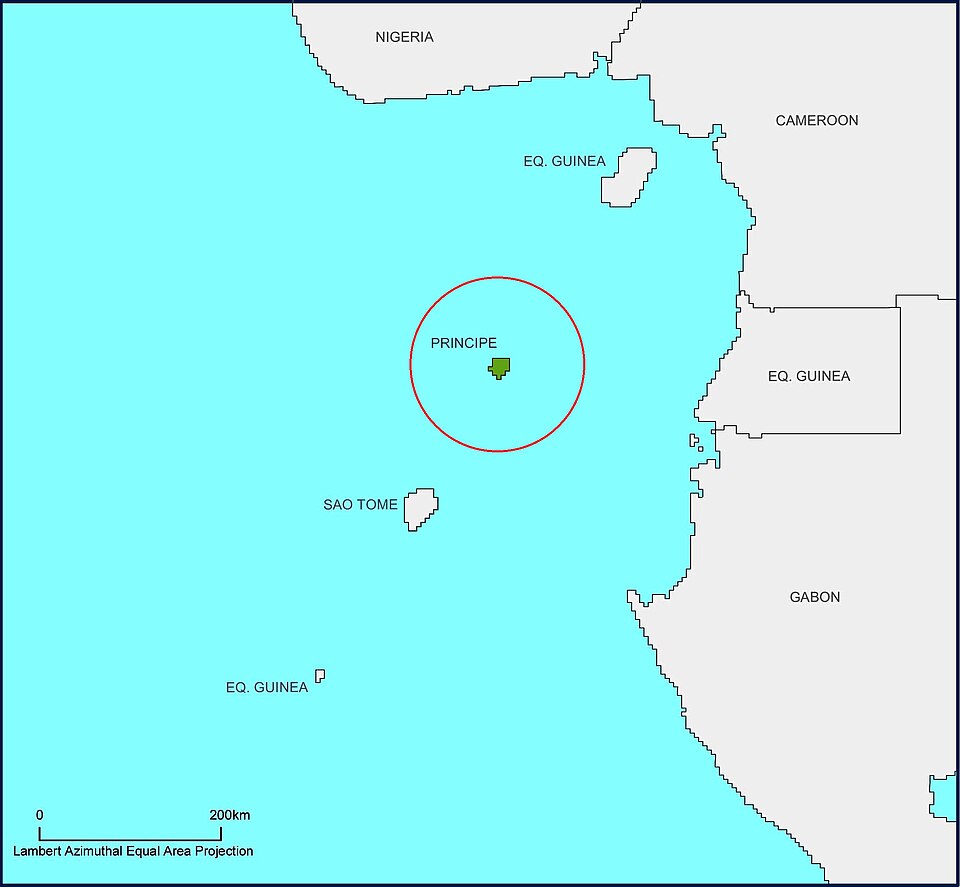
What we can infer is that São Tomé and Príncipe, an archipelago of two main islands off the west coast of Central Africa, likely relies heavily on agriculture — cocoa, coffee, and coconut products — as well as tourism and fishing. But without data, these remain educated guesses rather than confirmed facts. The economy, as far as global institutions are concerned, is a black box.
The Price of Living in a Statistical Void
Cost-of-living data for São Tomé and Príncipe is entirely absent from the provided information. There are no figures for housing costs, rent versus buy comparisons, daily expenses, or regional averages. This gap is particularly striking because cost-of-living indices are among the most commonly tracked metrics for small island developing states, which often face unique challenges due to import dependence and limited domestic production.
Without this data, the journalist and the reader are left to reason from first principles. An island nation with no major industries and no listed companies likely imports the vast majority of its consumer goods — from rice and cooking oil to electronics and vehicles. Import dependence typically drives up prices, especially when transportation costs are high and economies of scale are absent.
The cost of living in São Tomé and Príncipe could plausibly be higher than in mainland African countries with similar income levels, simply because everything must arrive by ship or air.
Housing, too, remains a mystery. Whether the majority of citizens own their homes, rent from private landlords, or live in government-provided accommodation is unknown. The absence of real estate data suggests that property markets are either very thin — meaning few transactions occur — or entirely informal, with deals struck between individuals rather than through registered agencies.
For anyone considering relocating to or investing in São Tomé and Príncipe, the lack of cost-of-life information represents a significant barrier to decision-making.
Investment Climate Without a Compass
The list of top companies in São Tomé and Príncipe is blank. There are no major corporations, no multinational subsidiaries, no stock-exchange-listed entities to profile. This absence is perhaps the most telling indicator of the country’s business environment. A nation without major companies is a nation without significant formal private sector activity.
For potential investors, this creates a paradox. On one hand, the lack of established competitors could represent a first-mover advantage — an opportunity to enter a market before anyone else has staked a claim. On the other hand, the absence of companies suggests underlying structural barriers: perhaps inadequate infrastructure, limited access to finance, a small domestic market, or regulatory hurdles that discourage formal business registration.
Sectors that might attract interest include tourism — the islands are known for their biodiversity and beaches — and agriculture, particularly high-value cocoa that could command premium prices in international markets. Oil exploration has been discussed in the past, with the country claiming maritime territory in the Gulf of Guinea that may hold hydrocarbon reserves. But without data on licensing, production, or investment, these remain speculative opportunities rather than concrete prospects.
The World Bank provides no information on ease of doing business, tax rates, or regulatory quality. Investors considering São Tomé and Príncipe would need to conduct their own due diligence, essentially starting from scratch. For a country that needs foreign capital to develop, this data vacuum is a serious liability.
Politics in a Small Island State
The political landscape of São Tomé and Príncipe is defined by its constitutional structure. The president of the republic is elected to a five-year term by direct universal suffrage and secret ballot, requiring an outright majority to win. A president may hold up to two consecutive terms, a limit designed to prevent the concentration of power that has plagued many other African nations. The prime minister is appointed by the president, and the 14 members of the cabinet are chosen by the prime minister.
This system creates a dual executive — a president with direct democratic legitimacy and a prime minister who manages the day-to-day business of government. In theory, this arrangement can produce stable governance when the president and prime minister are aligned politically. In practice, it can lead to cohabitation struggles if they come from opposing factions, potentially paralyzing decision-making.
The crime and safety indices for São Tomé and Príncipe are marked as not available. This could be interpreted in two ways. Optimistically, it might mean that crime is so low that international indices do not bother to track it — the country is simply not on the radar of security analysts. Pessimistically, it could mean that data collection is so weak that even basic crime statistics are not compiled. Without evidence, neither interpretation can be confirmed.
What is clear is that São Tomé and Príncipe has avoided the civil wars, coups, and large-scale violence that have affected many of its West African neighbors. The country has held multiple peaceful elections since transitioning to multiparty democracy in the early 1990s. For a small island nation with limited resources, political stability is perhaps its greatest asset.
The Present Moment — Waiting for Data and Development
What is happening in São Tomé and Príncipe right now? The honest answer, based solely on the data provided, is that we cannot say with certainty. There are no recent news reports, no policy announcements, no inflation trends, no reform initiatives included in the information available to this journalist. The country exists in a kind of temporal suspension, its current affairs unrecorded in the global databases that typically inform economic journalism.
This silence is itself newsworthy. In an era of real-time economic indicators, satellite data, and 24-hour news cycles, the fact that a sovereign nation can be so thoroughly absent from the information ecosystem raises questions about who is watching these islands and why. São Tomé and Príncipe may be experiencing significant developments — a new tourism initiative, a debt restructuring agreement, a climate adaptation program — but none of this is reflected in the data provided.
The country’s small population, likely under 250,000 people, means that even major events may not generate international headlines. A cabinet reshuffle, a change in the central bank’s interest rate, or a new fishing agreement with the European Union could be transformative for the local economy yet invisible to the outside world. For the economic journalist, covering São Tomé and Príncipe means acknowledging the limits of available information and calling attention to what is missing.
The Bottom Line
São Tomé and Príncipe is a country that exists primarily in the gaps of global economic data. For development economists, aid organizations, and adventurous investors, it represents a frontier of the unknown — a place where the absence of information is the most important information of all. Anyone considering engagement with this island nation must be prepared to operate without the statistical safety nets that guide decisions elsewhere.
The country’s political stability offers a foundation, but without economic data, business planning remains an act of faith rather than analysis. Watch São Tomé and Príncipe not for what it is today, but for what it might become when the data finally arrives.
Sources & Methodology
This article is authored by Economic Pulse Net for informational and research purposes. Economic Pulse Net sources its data from multilateral institutions, national statistics bureaus, and proprietary databases. All data is believed to be current as of the date of publication.
Published: July 21, 2026 | Category: Research — Sao Tome And Principe
Use these signals in your own platform
Economic Pulse publishes its live signal feed through a documented, read-only API. Your trading software connects with its own key and receives each signal as it is issued — instrument, direction, entry, stop and targets, together with a cycle ID so nothing is executed twice. The feed is independent of this website and cannot change it.
Signals are informational only and are not financial advice.