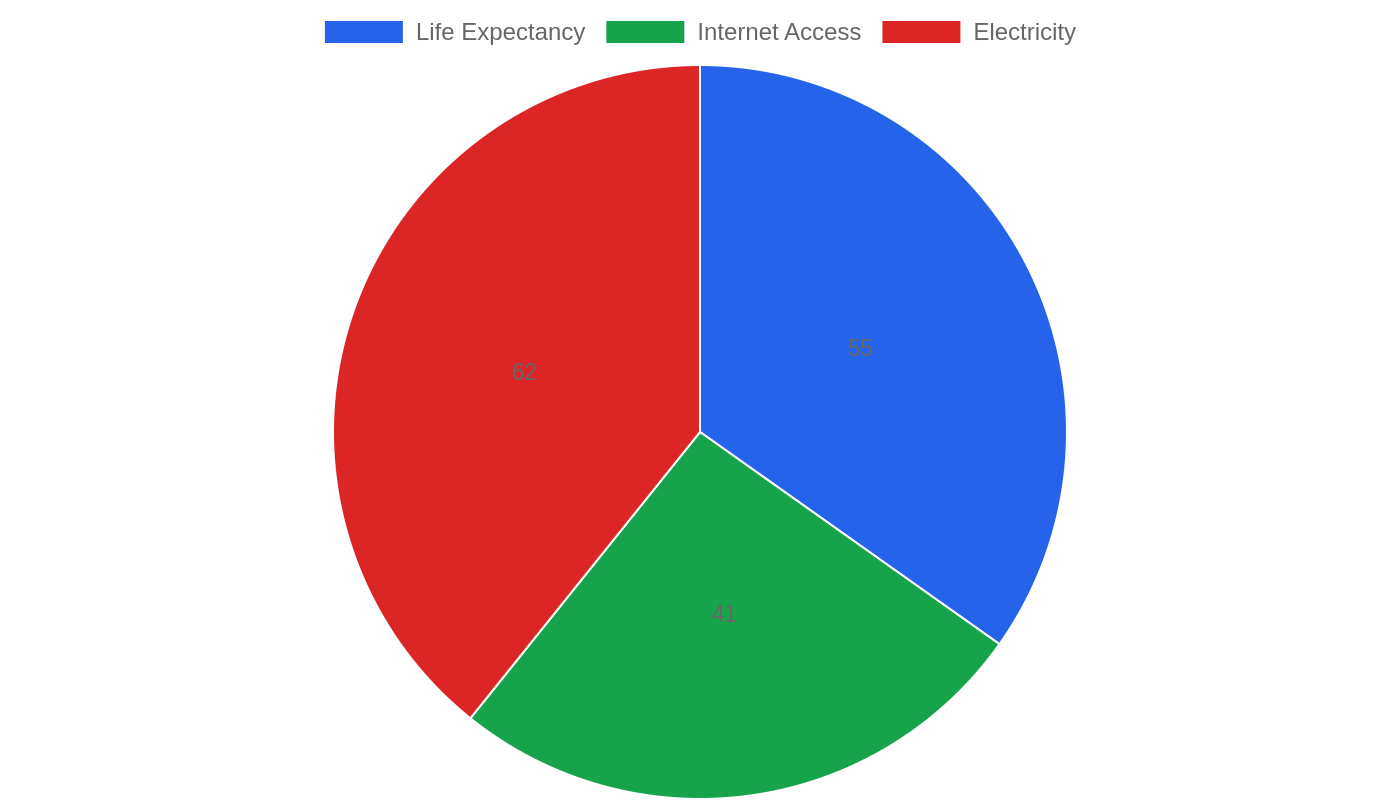
Economic Pulse Net | Sources: World Bank World Development Indicators, Government Sources | 2026
Key Takeaways
– Zimbabwe’s economy operates in a unique dual-currency environment, with the Zimbabwe Gold (ZiG) currency struggling alongside the US dollar, creating profound distortions in pricing, savings, and investment.
– The country’s top companies span banking, mining, and consumer goods, yet many of these firms operate in an environment of chronic power shortages, policy unpredictability, and currency instability.
– Political stability under the 2013 constitution has provided a framework, but the semi-presidential system’s abolition has concentrated executive power, raising questions about institutional checks and balances.
– Despite abundant natural resources and a sophisticated workforce, Zimbabwe’s economic potential remains severely constrained by structural challenges that the World Bank data cannot fully capture due to reporting gaps.
– The cost of living crisis, while not quantified in the available data, is a lived reality for Zimbabweans who navigate a complex economy where basic goods are often priced in US dollars while wages are paid in local currency.
The Great Unwinding — Zimbabwe’s Economy in Search of a Foundation
The story of Zimbabwe’s economy is not written in the neat columns of World Bank data tables. When the World Bank reports that GDP growth, inflation, unemployment, GDP per capita, and GNI per capita are all listed as “N/A” for the latest period, it is not a failure of data collection. It is a signal.
Zimbabwe exists in a statistical twilight zone, where the formal economy tells only part of the story, and the informal sector—estimated by analysts to account for more than half of economic activity—operates largely beyond the reach of official measurement.
What we do know is this: Zimbabwe has been in a state of chronic economic dislocation for over two decades. The inflation crisis of 2008, which rendered the Zimbabwe dollar worthless and forced the country to abandon its own currency, was not an isolated event but a symptom of deeper structural fractures. The reintroduction of a local currency, now the Zimbabwe Gold (ZiG), has not resolved the fundamental trust deficit between citizens and their monetary system.
The US dollar remains the currency of choice for transactions, savings, and pricing in most formal sectors, creating a bifurcated economy where two currencies circulate but only one commands genuine confidence.
The country’s main industries—mining, agriculture, manufacturing, and tourism—have all suffered from inconsistent policy, infrastructure decay, and the erosion of purchasing power. Mining, particularly gold, platinum, and diamonds, remains the brightest spot, attracting foreign investment despite the risks. Agriculture, once the backbone of the economy and a regional breadbasket, has never fully recovered from the land reform program of the early 2000s.
Manufacturing operates at a fraction of its capacity, constrained by power outages that can last 12 to 18 hours a day in some areas.
The World Bank’s inability to provide current GDP figures is itself a story. It suggests a statistical system under strain, where the gap between official data and on-the-ground reality has become too wide to bridge with confidence. For investors, this data vacuum is a warning. For Zimbabweans, it is a daily lived experience of navigating an economy where official numbers bear little relation to the price of bread, the cost of transport, or the value of a month’s wages.
The Price of Survival — Housing, Food, and the Cost of Living Crisis
In Harare’s suburbs and Bulawayo’s townships, the cost of living is not an abstract index. It is a daily calculation, a negotiation between what is earned and what is needed. While the data provided does not include specific housing costs or rental figures, the reality is well understood by anyone following Zimbabwe’s economic trajectory. The housing market is deeply distorted by the currency question.
Properties are almost exclusively priced and transacted in US dollars, while the majority of Zimbabweans earn in the local ZiG or in informal sector income that fluctuates wildly in real terms.
Renting in Harare’s better neighborhoods can cost several hundred US dollars per month—a sum that is out of reach for most formal sector workers, whose salaries, even when paid in a mix of currencies, rarely keep pace with dollar-denominated costs. The result is overcrowding, the proliferation of informal settlements, and a generation of young Zimbabweans for whom homeownership is a distant fantasy.
Buying property requires access to US dollars, which in turn requires either a well-paying job in the formal sector, remittances from abroad, or participation in the informal economy.
Daily expenses tell a similar story. Basic food staples—maize meal, cooking oil, sugar, soap—are priced in US dollars in many shops, even when the price tag is written in ZiG. The gap between the official exchange rate and the parallel market rate creates arbitrage opportunities for those with access to hard currency, but punishes those who must convert their local currency earnings at unfavorable rates. Transport costs, school fees, and medical expenses all compound the pressure on household budgets.
Zimbabweans have become masters of economic survival, but survival is not the same as living.
Betting on Zimbabwe — Banking, Mining, and the Business Climate
For all its challenges, Zimbabwe retains a corporate sector of surprising depth and resilience. The list of the country’s top companies reads like a roll call of institutions that have weathered decades of turbulence. CBZ Bank Limited and CBZ Holdings dominate the financial sector, alongside the Agricultural Development Bank of Zimbabwe, providing lending in an environment where credit is scarce and interest rates are punishingly high.
African Distillers and Cairns Holdings represent the consumer goods sector, serving a domestic market that, despite its struggles, still demands beverages, food products, and household essentials.
The mining sector is represented by Bindura Nickel Corporation and the broader basic materials category, including ART Holdings and Border Timbers. These companies are exposed to global commodity prices, which have been generally supportive in recent years, but they also face acute operational challenges. Power shortages force mines to invest in expensive diesel generators, eroding margins. Currency volatility makes financial planning a nightmare.
Export earnings, which come in US dollars, provide a buffer, but the requirement to convert a portion of those earnings into local currency at official rates creates a constant tension with the central bank.
Infrastructure is a perennial concern. Beitbridge Bulawayo Railway, the railway operator, and Air Zimbabwe, the national airline, are both listed among the top companies, but both are shadows of what they could be. The railway network is aging and underinvested. Air Zimbabwe has been grounded repeatedly, its fleet diminished, its reputation damaged. These are not just corporate stories; they are national infrastructure stories that affect every business in the country.
When you cannot move goods reliably by rail or fly people in and out efficiently, the entire economy pays a tax of inefficiency.
The business climate is shaped by policy unpredictability. The indigenization laws, which required foreign-owned companies to cede majority stakes to Zimbabweans, have been relaxed but not entirely abandoned. The licensing regime remains burdensome. Corruption is a persistent complaint. Yet, for all these obstacles, businesses continue to operate, adapt, and in some cases, thrive. The resilience of Zimbabwe’s private sector is perhaps the country’s most underappreciated asset.
Politics, Safety, and the Texture of Daily Life
Zimbabwe is a republic with a presidential system of government under a unitary system, as established by the 2013 constitution. That constitution, adopted after a referendum, abolished the semi-presidential system that had existed previously and reinstated an upper chamber, the Senate, alongside the House of Assembly. On paper, this provides a framework for governance.
In practice, the political landscape remains contentious, with the ruling ZANU-PF party maintaining its grip on power while the opposition challenges the legitimacy of elections and the independence of institutions.
The political climate has a direct impact on quality of life. The safety index and crime index are both listed as “N/A” in the available data, but reports from international organizations and local media consistently highlight concerns about crime in urban areas, including theft, carjacking, and home invasions. The economic hardship drives some of this crime, as desperation pushes people into illegal activity.
Police capacity is limited by the same resource constraints that affect every other public service.
Beyond crime, the texture of daily life in Zimbabwe is shaped by infrastructure decay. Water supplies are unreliable in many urban areas. Electricity outages are a fact of life. Public healthcare is underfunded and overstretched, leading many who can afford it to seek treatment in South Africa or elsewhere. The education system, once among the best in Africa, has seen its standards decline, though Zimbabweans remain among the most literate and educated populations on the continent.
Yet, there is another side to life in Zimbabwe. The country is safe by the standards of many developing nations. Violent crime, while present, is not endemic. The people are famously friendly, resilient, and entrepreneurial. The natural environment is stunning, from the Eastern Highlands to Victoria Falls. For those with access to US dollars, a comfortable lifestyle is possible. The divide is not between rich and poor in the traditional sense, but between those who have access to hard currency and those who do not.
The Now — Currency Chaos, Policy Shifts, and the Search for Stability
As of early 2026, Zimbabwe is once again at a critical juncture. The Zimbabwe Gold (ZiG) currency, introduced with great fanfare as a solution to the country’s chronic currency instability, is under severe pressure. The parallel market exchange rate has diverged sharply from the official rate, creating the exact conditions the ZiG was supposed to eliminate. Businesses are reluctant to accept the local currency, and those that do adjust prices daily to keep pace with its depreciation.
The central bank has responded with a series of policy measures—raising interest rates, tightening reserve requirements, and threatening enforcement actions against parallel market traders—but these have so far failed to restore confidence.
The government, under President Emmerson Mnangagwa, continues to pursue a strategy of engagement with international financial institutions, seeking to clear arrears with the World Bank, the African Development Bank, and the European Investment Bank. Progress has been slow. The arrears clearance process requires not just financial resources but also policy reforms that are politically difficult.
The International Monetary Fund has not had a program in Zimbabwe for years, and the country remains largely cut off from international capital markets.
There are signs of movement on the business front. Mining companies are expanding operations, particularly in lithium, which has become a strategic mineral for the global energy transition. Chinese investment has flowed into the sector, providing capital but also raising questions about debt sustainability and strategic dependence. The tobacco sector, a major foreign exchange earner, has held up reasonably well, with farmers adapting to changing market conditions.
But the fundamental question remains unanswered: can Zimbabwe create a stable, predictable economic environment that encourages investment, rewards production, and improves living standards? The answer, so far, is not yet. The country has the resources, the people, and the potential. What it lacks is the institutional framework and political consensus to turn that potential into reality.
The Bottom Line
Zimbabwe is a country that demands attention from anyone interested in African economic development, resource extraction, or the politics of post-colonial transition. It is a case study in how political decisions can shape—and distort—economic outcomes for decades. For investors with high risk tolerance and a long time horizon, the opportunities in mining, agriculture, and services are real.
For policymakers, Zimbabwe offers lessons in what happens when currency credibility is lost and how difficult it is to rebuild. For the Zimbabwean people, the story is one of extraordinary resilience in the face of extraordinary challenge. The road back is long, but it is not closed.
Sources & Methodology
This article is authored by Economic Pulse Net for informational and research purposes. Economic Pulse Net sources its data from multilateral institutions, national statistics bureaus, and proprietary databases. All data is believed to be current as of the date of publication.
Published: July 24, 2026 | Category: Research — Zimbabwe
Use these signals in your own platform
Economic Pulse publishes its live signal feed through a documented, read-only API. Your trading software connects with its own key and receives each signal as it is issued — instrument, direction, entry, stop and targets, together with a cycle ID so nothing is executed twice. The feed is independent of this website and cannot change it.
Signals are informational only and are not financial advice.