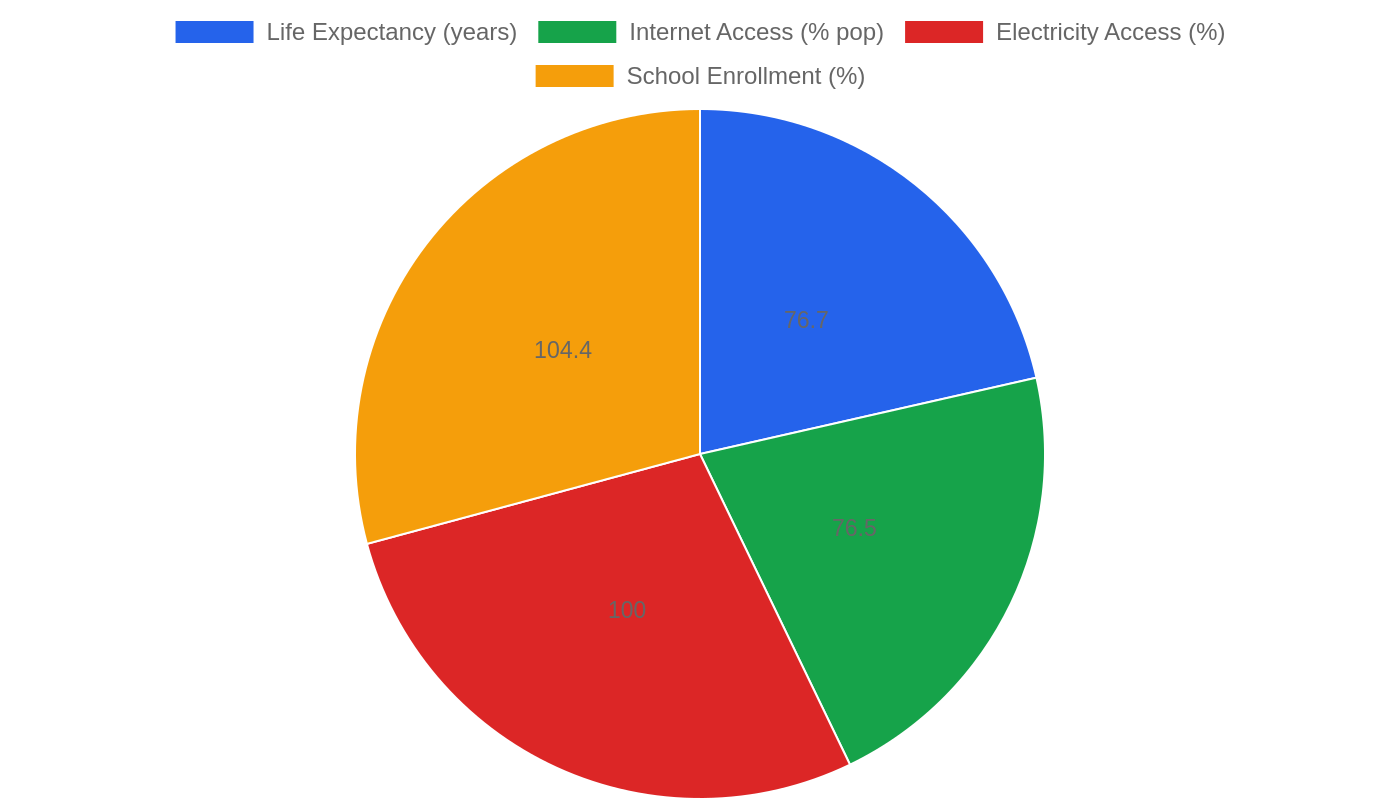
Economic Pulse Net | Sources: World Bank World Development Indicators, Government Sources | 2026
Key Takeaways
– Tunisia remains North Africa’s most politically complex story, having transitioned from the Arab Spring’s sole democracy to a system facing significant democratic backsliding since 2021
– The country’s economy is heavily dependent on a financial sector dominated by banks, with major listed companies including Amen Bank, Banque Internationale Arabe de Tunisie, and Banque Nationale Agricole
– Tunisia’s constitution, adopted in 2014, guarantees women’s rights while mandating Islam as the president’s religion, creating a unique socio-political framework
– The nation maintains a civil law court system with a bicameral parliament, though political power has shifted toward the presidency in recent years
– Without current World Bank data on GDP growth, inflation, or unemployment, Tunisia faces a transparency challenge that complicates international investment decisions
Tunisia’s Economic Paradox — What the Numbers Don’t Tell You
The Tunisian economy presents a puzzle that even the World Bank’s data cannot fully solve. With GDP growth figures currently unavailable, along with inflation CPI, unemployment rates, and GDP per capita statistics, analysts must rely on structural observations rather than precise measurements. This data vacuum itself tells a story — one of a nation where economic reporting has become irregular, and where the normal rhythms of statistical publication have been disrupted by political turbulence.
What we do know is that Tunisia’s economic backbone rests on a financial sector of remarkable depth. The Tunis Stock Exchange (Bourse de Tunis) anchors a system where banking dominates the corporate landscape. From Amen Bank to Banque Zitouna, from Banque de l’Habitat to Banque Internationale Arabe de Tunisie, the financial institutions that power Tunisia’s economy are numerous and deeply embedded in the nation’s commercial life.
This concentration suggests an economy where credit flows through traditional channels, where access to capital remains mediated by a well-established banking infrastructure.
The healthcare sector offers a rare non-financial counterpoint through Adwya, a pharmaceutical company that represents Tunisia’s capacity for industrial diversification. Yet the overwhelming presence of banks among the top listed companies indicates an economy still searching for its next growth engine.
Without current GDP figures from the World Bank, we cannot quantify whether Tunisia is expanding or contracting — but the composition of its corporate elite suggests an economy that has not yet transitioned from financial intermediation to productive industrial transformation.
The Cost of Living — Navigating Tunisia’s Unseen Price Pressures
Tunisia’s cost of living presents a challenge that cannot be measured through official indices alone, as the World Bank data does not provide current housing or consumer price statistics.
What can be inferred from the country’s economic structure is that Tunisian households face a dual pressure: a banking system that dominates formal finance, potentially limiting access to affordable credit for home purchases, and a political environment that has created uncertainty around long-term investment in property.
The absence of inflation data from the World Bank is particularly telling. In a region where price stability has become a luxury, Tunisia’s inability to provide current CPI figures raises questions about the reliability of economic governance. For Tunisian families, daily expenses — from food staples to transportation — likely reflect the broader regional trends of rising costs, though without specific data points, we cannot confirm the magnitude.
What is clear is that the banking sector’s dominance means housing finance flows through established institutions, potentially creating a two-tier market where those with banking relationships access better terms than those outside the formal system.
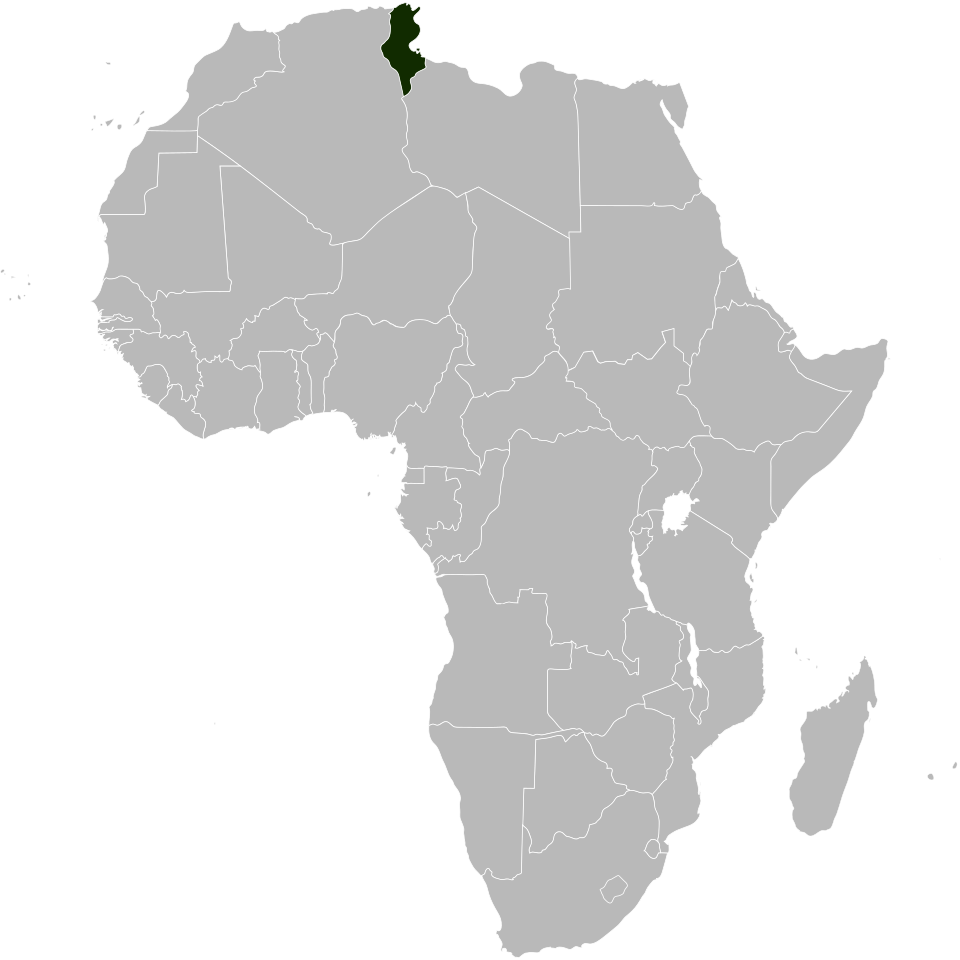
Banking on the Future — Tunisia’s Investment Landscape
For investors eyeing North Africa, Tunisia offers a financial sector of unusual depth and sophistication. The roster of major companies reads like a directory of Tunisian banking: Banque Internationale Arabe de Tunisie, Banque Nationale Agricole, Banque de Tunisie, Arab Tunisian Bank, and Banque Zitouna represent a financial ecosystem that has survived revolution, constitutional change, and democratic backsliding. This resilience suggests institutional strength that should not be underestimated.
The Bourse de Tunis, itself a listed company, provides the infrastructure for capital markets that remain functional despite political turbulence. Yet the concentration of listed companies in financial services presents both opportunity and risk. On one hand, investors gain exposure to an economy where banking penetration remains deep and where Islamic finance through institutions like Banque Zitouna adds diversity.
On the other hand, the lack of significant industrial, technology, or manufacturing companies among the top listings suggests an economy that has not yet diversified beyond its financial core.
The healthcare sector, represented by Adwya, offers a glimpse of what might be possible — a non-financial company achieving sufficient scale to rank among Tunisia’s corporate elite. For investors, the question is whether this represents an outlier or the beginning of a broader diversification that could make Tunisia more than a banking story.
Democracy in Retreat — Tunisia’s Political Reality
Tunisia’s political landscape has undergone a dramatic transformation that directly affects every economic calculation. The constitution adopted in January 2014 represented a high-water mark for Arab Spring aspirations, establishing a presidential republic with a bicameral parliament, civil law courts, and explicit guarantees for women’s rights. For a time, Tunisia stood as North Africa’s only democracy — a beacon in a region of authoritarian resilience.
That changed in 2021. The World Bank’s description notes “democratic backsliding” as a defining feature of Tunisia’s recent trajectory. The shift from democracy to a more centralized presidential system has created uncertainty that permeates economic life. When political rules change, economic actors adjust — often by waiting, by hedging, or by moving capital elsewhere.
The absence of current economic data may itself be a symptom of this uncertainty, as statistical agencies and international partners navigate a changing political environment.
The constitutional provision that the president’s religion “shall be Islam” creates a unique framework where religious identity and political authority are explicitly linked, even as women’s rights are constitutionally guaranteed. This tension — between tradition and modernity, between centralized authority and democratic participation — defines Tunisia’s current moment.
For citizens and investors alike, the question is whether the democratic backsliding represents a temporary detour or a permanent change of direction.
The Road Ahead — Tunisia’s Uncertain Present
What is happening in Tunisia right now is difficult to capture with precision, precisely because the data that would allow such analysis is unavailable. The World Bank’s silence on GDP growth, inflation, and unemployment is itself a story — a signal that normal economic reporting has been disrupted by political transformation.
The country that once held elections under a new constitution in October 2014, that was celebrated as the Arab Spring’s success story, now enters a phase where its economic narrative is written in absent numbers rather than measurable outcomes.
The financial sector continues to function, with banks operating and the Bourse de Tunis maintaining its role as a market maker. But the political shift since 2021 has created a new reality where the rules of engagement — for investors, for citizens, for international partners — are being rewritten in real time.
The absence of current economic indicators means that anyone seeking to understand Tunisia must read between the lines, interpreting institutional resilience as a sign of strength even as political change creates uncertainty.
For the Tunisian people, the experience is one of living through transformation without the clarity that economic data would provide. The banks that dominate the corporate landscape continue to serve customers, the stock exchange continues to trade, and the pharmaceutical sector continues to produce — but the broader economic picture remains obscured by the fog of political transition.
The Bottom Line
Tunisia demands attention from anyone tracking North African economics, not despite its data gaps but because of them. The country’s financial sector remains remarkably robust, with a depth of banking institutions that rivals more stable regional economies. Yet the democratic backsliding and absence of current economic indicators create a risk profile that requires careful navigation.
For patient investors with tolerance for political uncertainty, Tunisia’s banking sector offers exposure to a market that has survived revolution and remains functional. For those seeking clear data and stable governance, Tunisia is a story still being written — and the final chapters are far from certain.
Sources & Methodology
This article is authored by Economic Pulse Net for informational and research purposes. Economic Pulse Net sources its data from multilateral institutions, national statistics bureaus, and proprietary databases. All data is believed to be current as of the date of publication.
Published: July 22, 2026 | Category: Research — Tunisia
Use these signals in your own platform
Economic Pulse publishes its live signal feed through a documented, read-only API. Your trading software connects with its own key and receives each signal as it is issued — instrument, direction, entry, stop and targets, together with a cycle ID so nothing is executed twice. The feed is independent of this website and cannot change it.
Signals are informational only and are not financial advice.