Economic Pulse Net | Sources: World Bank World Development Indicators, Government Sources | 2026
Key Takeaways
– Tunisia, once celebrated as the Arab Spring’s only democratic success story, has experienced significant democratic backsliding since 2021, shifting from a presidential republic with a parliamentary system toward concentrated executive power.
– The nation’s economic trajectory has been shaped by a financial sector dominated by major banking institutions, including Banque Internationale Arabe de Tunisie, Banque Nationale Agricole, and Amen Bank, reflecting a credit-driven economy.
– The 2014 constitution, which guaranteed women’s rights and established a civil law court system, marked a historic shift following the October 2014 elections — the first held under the post-revolution framework.
– Tunisia’s position as the sole democracy in North Africa until 2021 has given way to an uncertain period of political consolidation, with significant implications for investors and regional stability.
The Great Economic Rebalancing: Beyond the Headlines
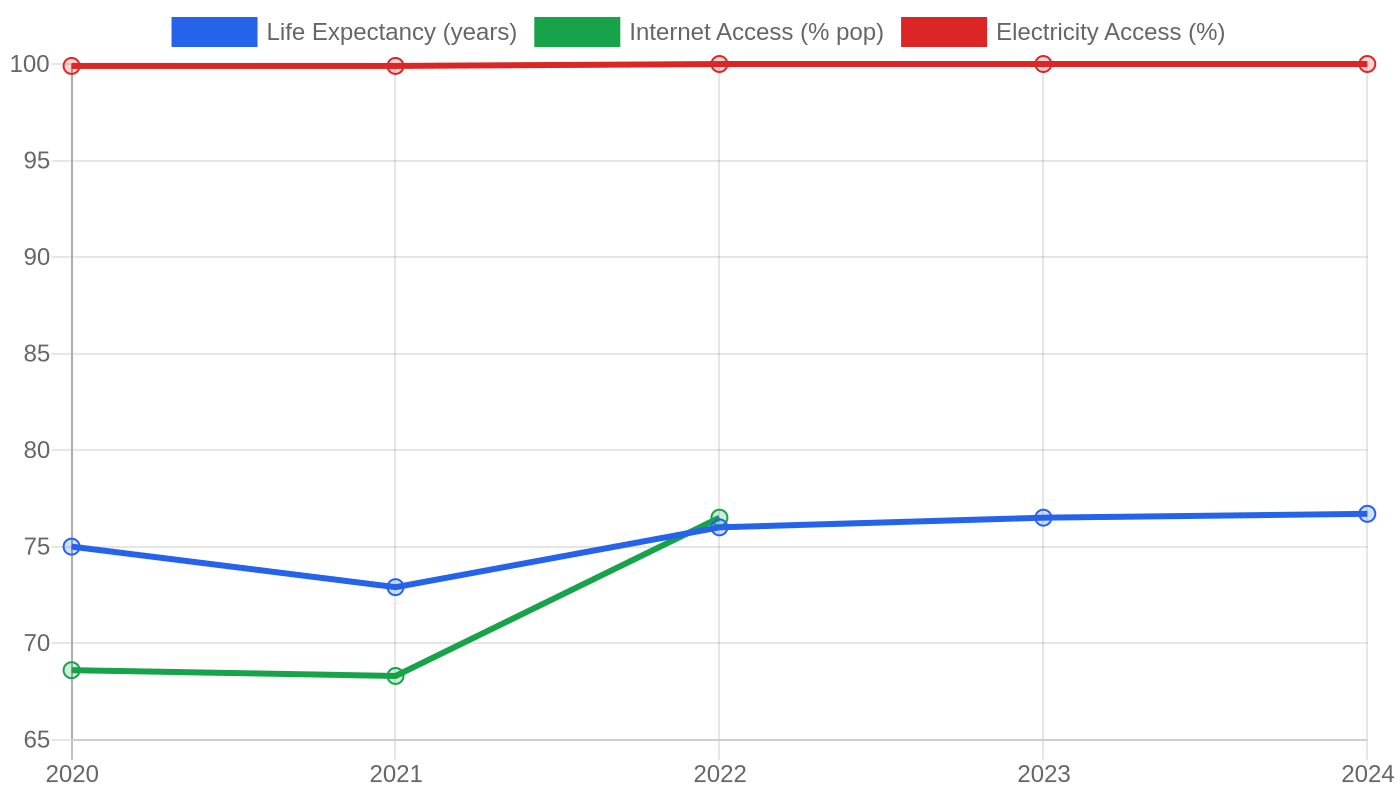
The Tunisian economy presents a complex tableau that defies simple categorization. According to the World Bank’s latest data collection, key economic indicators — GDP growth, inflation, unemployment, and GDP per capita — remain unrecorded in the current dataset, a silence that itself speaks to the challenges of data collection and economic formalization in a transitioning state.
What we do know is that Tunisia’s economic architecture rests heavily on its financial services sector, with the country’s top companies reading like a ledger of banking institutions: Amen Bank, Arab Tunisian Bank, Banque de l’Habitat, Banque de Tunisie et des Emirats, and the Banque Internationale Arabe de Tunisie all feature prominently.
This banking-heavy corporate landscape suggests an economy where credit intermediation, rather than industrial production or technology exports, drives formal economic activity. The presence of Banque Zitouna, an Islamic bank, alongside conventional lenders indicates a dual banking system catering to different segments of the population.
For a country that experienced the self-immolation of a street vendor in 2010 that sparked regional revolution, the persistence of a traditional financial sector raises questions about whether the economic grievances that fueled the Arab Spring have been adequately addressed.
The World Bank’s data gaps on inflation and employment are particularly telling. In economies undergoing structural adjustment, these are often the metrics most closely watched by citizens and international lenders alike.
Without hard numbers, analysts must rely on qualitative signals: the continued dominance of the banking sector suggests that credit remains available, but the democratic backsliding since 2021 introduces uncertainty about the rule of law and contractual enforcement that underpins long-term investment decisions.
The Housing Puzzle: Affordability in a Transition Economy
Cost of living data for Tunisia remains similarly sparse in the current World Bank dataset, yet the composition of the country’s top companies offers indirect insights into housing dynamics. The prominence of Banque de l’Habitat — literally translated as the “Housing Bank” — signals that housing finance occupies a central role in Tunisia’s economic life.
This specialized institution’s presence among the nation’s leading companies suggests that home ownership, rather than renting, remains the aspirational norm for Tunisian households, with mortgage lending serving as a critical financial pathway.
The concentration of financial institutions in the corporate rankings also implies that Tunisian households navigate a formal banking system for their housing needs rather than relying on informal financing mechanisms. However, without CPI or housing cost indices from the World Bank, it is impossible to benchmark Tunisian housing affordability against regional averages in North Africa.
What can be said is that a country whose leading companies include multiple banks specializing in retail and housing finance is one where property ownership carries significant cultural and economic weight — and where access to credit determines quality of life.
The Business Climate: Banking on Stability
For investors examining Tunisia’s corporate landscape, the message is unmistakable: this is a financial sector-led economy. The Bourse de Tunis, the country’s stock exchange, appears among the top companies, indicating a functioning capital market, while the multiplicity of banks — from Banque de Tunisie to Banque Nationale Agricole to Arab Tunisian Bank — suggests a competitive financial services environment.
Health care also makes an appearance through Adwya, a pharmaceutical company, pointing to a modest but present non-financial corporate sector.
The business climate in Tunisia must be understood through the lens of its political trajectory. The World Bank’s data on the political landscape notes that Tunisia was the only democracy in North Africa until 2021, after which democratic backsliding occurred. For businesses, democratic transitions typically bring legal reforms, anti-corruption measures, and greater transparency — but democratic backsliding raises concerns about policy reversals, weakened institutions, and unpredictable regulatory changes.
The banking sector’s continued prominence suggests that the financial establishment has weathered the political storm, but new entrants and international investors may adopt a wait-and-see approach until the political situation stabilizes.
Safety, Politics, and the Quality of Life Equation
Tunisia’s political identity is enshrined in its 2014 constitution, adopted just months before the October 2014 elections that marked the country’s first democratic exercise under the post-Arab Spring framework. The constitution notably guarantees rights for women — a significant achievement in the region — while also stipulating that the President’s religion “shall be Islam,” reflecting a carefully negotiated balance between progressive values and religious tradition.
The civil law court system provides a familiar legal framework for businesses and citizens, drawing on continental European legal traditions.
The political structure established by the 2014 constitution is a presidential republic with a prime minister serving as head of government, a bicameral parliament, and an independent judiciary. This architecture was designed to prevent the concentration of power that characterized the pre-revolution authoritarian era. However, the democratic backsliding that began in 2021 has raised concerns about whether these constitutional safeguards remain effective.
Crime and safety indices are not currently available from the World Bank dataset, but political stability is itself a form of public safety — and the erosion of democratic norms since 2021 represents a qualitative shift in Tunisia’s social contract that affects both citizens and foreign observers.
The Current Moment: Democracy’s Stress Test
Tunisia in this moment stands at a crossroads that its founders could not have predicted when they drafted the 2014 constitution. The political landscape data tells a story of constitutional promise followed by institutional strain: the presidential republic framework remains formally in place, but the democratic backsliding noted in the World Bank’s analysis signals that the balance of power has shifted.
For a country that was the sole democracy in North Africa until 2021, this represents not just a political change but a regional identity shift — Tunisia was a model that other Arab states could look to, and that status has been complicated.
The banking sector’s continued dominance amid political uncertainty offers a mixed signal. On one hand, financial institutions tend to be conservative actors that prefer stability; their persistence suggests business continues, albeit cautiously. On the other hand, the absence of updated economic data from the World Bank — no GDP growth figures, no inflation numbers, no unemployment statistics — makes it difficult to assess whether the economy is expanding or contracting.
The October 2014 elections, historic as they were, now feel distant; the more recent political developments have yet to be fully reflected in economic statistics.
The Bottom Line
Tunisia deserves the attention of anyone who cares about the trajectory of democratic governance in the Arab world and the broader Mediterranean region. The country’s experiment with constitutional democracy, women’s rights, and civil law governance made it a beacon of possibility — and its recent democratic backsliding raises profound questions about whether that experiment can be sustained.
For investors, the banking-dominated corporate landscape offers both opportunity and caution: established financial institutions provide a stable entry point, but the political uncertainty demands careful risk assessment. For citizens and policymakers watching from abroad, Tunisia’s fate will resonate far beyond its borders, serving as a case study in how revolutionary movements navigate the difficult path from uprising to stable governance.
The World Bank’s data gaps on key economic indicators only underscore the urgency of watching this country closely in the months and years ahead.
Sources & Methodology
This article is authored by Economic Pulse Net for informational and research purposes. Economic Pulse Net sources its data from multilateral institutions, national statistics bureaus, and proprietary databases. All data is believed to be current as of the date of publication.
Published: August 12, 2026 | Category: Research — Tunisia
Use these signals in your own platform
Economic Pulse publishes its live signal feed through a documented, read-only API. Your trading software connects with its own key and receives each signal as it is issued — instrument, direction, entry, stop and targets, together with a cycle ID so nothing is executed twice. The feed is independent of this website and cannot change it.
Signals are informational only and are not financial advice.