Economic Pulse Net | Sources: World Bank World Development Indicators, Government Sources | 2026
Key Takeaways
– Tunisia remains the Arab Spring’s only democratic success story, though that status has been severely strained since 2021, with the country undergoing a period of significant democratic backsliding.
– The nation’s economic engine is powered by a financial sector dominated by major banking institutions, which are the country’s most prominent publicly traded companies.
– A new constitution adopted in January 2014 established key rights for women and set the framework for the first post-revolution elections, but recent political shifts have created an uncertain path forward.
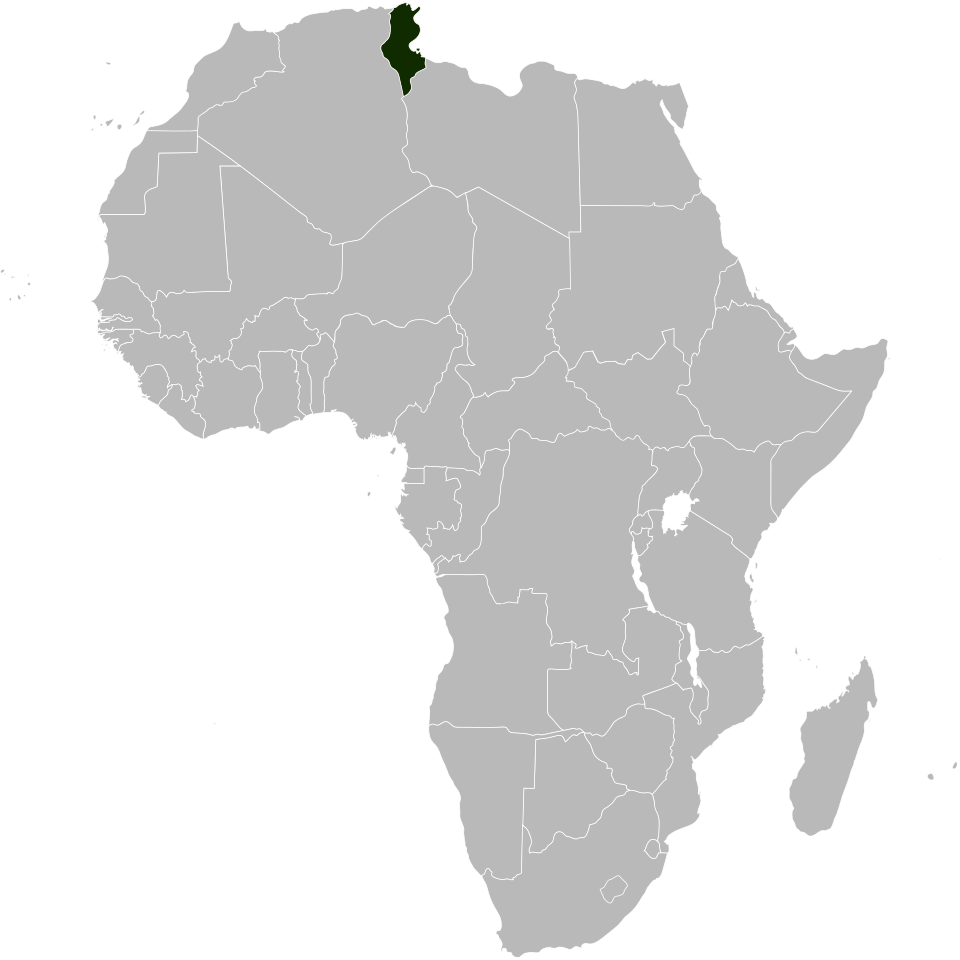
– Tunisia’s strategic position in North Africa and its status as the region’s only democracy until recent years make it a critical country to watch for economic and political developments.
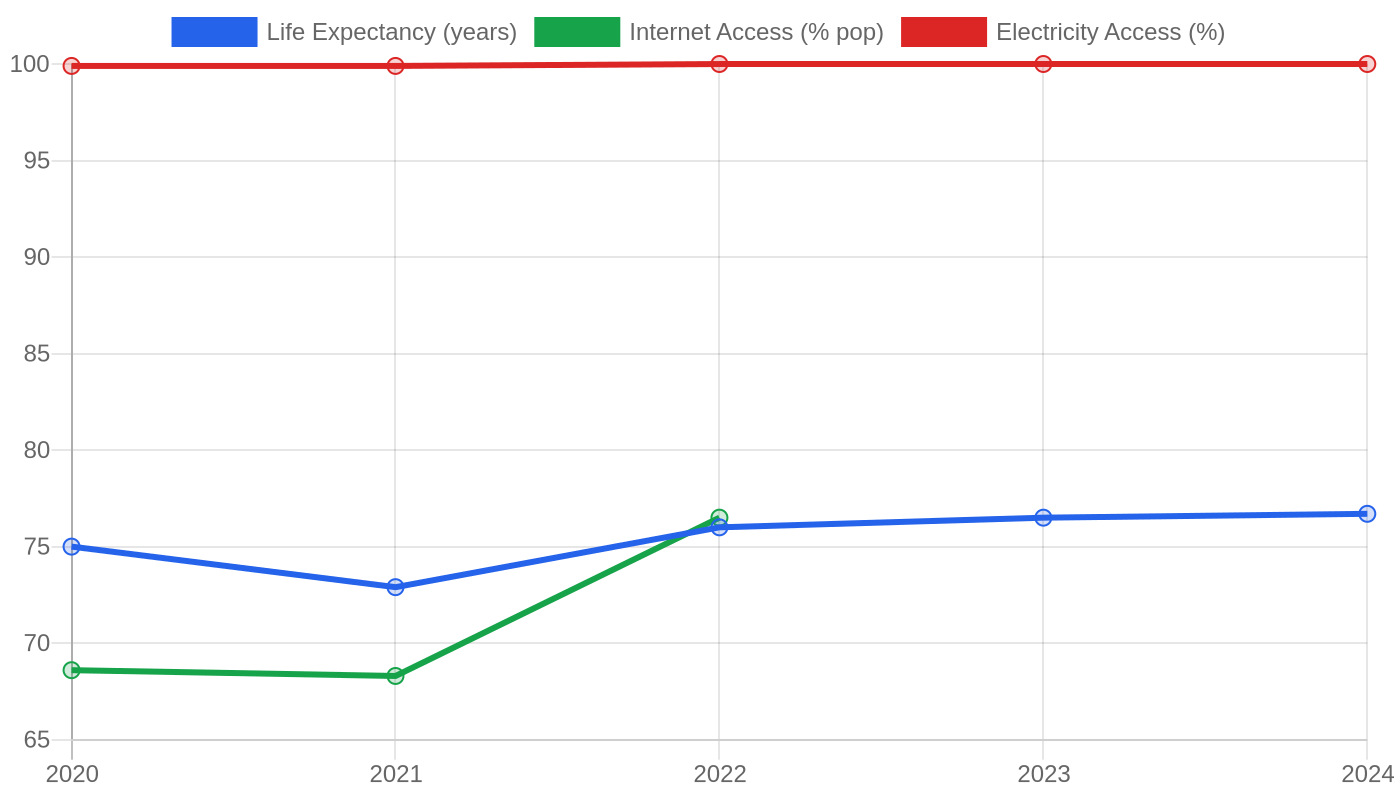
– The country’s economic data is currently opaque, with key indicators like GDP growth, inflation, and unemployment not being reported, leaving analysts to rely on structural observations.
The Tides of Transition: Reading Tunisia’s Economic Signals
The economic picture of Tunisia today is one of profound transition, marked by a notable absence of fresh data from the World Bank on core indicators such as GDP growth, inflation, and unemployment. In the world of economic journalism, a data vacuum is itself a story. It speaks to a nation in flux, where the machinery of statistical reporting may be struggling to keep pace with the political and social realities on the ground.
When we cannot point to a specific percentage for GDP growth, we must instead look at the structural bones of the economy. And here, the picture is clear: Tunisia is a nation whose formal economic strength is deeply intertwined with its financial sector.
The landscape is dominated by a dense network of banks — from Amen Bank and Banque de Tunisie to the Banque Internationale Arabe de Tunisie and the Banque Nationale Agricole. This concentration of financial institutions as the top companies in the nation signals an economy where credit, banking services, and financial intermediation are the primary arteries of commerce. It suggests a traditional, bank-centric economy rather than one driven by tech innovation or heavy industry.
For the average Tunisian, this means that economic health is often felt through the availability of credit, the stability of the national currency, and the solvency of these major lenders. When the World Bank data goes dark, the health of these institutions becomes the de facto barometer for the nation’s economic well-being.
The lack of fresh GDP data prevents us from quantifying growth, but the heavy reliance on the banking sector tells us that Tunisia’s economic fortunes are tied to domestic consumption and the ability of its financial houses to weather political storms.
The Cost of Daily Life: Balancing Books in a Post-Revolution State
Without current CPI data from the World Bank, we cannot put a precise number on the cost of living in Tunisia, but the absence of this metric is felt acutely by everyday citizens. Historically, Tunisia has been a middle-income country where the cost of living has been significantly lower than in European nations across the Mediterranean, yet higher than in many of its sub-Saharan neighbors.
The daily economic reality for Tunisians is likely characterized by a careful balancing act — managing household budgets against the price of imported goods, which can be volatile. The housing market, traditionally, has been a mix of urban apartment living in the capital, Tunis, and more traditional housing in rural areas.
Without specific index data, we infer that the pressure on housing costs is tied directly to the health of the banking sector; mortgages from institutions like Banque de l’Habitat are the primary vehicle for home ownership. When economic data is unavailable, the anecdotal reality is that families feel the pinch of rising prices at the market and the squeeze of wage stagnation.
The cost of living remains a political flashpoint, as it was during the revolution, and the inability to track it officially is a worrying sign for social stability.
The Business Landscape: Banking on the Bourse
For investors, Tunisia presents a market that is defined by its established players and its formal financial infrastructure. The list of top companies is almost exclusively financial, with the notable exception of Adwya in the health care sector. This tells a compelling story about where the private sector’s strength lies. The Bourse de Tunis, the country’s stock exchange, is the central arena for investment, and its roster is a who’s who of North African banking.
This concentration offers a specific kind of investment climate — one that is stable in its structure but potentially limited in its dynamism. For a foreign investor, the opportunity lies in the health care sector, represented by Adwya, which shows there is room for non-financial growth. However, the business environment is heavily influenced by the political landscape; the shift away from democratic norms since 2021 has likely increased the perceived risk for international capital.
The banks are the gatekeepers of the economy, and their health is the primary indicator for any business looking to establish a foothold. The sector to watch remains finance, but the environment is one of caution, where the rule of law and political predictability are paramount.
Safety, Society, and the Political Shift
The political landscape of Tunisia is the defining feature of its current era. The 2014 Constitution was a landmark document, guaranteeing rights for women and establishing a framework for a civil law court system within a presidential republic. It was the proud standard-bearer of the Arab Spring, and for years, it was the only democracy in North Africa. However, the data provided indicates a stark shift: “After a democratic backsliding, the…” — this incomplete sentence speaks volumes.
It points to the events of July 2021, when the president moved to consolidate power, suspending parliament and rewriting the rules of governance. This has fundamentally altered the quality of life and the sense of security for Tunisians. While crime indices are not available, the broader political safety net — the assurance of civil liberties and democratic processes — has been compromised.
The guarantee of women’s rights, once a constitutional cornerstone, now faces uncertainty in a shifting political environment. For the people, safety is no longer just about street crime; it is about political stability and the predictability of their rights.
The Moment Now: Navigating the Post-2021 Reality
Tunisia is currently living through a period of intense political redefinition. The “democratic backsliding” referenced in the World Bank data is the most crucial story of the moment. The country has moved from being the poster child of the Arab Spring to a cautionary tale about the fragility of democratic institutions. The economy is operating under this shadow, with the banking sector and the Bourse de Tunis navigating a landscape where international confidence is wavering.
The absence of key economic data from the World Bank suggests that the government may be struggling to provide transparent reporting, or that the economic shockwaves of the political changes are still being processed. The focus for the current government is likely on maintaining stability at all costs, which means keeping the financial sector afloat and managing the expectations of a population that has seen its revolutionary hopes dim.
The health care sector, with companies like Adwya, remains a point of resilience, but the overall mood is one of waiting — waiting to see if the political system can find a new equilibrium without losing the core values of the 2014 constitution.
The Bottom Line
Tunisia is a nation at a crossroads, and its story is essential reading for anyone interested in the future of democracy and economic development in the Arab world. The country’s fate is a barometer for the region, and its current trajectory away from democratic norms is a cause for concern. Investors should watch the stability of the banking sector, while political analysts should track the evolution of the post-2021 state.
For the Tunisian people, the hope remains that the promises of the 2014 constitution can be revived, and that the economy, once a source of pride, can be rebuilt on a foundation of transparency and growth. This is a country to watch, not for its current prosperity, but for the outcome of its defining struggle between its revolutionary past and its uncertain present.
Sources & Methodology
This article is authored by Economic Pulse Net for informational and research purposes. Economic Pulse Net sources its data from multilateral institutions, national statistics bureaus, and proprietary databases. All data is believed to be current as of the date of publication.
Published: August 12, 2026 | Category: Research — Tunisia
Use these signals in your own platform
Economic Pulse publishes its live signal feed through a documented, read-only API. Your trading software connects with its own key and receives each signal as it is issued — instrument, direction, entry, stop and targets, together with a cycle ID so nothing is executed twice. The feed is independent of this website and cannot change it.
Signals are informational only and are not financial advice.