Economic Pulse Net | Sources: World Bank World Development Indicators, Government Sources | 2026
Key Takeaways
* Growth Amidst Inflation: Nigeria’s economy is projected to grow by approximately 4.0% in 2025, a significant turnaround that contrasts sharply with an inflation rate hovering near 23%, creating a complex environment for consumers and investors alike.
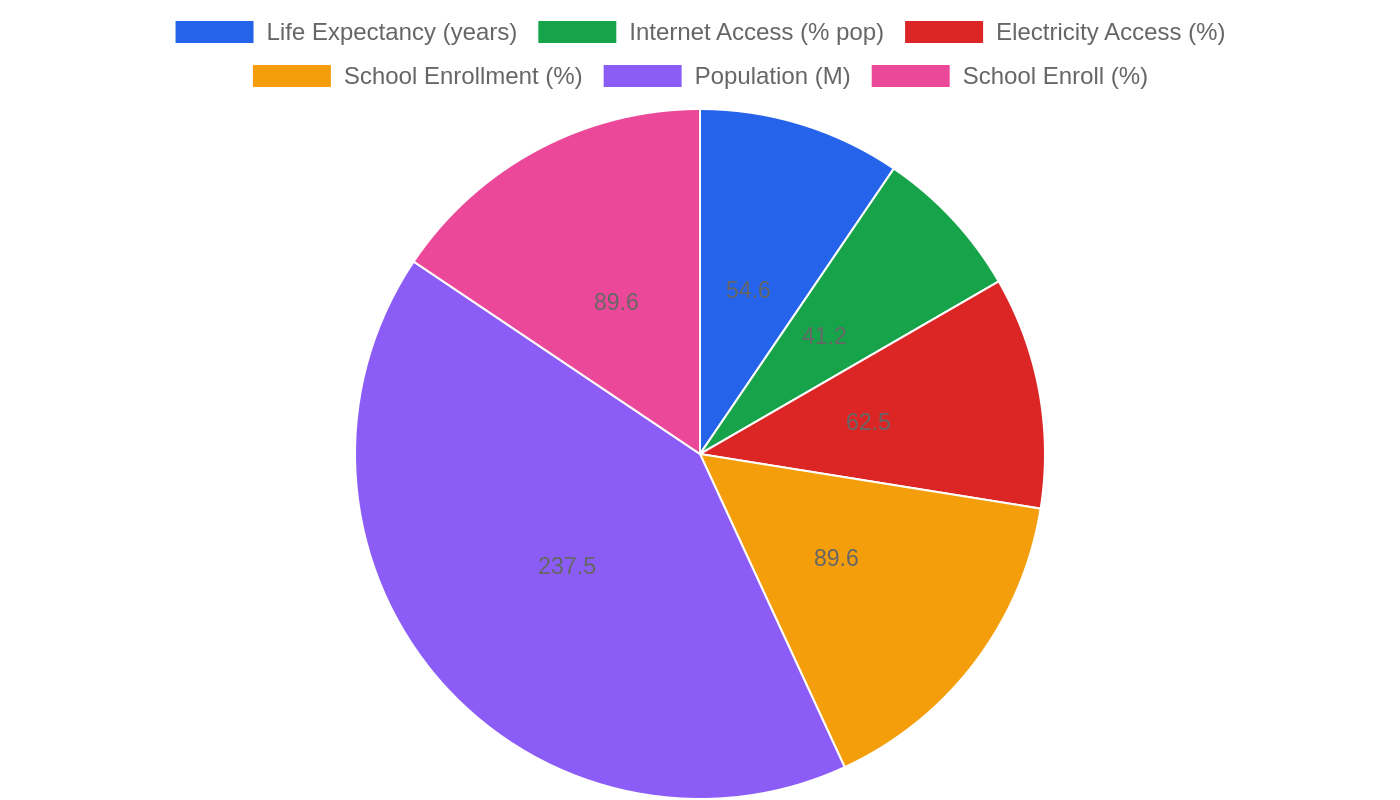
Demographic Powerhouse: With a population exceeding 237 million, Nigeria represents one of Africa’s largest consumer markets, driving its GDP to nearly $291 billion despite per capita income challenges.
Financial Sector Dominance: The corporate landscape is heavily anchored by financial institutions like Access Bank and the Central Bank of Nigeria, signaling the critical role of banking and credit in sustaining economic activity.
Political Stability Framework: As a federal republic modeled on the U.S. system, Nigeria maintains a structured executive and legislative branch, providing a predictable, albeit competitive, political arena for long-term planning.
Economic Engines: Growth vs. Price Pressures
Nigeria’s economic trajectory in 2025 presents a fascinating dichotomy between macroeconomic expansion and microeconomic pressure. According to World Bank data, the nation’s GDP growth is forecasted at 4.01%, indicating a robust recovery and expansion of overall economic output. However, this aggregate growth masks significant household strain, as the Consumer Price Index (CPI) inflation stands at a steep 23.01%.
This high inflation rate suggests that while the economy is producing more goods and services, the cost of doing so is rising rapidly, eroding purchasing power. The total GDP has reached approximately $290.8 billion USD, reflecting the sheer scale of the nation’s economic activity. Yet, when divided among its massive population of 237.5 million people, the GNI per capita remains modest at $1,360, highlighting the challenge of translating national wealth into individual prosperity.
Interestingly, the unemployment rate is reported at a relatively low 3.06%, which may suggest either strong labor absorption in informal sectors or statistical nuances in how employment is measured in a developing market. For international observers, these numbers signal a country that is growing but must urgently address price stability to ensure that growth translates into tangible improvements in living standards.
Daily Realities: Cost of Living and Housing Dynamics
For residents and expatriates alike, the daily reality in Nigeria is defined by the tension between rising costs and essential consumption needs. While specific housing indices are not detailed in the current dataset, the overarching CPI figure of 23.01% implies that rent, utilities, and food prices are experiencing substantial upward pressure.
This inflationary environment means that even with a GDP per capita (PPP) of roughly $9,532, maintaining a stable standard of living requires careful budgeting and potentially higher income thresholds than in previous years. The disparity between the national GDP figures and the lower GNI per capita indicates that wealth concentration may be influencing local market dynamics, where premium housing and imported goods remain accessible only to a segment of the population.
Consequently, businesses operating in the consumer services sector must navigate a customer base that is increasingly price-sensitive. Without precise regional housing averages to benchmark against, the general trend points toward a tightening of disposable income, forcing both landlords and tenants to adapt to a new normal of higher operational and living expenses.
Investment & Business Climate: Corporate Anchors and Sectors to Watch
The Nigerian business landscape is characterized by a diverse mix of industrial giants and service-oriented enterprises, offering varied entry points for investment. Financials dominate the top tier of corporate influence, with Access Bank and the Central Bank of Nigeria playing pivotal roles in stabilizing and facilitating capital flow across the economy.
Beyond finance, the industrial and consumer goods sectors show strong presence, exemplified by BUA Cement and BUA Foods, which cater to both infrastructure development and daily nutritional needs. The consumer services sector is equally vibrant, featuring major players like Aero Contractors, Arik Air, and Chanchangi Airlines, which indicate sustained demand for mobility and logistics within the region.
Other notable entities include Cassava Republic Press and Chocolate City Records, reflecting a growing creative economy that adds cultural and soft-power value to the market. C&I Leasing Group PLC further underscores the importance of industrial support services in enabling broader commercial activities.
For investors, these companies represent stable anchors in a volatile market, suggesting that sectors tied to basic necessities, transportation, and financial intermediation offer relative resilience amidst economic fluctuations.
Safety, Politics & Quality of Life: Governance and Security Context
Understanding Nigeria requires looking beyond economics to its political and social fabric. The country operates as a federal republic with a structure modeled after the United States, featuring 36 states and Abuja as the independent federal capital. Executive power rests with a President who serves as both head of state and government, elected by popular vote for two four-year terms, providing a clear chain of command and accountability.
This presidential authority is checked by a bicameral legislature comprising the Senate and House of Representatives, ensuring a system of checks and balances. State governors also serve four-year terms, mirroring the federal limit of two terms, which promotes political turnover and prevents entrenched power monopolies.
However, the human security dimension remains opaque; crime and safety indices are listed as N/A, meaning there is no quantifiable data available to assess personal safety risks for travelers or expatriates. This lack of data does not imply safety, but rather a gap in standardized reporting, requiring cautious assessment by those considering relocation or extended stays.
The political framework provides institutional stability, but the absence of safety metrics necessitates heightened situational awareness for all stakeholders.
What’s Happening Now: Current Affairs and Policy Focus
In the immediate term, Nigeria’s focus appears to be on strengthening statistical capacity and economic transparency. The National Bureau of Statistics recently celebrated African Statistics Day 2024, a move that underscores a commitment to improving data collection and reliability—a crucial step for attracting foreign investment and managing inflation effectively. This emphasis on accurate data aligns with the current need to monitor the 23% inflation rate and the 4% growth projection more closely.
As the country navigates its post-pandemic recovery, the celebration of statistics day signals a governmental priority on evidence-based policymaking. Stakeholders should watch for subsequent reports from the National Bureau of Statistics that may refine these initial 2025 projections. Furthermore, with major airlines and cement producers actively operating, supply chain efficiencies and energy availability remain underlying themes in current business developments.
The interplay between improved data governance and real-time economic performance will likely dictate policy adjustments in the coming quarters, making the National Bureau of Statistics a key entity to follow for early indicators of economic shifts.
The Bottom Line
Nigeria in 2025 is a market of immense potential constrained by significant inflationary headwinds. Investors with a long-term horizon should look to the financial and consumer staples sectors, where established companies like Access Bank and BUA Foods provide stability. However, the high cost of living and lack of safety data require careful risk management and localized expertise.
Ultimately, Nigeria remains a critical bellwether for African economic health, offering high growth volumes but demanding patience regarding individual purchasing power and security conditions.
Sources & Methodology
This article is authored by Economic Pulse Net for informational and research purposes. Economic Pulse Net sources its data from multilateral institutions, national statistics bureaus, and proprietary databases. All data is believed to be current as of the date of publication.
Published: September 29, 2026 | Category: Research — Nigeria
Use these signals in your own platform
Economic Pulse publishes its live signal feed through a documented, read-only API. Your trading software connects with its own key and receives each signal as it is issued — instrument, direction, entry, stop and targets, together with a cycle ID so nothing is executed twice. The feed is independent of this website and cannot change it.
Signals are informational only and are not financial advice.