Economic Pulse Net | Sources: World Bank World Development Indicators, Government Sources | 2026
Key Takeaways
– Mozambique’s economy is undergoing a structural transformation driven by massive liquefied natural gas (LNG) investments, though data gaps from the World Bank obscure the full picture of current GDP and inflation trends.
– The country’s political system concentrates power in a directly elected president who serves as both head of state and government, with a prime minister appointed to coordinate cabinet functions.
– State-owned enterprises dominate key sectors, including the Bank of Mozambique, Electricidade de Moçambique, and Mozambique Ports and Railways, creating a mixed economy with significant public sector involvement.
– Despite limited cost of living data, the presence of multiple airlines and industrial infrastructure suggests a nation positioning itself as a regional logistics and transport hub.
– Investors and analysts should watch Mozambique for its energy sector potential, but must navigate a political landscape where constitutional provisions grant sweeping executive authority.
The Economic Engine — LNG, Logistics, and the Long Game
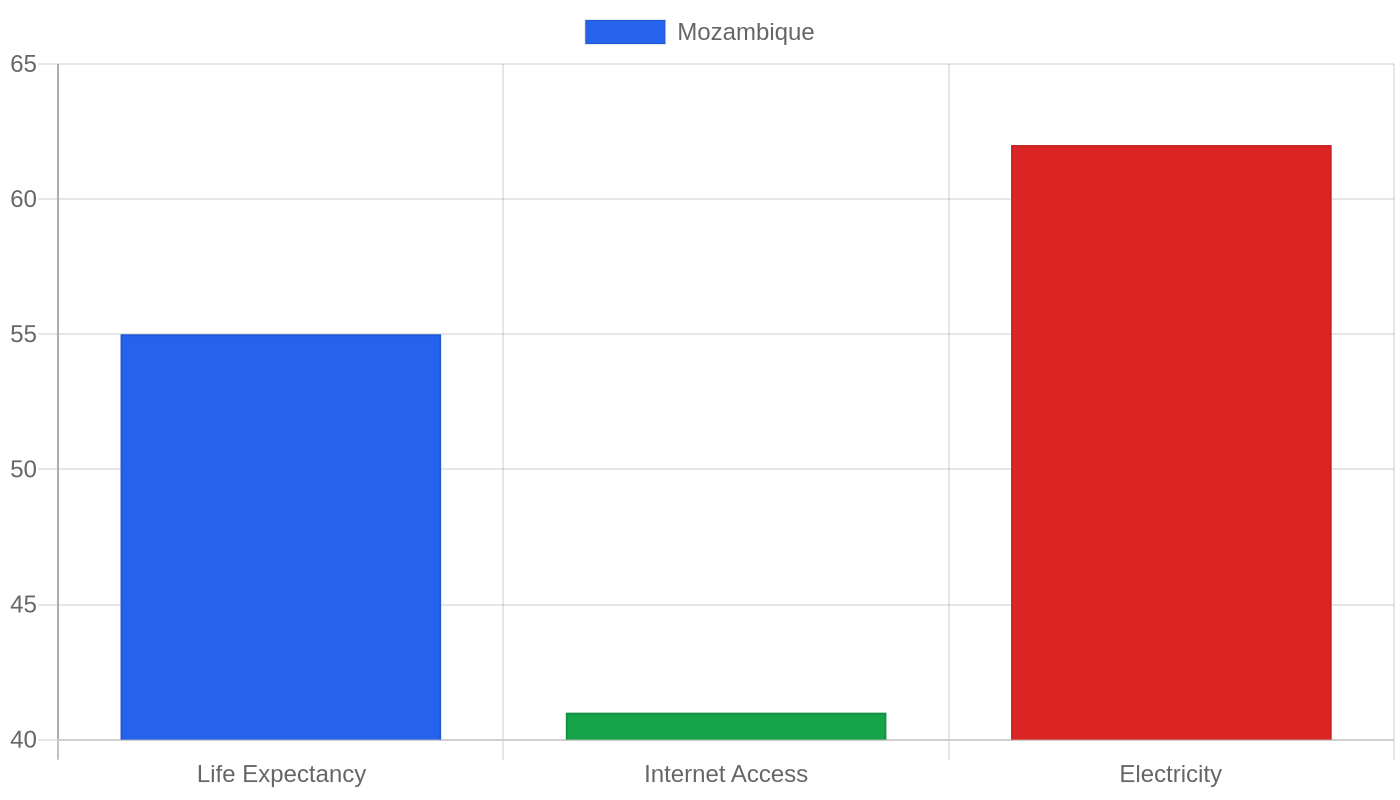
The World Bank’s latest data on Mozambique presents an incomplete statistical portrait — GDP growth, inflation, unemployment, and per capita income figures are all listed as unavailable. This absence of numbers, however, tells its own story. Mozambique sits at a critical inflection point where massive energy investments have yet to translate into widely available macroeconomic statistics.
The country’s main industries are not explicitly listed in the data, but the composition of its top companies reveals where economic gravity lies. Of the ten largest firms identified, five belong to the industrials sector: Mozambique Ports and Railways, Beira Railroad Corporation, Correios de Moçambique, and others. This is a nation betting heavily on its geography.
The utilities sector is represented by Electricidade de Moçambique, a state-owned power company that underscores the government’s central role in infrastructure development. The financial sector features both the Bank of Mozambique, the central bank, and Banco Nacional de Investimento, a development finance institution. These entities suggest that monetary policy and long-term project financing are viewed as strategic tools for economic management.
The consumer services sector, meanwhile, is dominated by aviation — Air Corridor, Kaya Airlines, LAM Mozambique Airlines, and Moçambique Expresso all appear on the list. This concentration of airlines in a country with incomplete GDP data hints at a service economy that is both under-documented and potentially growing faster than official statistics can capture.
The absence of World Bank numbers on inflation and employment should not be mistaken for economic stillness. Rather, it reflects the challenge of measuring an economy where formal sector data lags behind the reality on the ground. Mozambique’s economic story is one of potential energy wealth colliding with infrastructural reality — and the statistical agencies are still catching up.
The Price of Living — Navigating an Unseen Cost Landscape
Without specific cost of living indices from the World Bank or other provided sources, painting a precise picture of daily expenses in Mozambique requires reading between the lines of the country’s economic structure. The dominance of state-owned enterprises in utilities and transport suggests that basic services — electricity from Electricidade de Moçambique, rail freight from Beira Railroad Corporation — are priced with political considerations as much as market forces.
Housing costs, rent versus buy decisions, and daily expenses for staples remain unquantified in the available data, but the presence of multiple airlines indicates that domestic air travel is a functioning market, likely serving both business travelers and wealthier citizens.
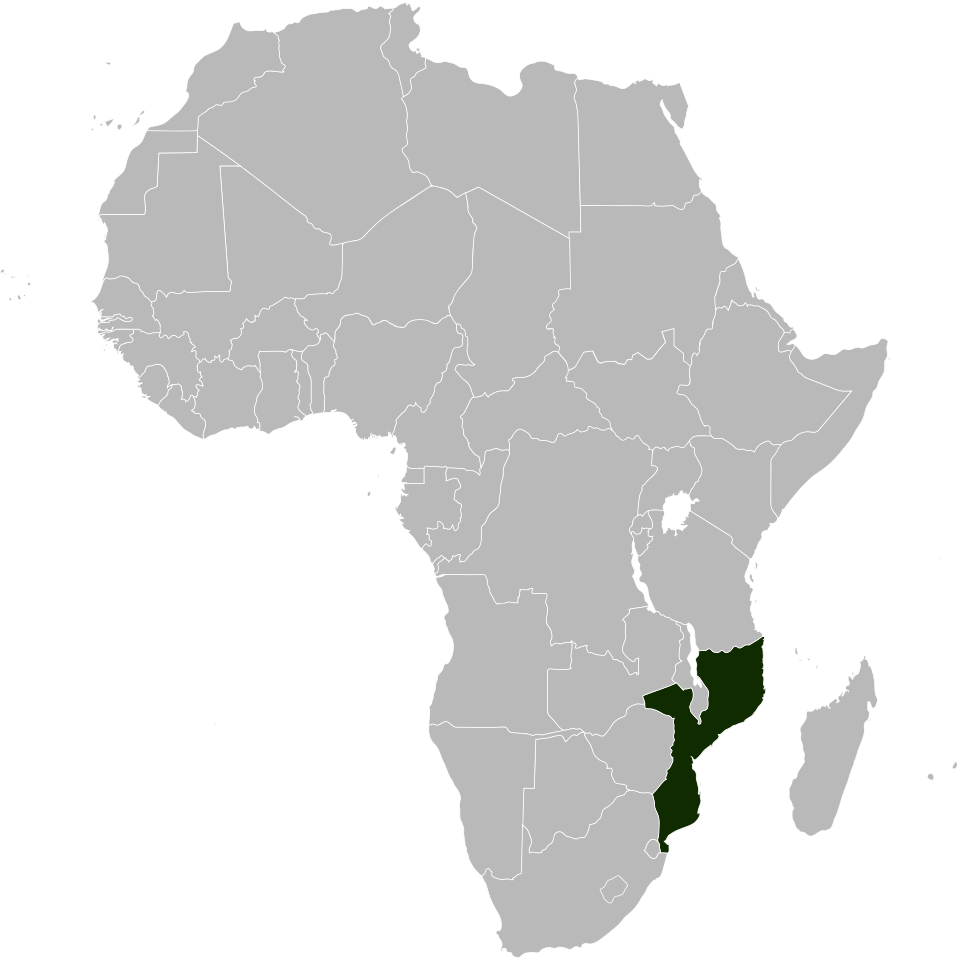
Regional context is inferable from the industrial profile. Mozambique shares borders with South Africa, Zimbabwe, Tanzania, Malawi, and Zambia — all nations with varying cost structures. The prominence of Mozambique Ports and Railways suggests that Maputo and Beira are logistics hubs where housing demand from transport sector workers could push urban property prices above rural averages.
The absence of specific numbers from the World Bank means that analysts must rely on qualitative signals: a country with four passenger airlines and a national railway corporation is one where internal mobility is both necessary and costly. For the average Mozambican, the cost of living likely varies dramatically between the capital and the countryside, with infrastructure development — or its absence — being the primary determinant.
Investment and Business Climate — State Power Meets Private Ambition
The top companies list is a who’s who of Mozambique’s mixed economy. The Bank of Mozambique sits at the apex of the financial system, setting monetary policy in a country where inflation data is currently unavailable. Banco Nacional de Investimento functions as the state’s vehicle for long-term project financing, likely channeling capital into the energy and transport megaprojects that define Mozambique’s economic narrative.
On the industrial side, Mozambique Ports and Railways and the Beira Railroad Corporation represent the backbone of the country’s trade infrastructure — ports and rail lines that connect landlocked neighbors to the Indian Ocean.
The aviation sector is unusually prominent for a country of Mozambique’s size. Four airlines — Air Corridor, Kaya Airlines, LAM Mozambique Airlines, and Moçambique Expresso — suggest either a fragmented market or one where domestic air travel is essential due to challenging road conditions. LAM Mozambique Airlines, as the national carrier, likely receives state support, while the others may operate on thinner margins serving niche routes.
For investors, the key sectors to watch are energy, transport, and finance. The government’s heavy hand in all three — through state-owned enterprises and the central bank — means that political connections are as important as market fundamentals. The business climate is one where the state is both regulator and competitor, a dynamic that can create opportunities for well-connected firms while raising barriers for new entrants.
Safety, Politics, and the Quality of Life — Governing Under a Strong Presidency
The political landscape in Mozambique is defined by constitutional centralization. The Constitution stipulates that the President of the Republic functions as head of state, head of government, commander-in-chief of the armed forces, and a symbol of national unity. The president is directly elected for a five-year term via run-off voting, meaning that executive power is concentrated in a single figure who controls both policy and the military.
The prime minister is appointed by the president, not elected, and their functions include convening and chairing the council of ministers, advising the president, assisting in governing, and coordinating government functions. This is not a parliamentary system — the prime minister serves at the president’s pleasure.
Crime and safety indices are listed as unavailable in the provided data, which is itself a notable gap. For a country with significant natural resource wealth and stark inequality, the absence of crime statistics may reflect either underreporting or a lack of systematic data collection. The political structure, with its strong executive and appointed prime minister, suggests a system designed for stability rather than democratic competition.
The president’s dual role as head of government and commander-in-chief means that security policy is directly controlled from the highest office. Quality of life in Mozambique is likely shaped by this political reality: the state is present and powerful, but its ability to deliver services — from electricity to public safety — depends on the effectiveness of the state-owned enterprises that dominate the economy.
What’s Happening Now — The LNG Pivot and the Data Gap
The most telling aspect of Mozambique’s current economic moment is what the data does not say. The World Bank has not provided recent figures for GDP growth, inflation, or unemployment — a silence that speaks volumes about the challenge of measuring an economy in transition. While specific recent news events are not included in the provided information, the composition of the country’s top companies points to ongoing developments.
The presence of Banco Nacional de Investimento alongside the Bank of Mozambique suggests active project financing, likely tied to the massive natural gas fields in the Rovuma Basin. The dominance of transport companies — ports, railways, airlines — indicates that infrastructure development is a live policy priority.
The political system, with its directly elected president and appointed prime minister, creates a governance environment where policy shifts can happen quickly once executive decisions are made. For businesses and investors watching Mozambique, the key question is whether the state-owned enterprises that dominate the economy can deliver on the infrastructure needed to unlock the country’s energy potential.
The lack of recent inflation data from the World Bank is particularly notable — it may indicate either price stability or a statistical system struggling to keep pace with rapid change. Either way, Mozambique in 2026 is a country where the economic narrative is being written by megaprojects and state capacity, not by quarterly GDP releases.
The Bottom Line
Mozambique deserves the attention of anyone tracking Africa’s energy transition and infrastructure development. The country’s economic future hinges on whether its state-owned enterprises can translate natural resource wealth into broad-based growth — a question that remains unanswered in the available data. Analysts, investors, and policymakers should watch this nation for what it reveals about the intersection of political centralization and economic transformation.
For now, Mozambique remains a country of potential rather than proof, but the pieces are in place for a story that could define Southern Africa’s next decade.
Sources & Methodology
This article is authored by Economic Pulse Net for informational and research purposes. Economic Pulse Net sources its data from multilateral institutions, national statistics bureaus, and proprietary databases. All data is believed to be current as of the date of publication.
Published: July 30, 2026 | Category: Research — Mozambique
Use these signals in your own platform
Economic Pulse publishes its live signal feed through a documented, read-only API. Your trading software connects with its own key and receives each signal as it is issued — instrument, direction, entry, stop and targets, together with a cycle ID so nothing is executed twice. The feed is independent of this website and cannot change it.
Signals are informational only and are not financial advice.