Economic Pulse Net | Sources: World Bank World Development Indicators, Government Sources | 2026
Key Takeaways
– Mozambique’s economy is anchored by massive state-owned enterprises in transport, energy, and finance, but the absence of recent GDP and inflation data from the World Bank leaves investors guessing at the true health of the economy.
– The country’s top companies are overwhelmingly state-linked — from the Bank of Mozambique to Electricidade de Moçambique and Mozambique Ports and Railways — signalling a economy where the public sector still holds the reins.
– Political power is highly concentrated: the President serves as head of state, head of government, and commander-in-chief, with the prime minister appointed by the president to coordinate the cabinet.
– Air travel is a surprisingly dominant theme among Mozambique’s largest firms, with four airlines — Air Corridor, Kaya Airlines, LAM Mozambique Airlines, and Moçambique Expresso — all ranking among the top ten companies.
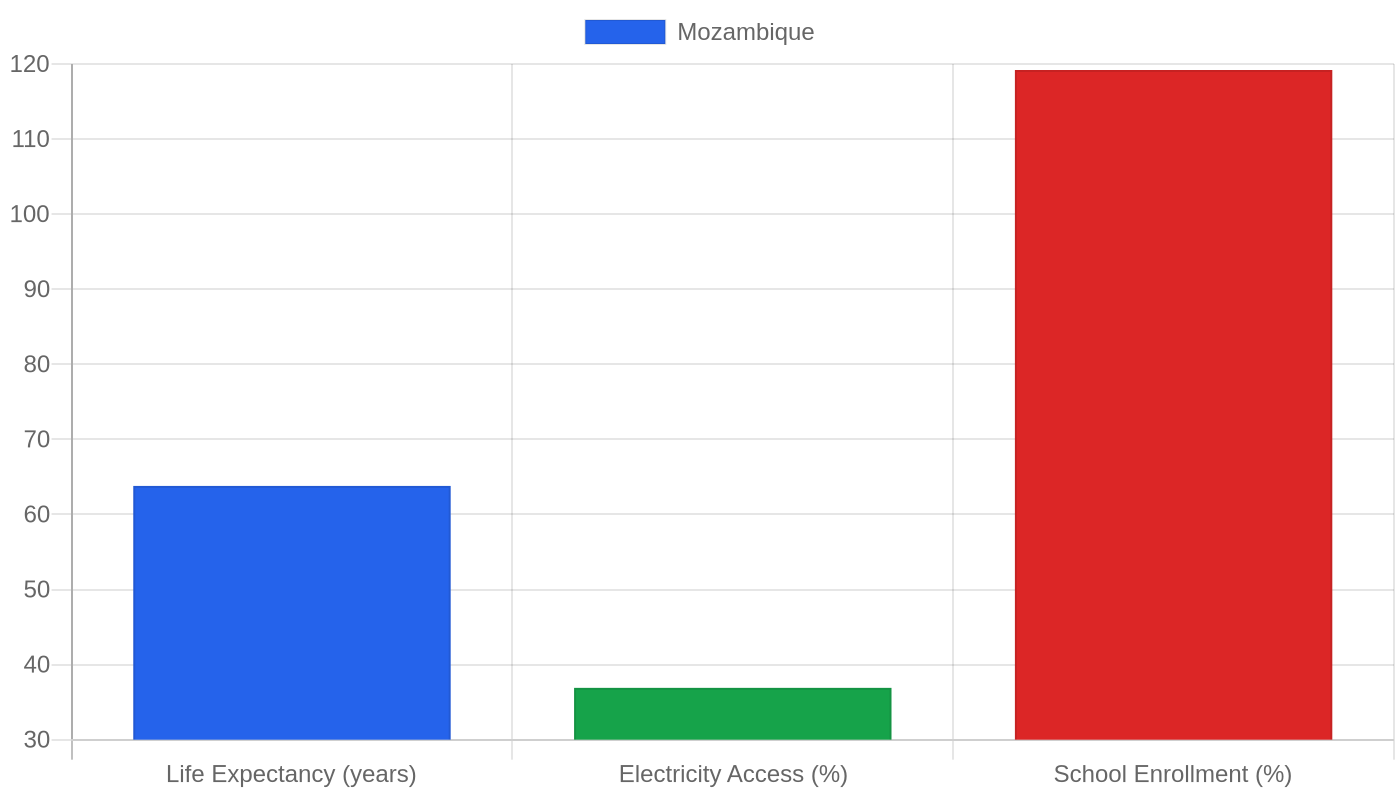
– The lack of basic socioeconomic indicators — population, unemployment, GNI per capita — points to a data transparency gap that complicates any serious investment thesis.
The Ghost Economy — Reading Between the Missing Numbers
The World Bank’s latest data on Mozambique is striking for what it does not say. There is no GDP growth figure, no inflation rate, no unemployment statistic, no population count. The country’s economic profile, at least as far as international institutions are concerned, has gone dark. For a nation that sits on one of Africa’s most strategic coastlines and operates some of the continent’s most critical transport corridors, this silence is itself a story.
What we do know comes from the corporate landscape. Mozambique’s top companies tell a tale of an economy built on logistics, energy, and state control. The Bank of Mozambique, the central bank, sits at the top of the financial sector alongside the Banco Nacional de Investimento, the state development bank. These institutions are the arteries through which capital — or its absence — flows.
On the industrial side, Mozambique Ports and Railways and the Beira Railroad Corporation are the backbone of a regional trade network that serves not just Mozambique but landlocked neighbours like Zimbabwe, Zambia, and Malawi. Electricidade de Moçambique provides the power that keeps the lights on in Maputo and beyond.
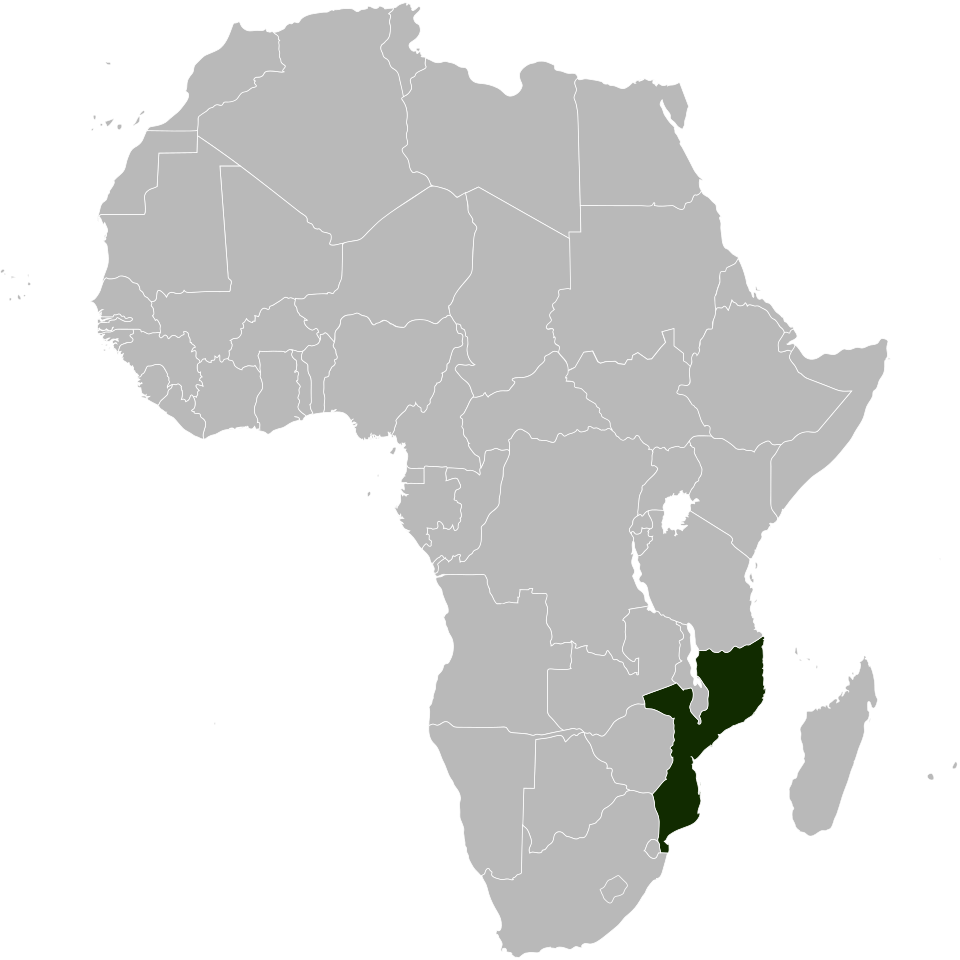
The prominence of four airlines — Air Corridor, Kaya Airlines, LAM Mozambique Airlines, and Moçambique Expresso — suggests a country where geography matters enormously. Mozambique stretches nearly 2,500 kilometres along the Indian Ocean, and road infrastructure remains patchy. Air travel is not a luxury; it is a necessity. Yet the sheer number of carriers competing in a relatively small market raises questions about profitability, subsidy dependence, and long-term viability.
Without hard economic data, analysts must read the tea leaves. The presence of a development bank and a central bank actively managing the financial system implies an economy that is not entirely adrift. But the absence of inflation or unemployment figures from the World Bank is worrying. It suggests either a breakdown in data collection, a reluctance to publish unfavourable numbers, or simply a government that does not prioritise economic transparency.
For any investor or policymaker looking at Mozambique, this information vacuum is a red flag.
The Cost of Living — Where the Data Goes Silent
On the cost of living, the available data is equally sparse. There are no housing cost indices, no rent-to-income ratios, no comparisons with regional averages. What can be inferred, however, is that Mozambique’s economy is heavily influenced by its state-owned enterprises. The presence of large employers like Electricidade de Moçambique and Mozambique Ports and Railways means that a significant portion of the formal workforce is tied to public-sector wages and benefits.
In such an environment, the cost of living is likely to be shaped more by government policy than by market forces.
In Maputo, the capital, housing demand has historically been driven by expatriates working in the energy and logistics sectors. But without rental data, it is impossible to say whether prices have stabilised, spiked, or collapsed. What is clear is that the dominance of state-owned companies creates a dual economy: those employed by the state or by large parastatals enjoy relative stability, while those in the informal sector — which in Mozambique is substantial — face a far more precarious existence.
Daily expenses for basics like food, transport, and utilities are likely to be high relative to incomes, as is common in countries where logistics are challenging and domestic manufacturing is limited.
The State-Led Economy — Investment and Business Climate
For anyone looking to do business in Mozambique, the first question is not about taxes or regulation. It is about who owns what. The list of top companies reads like a government directory: Bank of Mozambique, Banco Nacional de Investimento, Mozambique Ports and Railways, Beira Railroad Corporation, Correios de Moçambique, Electricidade de Moçambique. These are not private-sector dynamos; they are state instruments. The financial sector is dominated by the central bank and the development bank.
The transport sector is run by state-owned port and rail operators. The postal service is state-owned. The power utility is state-owned.
This concentration matters. It means that the business climate is not driven by entrepreneurial competition but by political access. The sectors to watch — ports, railways, energy — are all areas where the government is the primary actor. For private investors, the opportunity lies not in competing with the state but in partnering with it. The development bank, Banco Nacional de Investimento, is the natural entry point for any large-scale infrastructure or energy project. The central bank sets the rules.
The port and rail companies control the gates.
The airline sector is the one area where private and semi-private operators have carved out space. LAM Mozambique Airlines is the flag carrier, but Air Corridor, Kaya Airlines, and Moçambique Expresso suggest a more fragmented, possibly more competitive, market. Yet even here, the state’s shadow looms large. Airlines in small economies rarely survive without some form of government support, whether through subsidies, route rights, or preferential fuel pricing.
Power and Politics — Safety and Quality of Life
The political landscape in Mozambique is defined by concentration of power. According to the country’s constitution, the President of the Republic functions as head of state, head of government, commander-in-chief of the armed forces, and as a symbol of national unity. That is a lot of hats for one person. The president is directly elected for a five-year term via run-off voting. The prime minister is appointed by the president, not elected.
Their role includes convening and chairing the council of ministers, advising the president, and coordinating government functions.
This structure creates a system where accountability is vertical — upward to the president — rather than horizontal across branches of government. For citizens and businesses alike, this means that the quality of governance depends heavily on the individual occupying the presidency. There is no independent prime minister to check executive power, and no parliamentary system to force coalition-building. The constitution vests authority in a single figure.
On safety and crime, the data is absent. No crime index, no safety index. This is not uncommon for countries where statistical capacity is limited, but it leaves a gap in any assessment of quality of life. What can be said is that Mozambique has faced significant security challenges in recent years, particularly in the northern province of Cabo Delgado, where an Islamist insurgency has disrupted gas projects and displaced hundreds of thousands of people.
The absence of crime data from the World Bank may reflect the difficulty of collecting reliable statistics in a conflict-affected environment.
The Waiting Game — What’s Happening Now
The most striking feature of Mozambique’s current economic moment is the silence. The World Bank has not published recent GDP, inflation, or employment figures. The national statistics bureau has not provided updated cost-of-living data. The political system, as outlined in the constitution, remains unchanged. There are no recent news reports of major reforms, elections, or policy shifts in the available data.
This absence of fresh information is itself a signal. It suggests a country in a holding pattern — waiting for the next big gas project to come online, waiting for the security situation in the north to stabilise, waiting for the data to catch up with reality. The companies that dominate the economy — the port operators, the railway corporations, the power utility, the airlines — are all long-term plays. They are not responding to quarterly earnings calls or consumer sentiment surveys.
They are building infrastructure that will take decades to pay off.
For the moment, Mozambique is a country that exists more in potential than in performance. The pieces are there: a strategic coastline, a regional transport network, a growing energy sector, a financial system anchored by state banks. But without current data, without transparency, and without a clear political catalyst, the economy remains in the shadows. The question is not whether Mozambique will matter. It will. The question is when the world will be allowed to see the numbers.
The Bottom Line
Mozambique is a country for patient investors with a high tolerance for uncertainty. The state-owned infrastructure giants — ports, railways, power, airlines — are the foundation of any future growth story, but they come with political risk and data opacity. Anyone watching this country should focus on two things: the security situation in Cabo Delgado and the release of updated economic data from the World Bank or national authorities.
Until those numbers arrive, Mozambique remains a bet on potential rather than proof.
Sources & Methodology
This article is authored by Economic Pulse Net for informational and research purposes. Economic Pulse Net sources its data from multilateral institutions, national statistics bureaus, and proprietary databases. All data is believed to be current as of the date of publication.
Published: July 30, 2026 | Category: Research — Mozambique
Use these signals in your own platform
Economic Pulse publishes its live signal feed through a documented, read-only API. Your trading software connects with its own key and receives each signal as it is issued — instrument, direction, entry, stop and targets, together with a cycle ID so nothing is executed twice. The feed is independent of this website and cannot change it.
Signals are informational only and are not financial advice.