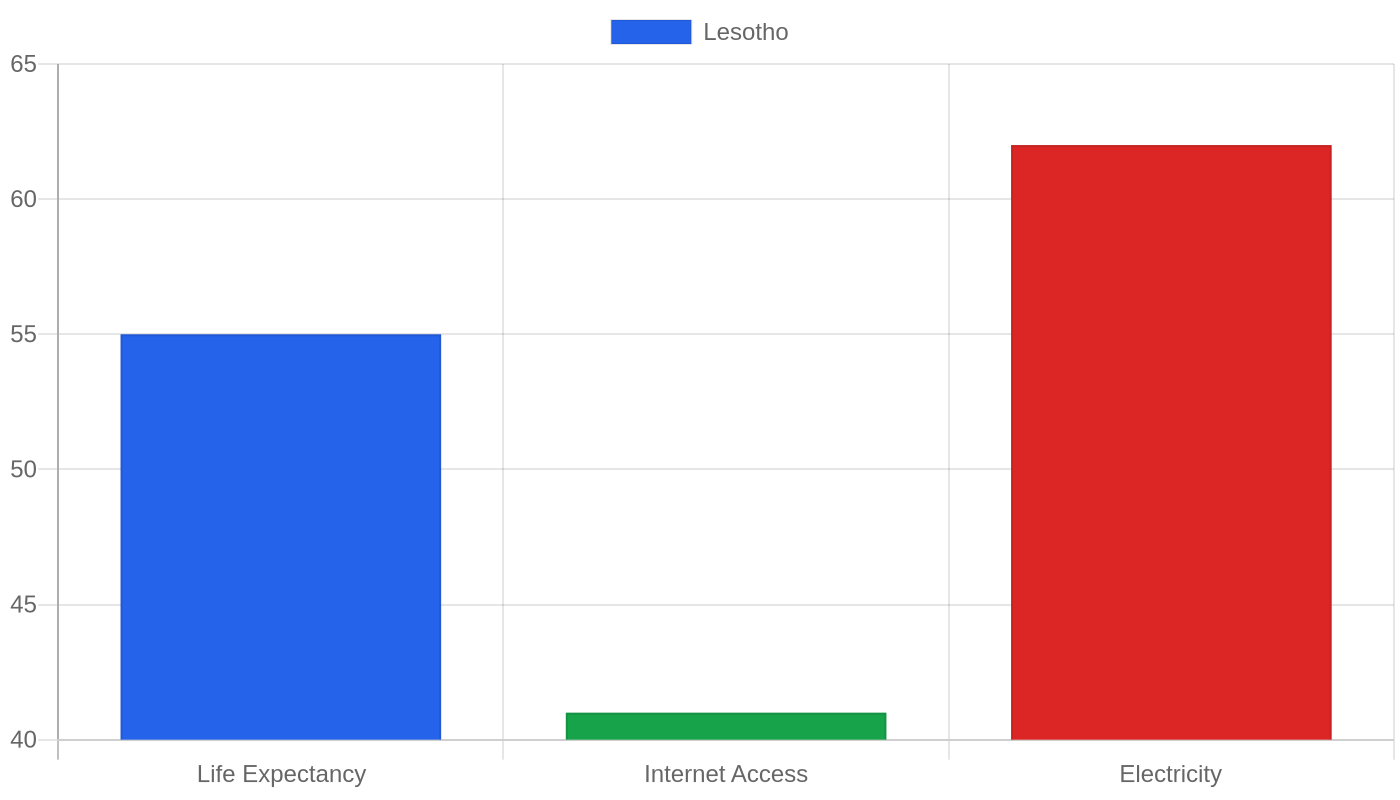
Economic Pulse Net | Sources: World Bank World Development Indicators, Government Sources | 2026
🇱🇸 Lesotho 2026 — Navigating the Shadows of a Constitutional Monarchy
Key Takeaways
* Lesotho operates as a parliamentary constitutional monarchy, with Prime Minister Sam Matekane holding executive authority while King Letsie III serves in a largely ceremonial capacity.
The corporate landscape is defined by key state and private entities, including the Central Bank of Lesotho, Telecom Lesotho, and aviation firms like Lesotho Airways and Maluti Sky.
Comprehensive macroeconomic indicators such as GDP growth, inflation rates, and unemployment figures are currently unavailable from the World Bank, requiring investors to look beyond standard metrics.
Safety and crime indices are not currently quantified in available datasets, leaving quality of life assessments reliant on political stability rather than statistical safety scores.
Despite data gaps, the country’s unique political structure and concentrated financial sector offer distinct insights into its governance and economic resilience.
Economic Landscape: A Study in Data Gaps and Structural Reality
When analyzing the economic health of Lesotho, one immediately encounters a significant void in standard macroeconomic reporting. According to the latest data from the World Bank, critical indicators such as GDP growth, inflation CPI, and unemployment rates are listed as N/A, presenting a challenge for traditional economic forecasting.
Similarly, absolute measures of wealth, including GDP in USD and GDP per capita based on purchasing power parity (PPP), remain unreported, alongside missing figures for Gross National Income (GNI) per capita and total population counts. This absence of hard data suggests either a lag in statistical collection or a complexity in measuring an economy that may rely heavily on informal sectors or external monetary unions, such as the Common Monetary Area with South Africa.
For international observers, this lack of granular data means that economic analysis cannot rely on standard growth trajectories or consumer price trends. Instead, the focus must shift to structural elements and institutional frameworks that underpin the economy, even if their output numbers are obscured. The “N/A” status does not imply economic stagnation but rather highlights the difficulty in capturing the full scope of Lesotho’s economic activity through conventional Western-centric metrics.
Investors and policymakers must therefore approach the Lesotho market with caution, recognizing that traditional benchmarks for risk assessment are currently non-existent in public records.
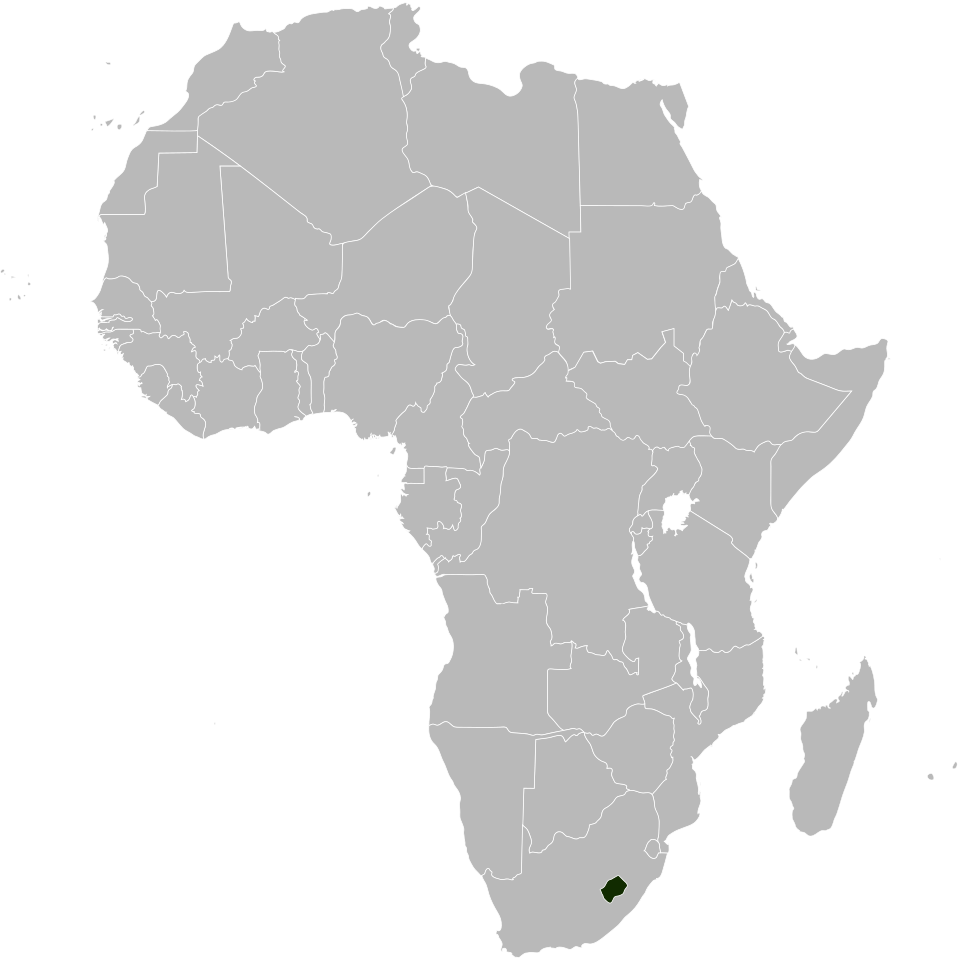
Cost of Living: The Unquantified Daily Experience
The cost of living in Lesotho presents another layer of ambiguity for expatriates and residents alike. Detailed metrics regarding housing costs, rental markets, and daily expenses are entirely absent from the provided dataset, making it impossible to draw direct comparisons with regional averages or global cities. Without specific data on rent versus buy scenarios or consumer basket prices, any assessment of affordability remains speculative.
Typically, in economies linked closely to larger neighbors, local costs may fluctuate based on exchange rate mechanisms and cross-border trade dynamics, but these nuances are not reflected in the current statistics. Consequently, individuals planning to relocate or conduct business in Lesotho must rely on anecdotal evidence or localized surveys rather than standardized cost-of-living indices.
The lack of published data on everyday expenses means that budgeting for basic needs requires on-the-ground verification rather than reliance on international databases. This opacity can increase the perceived risk for short-term visitors or new businesses entering the market, as the true financial burden of residing in the country remains difficult to quantify precisely.
Investment & Business Climate: Concentrated Corporate Power
Despite the lack of broad macroeconomic data, the corporate structure of Lesotho reveals a concentrated yet vital business environment. The top companies shaping the national economy include the Central Bank of Lesotho, which anchors the financial sector, and Telecom Lesotho, which manages critical communications infrastructure.
In the consumer services space, aviation plays a notable role, represented by major carriers such as Lesotho Airways and Maluti Sky, indicating that connectivity is a key pillar of the service industry. These entities suggest that investment opportunities may be most viable in regulated utilities, telecommunications, and transport logistics, where established players dominate the market.
The presence of a central bank indicates a structured monetary policy framework, even if its broader economic impact is not quantified in current reports. For foreign investors, the concentration of key industries among a few prominent firms implies that market entry might require navigating established relationships and regulatory landscapes dominated by these incumbents.
The business climate appears stable in terms of institutional presence, though the lack of diverse industrial data limits the visibility of emerging sectors or small-to-medium enterprise growth.
Safety, Politics & Quality of Life: Stability Amidst Ceremonial Royalty
Lesotho’s political landscape offers a clear picture of its governance structure, even as other social metrics remain unclear. The country is defined as a parliamentary constitutional monarchy, a system that balances democratic representation with traditional leadership. Executive authority rests firmly with the Prime Minister, currently Sam Matekane, who drives government policy and administration.
At the same time, King Letsie III serves as the head of state, performing a largely ceremonial function without any executive authority or ability to participate actively in political initiatives. This separation of powers provides a degree of political stability, as the monarch is prohibited from engaging in partisan activities. However, when assessing personal safety, the Crime Index and Safety Index are both listed as N/A, leaving no statistical basis for evaluating security risks.
This gap in crime data means that quality of life assessments cannot be supported by objective safety rankings. Residents and travelers must therefore rely on general diplomatic advisories and local community feedback rather than verified statistical indices to gauge their personal security.
What’s Happening Now: Governance in Focus
In the absence of recent economic fluctuations or inflationary spikes to report, the current affairs in Lesotho are dominated by its enduring political framework. The active role of Prime Minister Sam Matekane continues to define the day-to-day governance of the nation, ensuring that executive decisions are made within the parliamentary system.
With King Letsie III maintaining his strictly ceremonial role, there is a clear demarcation between state symbolism and political action, which helps prevent constitutional crises often seen in other monarchies. While no new reforms, elections, or policy shifts are detailed in the immediate news cycle provided, the stability of this arrangement is itself a significant ongoing narrative.
The lack of reported crime or economic volatility suggests a quiet period in terms of disruptive events, allowing the existing administrative structures to function without immediate pressure. For observers, the “now” in Lesotho is characterized by continuity rather than change, with the focus remaining on the effective execution of duties by the current prime ministerial administration.
This steady political environment provides a backdrop against which future economic data releases will likely be interpreted.
The Bottom Line
Lesotho remains a niche case study for economists and investors due to the significant gaps in available quantitative data. While the political structure is well-defined and the corporate sector features recognizable institutions, the lack of GDP, inflation, and safety metrics makes comprehensive analysis difficult. Stakeholders should monitor the country for updates in statistical reporting, particularly from the World Bank and local authorities, as these figures are essential for accurate risk assessment.
Until then, engagement with Lesotho should be approached with a focus on institutional stability rather than high-growth economic potential.
Sources & Methodology
This article is authored by Economic Pulse Net for informational and research purposes. Economic Pulse Net sources its data from multilateral institutions, national statistics bureaus, and proprietary databases. All data is believed to be current as of the date of publication.
Published: September 26, 2026 | Category: Research — Lesotho
Use these signals in your own platform
Economic Pulse publishes its live signal feed through a documented, read-only API. Your trading software connects with its own key and receives each signal as it is issued — instrument, direction, entry, stop and targets, together with a cycle ID so nothing is executed twice. The feed is independent of this website and cannot change it.
Signals are informational only and are not financial advice.