Economic Pulse Net | Sources: World Bank World Development Indicators, Government Sources | 2026
Key Takeaways
– Guinea possesses some of the world’s largest bauxite reserves, yet its economy remains opaque, with the World Bank reporting no official figures for GDP growth, inflation, or unemployment in the latest data.
– The country has been governed as a *de facto* military autocracy since the 2021 coup d’état, creating a stark disconnect between its mineral wealth and its political stability.
– Major bauxite and alumina companies dominate the corporate landscape, but consumer services like airlines also feature prominently, hinting at a fragile service sector struggling to connect a vast country.
– With no cost of living or crime index data available from the provided sources, Guinea remains a statistical black box, making investment decisions highly speculative.
– The political landscape—a republic in name only—raises fundamental questions about property rights, contract enforcement, and the rule of law for any business considering entry.
The Bauxite Paradox — Economic Data in a Statistical Vacuum
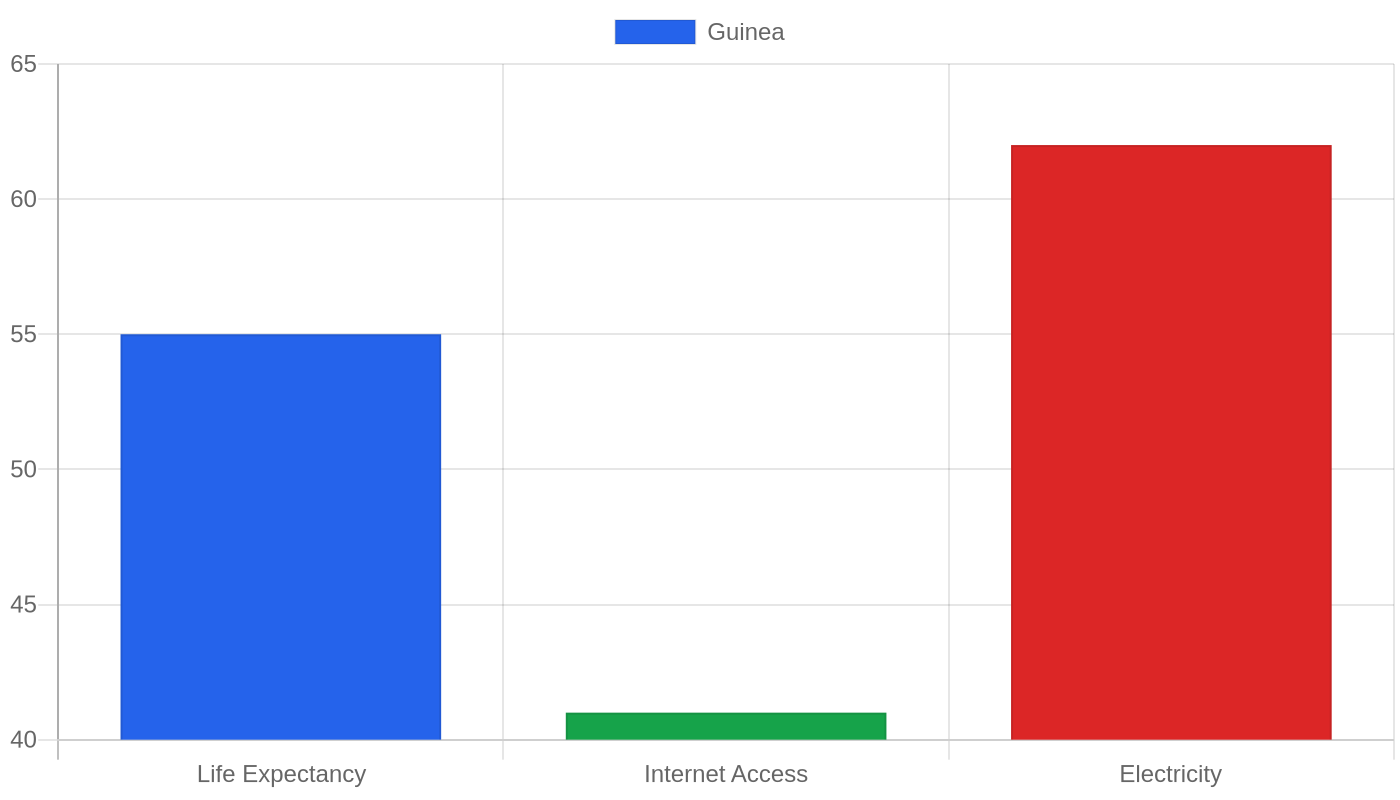
To write about Guinea’s economy is to confront a silence. The World Bank, the world’s foremost authority on cross-country economic data, reports no figures for Guinea’s GDP growth, inflation, unemployment, GDP in US dollars, GDP per capita based on purchasing power parity, or GNI per capita. This is not a data gap; it is a statement. It tells us that Guinea, for all its mineral endowment, operates outside the normal rhythms of global economic measurement.
The absence of numbers is itself the most important number.
What we do know is the structure of the economy, inferred from the companies that dominate the landscape. Guinea is a bauxite superpower. The Alumina Company of Guinea, Compagnie des Bauxites de Guinée, Compagnie des bauxites de Kindia, and Halco Mining are all basic materials firms—each one tied to the extraction and processing of bauxite, the raw material for aluminium. These are not small players; they are the backbone of the formal economy.
Yet, without GDP data, we cannot say how much of the national income they represent, how much value is captured domestically versus exported raw, or how much of that wealth trickles down to the population.
The absence of inflation data is equally troubling. In a country where food prices and transport costs can swing wildly due to political instability or infrastructure failures, the lack of a CPI figure suggests either a broken statistical apparatus or a deliberate opacity. For the average Guinean, the cost of living is not theoretical—it is daily reality. But no official source has provided the numbers to quantify it.
Employment data is also missing. With no unemployment rate, we cannot distinguish between a subsistence agrarian workforce and a modern labour market. The presence of several airlines—Air Guinee Express, Air Guinee International, Air Guinée, Eagle Air, Guinee Air Service—suggests some level of commercial activity, but airlines are notoriously capital-intensive and vulnerable to fuel price shocks. They are not necessarily a sign of broad-based employment.
The bottom line for this section is uncomfortable: Guinea’s economy is a black box. The World Bank’s silence is the most honest data point available.
Housing, Bread, and Transport — The Unmeasured Cost of Living
The cost of living in Guinea is a story told without numbers. The provided data includes no figures for rent, utility bills, food prices, or transport fares. But the absence of data does not mean the absence of hardship. In Conakry, the capital, housing is a perennial crisis. The city is built on a narrow peninsula, constraining land supply and pushing rents upward for any decent accommodation.
For a mid-level civil servant or a junior manager at one of the bauxite companies, finding affordable housing near work is a constant negotiation.
Rent versus buy is not a meaningful question for most Guineans. Property ownership requires clear land titles, and in a country where the judicial system is headed by the Supreme Court of Guinea but the political system is a military autocracy, title disputes are common and costly. Most urban residents rent—often informally, often without formal leases. The daily expenses of food, transport, and healthcare are paid in cash, and prices can vary dramatically between the capital and the interior.
Compared to other West African nations, Guinea likely faces higher transport costs due to poor road infrastructure and fuel import dependency. Without official data, we can only infer that the cost of living is a major political pressure point—one that the current military government has not addressed with transparent statistics.
Bauxite Giants and Consumer Services — The Investment Climate
Guinea’s investment climate is defined by a single question: can you trust the political environment? The corporate landscape is dominated by bauxite and alumina companies—Alumina Company of Guinea, Compagnie des Bauxites de Guinée, Compagnie des bauxites de Kindia, and Halco Mining. These are the heavyweights, the firms that generate the foreign exchange and the government revenue.
They operate in a sector where long-term capital commitments are essential—mines, refineries, transport infrastructure—and where political risk is therefore existential.
Alongside the miners, a surprising number of airlines appear in the top companies list: Air Guinee Express, Air Guinee International, Air Guinée, Eagle Air, Guinee Air Service. This cluster suggests that domestic air travel is a critical sector, likely driven by poor road conditions and the need to move people and light cargo between Conakry and the interior mining regions. But airlines are fragile businesses. Fuel costs, maintenance, and security concerns can ground a carrier quickly.
The one industrial company on the list—Office de la poste guinéenne—hints at a state-owned postal service, a relic of an earlier era of economic organisation. For a foreign investor, the message is mixed: there are rich resources to extract, but the service sector is thin, the state still plays a significant role, and the rule of law is uncertain.
A Republic in Name Only — Safety, Politics, and Daily Life
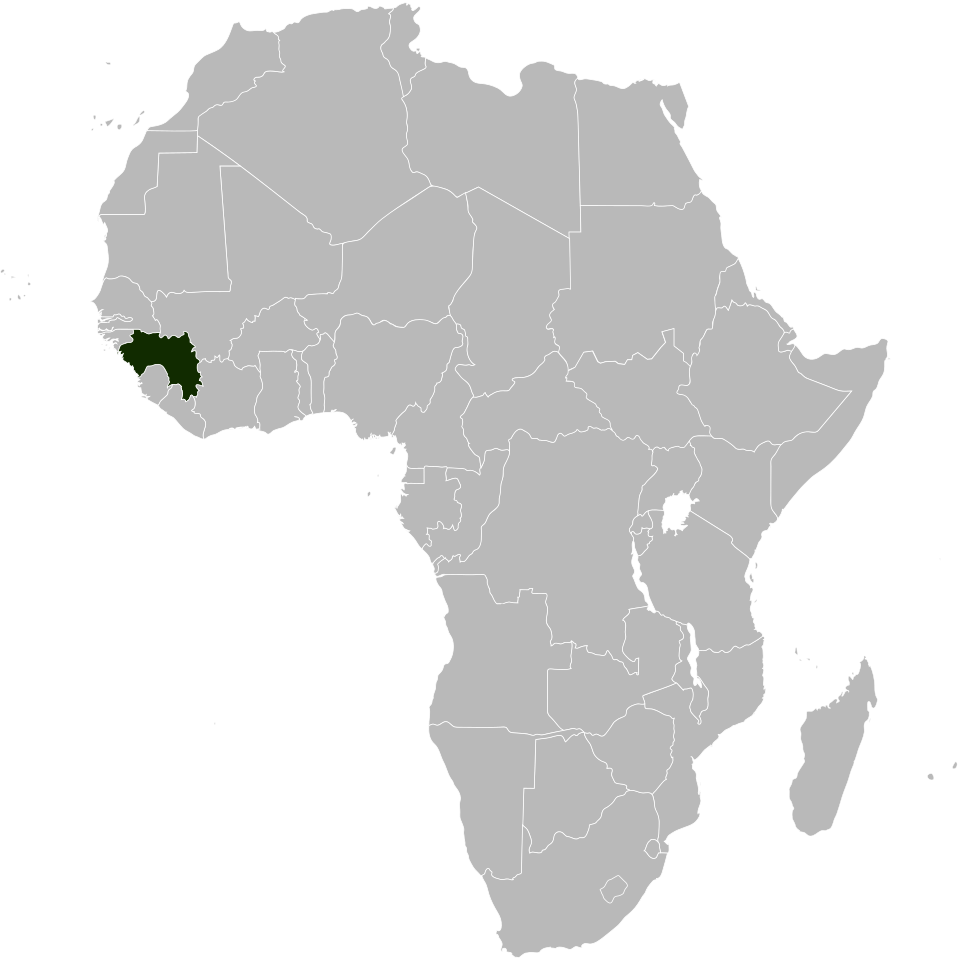
The political landscape of Guinea is a study in contradiction. The country is described as a republic *de jure*—on paper, it has a directly elected president who serves as both head of state and head of government, a unicameral National Assembly with directly elected members, and a judicial branch headed by the Supreme Court of Guinea. But since the 2021 coup d’état, it has been governed as a *de facto* military autocracy.
The National Assembly, once the legislative body of the country, has been effectively sidelined.
This political reality shapes every aspect of life. Safety is not just about crime—though no crime index or safety index is provided—but about the predictability of state power. In a military autocracy, the rules can change overnight. A business licence granted today can be revoked tomorrow. A protest that is tolerated one week can be suppressed the next. The absence of crime data may reflect a security apparatus that controls information as much as it controls the streets.
For the average Guinean, quality of life is a daily negotiation with uncertainty. The wealth from bauxite does not visibly transform the capital. Roads are congested, power cuts are common, and public services are underfunded. The political class, whether civilian or military, has not delivered broad-based prosperity. The coup of 2021 was justified by its perpetrators as a correction of a failing system, but three years on, the statistical vacuum suggests that accountability has not improved.
The Coup’s Long Shadow — What’s Happening Now
The most immediate and defining reality for Guinea in 2026 is the aftermath of the 2021 coup d’état. The military government that took power promised a transition back to civilian rule, but timelines have slipped, and the National Assembly remains dissolved. The political landscape is frozen. No elections have been held, no new constitution has been ratified, and the international community watches with a mixture of concern and resignation.
Economically, the silence from the World Bank is deafening. If inflation were under control, if growth were robust, if employment were improving, the government would likely release those figures. The fact that they are not available suggests either statistical incapacity or a desire to hide bad news. For the bauxite companies operating in Guinea, the risk premium has undoubtedly risen. Insurance costs, financing terms, and supply chain contracts all reflect the uncertainty of operating under a military regime.
There are no recent news reports in the provided data to indicate reforms, policy shifts, or business developments. This itself is a telling absence. In a normal economy, there would be quarterly GDP releases, central bank statements, trade data. In Guinea, the data flow has stopped. The country is not just politically isolated; it is statistically invisible. For anyone trying to understand what is happening right now, the honest answer is that we do not know—and that uncertainty is the story.
The Bottom Line
Guinea is a country of extraordinary natural wealth and extraordinary institutional poverty. Its bauxite reserves are among the largest in the world, but its political system is a military autocracy that does not publish basic economic statistics. For commodity traders and mining executives, Guinea remains a high-risk, high-reward play—but the risk has increased since the 2021 coup.
For the average citizen, the absence of data is not an abstraction; it is the daily experience of a state that does not account for itself. Watch Guinea if you are in the resources sector and have a high tolerance for uncertainty. Otherwise, wait for the numbers to return.
Sources & Methodology
This article is authored by Economic Pulse Net for informational and research purposes. Economic Pulse Net sources its data from multilateral institutions, national statistics bureaus, and proprietary databases. All data is believed to be current as of the date of publication.
Published: July 19, 2026 | Category: Research — Guinea
Use these signals in your own platform
Economic Pulse publishes its live signal feed through a documented, read-only API. Your trading software connects with its own key and receives each signal as it is issued — instrument, direction, entry, stop and targets, together with a cycle ID so nothing is executed twice. The feed is independent of this website and cannot change it.
Signals are informational only and are not financial advice.