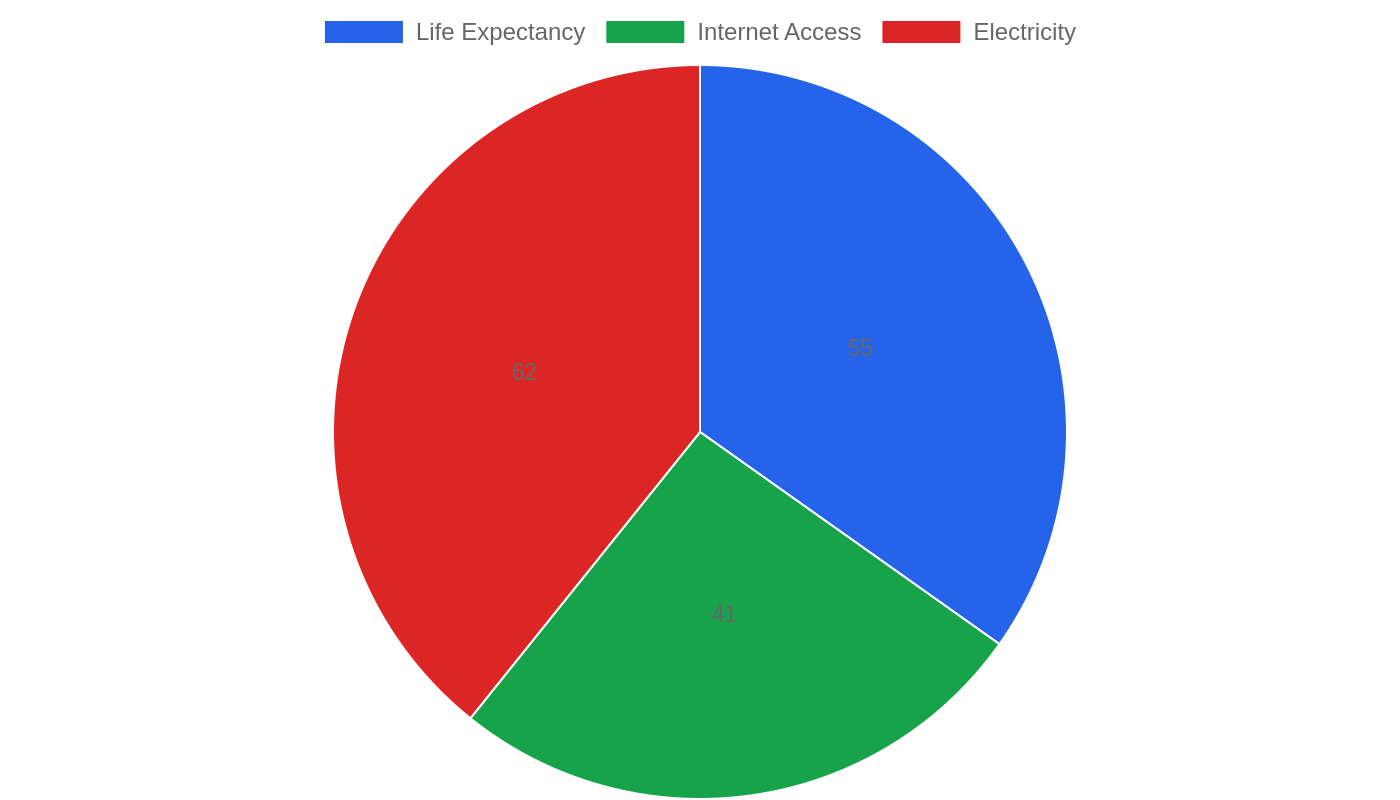
Economic Pulse Net | Sources: World Bank World Development Indicators, Government Sources | 2026
Key Takeaways
- Political Instability: Since the 2021 coup d’état, Guinea has transitioned from a *de jure* republic to a *de facto* military autocracy, creating significant uncertainty for long-term investors.
- Resource Rich, Data Poor: While Guinea is home to major bauxite mining operations like the Alumina Company of Guinea and Compagnie des Bauxites de Guinée, key macroeconomic indicators such as GDP growth, inflation, and unemployment rates are currently unavailable from the World Bank, obscuring the true state of the economy.
- Sectoral Focus: The business landscape is dominated by basic materials, specifically bauxite extraction, alongside a fragmented aviation sector with multiple consumer services players like Air Guinée and Eagle Air.
- Governance Vacuum: The National Assembly, traditionally the legislative body, has seen its powers curtailed since the 2021 power grab, leaving the judicial and legislative branches operating under a shadow of military oversight.
The Invisible Engine: Why the Numbers Don’t Add Up
In most economic analyses, the first step is to look at the growth rate, inflation, and employment figures to gauge the health of a nation.
For Guinea, however, the World Bank reports these critical metrics as “N/A” or not available, presenting a stark picture of statistical opacity.
This lack of data is itself a signal; it suggests that the economic machinery of the state is not producing reliable public information, a common trait in environments where political stability is compromised.
Without a clear GDP figure in USD or a per capita PPP estimate, it is impossible to quantify the standard of living or the total economic output with precision.
Nevertheless, the presence of major industrial players indicates that the economy is not stagnant, even if it is not measured.
The gap between the country’s known mineral wealth and its invisible macroeconomic indicators creates a risk premium for any observer trying to understand the market.
Investors must rely on qualitative assessments of industry activity rather than quantitative macroeconomic trends.
This data vacuum forces a focus on the physical reality of production rather than the abstract reality of national accounts.
A Life in the Shadows of the Mine
While specific cost-of-living data is not provided in the current dataset, the structural composition of the economy offers clues about the daily realities for its citizens.
The dominance of the basic materials sector, with companies like the Compagnie des Bauxites de Kindia and Halco Mining, suggests an economy heavily tethered to export commodities rather than consumer goods.
In such economies, the cost of imported necessities—food, fuel, and electronics—often fluctuates with global commodity prices and currency stability, both of which are currently shrouded in uncertainty due to the lack of reported inflation data.
The presence of multiple aviation companies, including Air Guinee Express and Guinee Air Service, hints at a reliance on air transport for connectivity, which is typically a premium expense in West Africa.
Without a clear GNI per capita figure, it is difficult to benchmark housing costs or rent-to-income ratios against regional averages.
However, the structural reliance on extractive industries often leads to a dual economy, where those employed in mining or high-level administration enjoy higher standards of living compared to the broader population, whose daily expenses are likely driven by informal market prices.
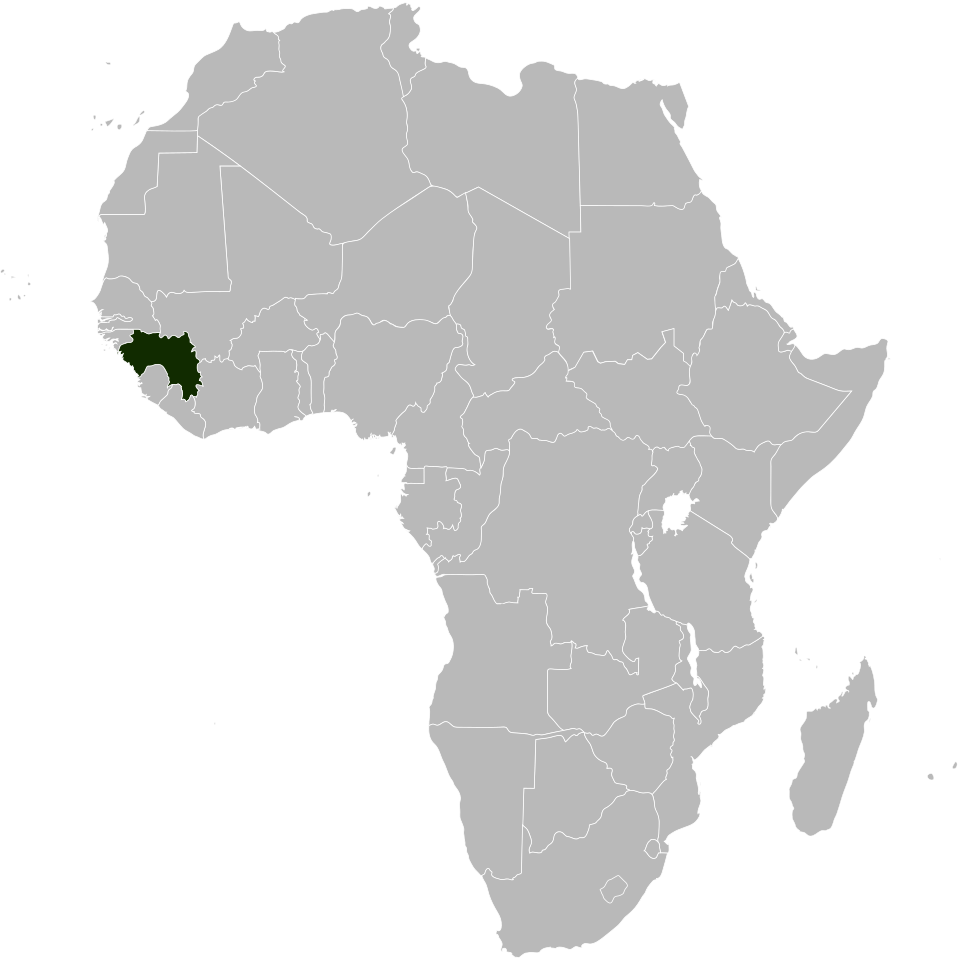
Bauxite Kings and Airborne Logistics
The corporate landscape of Guinea is sharply divided between the heavyweights of the mining industry and the fragmented aviation sector.
The basic materials sector is undeniably the backbone of the formal economy, anchored by giants such as the Alumina Company of Guinea and the Compagnie des Bauxites de Guinée.
These entities represent the primary source of foreign exchange earnings and industrial employment, making them the critical nodes of the national economy.
In contrast, the consumer services sector is populated by numerous aviation firms, including Air Guinee International, Eagle Air, and the Office de la poste guinéenne, which operates in the industrials space.
This proliferation of airlines suggests a competitive but potentially unstable domestic travel market, possibly reflecting the challenges of ground infrastructure in a country of this size.
For business operators, the environment is defined by the sheer scale of the mining operations, which require significant capital and logistical support.
The business climate, therefore, is less about consumer-facing innovation and more about the extraction and export of raw materials, with the aviation sector serving as a necessary, albeit costly, logistical support system.
The Coup’s Long Shadow: Safety and Governance
The political landscape of Guinea is currently defined by the aftermath of the 2021 coup d’état, which fundamentally altered the country’s governance structure.
Although Guinea remains a republic *de jure*, with a directly elected president and a unicameral National Assembly, it has effectively become a *de facto* military autocracy.
The National Assembly, which should serve as the legislative check on power, has seen its operational capacity and independence compromised since the military takeover.
The judicial branch, headed by the Supreme Court of Guinea, theoretically remains the highest court of appeal, but its independence is likely under strain in an environment where military authority supersedes civilian institutions.
Crime and safety indices are currently listed as N/A, which prevents a direct comparison with regional safety averages, but the political instability itself poses a significant risk to personal and business safety.
In periods of military rule, the rule of law is often subordinated to the directives of the ruling junta, creating an unpredictable environment for citizens and foreign nationals alike.
The lack of transparent safety data further compounds the risk, forcing observers to rely on anecdotal evidence of political tensions rather than statistical crime rates.
Navigating the Uncertainty: The Current Reality
The current affairs in Guinea are dominated by the transition period following the 2021 coup, where the military junta has consolidated power while postponing the democratic processes that define a stable republic.
With key economic indicators like GDP growth and inflation unavailable from the World Bank, the immediate economic picture is one of stagnation or hidden volatility, rather than measurable growth.
The business environment is currently in a state of wait-and-see, where major players in the bauxite sector continue operations but face heightened political risk that could affect licensing, taxation, or labor stability.
There is no clear timeline for the restoration of full civilian governance, leaving the National Assembly and other democratic institutions in a state of suspended animation.
This political limbo creates a unique challenge for international partners and investors, who must navigate a legal framework that is theoretically intact but practically subordinate to military command.
The absence of live economic indicators means that policy shifts, such as changes in mining taxes or export duties, are likely to be announced without prior warning or economic justification, adding to the unpredictability of the market.
The Bottom Line
Guinea presents a classic case of high potential obscured by high risk.
The country sits atop significant bauxite reserves, managed by major international and local companies, yet the lack of transparent macroeconomic data and the dominance of a military autocracy make it a difficult proposition for long-term strategic investment.
It is a market for those who can tolerate political opacity and who have specific expertise in extractive industries, rather than a destination for broad-based economic engagement.
For the global economic observer, Guinea is a cautionary tale of how political instability can render an economy’s potential invisible, turning a resource-rich nation into a data black hole.
Watching Guinea requires monitoring not just the price of bauxite, but the subtle shifts in military-civilian relations that will determine if the country ever returns to the fold of predictable, democratic economics.
Sources & Methodology
This article is authored by Economic Pulse Net for informational and research purposes.
Economic Pulse Net sources its data from multilateral institutions, national statistics bureaus, and proprietary databases.
All data is believed to be current as of the date of publication. Published: September 02, 2026 |
Category: Research — Guinea
Use these signals in your own platform
Economic Pulse publishes its live signal feed through a documented, read-only API. Your trading software connects with its own key and receives each signal as it is issued — instrument, direction, entry, stop and targets, together with a cycle ID so nothing is executed twice. The feed is independent of this website and cannot change it.
Signals are informational only and are not financial advice.