Economic Pulse Net | Sources: World Bank World Development Indicators, Government Sources | 2026
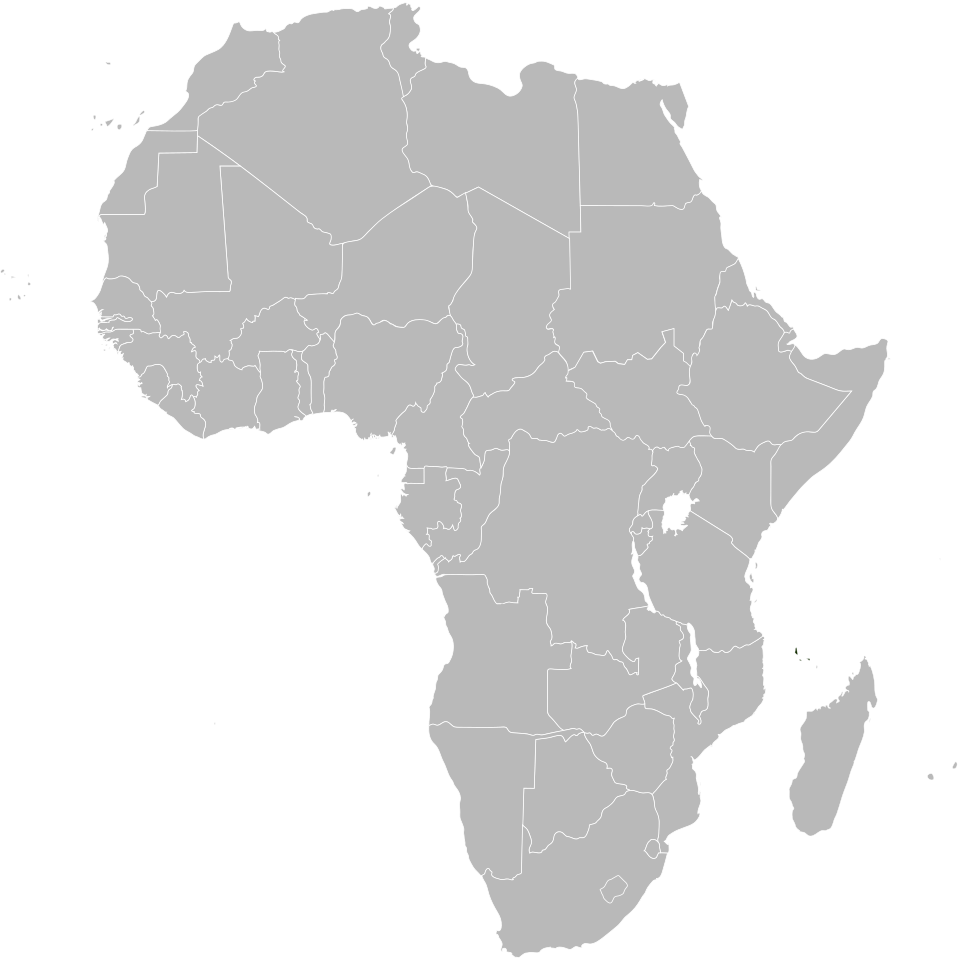
The Union of the Comoros, an archipelago of volcanic islands scattered across the Mozambique Channel, presents one of Africa’s most intriguing economic paradoxes. It is a nation of immense strategic beauty, positioned along vital Indian Ocean trade routes, yet it remains one of the continent’s least-documented economies.
As the country navigates a complex political transition away from its militarized past, international investors and development economists are watching closely—not for what the data currently shows, but for what the trajectory suggests about the future of small-island states in an increasingly volatile global economy.
Key Takeaways
– Political Transformation: The Comoros has formally transitioned from a military dictatorship to a federal presidential republic, with the 2001 Constitution marking a definitive break from authoritarian governance.
– Aviation-Focused Economy: The country’s most prominent corporate entities are concentrated in the consumer services and aviation sectors, signaling a strategic bet on connectivity and tourism.
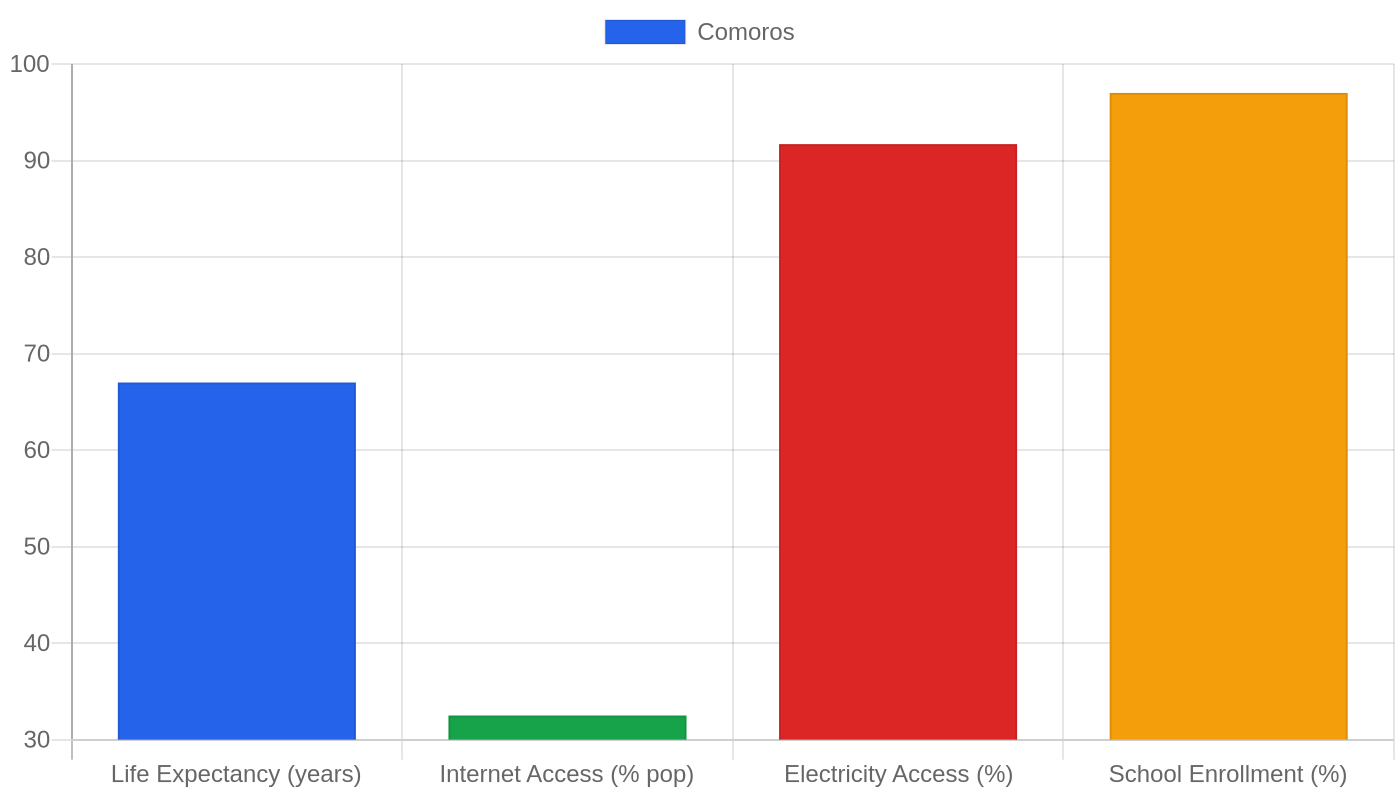
– Data Transparency Gap: The World Bank currently lists no official figures for GDP growth, inflation, or unemployment, highlighting significant statistical capacity challenges.
– Financial Sector Development: A mix of commercial banks and the Central Bank of the Comoros suggests gradual formalization of the financial system.
– Federal Power Structure: The 2001 constitutional framework distributes power across the three main islands, creating a unique governance experiment in the region.
The Economic Enigma — Growth Without Numbers
The Comorian economy remains something of a statistical ghost in the World Bank’s global database. With no official GDP growth figures, inflation rates, or unemployment data available, analysts are forced to rely on qualitative indicators and regional comparisons to assess the archipelago’s economic health. This absence of hard data is itself a critical economic indicator—it reflects the significant institutional constraints facing the country’s statistical agencies and finance ministry.
For a nation seeking foreign direct investment and development assistance, the inability to produce reliable economic metrics creates a substantial barrier to capital inflows and international partnerships.
The composition of the Comoros’ top companies offers the clearest available signal of economic structure. The prominence of aviation firms—AB Aviation, Comores Air Services, Comores Aviation International, Comoro Islands Airline, and Int’Air Îles—suggests that transportation and logistics form a critical pillar of the national economy. This makes geographic sense: as an archipelago nation, air connectivity is not a luxury but a lifeline for commerce, tourism, and inter-island trade.
The financial sector, represented by the Central Bank of the Comoros and Exim Bank Comoros, indicates a developing formal banking infrastructure, though the absence of major industrial or agricultural corporations in the top rankings points to an economy still heavily reliant on small-scale activity and informal trade.
The lack of inflation data is particularly concerning for policymakers. In small island economies, inflation can be volatile due to import dependence, global commodity price shocks, and exchange rate fluctuations. Without reliable price indices, the Central Bank of the Comoros faces significant challenges in conducting effective monetary policy, and businesses struggle with planning and investment decisions.
The World Bank’s inability to report GDP per capita or GNI figures further underscores the measurement challenges, placing the Comoros in a category of nations where economic governance remains a work in progress.
The Cost of Paradise — Living in the Archipelago
With no official cost of living indices available from the World Bank, understanding day-to-day economic realities in the Comoros requires careful inference from the country’s economic structure and regional context. As an import-dependent island nation, the Comoros faces inherent cost pressures that typically characterize such economies: transportation premiums on all imported goods, limited economies of scale in domestic production, and vulnerability to global supply chain disruptions.
The heavy reliance on aviation services suggests that internal movement of goods and people carries significant expense, potentially driving up prices across all sectors of the economy.
Housing dynamics in the Comoros remain largely undocumented, though the federal structure of the government—with administrative centers distributed across the islands—suggests a dispersed pattern of urbanization rather than the extreme primacy of a single megacity.
This distribution could potentially moderate housing costs in the capital compared to more centralized island economies, though infrastructure limitations and the high cost of construction materials in island settings typically push housing expenses above regional mainland averages.
For the average Comorian household, the combination of import costs, transportation premiums, and limited formal employment opportunities likely creates significant pressure on disposable income, regardless of the specific price levels at any given moment.
Aviation, Banking, and the Business Landscape
The corporate landscape of the Comoros tells a compelling story of strategic priorities and economic aspirations. The extraordinary concentration of aviation companies—five of the seven top firms—indicates that the country has identified air connectivity as its primary economic development vector. This is a rational strategy for an archipelago nation seeking to integrate into regional and global markets, attract tourism, and maintain cohesion across its dispersed islands.
The presence of multiple carriers suggests a competitive aviation market, though the small size of the economy raises questions about the long-term viability of all these operators.
The financial sector, while less prominent in the corporate rankings, plays an outsized role in the country’s development prospects. The Central Bank of the Comoros anchors the monetary system, while Exim Bank Comoros provides trade finance and commercial banking services that are essential for an import-dependent economy.
The development of a robust financial sector is critical for the Comoros to diversify beyond aviation and transportation, enabling entrepreneurship in agriculture, fisheries, and tourism services. However, the limited number of financial institutions—particularly the absence of major regional or international banks—suggests that access to capital remains a significant constraint for Comorian businesses and entrepreneurs.
Security, Sovereignty, and the New Political Order
The political transformation of the Comoros from a military dictatorship to a federal presidential republic represents one of the most significant governance transitions in the Indian Ocean region. The ratification of the Constitution on December 23, 2001, established a multi-party system and distributed power across the islands’ governments and executives, creating a complex federal structure designed to address historical grievances and regional tensions.
The peaceful transfer of power from Azali Assoumani to Ahmed Abdallah Mohamed marked a critical test of the new constitutional order, demonstrating that the country could navigate leadership transitions without reverting to authoritarian rule.
The federal arrangement reflects a deliberate effort to balance power among the islands and prevent the concentration of authority that characterized earlier periods of military rule. However, federal systems in small island states face unique challenges: limited administrative capacity, potential duplication of functions, and the difficulty of coordinating economic policy across multiple jurisdictions.
The success of the Comorian experiment will depend on the ability of the federal government to provide public goods efficiently while respecting island autonomy. With crime and safety indices unavailable, assessing public security remains challenging, though the political stability achieved since 2001 suggests that the security environment has been sufficient to maintain continuity in governance.
The Current Moment — Reform, Transition, and Untapped Potential
The Comoros stands at a critical juncture, having completed its constitutional transition and established the institutional framework for democratic governance, yet still facing the monumental task of economic transformation. The current period is characterized by the challenge of converting political stability into economic opportunity—a transition that many post-authoritarian states struggle to achieve.
The government’s apparent prioritization of aviation infrastructure and services suggests a forward-looking approach to economic development, recognizing that connectivity is the key to unlocking the country’s tourism potential and integrating into regional value chains.
The financial sector’s development, evidenced by the presence of both central banking functions and commercial banking services, indicates a gradual formalization of the economy that could attract international investment and development financing.
However, the persistent gaps in economic data collection and reporting remain a significant obstacle, limiting the country’s ability to access international capital markets, secure favorable development assistance terms, and provide investors with the information needed to make informed decisions.
The World Bank’s inability to report core economic indicators for the Comoros is not merely a statistical inconvenience—it is a fundamental constraint on the country’s economic sovereignty and development prospects.
The Bottom Line
The Comoros is a nation of significant untapped potential, strategically positioned in the Indian Ocean with a young political system and a clear focus on aviation-led development. For investors and development partners willing to look beyond the current data gaps, the country offers a frontier opportunity in tourism, transportation, and financial services.
The success of the federal experiment and the maturation of the democratic system will be critical determinants of whether the Comoros can translate political stability into sustained economic growth. This is a country to watch for those interested in the next chapter of African island development—patient investors and regional policymakers should keep the Comoros on their radar as a potential emerging market in the making.
Sources & Methodology
This article is authored by Economic Pulse Net for informational and research purposes. Economic Pulse Net sources its data from multilateral institutions, national statistics bureaus, and proprietary databases. All data is believed to be current as of the date of publication.
Published: August 19, 2026 | Category: Research — Comoros
Use these signals in your own platform
Economic Pulse publishes its live signal feed through a documented, read-only API. Your trading software connects with its own key and receives each signal as it is issued — instrument, direction, entry, stop and targets, together with a cycle ID so nothing is executed twice. The feed is independent of this website and cannot change it.
Signals are informational only and are not financial advice.