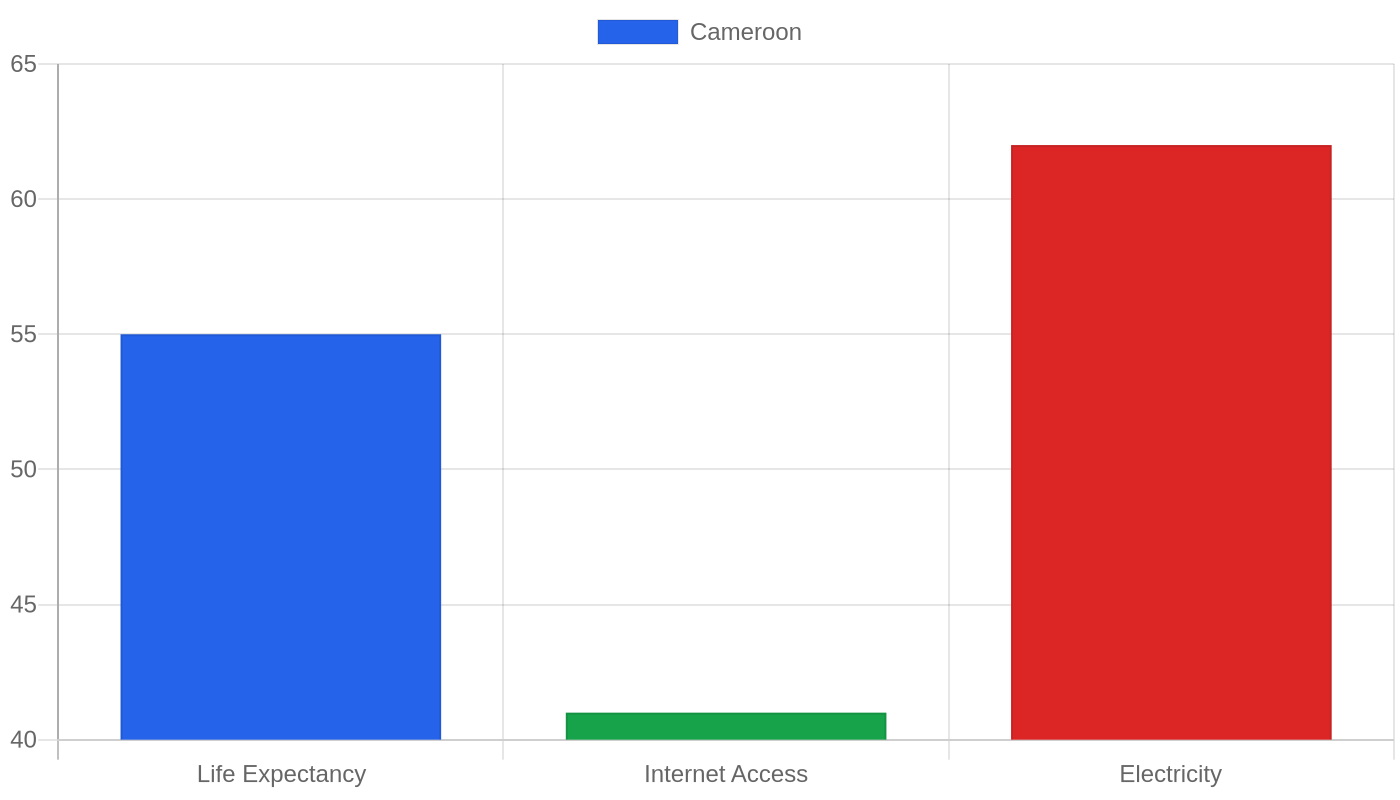
Economic Pulse Net | Sources: World Bank World Development Indicators, Government Sources | 2026
Key Takeaways
– Concentrated Power: Cameroon’s political system places sweeping authority in the presidency, from appointing the prime minister to commanding the armed forces, creating a highly centralized decision-making environment.
– Established Corporate Anchors: The nation’s economic backbone rests on a mix of state-linked and private enterprises spanning banking, brewing, transportation, and telecommunications.
– Infrastructure at the Core: With major players like Camrail (railways), Camtel (telecoms), and CAMPOST (postal services) dominating the industrial landscape, connectivity and logistics are pivotal to the country’s economic ambitions.
– A Consumer Economy in the Making: The prominence of Brasseries du Cameroun and Cameroon Development Corporation signals a significant focus on domestic consumer goods and agro-industrial production.
– A Story of Potential: While the World Bank’s latest key economic indicators for Cameroon are not available, the structure of its economy and political framework offer a clear narrative of a nation with substantial untapped potential awaiting its moment.
The Economic Engine — Between Promise and Reality
Cameroon, often described as “Africa in miniature” for its geological and cultural diversity, presents a complex economic picture that defies simple categorization. The most recent data from the World Bank shows no current figures for GDP growth, inflation, or unemployment, leaving analysts to rely on the country’s structural economic profile.
At its heart, the Cameroonian economy is a dualistic system, where a modern, formal sector operates alongside a vast informal economy that provides livelihoods for the majority of the population. The nation’s economic strategy has long focused on its role as a regional hub, leveraging its port at Douala and its central position in the CEMAC zone to facilitate trade with landlocked neighbors like Chad and the Central African Republic.
The industrial landscape is dominated by a handful of heavyweight players that shape the economic narrative. Brasseries du Cameroun, a subsidiary of the French Castel Group, is not just a brewer but a manufacturing titan, representing one of the largest industrial employers in the country.
Alongside it, the **Cameroon Development Corporation** stands as a massive agro-industrial enterprise, primarily focused on the production of rubber, palm oil, and bananas, making it a crucial player in the agricultural export sector. The financial sector, anchored by **Afriland First Bank** and the **Commercial Bank Cameroon**, provides the necessary liquidity for commerce, though access to credit remains a persistent challenge for small and medium-sized enterprises.
This concentration of economic activity in a few corporate giants highlights both the strength of established institutions and the difficulty for new entrants to break into the market.
The absence of fresh World Bank data creates a challenge for economists, but the underlying dynamics are clear. Cameroon’s economy is heavily influenced by global commodity prices, particularly for oil, cocoa, and timber, which have historically provided the bulk of export revenues. The country has also been working to diversify its economy, with growing investments in infrastructure and digital services.
The presence of Camtel in the telecommunications sector and **Camrail** in logistics underscores a national focus on improving connectivity to boost internal trade and attract foreign investment. However, the reality is that the economy remains vulnerable to external shocks and internal inefficiencies, with a need for significant structural reforms to unlock its full growth potential.
The question for Cameroon is not whether it has the resources to prosper, but whether it can build the institutional framework to manage them effectively.
The Cost of Living — A Tale of Two Economies
Navigating the cost of living in Cameroon means navigating a profound duality between the modern commercial hubs of Douala and Yaoundé and the more traditional, agrarian interior. Without specific data from the World Bank on inflation or household expenditure, we must look to the structural factors that define daily life for the average Cameroonian.
In the major cities, the cost of essentials like housing, food, and transportation consumes a significant portion of household income, mirroring trends seen across Central African urban centers.
The housing market is particularly stratified; there is a growing demand for modern, secure apartments in upscale neighborhoods, which command premium rents often paid in advance, while the majority of urban dwellers live in more affordable, self-built housing on the city peripheries where services like water and electricity can be intermittent.
For the average citizen, daily expenses are heavily influenced by the agricultural cycle, with food prices fluctuating based on seasonal harvests. Staples like cassava, plantains, and maize form the basis of the local diet, and their prices are sensitive to fuel costs, which affect transportation to market. The presence of consumer goods giants like Brasseries du Cameroun means that processed beverages and packaged goods are widely available, but they are often considered luxury items for lower-income households.
This consumer market is a key driver for the formal economy, yet it operates in stark contrast to the informal markets where most daily transactions occur. The gap between the cost of a modern urban lifestyle and the income of an average worker is a persistent source of social pressure, making the pursuit of affordable housing and basic goods a central political issue.
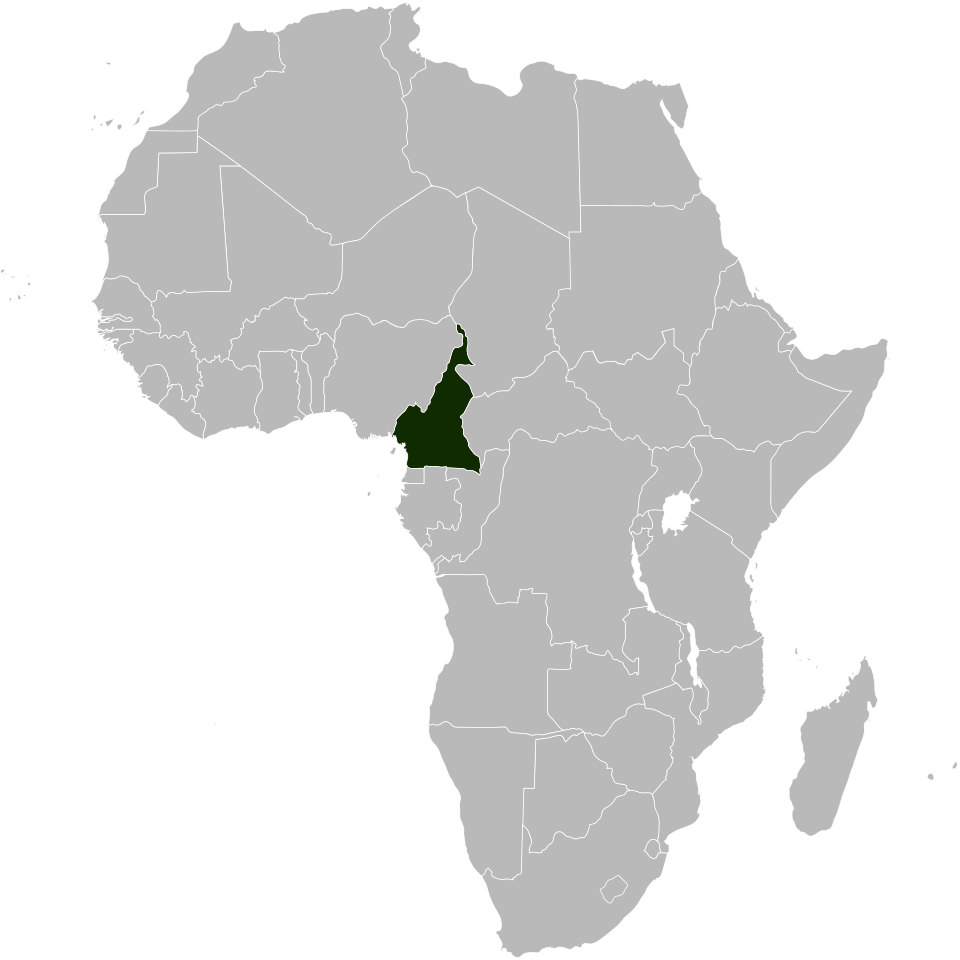
Business Frontier — Where Capital Meets Opportunity
For investors, Cameroon represents a frontier market with tangible assets but complex operational challenges. The corporate landscape is a mix of privatized former state monopolies and established private groups, creating an environment where relationships and local knowledge are paramount. The most significant opportunities currently lie in infrastructure development, agro-processing, and digital financial services.
The government has placed a high priority on rehabilitating and expanding the national railway network through Camrail, seeing it as essential for reducing the cost of moving goods from the coast to the interior. Similarly, the expansion of **Camtel**’s fiber-optic backbone is critical for the digital economy, offering potential for growth in fintech and e-commerce, which are still in their infancy but rapidly evolving.
The business environment, however, is not for the faint of heart. Navigating the regulatory landscape requires patience, and bureaucratic hurdles are a common complaint among foreign and domestic entrepreneurs alike. The dominance of established players like Afriland First Bank in the financial sector means that access to capital is often tied to existing relationships, making it difficult for startups to secure initial funding.
Yet, the sheer size of the domestic market, combined with its position as a gateway to the broader Central African region, offers a compelling case for long-term investment. Companies that can successfully partner with local firms, navigate the political landscape, and adapt to the local consumer culture have the potential to achieve significant returns.
The country’s industrial base, though concentrated, is resilient and has a track record of serving both domestic and regional demand, making it a battleground for companies looking to establish a foothold in Francophone Africa.
Power, Politics, and the Pulse of the Nation
The political landscape in Cameroon is defined by a highly centralized executive branch, where the President is the dominant figure in the nation’s governance. According to the provided data, the President is elected by popular vote for a seven-year term and holds vast powers: creating policy, administering government agencies, commanding the armed forces, negotiating treaties, and declaring states of emergency.
This concentration of authority extends downwards, with the President appointing officials at all levels, from the Prime Minister—who is considered the official head of government—to provincial governors and divisional officers. This structure creates a system where the central government in Yaoundé holds immense sway over regional affairs, which has been a point of tension in the country’s English-speaking regions, fueling calls for greater decentralization.
While specific crime and safety indices are not available, the quality of life in Cameroon is intrinsically linked to this political framework. The country faces significant security challenges, including the insurgency in the far north and the ongoing “Anglophone Crisis” in the Northwest and Southwest regions, which have displaced hundreds of thousands of people. These conflicts have strained public resources and created a sense of uncertainty that permeates daily life.
For the average citizen, the government’s ability to provide basic services like security, healthcare, and education is the most direct measure of their quality of life. The political stability that Cameroon has enjoyed for decades is a double-edged sword; it has provided continuity and avoided the kind of state collapse seen in some neighbors, but it has also been criticized for stifling political opposition and failing to address deep-seated regional grievances.
The upcoming electoral cycle will be a critical test of the nation’s ability to manage these tensions and chart a path toward more inclusive governance.
Current Affairs — The Nation at a Crossroads
Right now, Cameroon is navigating a period of intense economic and political recalibration. The government is actively seeking to reposition the country as a more attractive destination for foreign direct investment, focusing on improving the ease of doing business and upgrading critical infrastructure.
The ongoing expansion of the deep-sea port at Kribi is a flagship project designed to relieve pressure on Douala and attract new industrial activity, signaling a clear intention to modernize the country’s trade capabilities. In the corporate sphere, Camair-Co, the national airline, continues its efforts to stabilize operations and expand its route network, which is seen as vital for boosting business travel and tourism, though the carrier faces intense competition from regional and international airlines.
The economic agenda is heavily focused on import substitution and local value addition, aiming to reduce the country’s reliance on imported goods. This is where giants like the Cameroon Development Corporation play a pivotal role, as the government pushes for greater processing of raw materials like rubber and palm oil within the country.
Meanwhile, the financial sector is undergoing a quiet revolution, with **Afriland First Bank** and others increasingly promoting digital banking solutions to capture the unbanked population. These efforts are happening against a backdrop of global economic headwinds, including high energy prices and supply chain disruptions, which are putting pressure on the national budget.
The government’s ability to manage these immediate challenges while pursuing long-term structural reforms will define Cameroon’s trajectory for the rest of the decade. The focus is now on translating the country’s undeniable potential into tangible improvements in the lives of its citizens.
The Bottom Line
Cameroon is a country of immense potential, strategically located and richly endowed with natural resources and human capital. Its established corporate sector provides a stable foundation, but the nation’s progress is ultimately tied to its political evolution and its ability to foster a more inclusive and diversified economy. Investors with a long-term horizon and a high tolerance for navigating complex environments may find significant opportunities here, particularly in infrastructure and agro-industry.
For the global observer, Cameroon is a key bellwether for the future of Central Africa, a test case of whether a resource-rich, centralized state can successfully modernize its economy without fracturing its social and political fabric. It is a nation to watch, not for the faint-hearted, but for those who believe in the enduring potential of the African continent.
Sources & Methodology
This article is authored by Economic Pulse Net for informational and research purposes. Economic Pulse Net sources its data from multilateral institutions, national statistics bureaus, and proprietary databases. All data is believed to be current as of the date of publication.
Published: August 03, 2026 | Category: Research — Cameroon
Use these signals in your own platform
Economic Pulse publishes its live signal feed through a documented, read-only API. Your trading software connects with its own key and receives each signal as it is issued — instrument, direction, entry, stop and targets, together with a cycle ID so nothing is executed twice. The feed is independent of this website and cannot change it.
Signals are informational only and are not financial advice.