Economic Pulse Net | Sources: World Bank World Development Indicators, Government Sources | 2026
Key Takeaways
– Botswana remains Africa’s longest uninterrupted democracy, with a parliamentary republic system established at independence in 1966 and rooted in both the UK’s Westminster model and traditional Tswana tribal governance.
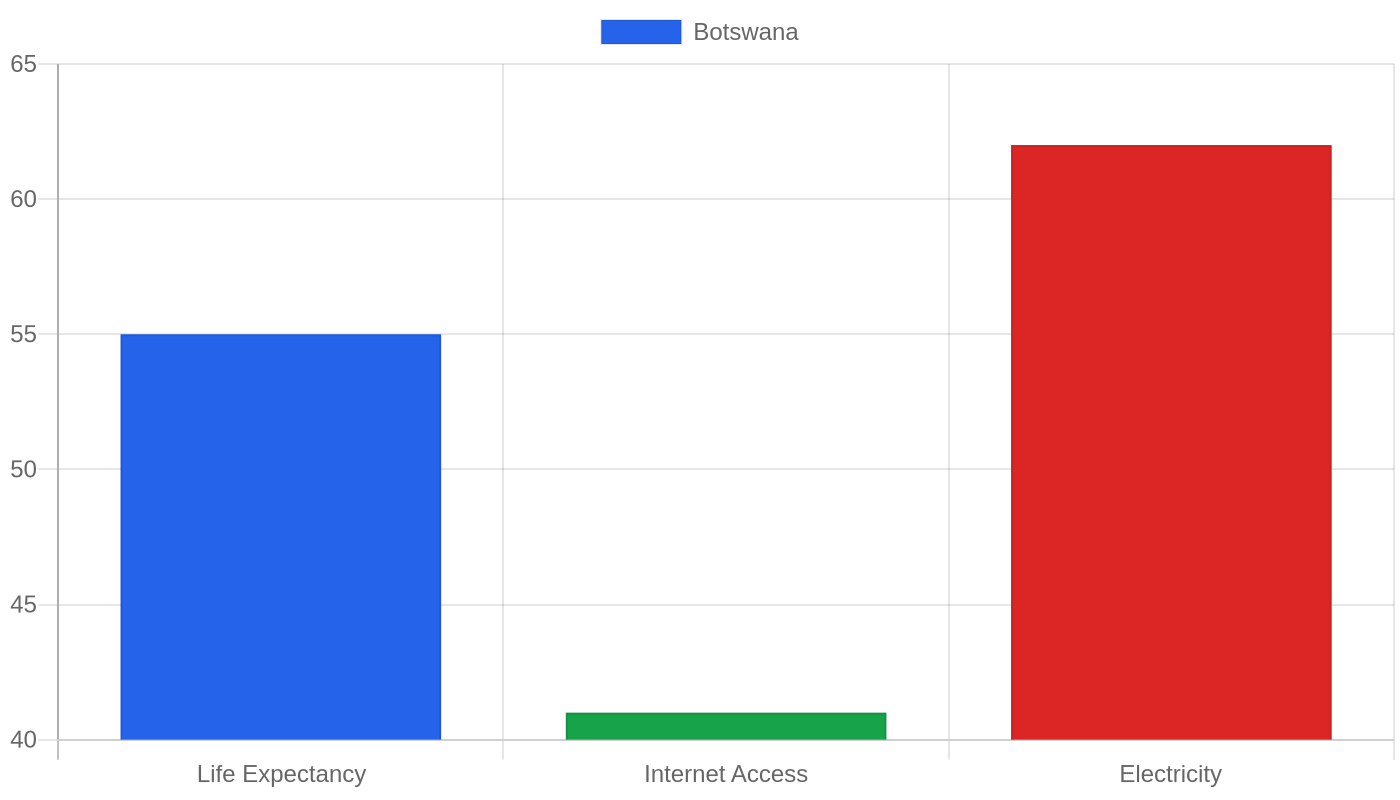
– The country’s economic narrative is defined by its institutional stability, though current World Bank data shows a period of transition with key metrics still being compiled.
– State-owned enterprises dominate the corporate landscape, from Botswana Power Corporation to Botswana Telecommunications Corporation, signalling a mixed economy where government remains the primary engine.
– The seat of government in Gaborone anchors a centralised political structure where national law supersedes local law, creating a unique governance model across the region.
– For investors and observers, Botswana’s story is one of cautious continuity — a nation that built its reputation on governance discipline rather than resource-driven volatility.
The Economic Engine — Diamonds, State Enterprise, and the Long Game
The World Bank’s latest data snapshot for Botswana presents an intriguing picture of economic transition, with headline figures for GDP growth, inflation, and unemployment yet to be finalised. What is clear is that Botswana’s economic architecture has long rested on a foundation of prudent resource management and state-led development.
The country’s main industries — while not enumerated in the current data release — have historically centred on diamond mining, beef production, and tourism, with the Botswana Meat Commission standing as a testament to the agricultural sector’s enduring importance. The presence of the Bank of Botswana at the heart of the financial system underscores a monetary authority that has maintained stability through decades of global commodity cycles.
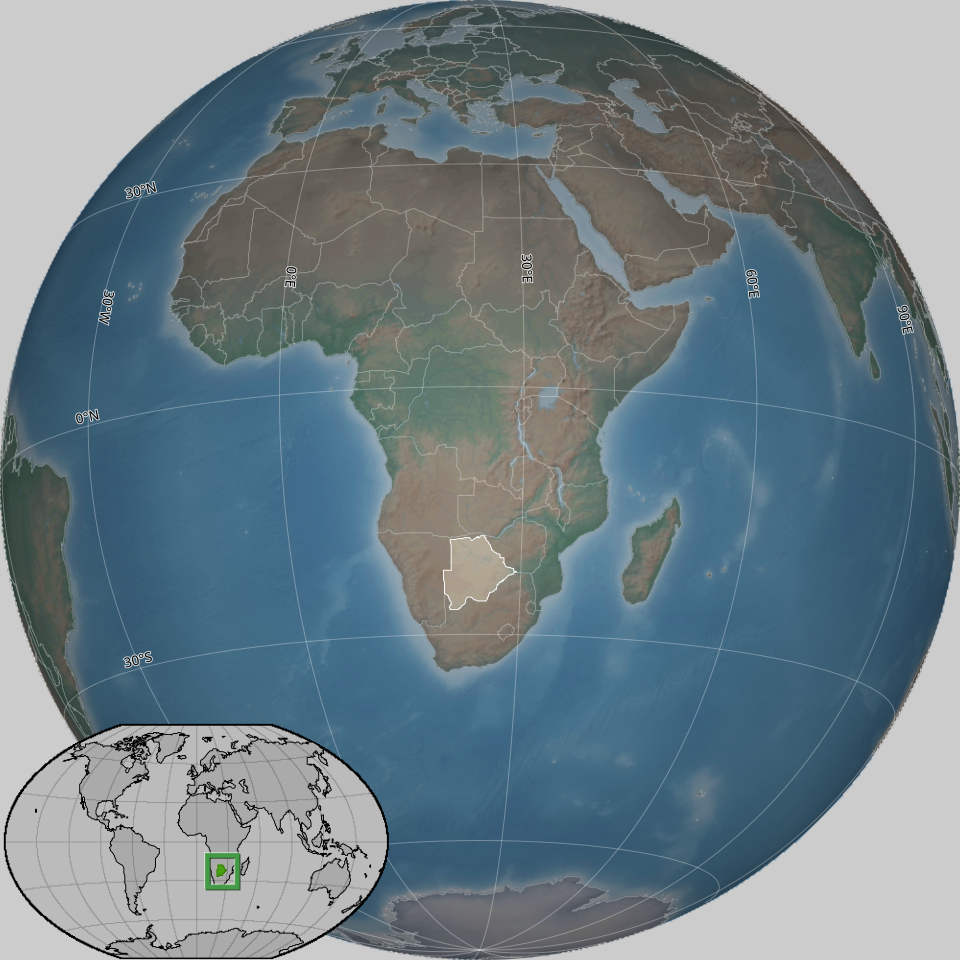
The GNI per capita and GDP per capita figures, currently unavailable from the World Bank, would typically place Botswana among the upper-middle-income tier of African nations — a remarkable achievement for a landlocked country of roughly 2.3 million people. The structure of the economy, however, reveals a persistent challenge: the state’s dominance through parastatals like Botswana Power Corporation and Botswana Railways means that private sector growth remains constrained.
Inflation, typically managed within a narrow band by the central bank, has historically been kept in check through prudent fiscal policy and the crawling peg exchange rate regime. The unemployment data, when it arrives, will likely confirm what analysts have long observed — that Botswana’s formal economy cannot yet absorb its growing youth population, pushing many into the informal sector or regional migration.
The Cost of Living — Gaborone’s Quiet Affordability Crisis
The cost of living data for Botswana remains sparse, but the picture that emerges from the country’s economic structure is one of relative affordability tempered by import dependence. As a landlocked nation, Botswana relies heavily on South African supply chains for manufactured goods, foodstuffs, and fuel, which introduces a structural premium on everyday items.
Housing in Gaborone and Francistown has historically been more affordable than in Johannesburg or Windhoek, yet the gap has narrowed as urban migration accelerates and the state-led housing backlog grows. The rental market is bifurcated — expatriate professionals and mining executives command premium properties in gated communities, while Batswana citizens often rely on government-subsidised housing schemes or informal settlements on the city periphery.
Daily expenses for a typical household in Gaborone would centre on food, transport, and utilities, with Botswana Power Corporation’s electricity tariffs and Botswana Telecommunications Corporation’s data bundles representing significant line items. The BotswanaPost network, while primarily a postal service, also serves as a barometer of rural connectivity and the cost of sending money between family members in different districts.
Compared to regional averages, Botswana’s cost of living sits in a middle band — cheaper than South Africa’s major metros, but more expensive than its northern neighbours. The absence of comprehensive CPI data from the World Bank makes precise comparisons difficult, but the structural realities of a small, import-dependent economy suggest that inflation will remain a watchpoint for households in the coming quarters.
Investment & Business Climate — A Bourse in the Making
Botswana’s investment story is anchored by an unlikely financial hub: the Botswana Stock Exchange, which has carved out a reputation as one of Africa’s most efficiently regulated bourses. The exchange lists a cross-section of the economy’s dominant players, from BancABC and the Bank of Botswana to Air Botswana and the Botswana Guardian, offering investors exposure to everything from aviation to media.
The corporate landscape remains heavily state-influenced, with Botswana Power Corporation and Botswana Telecommunications Corporation operating as parastatals that dominate their respective sectors. For foreign investors, the appeal has long been Botswana’s governance — transparent procurement, an independent judiciary, and a political class that has resisted the resource curse that has plagued so many of its neighbours.
The business environment, however, presents a paradox. The same state institutions that provide stability also crowd out private enterprise, particularly in infrastructure, energy, and telecommunications. Botswana Railways and BotswanaPost operate in sectors where privatisation has been discussed for decades but implemented only tentatively. The Botswana Meat Commission, a legacy institution, continues to dominate the beef export trade, a sector where private abattoirs have struggled to gain a foothold.
For investors, the sectors to watch are those where liberalisation is beginning to take hold — fintech, renewable energy, and logistics — though the pace of reform will depend on political will in Gaborone. The stock exchange’s efforts to attract regional listings suggest a quiet ambition to become a gateway for Southern African capital, even as liquidity remains thin compared to Johannesburg or Lagos.
Safety, Politics & Quality of Life — The Democratic Exception
Botswana’s political landscape is its most distinctive asset. As a parliamentary republic governed by the Constitution of Botswana, the country has maintained uninterrupted democratic governance since 1966 — the longest such record in Africa. The seat of government in Gaborone houses a centralised administration where national law supersedes local law, a structure that blends the United Kingdom’s Westminster system with the Tswana people’s tribal governments.
This hybrid model has produced remarkable continuity: the Botswana Democratic Party held power for nearly six decades before a historic transition, demonstrating that the institutions — not individual leaders — have been the bedrock of the country’s stability. The crime index and safety index data are currently unavailable from the World Bank, but the qualitative picture is of a country that has largely avoided the urban violence and organised crime that afflicts many regional neighbours.
Quality of life in Botswana is shaped by a paradox of middle-income status and developmental gaps. The country’s diamond wealth has funded education, healthcare, and infrastructure, yet inequality remains significant, and the HIV/AIDS epidemic has strained public services for decades.
The political system’s responsiveness to citizens — through the kgotla system of traditional village councils that feed into the centralised structure — provides a level of accountability that many African democracies lack. For the ordinary citizen, life in Gaborone offers a stability that is increasingly rare in the region, though the economic constraints of a small market and limited industrialisation temper the optimism.
The country’s social contract, built on the promise that democratic governance would deliver material progress, faces its greatest test as the global diamond market softens and the state’s redistributive capacity narrows.
What’s Happening Now — The Post-Diamond Transition Begins
Botswana in 2026 stands at the threshold of its most significant economic transition since independence. The World Bank’s decision to hold back key data points suggests a period of recalibration, as statisticians and economists work to capture an economy in flux. The global diamond market’s structural decline — driven by lab-grown alternatives and shifting consumer preferences — has forced Gaborone to confront the limits of its resource-dependent model.
The state-owned enterprises that anchor the economy, from Botswana Power Corporation to Botswana Telecommunications Corporation, are under increasing pressure to diversify revenue streams and improve efficiency, even as political resistance to privatisation remains strong.
The Botswana Stock Exchange has been quietly positioning itself as a hub for regional listings, a strategy that could unlock new capital flows into the country. Meanwhile, the Botswana Meat Commission is navigating the complexities of European Union export protocols, with beef remaining a critical non-mining export. The political calendar is dominated by debates over economic diversification, with the government in Gaborone exploring avenues from tourism to financial services as future growth pillars.
The central bank, for its part, has maintained its reputation for monetary discipline, even as the inflation data remains unpublished. The coming months will reveal whether Botswana can leverage its institutional strengths to navigate this transition — or whether the democratic exception becomes a cautionary tale.
The Bottom Line
Botswana is a country that investors and policymakers should watch not for its headline numbers, but for its institutional resilience. As Africa’s longest uninterrupted democracy, it offers a rare case study in how governance discipline can outlast resource booms. The current data vacuum from the World Bank reflects a moment of genuine transition — the diamond era is ending, and the next chapter has yet to be written.
For those who believe that Africa’s future lies in stable, well-governed middle-income states, Botswana remains the bellwether. The question is whether the institutions that delivered the past sixty years of stability can now deliver a future beyond diamonds.
Sources & Methodology
This article is authored by Economic Pulse Net for informational and research purposes. Economic Pulse Net sources its data from multilateral institutions, national statistics bureaus, and proprietary databases. All data is believed to be current as of the date of publication.
Published: August 01, 2026 | Category: Research — Botswana
Use these signals in your own platform
Economic Pulse publishes its live signal feed through a documented, read-only API. Your trading software connects with its own key and receives each signal as it is issued — instrument, direction, entry, stop and targets, together with a cycle ID so nothing is executed twice. The feed is independent of this website and cannot change it.
Signals are informational only and are not financial advice.