Economic Pulse Net | Sources: World Bank World Development Indicators, Government Sources | 2026
Key Takeaways
* Diversification in Progress: While specific GDP growth figures are currently unavailable, the corporate landscape highlights a shift from pure extraction toward services and telecommunications, evidenced by major players like Angola Cables and Air 26.
Resource Wealth vs.
Data Gaps: The presence of entities like African Diamond Producers Association underscores the nation’s mineral wealth, yet comprehensive macroeconomic indicators such as inflation, unemployment, and GDP per capita remain unreported in current datasets.
Corporate Structure: The business environment is anchored by a mix of state-linked and private enterprises, with Oil & Gas (Angola LNG) and Consumer Services forming critical pillars of the recorded economy.
Governance Stability: Political authority remains centralized under the Executive branch, led by the President and supported by the Vice-President and Council of Ministers, providing a clear chain of command despite limited transparency on judicial or legislative nuances.
Economic Engines and Industrial Shifts
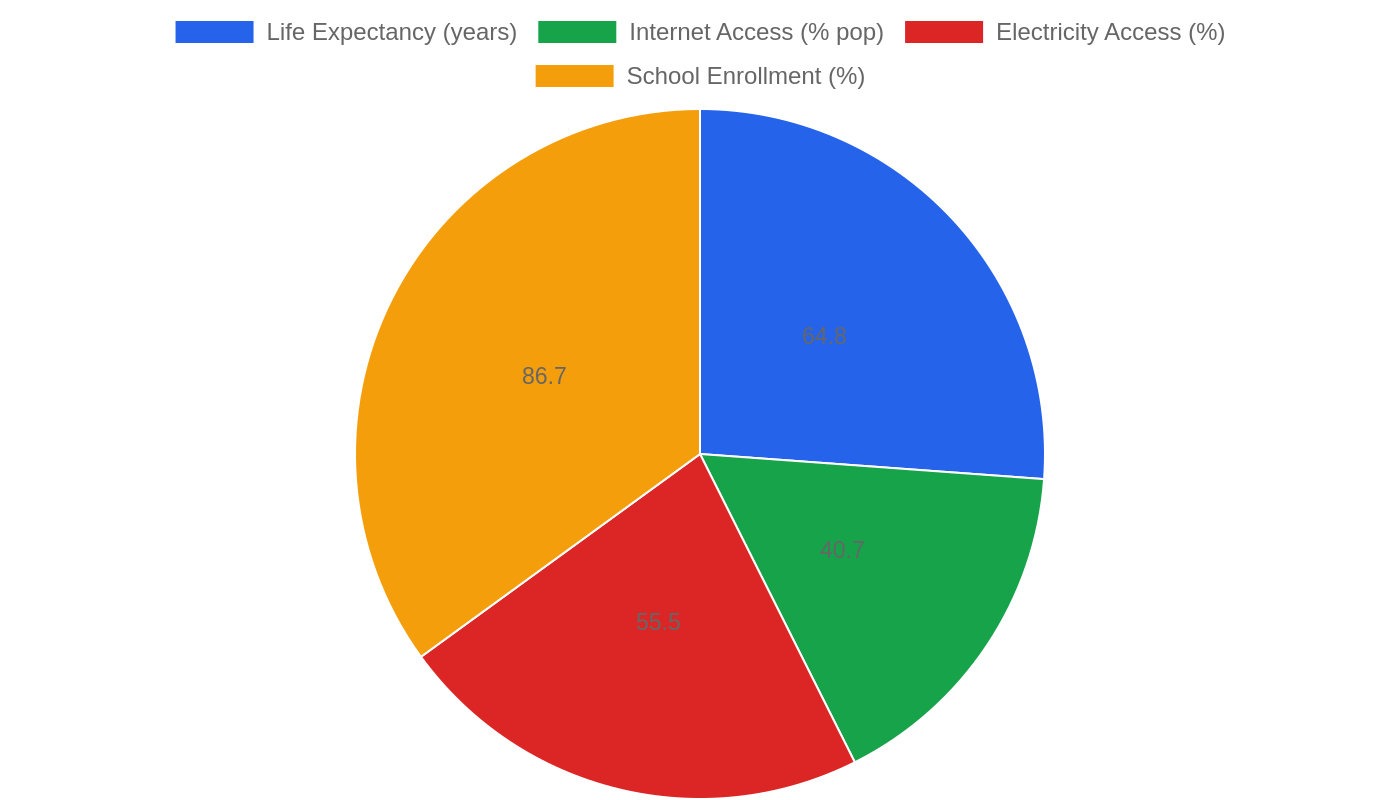
The Angolan economy presents a complex picture where traditional resource dominance meets emerging service-sector growth, though precise quantitative metrics remain obscured. According to World Bank data, key indicators such as GDP growth, inflation CPI, and unemployment rates are listed as N/A, suggesting either a lag in reporting or significant volatility that makes standard measurement difficult.
However, the industrial composition reveals a nation in transition; while oil and gas remain foundational through giants like Angola LNG, there is a visible expansion into consumer services and telecommunications. Companies such as Angola Cables indicate a growing digital infrastructure, while firms like Air 26 and Aeronáutica point to an expanding mobility and logistics sector.
This diversification away from raw material export alone is crucial for long-term resilience, even if the aggregate GDP in USD and PPP-adjusted per capita income figures are not currently disclosed. Without concrete numbers on population size or GNI per capita, it is challenging to assess the average citizen’s economic standing, but the corporate roster suggests active market participation in non-extractive fields.
The absence of specific employment data masks potential structural challenges, yet the existence of a formalized stock exchange, the Angola Stock Exchange and Derivatives, implies a developing financial ecosystem capable of supporting these varied industries. Ultimately, the economy appears to be building breadth beyond its hydrocarbon roots, even if the statistical depth required to measure this progress fully is missing from the current record.
Cost of Living and Housing Dynamics
Assessing the daily economic reality for residents and expatriates in Angola requires navigating a landscape where cost-of-living indices are not currently quantified. With no specific data provided on housing costs, rent-to-price ratios, or general expense levels, it is impossible to benchmark Angola against regional averages or global cities using standard metrics.
This lack of granular financial data creates uncertainty for businesses planning relocation packages or individuals considering investment in real estate. Typically, in economies with strong commodity exports but opaque consumer price tracking, costs can be highly bifurcated between local markets and international standards. The presence of diverse consumer goods providers like Ancar suggests a functioning retail sector, but without inflation data, the purchasing power of the currency remains ambiguous.
Consequently, stakeholders must rely on qualitative assessments rather than hard numbers when evaluating affordability. The silence on these indices does not imply stability, but rather a gap in accessible economic intelligence that complicates precise budgeting and financial planning for those operating within the country.
Investment Landscape and Corporate Power
The investment climate in Angola is characterized by a concentrated group of major corporations that dominate their respective sectors, offering both opportunity and insight into market priorities. The list of top companies reveals a heavy reliance on basic materials and energy, with Angola LNG serving as a critical node in the global energy supply chain. Simultaneously, the rise of consumer-focused entities such as Alada, Alfa 5, and Ancar indicates a robust domestic demand for goods and industrial services.
The telecommunications sector, represented by Angola Cables, highlights the strategic importance of connectivity in modernizing the national infrastructure. For investors, the presence of the Angola Stock Exchange and Derivatives offers a potential avenue for capital formation, although the liquidity and depth of this market are not detailed in the current data.
The African Diamond Producers Association points to the continued significance of mining, ensuring that the extractive industry remains a central pillar of foreign direct interest. Business operators must navigate an environment where large, established players define the market structure, potentially limiting entry barriers for smaller foreign entrants unless they partner with local entities like Air 26 or Angola Air Charter.
The diversity of these top firms—from industrials to financials—suggests a multifaceted economy that rewards specialization and sector-specific expertise.
Safety, Politics, and Governance Framework
Political stability in Angola is defined by a clear hierarchical structure, with executive authority firmly vested in the President, who is assisted by the Vice-President and the Council of Ministers. This centralized model ensures that policy direction flows from the top down, although the roles of the legislative and judicial branches are less detailed in the available governance overview.
From a safety perspective, crime and safety indices are reported as N/A, leaving investors and residents without standardized metrics to gauge personal security risks. This data void complicates risk assessment for multinational corporations deploying staff to the region, as they cannot rely on typical safety benchmarks used in other emerging markets.
The political landscape’s transparency regarding the executive branch provides some clarity on decision-making processes, but the lack of safety data remains a significant blind spot. Quality of life assessments are similarly hindered by the absence of happiness or well-being indices, making it difficult to evaluate the social contract between the government and its citizens.
Prospective stakeholders must therefore conduct their own due diligence on ground-level conditions, as official statistical bodies do not currently provide aggregated safety or livability scores.
Current Affairs and Market Pulse
While specific recent news events are not detailed in the provided dataset, the corporate roster itself serves as a live indicator of ongoing economic activity. The continued operation and prominence of Angola LNG suggest that energy production remains a steady, albeit possibly stagnant, component of the national output. Meanwhile, the inclusion of multiple consumer services firms like Aeronáutica and Air 26 implies that domestic travel and leisure activities are sustaining commercial interest.
The existence of Angola Cables points to ongoing investments in digital infrastructure, which is likely a priority for modernizing the business environment. Without explicit updates on inflation trends or new policy reforms, the “current” narrative is one of maintenance and incremental development rather than explosive change. The Angola Stock Exchange and Derivatives remains a focal point for financial innovation, suggesting that regulatory frameworks are evolving to support capital markets.
Stakeholders should watch for shifts in the consumer services sector, as changes in companies like Alada or Ancar may signal broader shifts in public spending and disposable income trends.
The Bottom Line
Angola presents a paradox of rich resource potential and opaque economic statistics, requiring investors to look beyond traditional GDP metrics. The country is best suited for specialized investors interested in energy, telecommunications, and consumer services who can navigate the lack of transparent data. Those seeking clear, predictable macroeconomic environments may find the current information gaps too risky, while others may see value in the established corporate structures.
Ultimately, Angola demands a cautious, detail-oriented approach, relying on corporate health rather than national aggregates to gauge economic vitality.
Sources & Methodology
This article is authored by Economic Pulse Net for informational and research purposes. Economic Pulse Net sources its data from multilateral institutions, national statistics bureaus, and proprietary databases. All data is believed to be current as of the date of publication.
Published: September 25, 2026 | Category: Research — Angola
Use these signals in your own platform
Economic Pulse publishes its live signal feed through a documented, read-only API. Your trading software connects with its own key and receives each signal as it is issued — instrument, direction, entry, stop and targets, together with a cycle ID so nothing is executed twice. The feed is independent of this website and cannot change it.
Signals are informational only and are not financial advice.