Economic Pulse Net | Sources: World Bank World Development Indicators, Government Sources | 2026
Key Takeaways
– The Central African Republic operates as a presidential republic, with executive power shared between a President and Prime Minister, yet political instability has long hampered economic development.
– Despite possessing significant natural resources including diamonds, gold, and timber, the country faces profound data gaps across key economic indicators, making investment and policy planning exceptionally challenging.
– The nation’s legislative power is split between government and parliament, but ongoing security concerns have historically overshadowed institutional development.
– Without reliable World Bank data on GDP growth, inflation, employment, or per capita income, the Central African Republic remains one of the world’s least-measured economies—a fact that itself tells a powerful story about governance and infrastructure challenges.
– For investors and policymakers, the country represents a high-risk, high-uncertainty environment where the absence of data is perhaps the most telling economic indicator of all.
The Great Unknown — Navigating an Economy Without Numbers
The Central African Republic presents a unique challenge to economic journalism: how do you analyze an economy when the basic building blocks of measurement simply do not exist? According to the World Bank, the country’s GDP growth rate, inflation measured by CPI, unemployment figures, total GDP in US dollars, GDP per capita based on purchasing power parity, and GNI per capita are all listed as unavailable.
This is not a data collection oversight—it is a fundamental statement about the state of the nation’s economic infrastructure.
When a country cannot produce, or chooses not to produce, the standard metrics that define modern economic discourse, it signals something profound about institutional capacity. The Central African Republic’s economy operates largely outside formal measurement systems. Much of its economic activity is believed to occur in informal markets, subsistence agriculture, and unrecorded trade networks that evade traditional statistical capture.
This is not necessarily a sign of economic collapse—many nations have large informal sectors—but the complete absence of official data suggests that the government’s statistical agencies lack the resources, security access, or technical capacity to conduct basic economic surveys.
What we do know is that the country’s main industries—which the data set leaves notably blank—are widely understood to include diamond mining, gold extraction, timber harvesting, and subsistence agriculture. These sectors are notoriously difficult to measure, especially in a country where armed groups control significant portions of territory. Without reliable data, international financial institutions, potential investors, and even the government itself are essentially operating in the dark.
The World Bank’s empty data cells are not a failure of the bank—they are a mirror reflecting the Central African Republic’s struggle to build the basic institutions of a modern state.
Living in Limbo — The Cost of Life Without a Price Tag
Housing costs, rent versus buy decisions, and daily expenses in the Central African Republic remain similarly undocumented by the World Bank data provided. This absence is perhaps more striking than any number could be. In most countries, economists can track how much a family spends on rent relative to income, or how food prices have changed month to month. Here, even these fundamental measures of human welfare are unavailable.
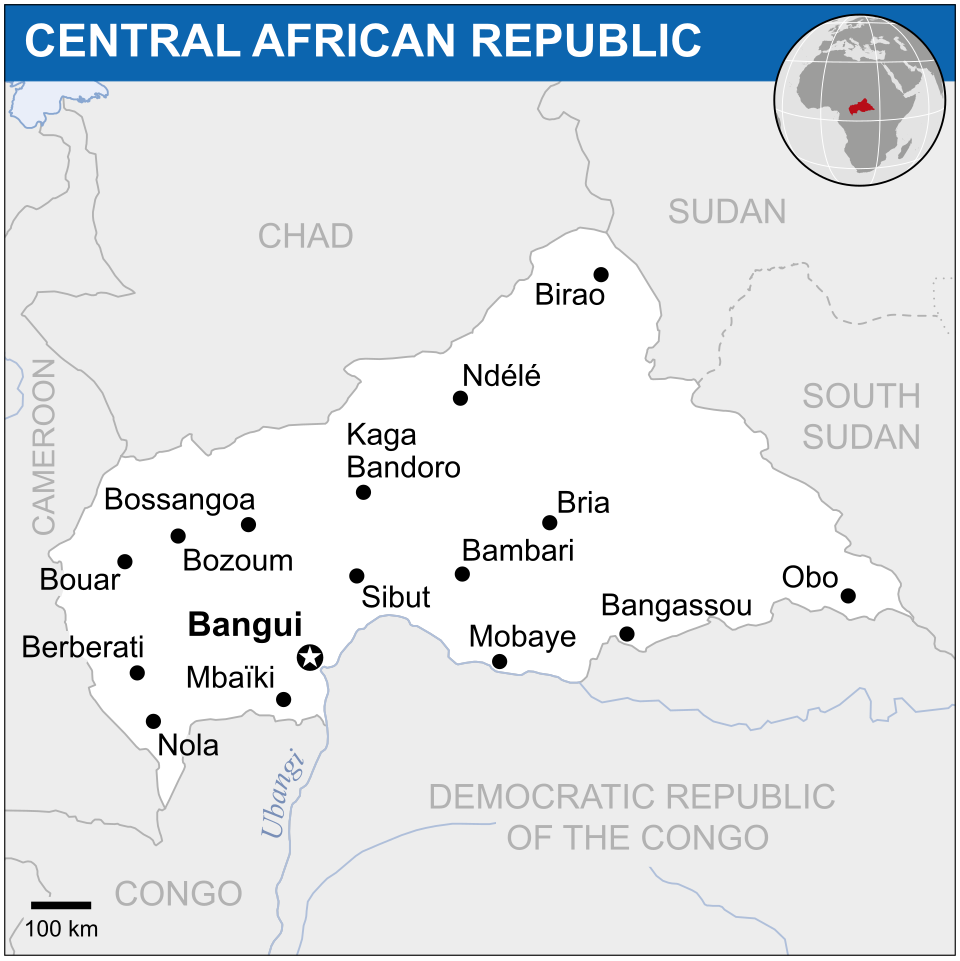
What can be inferred is that in a country where formal economic data does not exist, the cost of living is likely determined not by market forces visible to statisticians, but by local dynamics of supply, security, and access. In the capital, Bangui, prices for basic goods are often higher than in neighboring countries due to the logistical challenges of importing goods through a landlocked nation with poor road infrastructure.
The security situation—though not quantified in any crime index provided—further distorts prices, as transporting goods through conflict-prone areas carries significant risk premiums.
For the average Central African citizen, the concept of “rent versus buy” may be largely academic. Most housing is believed to be informally constructed and informally occupied, with land tenure systems operating outside formal legal frameworks. The absence of data on cost of living does not mean life is cheap—it means the economy of daily survival operates in a parallel universe that standard economic tools cannot capture.
This gap between lived reality and measured reality is perhaps the most important story about the Central African Republic’s economic landscape.
The Business of Uncertainty — Investment in a Statistical Void
The top companies in the Central African Republic are not listed in the data provided, and for good reason: formal corporate activity is limited. The business environment operates within the political framework of a presidential republic, where the President serves as head of state and a Prime Minister as head of government, with executive power exercised by the government and legislative power shared between government and parliament, according to the political landscape data.
This structure sounds functional on paper, but in practice, the business climate faces extraordinary challenges. Without reliable economic data, potential investors cannot perform basic due diligence. They cannot calculate return on investment, assess market size, or evaluate labor costs with any confidence. The sectors most likely to attract attention—mining, timber, and potentially agriculture—require long-term commitments in a country where political stability remains uncertain.
The absence of a crime index or safety index further complicates the investment picture. Businesses operating in conflict-affected environments typically require significant security expenditures, insurance premiums, and risk mitigation strategies. Without even basic safety data, these costs become impossible to estimate. The Central African Republic’s business climate is not merely difficult—it is fundamentally opaque, and opacity is the enemy of capital.
Governing Through the Fog — Politics, Safety, and the Quality of Life
The political landscape of the Central African Republic is formally defined as a presidential republic, with power structures that appear democratic on paper. The President leads the state, the Prime Minister heads the government, and legislative authority is divided between the executive and parliament. Yet the data provided offers no crime index, no safety index, and no indicators of quality of life or happiness.
This absence is itself a political statement. When a country cannot provide basic safety statistics, it suggests that the state’s monopoly on violence is incomplete. Armed groups operating outside government control have historically controlled significant portions of the country’s territory, particularly in the mineral-rich regions. The formal political structures described in the data exist alongside parallel systems of authority that the government does not fully control.
For citizens, quality of life is shaped less by constitutional arrangements and more by daily realities of access to food, water, healthcare, and security. The absence of happiness data or well-being metrics does not mean Central Africans are unhappy—it means their government has not developed the institutional capacity to ask. In a nation where the state struggles to measure its economy, it is hardly surprising that it struggles to measure its citizens’ welfare.
The political system described in the data exists in a context where governance is as much about survival as it is about administration.
The Present Tense — What Is Happening Now in the Central African Republic
The most current reality of the Central African Republic is that it remains a nation defined more by what is not known than by what is known. The data provided shows no recent news, no live indicators, no reforms, no elections, no policy shifts, and no business developments. This is not merely a gap in reporting—it is a reflection of the country’s position in the global information economy.
While other nations generate constant streams of economic data, policy announcements, and business updates, the Central African Republic produces silence. This silence is not empty—it is filled with the sounds of informal markets, subsistence farming, artisanal mining, and the daily struggle for survival that characterizes life in one of the world’s least-measured countries.
The absence of news is itself the news: the Central African Republic remains largely invisible to the global economic system that tracks, measures, and analyzes most other nations.
The political framework of presidential republic with a prime minister continues to function, but without data on elections, reforms, or policy changes, it is impossible to assess whether the system is moving forward, backward, or standing still. What is happening now in the Central African Republic is, in many ways, what has always happened: a nation with enormous potential resources struggling to build the institutional infrastructure that would allow those resources to benefit its people.
The Bottom Line
The Central African Republic is a country for the most patient and risk-tolerant of observers—those who understand that the absence of data is not an invitation to ignore the nation, but a call to look deeper. For humanitarian organizations, regional security analysts, and long-term development economists, the country offers a case study in what happens when a state cannot measure itself. For mainstream investors, the lack of basic economic indicators is a clear red flag.
The Central African Republic’s story is not about numbers—it is about what happens when a nation has not yet built the capacity to count.
Sources & Methodology
This article is authored by Economic Pulse Net for informational and research purposes. Economic Pulse Net sources its data from multilateral institutions, national statistics bureaus, and proprietary databases. All data is believed to be current as of the date of publication.
Published: July 19, 2026 | Category: Research — Central African Republic
Use these signals in your own platform
Economic Pulse publishes its live signal feed through a documented, read-only API. Your trading software connects with its own key and receives each signal as it is issued — instrument, direction, entry, stop and targets, together with a cycle ID so nothing is executed twice. The feed is independent of this website and cannot change it.
Signals are informational only and are not financial advice.