Economic Pulse Net | Sources: World Bank World Development Indicators, Government Sources | 2026
Key Takeaways
– The British Virgin Islands operates as a parliamentary democracy under the constitutional authority of King Charles III, with the UK-appointed Governor holding ultimate executive power and responsibility for defence and foreign affairs
– As one of the world’s most significant offshore financial centres, the territory’s economy is uniquely shaped by international regulatory pressures and global capital flows rather than traditional industrial output
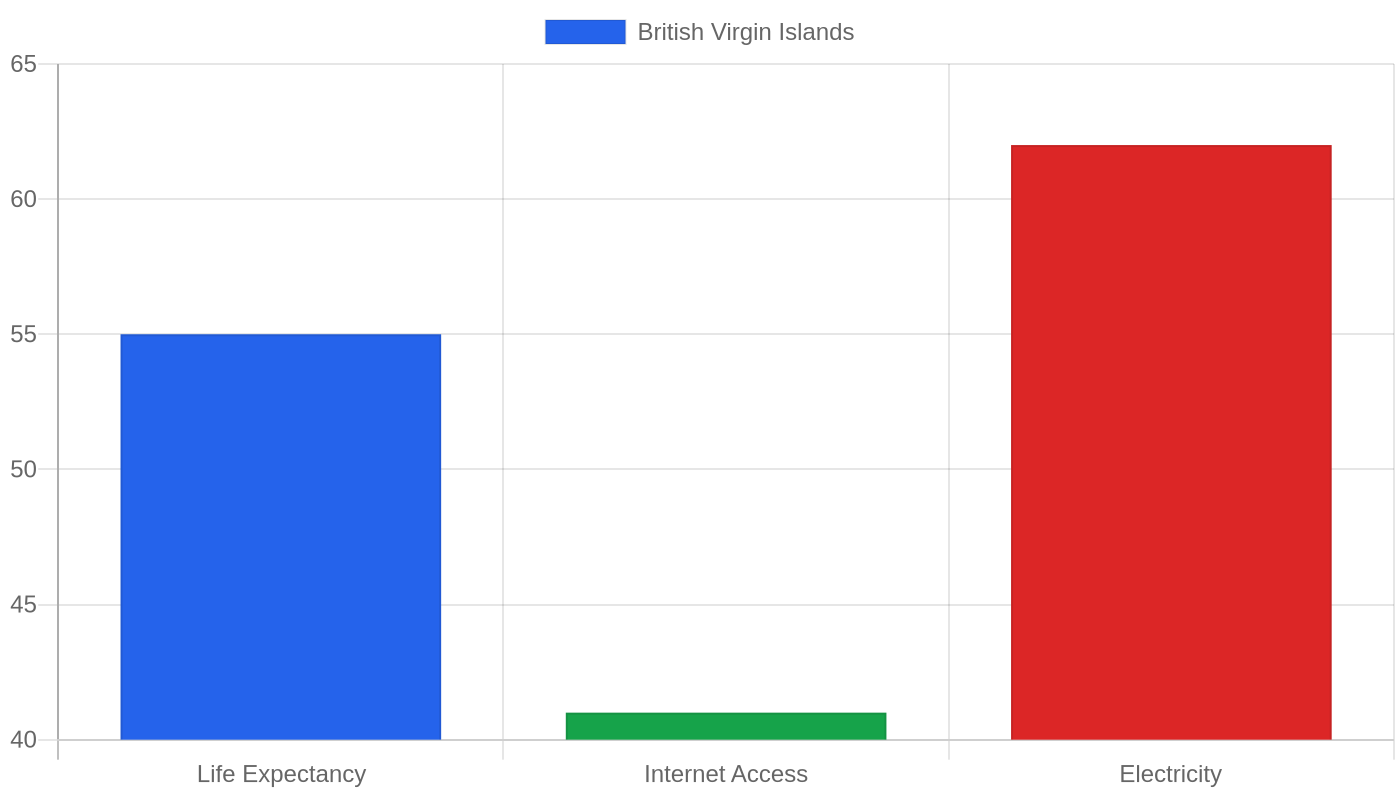
– The absence of standard economic metrics from the World Bank—no GDP, inflation, unemployment, or population figures—reflects the territory’s deliberately opaque financial ecosystem and its status as a non-sovereign entity
– Political stability is guaranteed through the UK’s constitutional oversight, providing a layer of institutional security that many Caribbean neighbours lack
– The territory faces ongoing scrutiny from international bodies over financial transparency, making its regulatory evolution a critical story for global investors and policymakers
The Invisible Economy — Why Traditional Metrics Don’t Tell the Story
The British Virgin Islands presents a fascinating paradox for economic journalists: a territory where the absence of data is itself the most telling data point. The World Bank provides no figures for GDP growth, inflation, unemployment, GDP in US dollars, GDP per capita on a purchasing power parity basis, or GNI per capita. Population statistics are similarly unavailable from standard international sources. This is not an oversight.
It is a feature of a jurisdiction that has built its prosperity on financial discretion rather than statistical transparency.
The territory’s main industries are not captured in traditional economic surveys because they operate in the realm of international corporate services, trust administration, and legal structuring. The BVI is home to hundreds of thousands of registered companies—far exceeding its resident population—and serves as the legal domicile for a significant portion of the world’s special purpose vehicles, investment funds, and holding companies.
This creates an economy that generates substantial fee income, legal employment, and government revenue through registration fees and annual licence renewals, but one that resists easy measurement through conventional GDP accounting.
What we can infer is that the BVI’s economic model is fundamentally different from that of its Caribbean neighbours. Where most island nations depend on tourism, agriculture, or commodity exports, the BVI depends on the continued confidence of international capital markets and the legal framework that supports them.
The territory’s prosperity is therefore tied less to local productivity and more to global regulatory trends, tax treaty negotiations, and the shifting attitudes of major economies toward offshore financial centres. This makes the BVI unusually vulnerable to external policy changes while simultaneously insulating it from the commodity price shocks and weather-related disruptions that affect more traditional Caribbean economies.
The Price of Paradise — Housing and Living in a Financial Hub
The cost of living in the British Virgin Islands reflects its dual nature as both a Caribbean paradise and a high-end financial services centre. While comprehensive cost-of-living indices are not available from the provided data, the territory’s economic structure strongly suggests that living expenses are significantly elevated compared to regional averages.
The presence of a wealthy expatriate workforce in the financial sector, combined with limited land availability on a small island chain, creates upward pressure on housing costs that would be familiar to anyone who has lived in Bermuda, the Cayman Islands, or similar jurisdictions.
Housing in the BVI is predominantly a rental market for the expatriate professionals who drive the financial services industry. Purchase options exist but are limited by the territory’s small geographic footprint and the legal restrictions on land ownership by non-Belongers—a term used across the Caribbean for non-nationals. Daily expenses for imported goods, food, and utilities are inevitably high given the islands’ remote location and dependence on shipping.
The territory’s lack of a broad-based manufacturing sector means virtually everything beyond fresh local produce must be imported, adding transportation costs and import duties to the price of everyday items.
For the local population, the cost of living creates a sharp divide between those employed in the high-value financial sector and those working in tourism, retail, or government services. This economic stratification is a persistent social challenge, though one that the territory has managed without the acute housing crises seen in some other Caribbean financial centres.
Where Capital Finds a Home — Investment Climate and Business Environment
The British Virgin Islands’ business environment is defined by its legal infrastructure rather than its physical one. The territory’s top companies are not manufacturers or retailers but the law firms, trust companies, corporate service providers, and accounting practices that facilitate the registration and administration of offshore entities.
These firms operate within a legal framework derived from English common law, supplemented by the BVI Business Companies Act, which has become the global gold standard for corporate structuring.
The sectors to watch in the BVI are not emerging industries in the traditional sense, but rather the territory’s ongoing adaptation to international regulatory standards. The European Union’s tax blacklists, the OECD’s Base Erosion and Profit Shifting initiatives, and the UK’s own transparency requirements all represent both threats and opportunities for the BVI financial sector.
Jurisdictions that successfully navigate these regulatory challenges while maintaining their competitive edge continue to attract business; those that fail see capital flow to more compliant or more opaque alternatives.
For investors, the BVI offers what few other jurisdictions can match: legal certainty, political stability guaranteed by the UK, a time zone that allows same-day transactions with both North American and European markets, and a sophisticated service industry that understands the needs of international capital. The territory’s challenge is to maintain these advantages while meeting the transparency demands that are reshaping global finance.
Stability by Design — Safety, Politics, and Quality of Life
The political landscape of the British Virgin Islands is unusual in the Caribbean context. The territory operates as a parliamentary democracy, with ultimate executive authority vested in King Charles III and exercised on his behalf by the Governor of the British Virgin Islands, who is appointed by the King on the advice of the British Government. Defence and most foreign affairs remain the responsibility of the United Kingdom.
This constitutional arrangement provides a layer of institutional stability that is rare among small island states.
The practical effect of this political structure is that the BVI enjoys the benefits of British military protection, diplomatic representation, and civil service standards without the volatility that can accompany full independence. The Governor retains reserve powers that can be used in cases of serious constitutional crisis, providing a backstop against political instability.
At the same time, the elected government manages domestic affairs, including education, healthcare, infrastructure, and economic policy, giving residents democratic control over their daily lives.
Crime and safety indices are not available from the provided data, but the territory’s small population, close-knit communities, and relatively high per capita income typically contribute to lower crime rates than those seen in larger Caribbean nations.
The quality of life in the BVI is shaped by its natural environment—the islands are renowned for their beaches, sailing waters, and coral reefs—combined with the amenities that a wealthy financial centre can support, including good healthcare facilities, international schools, and reliable infrastructure.
Navigating New Currents — What’s Happening Now
The British Virgin Islands is currently navigating one of the most challenging periods in its modern history as the global regulatory landscape shifts beneath its feet. The territory has faced sustained pressure from the United Kingdom itself to improve beneficial ownership transparency and to demonstrate that its financial system is not being used for money laundering or tax evasion.
The UK government’s 2023 introduction of registers of beneficial ownership for overseas territories, following years of legal challenges from BVI authorities, represents a fundamental change in how the jurisdiction operates.
This regulatory evolution comes at a time when the global financial services industry is consolidating, with clients seeking jurisdictions that offer both efficiency and unquestioned compliance. The BVI’s response to these pressures will determine whether it maintains its position as the world’s leading offshore incorporation jurisdiction or cedes ground to competitors such as the Cayman Islands, Singapore, or the growing number of onshore alternatives offering similar services.
The territory is also grappling with the economic aftermath of the COVID-19 pandemic, which disrupted both the tourism sector and the in-person business that many financial services firms rely on. While the financial sector proved resilient through remote working arrangements, the broader economy has faced challenges from supply chain disruptions and the rising cost of imported goods.
The government’s focus on diversifying the economy beyond pure financial services, including investments in renewable energy and digital infrastructure, represents a pragmatic response to these vulnerabilities.
The Bottom Line
The British Virgin Islands remains an essential jurisdiction for anyone involved in international finance, cross-border investment, or corporate structuring. Its combination of legal sophistication, political stability, and Caribbean location is difficult to replicate. However, the territory’s future depends on its ability to adapt to a world that is increasingly sceptical of financial opacity while preserving the efficiency and flexibility that made it successful in the first place.
Investors, policymakers, and financial professionals should watch the BVI not for its economic statistics, but for how it navigates the tension between transparency and competitiveness—a story that will shape offshore finance for decades to come.
Sources & Methodology
This article is authored by Economic Pulse Net for informational and research purposes. Economic Pulse Net sources its data from multilateral institutions, national statistics bureaus, and proprietary databases. All data is believed to be current as of the date of publication.
Published: July 24, 2026 | Category: Research — British Virgin Islands
Use these signals in your own platform
Economic Pulse publishes its live signal feed through a documented, read-only API. Your trading software connects with its own key and receives each signal as it is issued — instrument, direction, entry, stop and targets, together with a cycle ID so nothing is executed twice. The feed is independent of this website and cannot change it.
Signals are informational only and are not financial advice.