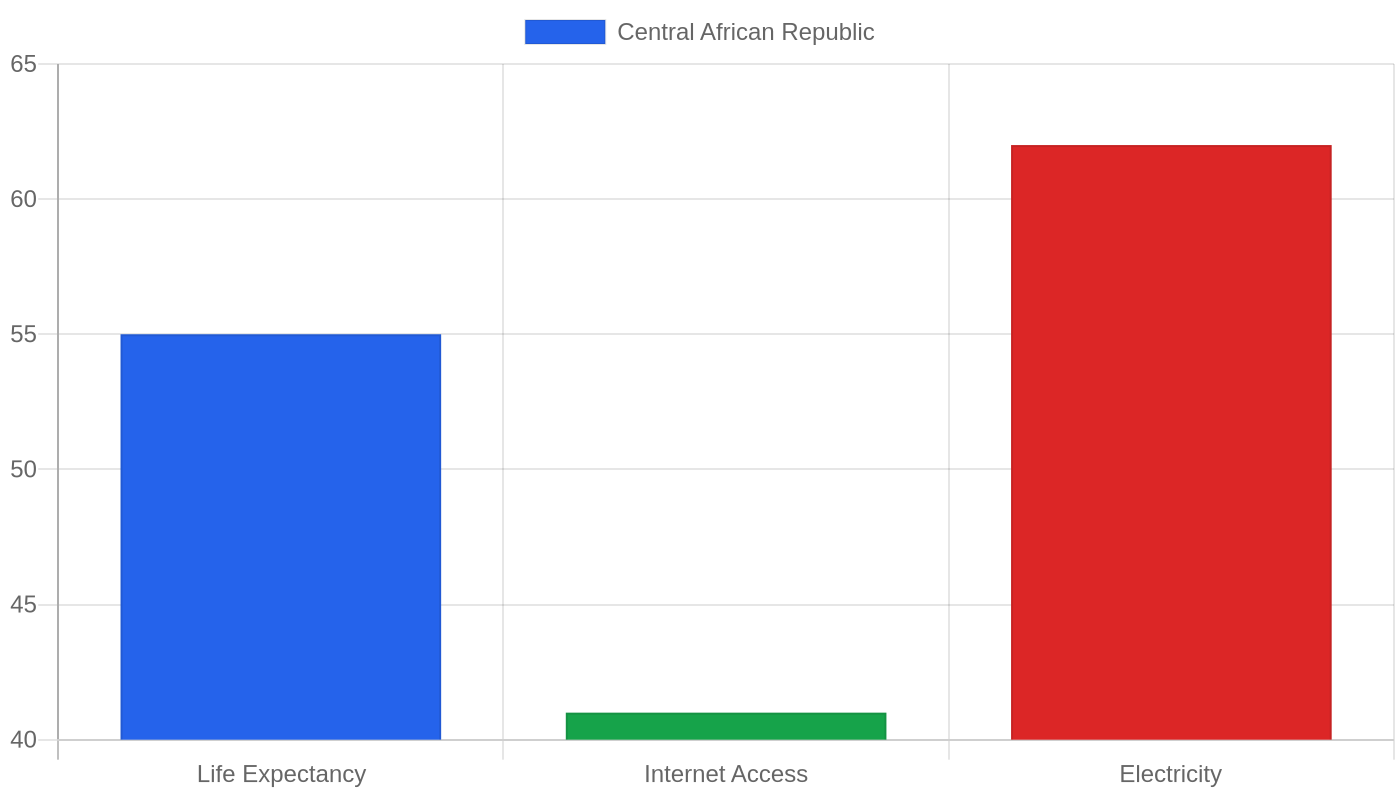
Economic Pulse Net | Sources: World Bank World Development Indicators, Government Sources | 2026
Key Takeaways
– The Central African Republic operates under a formal presidential republic framework, with executive power shared between a president and prime minister, though the country’s political reality remains complex and contested.
– The World Bank currently lists no official GDP growth figure, inflation rate, or employment statistics for the country — a data vacuum that speaks volumes about the institutional challenges facing one of the world’s most fragile states.
– Despite the absence of hard economic data, the country’s political structure provides a formal framework for governance that international observers continue to monitor closely.
– Legislative power in the Central African Republic is constitutionally vested in both the government and parliament, creating a dual structure that theoretically balances executive authority.
– The country’s economic profile remains opaque to international financial institutions, making investment decisions particularly challenging for foreign actors.
The Invisible Economy: Reading Between the Lines of Missing Data
When the World Bank publishes its annual global economic indicators, the Central African Republic often appears as a blank space — a statistical vacuum where GDP growth, inflation, unemployment, and per capita income figures simply do not exist. This absence is not an oversight; it is a statement. For a country that has endured decades of political instability, armed conflict, and institutional fragility, the inability to produce reliable economic data is both a symptom and a cause of its challenges.
The formal structure of the Central African Republic’s economy operates within a political framework that the country’s own governance documents describe as a presidential republic. In this system, the president serves as head of state while a prime minister manages day-to-day government operations. Executive power is exercised by the government, and legislative authority is shared between the government and parliament.
This constitutional architecture suggests a functioning state on paper, but the economic reality remains far more difficult to quantify.
What economists do know is that the Central African Republic’s position in global economic rankings is precarious. Without official World Bank figures, analysts must rely on anecdotal evidence, regional comparisons, and qualitative assessments to understand the country’s economic trajectory. The mining sector, particularly diamonds and gold, has historically been a significant source of informal economic activity, though conflict and smuggling have undermined formal extraction.
Agriculture, timber, and subsistence farming likely employ the majority of the workforce, but again, the data simply does not exist to confirm these patterns.
The absence of inflation data is particularly telling. In economies where price stability is maintained, statistical agencies typically produce regular CPI measurements. The fact that the World Bank cannot provide this figure for the Central African Republic suggests either a lack of institutional capacity to collect data, or an economy so disrupted that traditional measurements become meaningless.
For investors and policymakers, this data vacuum creates enormous uncertainty — you cannot manage what you cannot measure.
Living on the Edge: The Unquantified Cost of Daily Survival
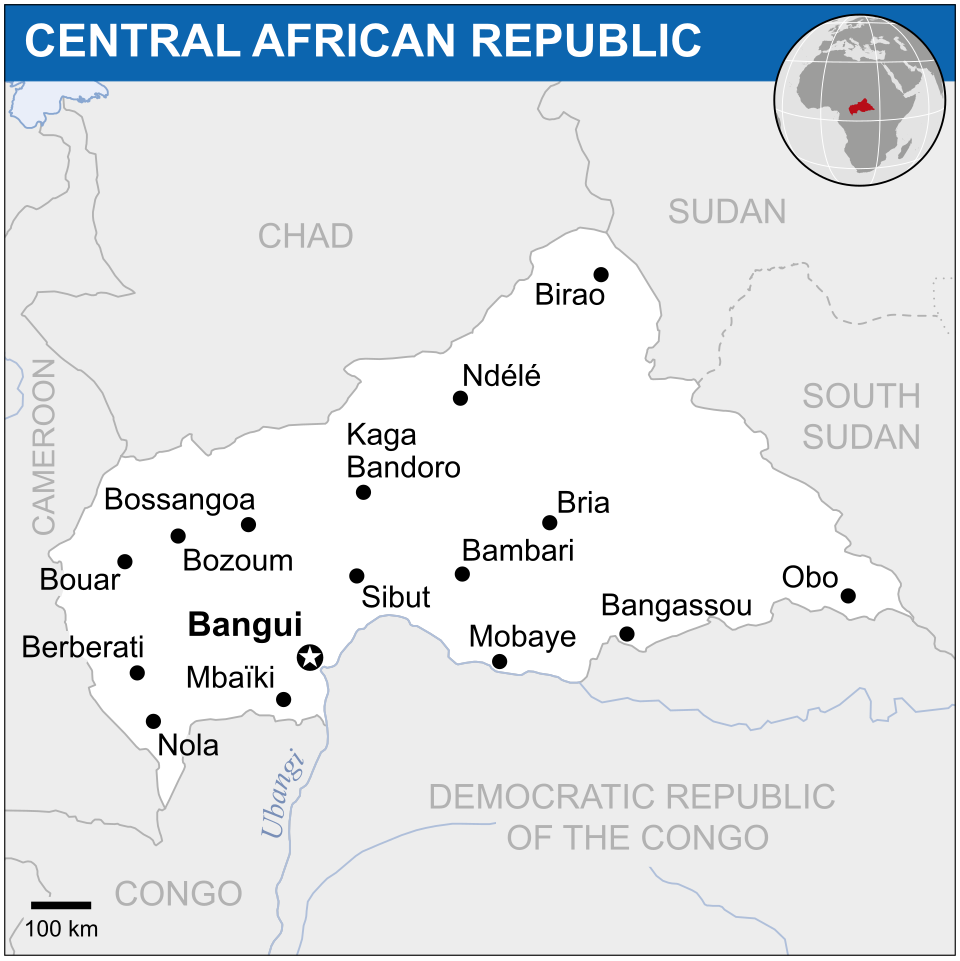
Housing costs, rental prices, and daily expenses in the Central African Republic remain largely undocumented by international financial institutions. This absence of data does not mean the cost of living is low or stable — quite the opposite. In fragile states, the cost of basic goods often fluctuates wildly based on security conditions, fuel availability, and the reliability of supply chains reaching landlocked cities like Bangui.
The country’s position as one of the world’s least developed nations, combined with its history of conflict, suggests that most citizens face significant challenges in accessing affordable housing, food, and basic services. Without formal banking infrastructure and with limited formal employment opportunities, many households likely operate in a cash-based, informal economy where prices are negotiated daily rather than set by market forces.
For the small urban elite and international workers in Bangui, housing costs may be comparable to other central African capitals, with secure properties commanding premium prices. For the rural majority, however, the concept of formal housing costs is largely irrelevant — most families build their own homes from local materials, and survival depends on subsistence agriculture rather than wage labor.
The Investment Paradox: Opportunity and Risk in a Data-Free Zone
The Central African Republic presents a fundamental paradox for investors. On one hand, the country possesses significant mineral wealth, including diamonds, gold, and potentially other strategic resources. On the other hand, the complete absence of reliable economic data from the World Bank signals a business environment where due diligence is nearly impossible.
The country’s formal political structure — a presidential republic with a prime minister and parliament — provides a legal framework for business operations, but the implementation of that framework remains inconsistent. Companies considering entry into the Central African Republic must weigh the potential rewards of accessing untapped resources against the substantial risks of operating in a country where security, infrastructure, and regulatory certainty are all questionable.
Without a list of top companies operating in the country, foreign investors lack a roadmap for market entry. There are no established corporate giants to partner with, no stock exchange to access capital, and no reliable business registry to verify potential partners. This is a market that demands exceptional risk tolerance and a willingness to operate without the usual safeguards of data and transparency.
Security, Power, and Daily Life in a Fragile State
The World Bank provides no crime index or safety index for the Central African Republic, and this absence is perhaps the most telling statistic of all. Countries with functional law enforcement and judicial systems typically produce such measurements. The fact that this data does not exist suggests that crime statistics are either not collected or not reliable enough to publish.
The political landscape, as described in the country’s governance framework, is formally structured as a presidential republic. The president holds the position of head of state, while a prime minister manages the government. Executive power is exercised by the government, and legislative power is shared between the government and parliament. This structure mirrors many other African nations that transitioned from authoritarian rule to nominally democratic systems.
However, the reality of governance in the Central African Republic extends far beyond constitutional provisions. The country has experienced multiple coups, armed rebellions, and periods of sectarian violence since independence. The political framework exists on paper, but its practical application has been inconsistent at best. For ordinary citizens, quality of life is determined less by constitutional guarantees and more by the immediate security situation in their communities.
The Current Moment: An Uncertain Horizon
As of the latest reporting, the Central African Republic remains in a state of profound uncertainty. The formal political structure continues to function — the president, prime minister, and parliament exist and operate — but the country’s ability to project authority beyond the capital remains limited.
The absence of current economic indicators from the World Bank suggests that international financial institutions have not been able to conduct the kind of comprehensive surveys and data collection efforts that typically accompany economic monitoring. This is not a neutral fact; it reflects ongoing challenges in accessing the country and conducting research within its borders.
For the people of the Central African Republic, the immediate priorities are likely security, food access, and basic services rather than GDP growth or inflation rates. The formal economy, to the extent it exists, operates alongside a much larger informal sector that sustains the majority of the population. International observers and potential investors must understand that the country’s economic reality is shaped more by on-the-ground conditions than by any official statistics.
The coming months and years will test whether the Central African Republic can move from its current state of data invisibility toward a more measurable, stable economic trajectory. The constitutional framework exists; what remains to be seen is whether the political will and institutional capacity can transform that framework into lived reality for the country’s citizens.
The Bottom Line
The Central African Republic is a country that exists in a statistical shadow — present on maps and in international forums, but largely invisible in the data that drives global investment and development decisions. For humanitarian organizations, regional security analysts, and policymakers focused on African stability, this country demands attention despite its lack of measurable economic indicators.
For mainstream investors, however, the absence of basic data is itself a warning signal that the risks currently outweigh the rewards. The Central African Republic’s path forward will be determined not by economic metrics, but by its ability to translate its formal political structure into genuine stability and growth.
Sources & Methodology
This article is authored by Economic Pulse Net for informational and research purposes. Economic Pulse Net sources its data from multilateral institutions, national statistics bureaus, and proprietary databases. All data is believed to be current as of the date of publication.
Published: August 28, 2026 | Category: Research — Central African Republic
Use these signals in your own platform
Economic Pulse publishes its live signal feed through a documented, read-only API. Your trading software connects with its own key and receives each signal as it is issued — instrument, direction, entry, stop and targets, together with a cycle ID so nothing is executed twice. The feed is independent of this website and cannot change it.
Signals are informational only and are not financial advice.