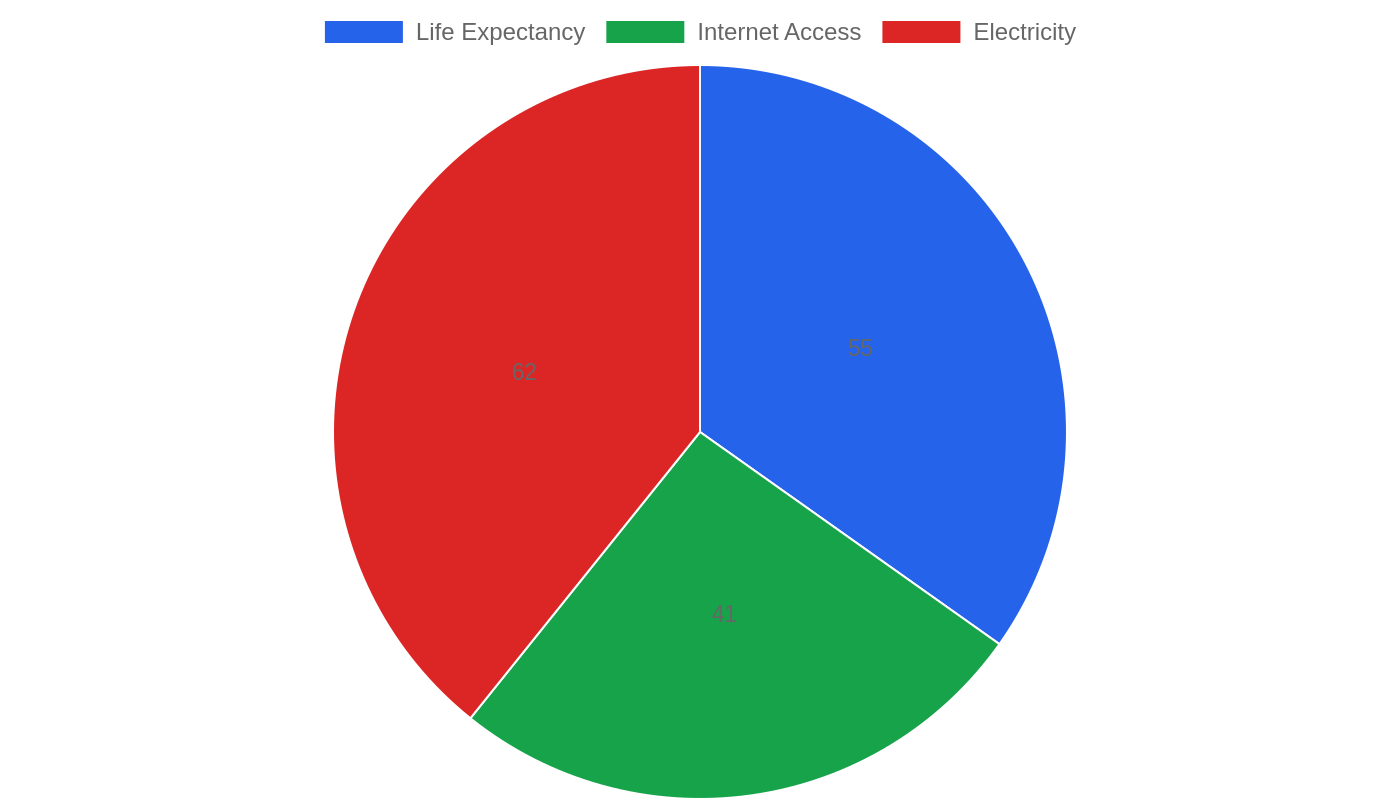
Economic Pulse Net | Sources: World Bank World Development Indicators, Government Sources | 2026
Key Takeaways
* Uruguay operates as a stable, unitary representative democratic republic with a strict separation of powers and universal suffrage, providing a predictable political framework for long-term planning.
Key economic sectors are dominated by state-linked entities, including ANCAP in energy, ANTEL in telecommunications, and UTE in utilities, signaling a significant public sector presence in the market.
The financial landscape is anchored by major institutions such as Banco de la República Oriental del Uruguay and the Bolsa de Valores de Montevideo, offering structured avenues for capital management.
While specific macroeconomic indicators like GDP growth and inflation rates are currently unreported, the nation’s structural integrity remains defined by its nationwide administration of justice, education, health, and security.
Investors and observers should focus on the interplay between strong institutional checks and balances and the operational efficiency of key industrial and media players like El País and the State Railways Administration.
Structural Stability: The Backbone of Governance
Uruguay’s economic resilience is deeply rooted in its political architecture, which serves as a stabilizing force amidst regional uncertainties. As a representative democratic republic with a presidential system, the country ensures that power is not concentrated in a single executive hand but is distributed through a robust constitutional framework.
The Uruguayan Constitution establishes a clear separation of powers designed to provide a system of checks and balances, preventing arbitrary governance and fostering an environment where policy shifts are gradual rather than abrupt. Members of government are elected for five-year terms through a universal suffrage system, granting legitimacy to leadership changes and ensuring that public mandates reflect the will of the electorate.
This democratic continuity is crucial for investors who require predictability; unlike nations where sudden regime changes can disrupt markets, Uruguay’s political cycle offers a known timeline for administrative transitions. Furthermore, as a unitary state, critical functions such as justice, education, health, security, foreign policy, and defense are administered nationwide.
This centralized approach to essential services means that regulatory standards and social safety nets are consistent across the entire territory, reducing regional disparities in legal enforcement and public service quality. For international stakeholders, this uniformity simplifies compliance and operational logistics, as businesses do not need to navigate fragmented local laws for core infrastructure or labor regulations.
The stability provided by this structure allows Uruguay to maintain diplomatic coherence and internal order, creating a foundation upon which economic activities can theoretically flourish even when headline growth figures are absent from current reports.
Market Dynamics: State-Led Industries and Financial Pillars
The Uruguayan economy presents a unique profile where state involvement plays a pivotal role in defining market dynamics and industry leadership. Rather than a purely free-market landscape dominated by private conglomerates, several key industries are driven by major entities that operate under significant public oversight or ownership.
ANCAP stands out as a central player in the oil and gas sector, controlling vital energy resources and distribution channels that keep the nation’s transport and industrial engines running. Similarly, ANTEL dominates the telecommunications space, ensuring that connectivity infrastructure—a prerequisite for modern business—is managed by a national entity focused on broad coverage rather than pure profit maximization.
In the utilities sector, UTE provides essential power services, integrating energy production and distribution under a unified national strategy. The financial sector is equally structured around prominent institutions, with Banco de la República Oriental del Uruguay serving as a cornerstone for banking and financial services, while the Bolsa de Valores de Montevideo offers a regulated platform for equity trading and capital raising.
These institutions collectively form the backbone of commercial activity, influencing everything from credit availability to investment flows. Beyond energy and finance, the industrial landscape includes the State Railways Administration of Uruguay, which manages critical logistics and transportation networks, facilitating the movement of goods both domestically and for export.
The media landscape is also shaped by influential organizations like El País, which informs public discourse and reflects societal trends, thereby indirectly influencing consumer behavior and political sentiment. This concentration of influence in state-linked or major national companies suggests that economic policy decisions often have direct implications for these giants, making their performance a reliable proxy for overall economic health.
For analysts, monitoring the operational efficiency and strategic direction of these entities provides more actionable insight than waiting for delayed GDP figures, as they represent the tangible pulse of daily economic life.
Living Standards and Operational Costs
Understanding the cost of living in Uruguay requires looking beyond aggregate price indices to the structural realities of housing and daily expenses. While specific Consumer Price Index (CPI) data is currently unavailable, the nature of the country’s unitary administration suggests that costs for essential services such as healthcare, education, and security are standardized nationwide.
This uniformity implies that residents and expatriates can expect a relatively consistent baseline for basic needs regardless of their location within the country, avoiding the extreme cost disparities seen in federal systems with highly variable local taxation. Housing markets, however, likely reflect broader regional trends, with urban centers like Montevideo commanding premium prices due to the concentration of jobs, amenities, and international business hubs.
Rent versus buy decisions would be influenced by interest rate environments set by domestic financial institutions, particularly Banco de la República Oriental del Uruguay, which plays a key role in monetary transmission. Daily expenses, including food and transportation, are impacted by the dominance of ANCAP in fuel pricing, meaning that energy costs directly influence logistics and consumer spending power.
Without real-time inflation data, it is difficult to assess short-term purchasing power erosion, but the long-term trend in Uruguay has historically been one of moderate price stability compared to some neighbors. This stability, combined with the high quality of public services funded by the state budget, creates a value proposition for those seeking a high standard of living relative to income levels.
Potential residents must consider that while entry-level costs may be manageable, the premium associated with imported goods and luxury services in a small, open economy can elevate the overall cost of a cosmopolitan lifestyle. Therefore, budgeting for Uruguay should account for a steady, predictable expense structure rather than volatile spikes, allowing for better long-term financial planning.
Safety, Politics, and Quality of Life
Uruguay consistently ranks as one of the safest countries in Latin America, a fact that significantly enhances its appeal for both tourists and long-term residents. Although specific Crime and Safety Indices are not currently reported, the nation’s reputation for low violent crime and high civic trust is well-established in global assessments. This sense of security is reinforced by the political landscape, where the rule of law is upheld through a transparent judicial system administered at the national level.
The separation of powers ensures that no single branch of government can override legal protections, providing citizens and businesses with confidence in contract enforcement and property rights. Political stability is further bolstered by the five-year electoral cycle, which allows for peaceful transfers of power and continuous dialogue between the government and the opposition. This environment contributes to a high quality of life, characterized by social cohesion and access to comprehensive public services.
The emphasis on nationwide administration of health and education means that human capital development is prioritized, leading to a skilled workforce and a healthy population. For expatriates, the combination of physical safety, political predictability, and strong social infrastructure makes Uruguay a rare haven in a region often plagued by instability.
However, this stability comes with the expectation of active civic participation and adherence to social norms, reflecting the deep democratic culture embedded in the constitution. Ultimately, the intangible assets of safety and political calm are perhaps Uruguay’s most valuable economic exports, attracting foreign direct investment not just for market size, but for risk mitigation.
Current Affairs and Strategic Outlook
In the absence of fresh macroeconomic headlines, the current narrative for Uruguay revolves around maintaining institutional integrity and navigating global headwinds through structural resilience. The ongoing administration of nationwide policies by the state apparatus continues to be the primary driver of domestic affairs, with recent focus likely placed on optimizing the efficiency of state-owned enterprises like ANCAP and UTE.
As global energy prices fluctuate, the role of ANCAP becomes increasingly critical in balancing fiscal responsibility with energy security, potentially leading to debates over subsidy structures or investment in renewable integration. Meanwhile, the digital transformation agenda is being advanced by ANTEL, which must balance its mandate as a public utility with the competitive pressures of the global telecommunications market.
The financial sector, led by Banco de la República Oriental del Uruguay, is likely engaged in prudent monetary management to safeguard against external shocks, given the lack of visible inflation data to guide aggressive policy shifts. On the political front, the five-year term cycles mean that legislative agendas are constantly being reviewed and renewed, with the opposition playing a vital role in scrutinizing executive actions.
The media, represented by outlets like El País, serves as a watchdog, highlighting issues ranging from environmental concerns to social inequality, thereby keeping the government accountable. With no immediate elections or major crises dominating the news cycle, the current period is one of consolidation, where the focus is on sustaining the democratic model and improving the operational performance of key industries.
This quiet phase allows for strategic planning without the distraction of political turmoil, positioning Uruguay to respond swiftly if external economic conditions change.
The Bottom Line
Uruguay is best viewed as a defensive holding rather than a high-growth speculative play, appealing to investors and expatriates who prioritize stability, rule of law, and social cohesion over rapid expansion. Its strength lies in its predictable political environment and the dominant role of state-linked entities that ensure continuity in essential services.
Those seeking a safe harbor in Latin America with a transparent democratic framework will find Uruguay’s structural advantages compelling, despite the lack of dynamic growth metrics.
Sources & Methodology
This article is authored by Economic Pulse Net for informational and research purposes. Economic Pulse Net sources its data from multilateral institutions, national statistics bureaus, and proprietary databases. All data is believed to be current as of the date of publication.
Published: September 25, 2026 | Category: Research — Uruguay
Use these signals in your own platform
Economic Pulse publishes its live signal feed through a documented, read-only API. Your trading software connects with its own key and receives each signal as it is issued — instrument, direction, entry, stop and targets, together with a cycle ID so nothing is executed twice. The feed is independent of this website and cannot change it.
Signals are informational only and are not financial advice.