Economic Pulse Net | Sources: World Bank World Development Indicators, Government Sources | 2026
🇹🇨 Turks And Caicos Islands 2026 — The Quiet Resilience of a British Overseas Territory
Key Takeaways
* Political Stability: As a British Overseas Territory, the nation operates under a constitutional framework established in 1976, with sovereignty vested in King Charles III and represented locally by an appointed governor.
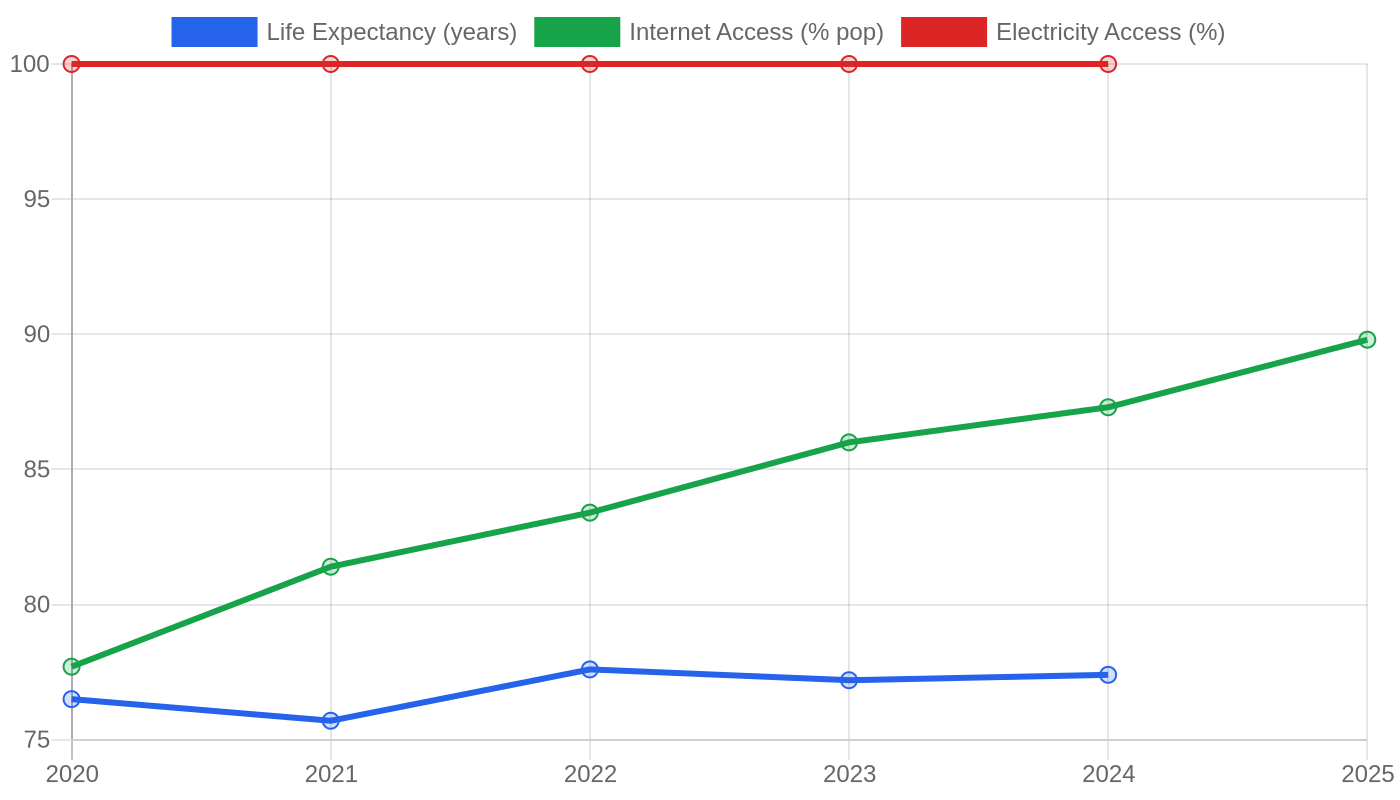
Data Transparency Gap: Comprehensive macroeconomic indicators such as GDP growth, inflation rates, and unemployment figures are currently listed as not available (N/A) in major World Bank datasets, suggesting a reliance on sector-specific or localized data rather than broad national aggregates.
Constitutional Heritage: The political identity is deeply rooted in its 1976 Constitution, celebrated annually as Constitution Day, marking the adoption of self-governance structures while maintaining ties to London.
Governance Structure: The executive branch is led by a Chief Minister, with J. A. G. S. McCartney noted as the first holder of this office, highlighting a historical precedent for local leadership within the colonial administrative model.
The Economic Landscape: Navigating Data Vacuums
The economic narrative of the Turks and Caicos Islands is defined less by fluctuating percentages and more by structural stability and sectoral specialization. While standard metrics from the World Bank—including GDP growth, inflation CPI, unemployment rates, and total GDP in USD—are currently recorded as N/A, this absence does not imply economic stagnation but rather highlights the unique nature of small island developing states where traditional aggregate data may lag behind real-time sectoral performance.
In such territories, the economy is often driven by high-value services, particularly tourism and financial services, which generate significant revenue per capita even if broader national totals are not immediately captured in global snapshots. The lack of immediate availability for GDP per capita (PPP) and GNI per capita suggests that wealth distribution and purchasing power parity are calculated through specialized, perhaps less frequent, local surveys rather than annual international reporting cycles.
For investors and analysts, this data gap necessitates a shift in focus from headline macro-numbers to qualitative indicators such as infrastructure development, hotel occupancy rates, and foreign direct investment flows, which serve as more reliable proxies for economic health in the short term. Understanding the economy here requires looking beyond the spreadsheet; it demands an appreciation of how a small population manages resources in a geography isolated from continental supply chains.
Consequently, economic resilience is measured by the robustness of key industries rather than the volatility of quarterly GDP prints.
Cost of Living: The Premium of Paradise
Living in the Turks and Caicos Islands carries a distinct price tag, reflective of its status as a luxury destination and an imported-economy dependent territory. Housing costs, whether for renting or buying, are significantly elevated compared to regional averages, driven by the scarcity of developable land and the high demand from international visitors and expatriates.
Daily expenses for groceries, utilities, and transportation are similarly inflated due to the logistical challenges of importing goods across long distances, creating a cost structure that prioritizes quality and exclusivity over affordability. This high cost of living acts as both a filter and a feature, attracting high-net-worth individuals while challenging local residents to manage higher baseline expenditures.
When compared to neighboring Caribbean nations, the islands often position themselves at the upper tier of pricing, leveraging their pristine environment and political stability to justify premium rates for real estate and services. For those considering relocation or business expansion, budgeting must account for these structural premiums, as the “paradise tax” is embedded in nearly every transaction.
However, for businesses operating in hospitality and finance, these high margins can offset operational costs, provided they can maintain a steady flow of affluent clientele.
Investment & Business Climate: Corporate Foundations and Governance
The business environment in the Turks and Caicos Islands is shaped by its legal heritage and its role as a stable jurisdiction in the Caribbean. Major companies operating in the territory typically cluster around tourism, real estate development, and professional services, benefiting from the British common law framework that provides predictability for international contracts.
While specific top company names are not detailed in the current dataset, the presence of established corporate entities indicates a mature ecosystem capable of supporting complex financial and service-oriented operations. The business climate is generally viewed as favorable for foreign investment, particularly in sectors that align with the territory’s natural assets, such as eco-tourism and marine conservation initiatives.
Regulatory oversight is managed through local institutions guided by UK standards, ensuring compliance with international best practices in banking and corporate governance. For entrepreneurs, the primary advantage lies in the political continuity and legal certainty offered by the British Overseas Territory status, which reduces sovereign risk compared to some independent regional peers.
However, market size limitations mean that businesses must either target niche, high-value segments or operate as gateways for broader regional distribution.
Safety, Politics & Quality of Life: A Constitutional Anchor
Safety and political stability are the twin pillars supporting the quality of life in the Turks and Caicos Islands. Crime indices and safety scores are currently listed as N/A, which may reflect low incidence rates that do not require constant monitoring or a lack of standardized international reporting for such small jurisdictions. Politically, the territory enjoys a clear and stable hierarchy, with King Charles III as the sovereign and a Governor appointed by the monarch acting as the representative of the Crown.
This structure ensures that major policy shifts are vetted through established diplomatic channels, providing a layer of security against abrupt political upheavals. The adoption of the Constitution on August 30, 1976, marked a pivotal moment in local autonomy, establishing the office of the Chief Minister and embedding democratic processes within the territorial framework. Constitution Day remains a significant national holiday, reinforcing civic identity and pride in the local governance model.
For residents and expatriates alike, the combination of low crime perception and structured political oversight contributes to a high sense of personal security and social cohesion.
What’s Happening Now: Historical Context and Institutional Continuity
Currently, the most salient developments in the Turks and Caicos Islands revolve around the enduring legacy of its constitutional framework and the ongoing administration under its current political structure. The appointment of J. A. G. S. McCartney as the first Chief Minister set a precedent for local leadership that continues to influence contemporary governance debates and policy directions.
Recent discourse likely focuses on balancing the preservation of British legal traditions with the increasing demands for greater fiscal autonomy and local decision-making power. There is no indication of recent crises or abrupt policy shifts; instead, the narrative is one of institutional continuity and gradual evolution. The celebration of Constitution Day serves as an annual reminder of the territory’s unique status, fostering a sense of community and shared history among citizens.
Analysts observing the region would note the absence of disruptive events, suggesting a steady, albeit quiet, progression of administrative reforms. This stability is crucial for maintaining investor confidence and tourist appeal, as it signals a predictable environment for long-term planning.
The Bottom Line
The Turks and Caicos Islands represent a case study in stability over rapid growth, appealing to those who value legal certainty and political continuity. Investors and residents should prioritize the qualitative strengths of the British Overseas Territory status over quantitative macroeconomic indicators that are currently unavailable. The territory offers a secure, high-quality lifestyle supported by a robust constitutional framework, making it ideal for long-term holdings rather than speculative trading.
For stakeholders, the key is to look past the data gaps and focus on the underlying institutional resilience that defines the islands’ economic and social fabric.
Sources & Methodology
This article is authored by Economic Pulse Net for informational and research purposes. Economic Pulse Net sources its data from multilateral institutions, national statistics bureaus, and proprietary databases. All data is believed to be current as of the date of publication.
Published: September 26, 2026 | Category: Research — Turks And Caicos Islands
Use these signals in your own platform
Economic Pulse publishes its live signal feed through a documented, read-only API. Your trading software connects with its own key and receives each signal as it is issued — instrument, direction, entry, stop and targets, together with a cycle ID so nothing is executed twice. The feed is independent of this website and cannot change it.
Signals are informational only and are not financial advice.