Economic Pulse Net | Sources: World Bank World Development Indicators, Government Sources | 2026
Key Takeaways
* Political Stability: St Lucia operates as a Commonwealth realm with a parliamentary system, currently led by Prime Minister Philip J. Pierre under Governor-General Errol Charles.
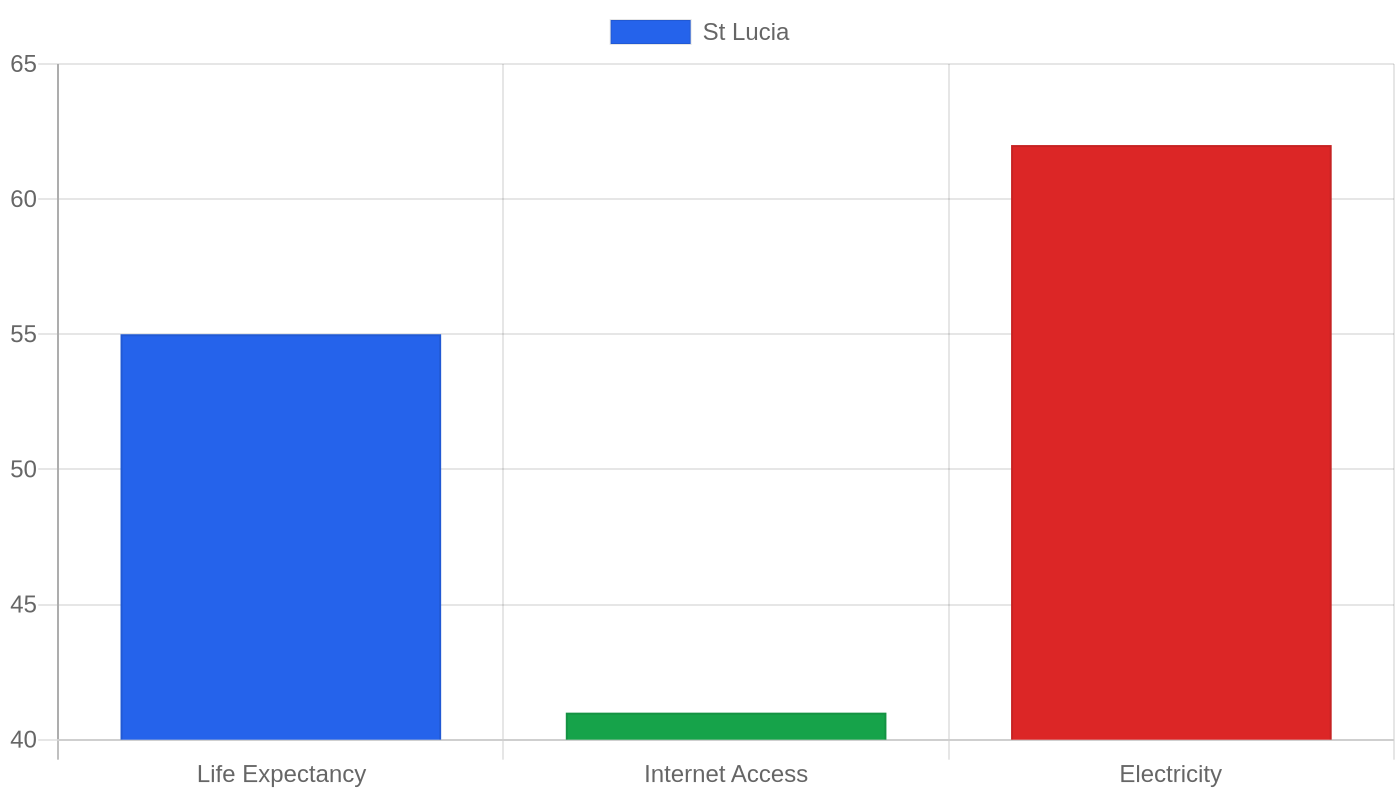
Data Gaps: Comprehensive economic indicators such as GDP growth, inflation rates, and unemployment figures are not currently available from the World Bank for this period.
Institutional Framework: The House of Assembly comprises 17 seats, with members elected via plurality, shaping the nation’s legislative direction.
Information Void: Critical metrics regarding cost of living, major corporate entities, and crime indices remain unspecified, highlighting a need for localized primary research.
Strategic Focus: Investors must rely on structural political analysis rather than hard financial data to assess the current business climate.
Economic Structure and Policy Landscape
The economic narrative of St Lucia is currently defined more by its institutional framework than by quantifiable performance metrics. According to the World Bank, specific data points for GDP growth, inflation CPI, and unemployment are listed as N/A, indicating either a lack of recent reporting or significant statistical gaps in international databases. This absence of hard numbers makes it challenging to gauge the immediate health of the economy through traditional macroeconomic lenses.
However, the country remains a unitary state with a parliamentary system, which provides a stable baseline for policy implementation despite the missing financial telemetry. The head of government, Prime Minister Philip J. Pierre, leads the cabinet and typically directs policy based on the mandate received from the largest party in the House of Assembly. With 17 seats in the lower house, the political landscape is competitive, yet structured around clear electoral rules that favor plurality winners.
For observers, this suggests that while the machinery of governance is well-understood, the output of that machinery—measured in dollars and cents—is currently obscured. Investors looking at St Lucia must therefore focus on political continuity and regulatory consistency rather than short-term economic volatility, as the latter simply cannot be measured with the provided data.
The constitutional monarchy status, represented by Governor-General Errol Charles on behalf of King Charles III, adds a layer of traditional stability that often appeals to long-term stakeholders seeking predictable legal environments. Ultimately, the “N/A” tags in the World Bank data serve as a reminder that many small island developing states face challenges in maintaining real-time, high-frequency economic reporting standards comparable to larger economies.
Cost of Living and Housing Dynamics
Assessing the daily economic reality for residents and expatriates in St Lucia presents a unique challenge due to the lack of specific cost-of-living indices. The provided data does not include figures for housing costs, rent versus buy comparisons, or general daily expenses, leaving a significant void in understanding the purchasing power of the local population. Without concrete numbers, it is impossible to definitively compare St Lucia’s expense profile against regional averages in the Caribbean.
Typically, island nations experience higher import-dependent costs, but without explicit data, any assertion about affordability would be speculative. The absence of a Crime Index and Safety Index further complicates the quality-of-life assessment, as security concerns often correlate with property values and insurance premiums. Consequently, potential movers or businesses must rely on anecdotal evidence or direct market inquiries rather than standardized economic reports to gauge financial requirements.
This information gap underscores the importance of localized due diligence; what works in one Caribbean jurisdiction may not apply here without verification. For now, the cost of living in St Lucia remains an unquantified variable, requiring stakeholders to approach budgeting with caution and flexibility.
Investment and Business Climate
The investment landscape in St Lucia is shaped by its political structure and the presence of key governmental roles, though specific corporate data is scarce. The top companies list is empty in the provided dataset, making it difficult to identify dominant private sector players or leading industries. Similarly, the main industries section offers no detail, preventing a deep dive into sectors such as tourism, agriculture, or offshore finance that might drive employment.
This lack of granular business data suggests that the private sector ecosystem may be fragmented or not comprehensively tracked in international summaries. However, the political environment offers some clarity: with Prime Minister Philip J. Pierre at the helm, policy directions can be anticipated through official government channels rather than corporate press releases.
The House of Assembly’s 17-seat composition means legislative changes can occur relatively quickly if there is a strong majority, potentially affecting regulatory frameworks for foreign investors. Businesses operating in or entering St Lucia must navigate this opacity by engaging directly with local chambers of commerce or government trade offices.
The constitutional monarchy setup ensures that property rights and legal contracts are likely grounded in established common law traditions, providing a foundational safety net for investments. Nevertheless, the absence of data on major companies and industries means that market entry strategies must be built on adaptive planning rather than static industry benchmarks.
Safety, Politics and Quality of Life
St Lucia’s social fabric is woven through its democratic institutions and royal ties, offering a distinct cultural and political identity. As a Commonwealth realm, the country maintains a ceremonial monarch, King Charles III, represented locally by Governor-General Errol Charles, which influences national ceremonies and diplomatic protocols. The political system is a parliamentary democracy where the Prime Minister, currently Philip J. Pierre, holds executive power and leads the cabinet.
The House of Assembly, with its 17 elected members, serves as the primary legislative body, ensuring that governance reflects the will of the plurality-elected representatives. While specific crime and safety indices are marked as N/A, the general stability of a constitutional monarchy often correlates with lower levels of civil unrest compared to non-democratic regimes. Quality of life assessments are similarly hampered by the lack of happiness data or social welfare metrics in the provided text.
However, the structured nature of the government implies a level of order and predictability that supports daily life. Residents and visitors alike operate within a framework where legal and political transitions are governed by established parliamentary procedures. This institutional reliability is a key component of the country’s intangible assets, even when tangible safety statistics are unavailable.
What’s Happening Now / Current Affairs
The current affairs landscape in St Lucia is dominated by its ongoing political dynamics and constitutional arrangements. Prime Minister Philip J. Pierre continues to lead the government, navigating the complexities of a 17-seat House of Assembly. Governor-General Errol Charles acts as the representative of the Crown, ensuring that the constitutional monarchy functions smoothly amidst regular parliamentary sessions.
The latest updates reflect a steady adherence to the unitary state structure, with no immediate signs of constitutional crisis or major political upheaval. While economic news is muted by the lack of GDP or inflation data, the political sphere remains active with the usual rhythms of parliamentary debate and cabinet decisions. The focus for external observers should remain on the stability of the ruling coalition and its ability to manage the island’s resources effectively.
Any shifts in the leadership of the largest party in the House of Assembly could signal changes in policy direction, particularly regarding fiscal management and international relations. For now, the country appears to be in a phase of routine governance, relying on its established democratic processes to address both domestic and international challenges.
The Bottom Line
St Lucia presents a case where political structure is clear, but economic substance is obscured by data limitations. Investors and researchers should watch this country for its stable parliamentary democracy and constitutional continuity rather than for immediate financial returns or growth metrics. The absence of hard data requires a cautious, qualitative approach to engagement, focusing on institutional trust over quantitative analysis.
For those willing to navigate information gaps, St Lucia offers a predictable political environment anchored in Commonwealth traditions.
Sources & Methodology
This article is authored by Economic Pulse Net for informational and research purposes. Economic Pulse Net sources its data from multilateral institutions, national statistics bureaus, and proprietary databases. All data is believed to be current as of the date of publication.
Published: October 25, 2026 | Category: Research — St Lucia
Use these signals in your own platform
Economic Pulse publishes its live signal feed through a documented, read-only API. Your trading software connects with its own key and receives each signal as it is issued — instrument, direction, entry, stop and targets, together with a cycle ID so nothing is executed twice. The feed is independent of this website and cannot change it.
Signals are informational only and are not financial advice.