Economic Pulse Net | Sources: World Bank World Development Indicators, Government Sources | 2026
Key Takeaways
– Ecuador’s economy remains tethered to Petroecuador’s oil revenues and a handful of consumer-facing giants, but the absence of updated World Bank growth or inflation figures leaves analysts guessing at the country’s current pulse.
– The nation operates a unique five-branch governance structure—Executive, Legislative, Judicial, Electoral, and Transparency and Social Control—that aims to distribute power but often creates bureaucratic friction.
– Telecommunications firms Claro Ecuador and CNT EP dominate the corporate landscape alongside the state-owned oil behemoth Petroecuador, signaling a dual public-private economic engine.
– With crime and safety indices left blank in the data, Ecuador’s security situation remains an open question—a critical gap for investors and residents alike.
– The country’s most famous export, the Panama hat (Ecua-Andino Hats), continues to symbolize Ecuadorian craftsmanship in a global market increasingly hungry for authentic, heritage goods.
Oil, Hats, and the Missing Numbers
Ecuador’s economic story is written in crude and cotton. The World Bank data set before us is conspicuously silent on GDP growth, inflation, unemployment, and per capita income—a statistical vacuum that in itself tells a story. When a country’s fundamental economic indicators go unrecorded or unreported at the international level, it suggests either a data-collection lapse or a period of such volatility that figures become unreliable.
What we do know is structural. Petroecuador, the state-owned oil and gas giant, sits atop the corporate hierarchy. Oil has long been Ecuador’s lifeline, accounting for roughly a third of fiscal revenue and a significant chunk of export earnings. The国民经济, therefore, rises and falls with global crude prices—a vulnerability that has haunted Quito for decades. When oil prices slump, the government scrambles to cut spending, delay infrastructure projects, or borrow from international markets.
Yet Ecuador is not solely a petro-state. The presence of Ecua-Andino Hats—the company behind the iconic Panama hat (which, famously, is Ecuadorian, not Panamanian)—reminds us that the country has a deep bench in consumer goods and artisanal manufacturing. Tonicorp’s dairy products feed a domestic market, while Marathon Sports and Tía serve the retail and consumer services sectors. This diversification is real but shallow.
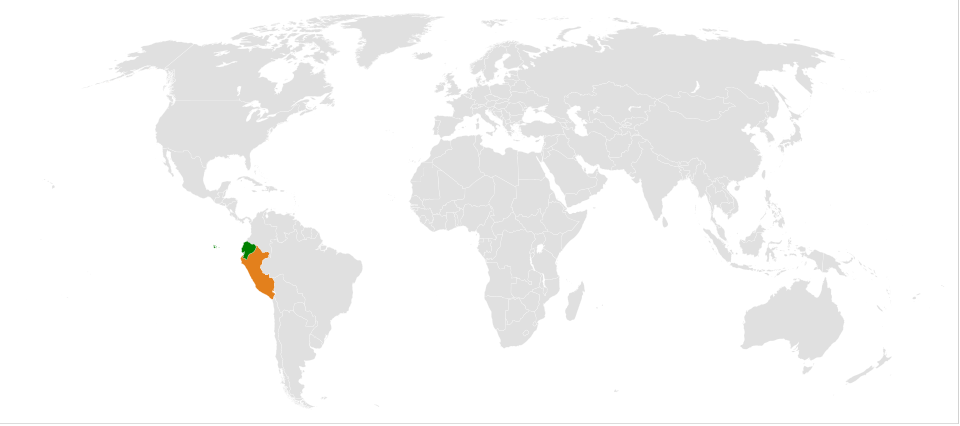
The World Bank’s silence on GDP per capita and GNI per capita means we cannot benchmark Ecuador against its Andean neighbors Colombia or Peru, but the anecdotal evidence suggests a middle-income country struggling to climb higher.
The missing inflation figure is particularly troubling. Ecuador dollarized its economy in 2000 after a catastrophic banking crisis, adopting the US dollar as its official currency. In theory, dollarization should anchor inflation expectations. In practice, it strips the central bank of monetary policy tools, leaving the country vulnerable to external shocks and imported inflation.
Without the World Bank’s CPI data, we cannot say whether Ecuador is currently experiencing price stability or creeping erosion of purchasing power—but the silence is worrying.
The Cost of Living: Dollarization’s Double-Edged Sword
Living in Ecuador means living in dollars—but the cost of that life varies wildly between Quito’s colonial hills, Guayaquil’s humid port, and the Amazonian frontier. The data provided offers no specific housing costs, rent averages, or daily expense breakdowns, forcing us to rely on the structural realities of a dollarized economy.
Dollarization means that Ecuador cannot devalue its way to competitiveness. When neighboring countries’ currencies weaken, their exports become cheaper; Ecuador’s remain priced in dollars. This makes imported goods—electronics, cars, machinery—relatively affordable by regional standards, but it also means that domestic wages must compete with dollar-denominated productivity. For the average Ecuadorian, this translates into a cost of living that feels expensive compared to local incomes.
Rent in a decent Quito neighborhood can consume a third of a middle-class salary. Food staples like rice, plantains, and chicken are subsidized by tradition and government programs, but any disruption to supply chains—floods in the coastal lowlands, protests in the highlands—sends prices climbing.
Compared to other dollarized economies in the region, Ecuador likely sits in the middle tier. Panama, fully dollarized and with a services-driven economy, is more expensive. El Salvador, also dollarized, is cheaper. But without hard data from the World Bank, we are left with a portrait of a country where the dollar giveth stability and taketh away flexibility. For the urban professional, life is manageable. For the rural farmer or informal worker, the dollar is a master that rarely bends.
Investment & Business Climate: A Landscape of Giants and Gatekeepers
The corporate roster provided by the data reads like a who’s who of Ecuadorian economic power. Claro Ecuador and CNT EP dominate telecommunications—one private, one public—creating a duopoly that shapes how 18 million Ecuadorians connect to the internet and each other. Correos del Ecuador, the state postal service, represents the industrial backbone, while Ecuavisa controls a significant share of television viewership.
For an investor looking at Ecuador, the first question is: Can I compete with the state? Petroecuador is not just a company; it is an arm of the government. CNT EP is a state enterprise. Correos del Ecuador is a public entity. The five-branch political structure—including a Transparency and Social Control branch—suggests a governance model that prizes oversight but may also create layers of approval that slow foreign direct investment.
Bureaucracy in Ecuador is not merely a nuisance; it is a structural feature of the state.
Yet opportunities exist. Marathon Sports and Tía are private consumer services companies that have thrived in the domestic market, suggesting that Ecuadorians have disposable income and brand loyalty. Tonicorp’s dairy products indicate a robust agricultural processing sector. Ecua-Andino Hats has proven that an Ecuadorian brand can go global. For an investor with patience and local knowledge, sectors like agribusiness, telecommunications infrastructure, and consumer goods offer pathways.
The challenge is navigating a political system where the rules can change with the electoral cycle—and where the five branches of government may not always speak with one voice.
Safety, Politics & Quality of Life: The Five-Branch Experiment
Ecuador’s political landscape is unlike any other in Latin America. Five branches of government—Executive, Legislative, Judicial, Electoral, and Transparency and Social Control—were designed to prevent the concentration of power that plagued the country in the 20th century. In theory, this creates checks and balances. In practice, it can create gridlock. The Transparency and Social Control branch, unique to Ecuador, is tasked with overseeing public officials and combating corruption.
It is a noble idea, but its effectiveness depends on the political will of those in power.
The data provides no crime or safety indices, which is a significant gap. Ecuador has historically been safer than its neighbors Colombia and Peru, but recent years have seen a rise in drug-related violence as cartels use the country’s ports for trafficking. Without hard numbers, we cannot quantify the risk, but anecdotal reports from the ground suggest that security is a growing concern—especially in Guayaquil, the largest city and primary port.
Quality of life in Ecuador is a study in contrasts. The Galápagos Islands offer a natural paradise. The Andes provide temperate climates and stunning landscapes. The Amazon basin is one of the most biodiverse places on Earth. Yet infrastructure gaps, political instability, and economic inequality mean that many Ecuadorians experience a daily struggle. The happiness data is absent, but one can infer that the country’s natural wealth is not yet matched by institutional wealth.
Current Affairs: The State Between Data Points
Right now, Ecuador is navigating a period of profound uncertainty. The absence of updated World Bank indicators suggests that the statistical agencies may be struggling to keep pace with events—or that the government is slow to release data that could be politically damaging. Either way, the silence is deafening.
Petroecuador is likely facing the same pressures as every other state oil company: global energy transition, volatile prices, and aging infrastructure. The telecommunications duopoly of Claro Ecuador and CNT EP is probably battling over 5G spectrum and rural connectivity. Ecua-Andino Hats, meanwhile, is trying to maintain its premium positioning in a market flooded with cheap imitations.
Politically, the five-branch system is being tested. The Transparency and Social Control branch may be investigating corruption cases or facing allegations of overreach. The Electoral branch is preparing for the next cycle of elections. The Legislative branch is debating budgets and reforms. And the Executive is trying to hold it all together while managing a dollarized economy that offers no easy fixes.
For the Ecuadorian people, life goes on. They shop at Tía, watch Ecuavisa, and hope that the next oil price spike brings prosperity rather than pain. They wear Panama hats and drink Tonicorp milk. They are resilient, creative, and patient. But they deserve better data—and better governance.
The Bottom Line
Ecuador is a country of extraordinary potential and persistent frustration. Its dollarized economy offers stability but limits growth. Its five-branch government promises accountability but delivers bureaucracy. Its corporate giants—Petroecuador, Claro, CNT EP—are pillars of the economy, but they also crowd out smaller players. For the investor willing to navigate complexity, Ecuador offers opportunities in telecommunications, consumer goods, and agribusiness.
For the traveler, it offers the Galápagos, the Andes, and the Amazon. For the economist, it offers a fascinating case study of what happens when a country tries to do everything differently—and struggles to make it work. Watch Ecuador not for its headlines, but for its quiet, stubborn determination to find equilibrium.
Sources & Methodology
This article is authored by Economic Pulse Net for informational and research purposes. Economic Pulse Net sources its data from multilateral institutions, national statistics bureaus, and proprietary databases. All data is believed to be current as of the date of publication.
Published: July 30, 2026 | Category: Research — Ecuador
Use these signals in your own platform
Economic Pulse publishes its live signal feed through a documented, read-only API. Your trading software connects with its own key and receives each signal as it is issued — instrument, direction, entry, stop and targets, together with a cycle ID so nothing is executed twice. The feed is independent of this website and cannot change it.
Signals are informational only and are not financial advice.