Economic Pulse Net | Sources: World Bank World Development Indicators, Government Sources | 2026
Key Takeaways
– Chile’s economy operates under a constitution drafted in 1980 during the Pinochet dictatorship, a document still shaping the country’s political and economic trajectory
– Major conglomerates like Antofagasta PLC and AntarChile dominate the basic materials and consumer goods sectors, reflecting the concentration of economic power
– The political landscape remains deeply influenced by the 1980 constitution’s origins, with ongoing debates about reform and legitimacy
– Technology and gaming companies like ACE Team and AmnesiaGames signal a growing digital economy alongside traditional industries
– Chile’s economic model, built on free-market principles enshrined in the Pinochet-era constitution, faces questions about inclusivity and sustainability
The Constitution That Built — and Constrains — Chile’s Economy
The story of Chile’s economy cannot be told without understanding its political DNA. The current Constitution of Chile was drafted by Jaime Guzmán in 1980 and subsequently approved via a national plebiscite in September of that year — regarded as “highly irregular” by some observers, according to the World Bank’s political landscape data. It entered into force in March 1981, under the military dictatorship of Augusto Pinochet.
This is not ancient history. This is the living legal framework that still governs Chile’s economic rules today. After Pinochet’s defeat in the 1988 plebiscite, the constitution was amended to ease provisions for future amendments. In September 2005, President Ricardo Lagos signed into law several constitutional changes. Yet the foundational architecture — the one designed to lock in free-market policies and limit state intervention — remains intact.
For investors and analysts watching Chile, this constitutional context is not a footnote. It is the stage on which every economic drama plays out. The document’s origins create a persistent legitimacy question that affects everything from tax policy to mining royalties to social spending. When Chileans debate their economic future, they are ultimately debating the soul of a constitution born in dictatorship but still governing a democracy.
The Copper Colossus and the Digital Challengers
Chile’s economic structure reveals a fascinating duality. On one hand, you have the old guard — the massive conglomerates and resource giants that built modern Chile. Antofagasta PLC, listed among the top companies in the basic materials sector, is a global copper mining powerhouse. AntarChile operates as a sprawling conglomerate. Agrosuper dominates consumer goods. These are the pillars of the traditional Chilean economy, built on mineral wealth and agricultural exports.
But look closer at the top companies list and you see something else emerging. ACE Team and AmnesiaGames are both classified under technology. Aerocardal, AeroEjecutiva, and Aerovías DAP represent consumer services in aviation. AES Andes operates in utilities. This mix tells a story of an economy in transition — still anchored by resources but developing new competencies in technology and services.
The World Bank data provided does not include specific GDP growth, inflation, or unemployment figures for Chile. This absence itself is notable. It suggests either data collection challenges or a moment of transition where traditional metrics may not fully capture economic reality. What we do know is that Chile’s economic model — heavily dependent on copper prices, vulnerable to global commodity cycles, and structured around the constitutional framework of the 1980s — faces pressures from multiple directions.
The technology sector’s emergence, however small in comparison to mining, represents a hedge. Gaming companies like ACE Team and AmnesiaGames are not going to replace Antofagasta PLC overnight. But they signal that Chilean entrepreneurship is finding new paths beyond copper and agriculture. This diversification, if sustained, could reshape the economy’s resilience over the next decade.
The Cost of Living in a Land of Extremes
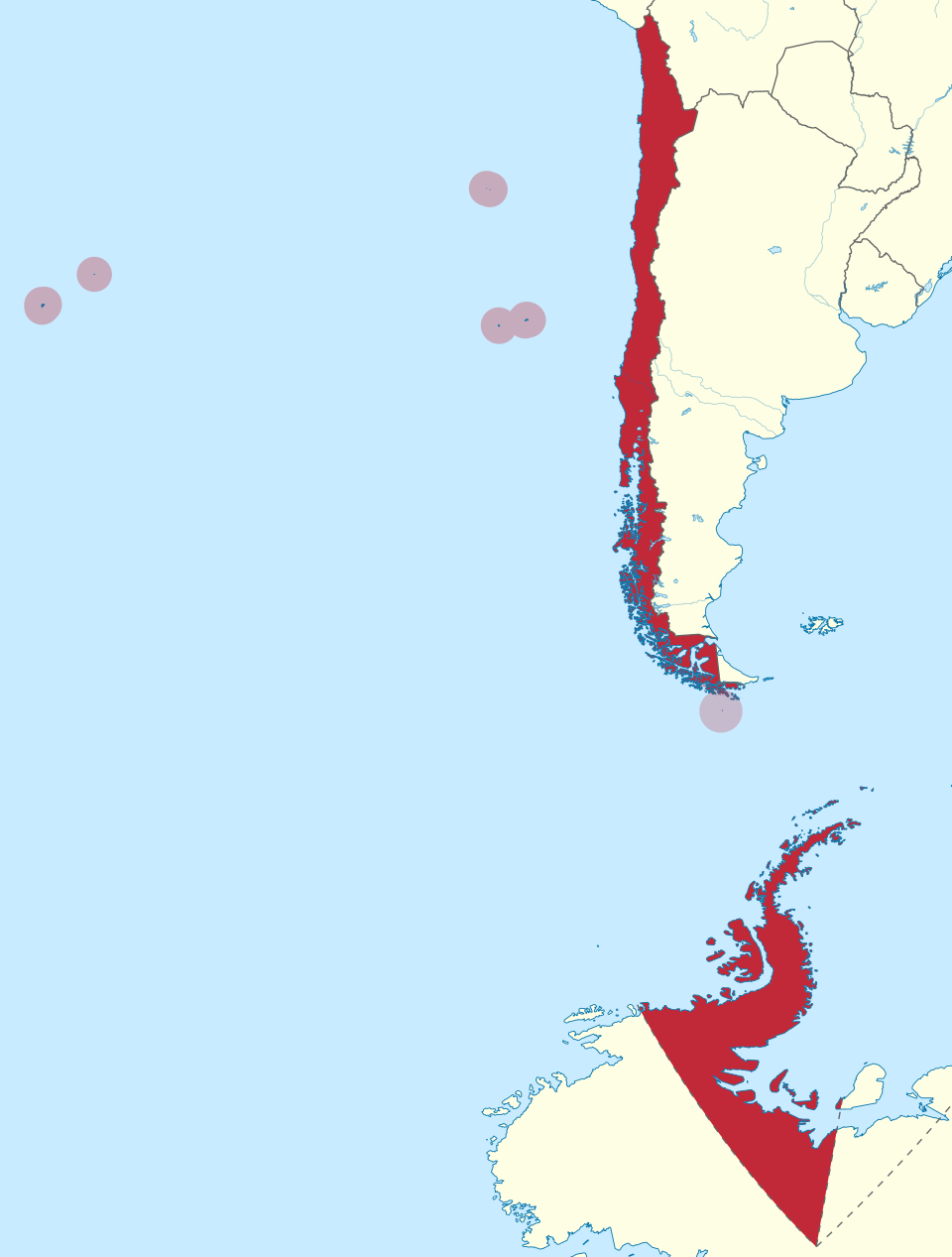
Chile’s geography is a study in contrasts — the Atacama Desert in the north, fertile central valleys, Patagonian wilderness in the south. Its cost of living reflects similar extremes. Without specific World Bank data on housing costs or daily expenses, we can observe the structural forces at play.
Santiago, the capital, has long been one of South America’s more expensive cities, driven by the concentration of economic activity and the wealth generated by mining and corporate sectors. The presence of major conglomerates like AntarChile and Antofagasta PLC in the corporate landscape means executive salaries and high-end services push up prices for everyone. Rent versus buy calculations in Santiago favor those with access to credit — a group that remains limited in a country with persistent inequality.
Outside the capital, costs drop dramatically but so do opportunities. The tension between Santiago’s expensive, opportunity-rich environment and the more affordable but economically limited regions is a defining feature of Chilean life.
For the middle class, housing costs consume a significant portion of income, while the working class faces pressure from the same dynamics that affect urban centers across Latin America — gentrification, transportation costs, and the gap between wage growth and living expenses.
Investment Climate: Where the Giants Play
For investors looking at Chile, the top companies list is the most revealing data point available. The dominance of basic materials through Antofagasta PLC, consumer goods through Agrosuper, and utilities through AES Andes tells you where the real money flows. These are not speculative startups. These are established, capital-intensive businesses with global reach.
The technology sector, represented by ACE Team and AmnesiaGames, offers a different kind of opportunity — higher risk, potentially higher reward, and less dependent on the commodity cycles that have historically dictated Chile’s economic fortunes. The aviation services companies — Aerocardal, AeroEjecutiva, Aerovías DAP — point to a country with significant internal transportation needs, driven by its elongated geography and the demands of its mining and tourism sectors.
The business climate in Chile has traditionally been favorable compared to regional peers, with relatively strong institutions and rule of law. But the constitutional question hangs over everything. Investors need to assess not just the current regulatory environment but the political trajectory. Will the constitution be reformed? What would that mean for mining royalties, labor laws, or environmental regulations? These questions matter more for long-term investment than any quarterly earnings report.
Politics, Safety, and the Quality of Life Question
The political landscape data provided by the World Bank focuses heavily on the constitutional question. This is appropriate because it remains the central political fact of modern Chile. The 1980 constitution, born in a “highly irregular” process under dictatorship, continues to shape governance. The 2005 reforms under President Lagos were significant but did not fundamentally alter the document’s character.
This political uncertainty has real consequences for quality of life. Without specific crime or safety indices, we can observe that Chile has historically been one of South America’s safer countries, but social unrest — most dramatically in the 2019 protests — has challenged that reputation. The constitutional question is not abstract. It is about who gets what, how resources are distributed, and what kind of society Chile wants to be.
The happiness and well-being of Chileans cannot be separated from this political context. A country with significant mineral wealth, a sophisticated corporate sector, and relatively strong institutions should, in theory, provide a high quality of life. But the legacy of the constitution’s origins and the ongoing debate about its legitimacy create a persistent undercurrent of tension. Chileans are asking fundamental questions about their social contract. Those questions do not have easy answers.
The Constitutional Reckoning Continues
Right now, Chile is living through the aftershocks of its constitutional debate. The 2019 protests, the subsequent constitutional convention, the rejection of the proposed new constitution in 2022, and the ongoing political maneuvering all flow from the same source — the unresolved question of what should replace the Pinochet-era framework.
The 2005 reforms under President Lagos showed that change is possible but incremental. The question now is whether incremental change is enough. Chile’s political class is grappling with demands for more fundamental transformation while also managing the expectations of a population that has seen protest and disappointment in equal measure.
For the economy, this means uncertainty. Major investment decisions — particularly in mining and energy — require stable regulatory environments. The constitutional debate creates exactly the kind of uncertainty that makes capital cautious. At the same time, the technology sector’s growth suggests that some parts of the economy are finding ways to move forward regardless of the political drama.
The companies that will thrive in this environment are those that can navigate both the old economy — copper, agriculture, consumer goods — and the new — technology, services, aviation. Chile’s future depends on whether it can resolve its constitutional questions without sacrificing the economic dynamism that has made it a regional leader.
The Bottom Line
Chile is a country of extraordinary economic potential constrained by an unresolved political past. Investors should watch for signals on constitutional reform — not just the headlines but the details of what any new framework would mean for property rights, resource extraction, and social spending. The technology sector offers a glimpse of a more diversified future, but the old economy of copper and conglomerates still dominates.
For anyone interested in Latin American economics, Chile remains the most important case study in whether a country can transcend its founding political trauma to build a truly inclusive prosperity.
Sources & Methodology
This article is authored by Economic Pulse Net for informational and research purposes. Economic Pulse Net sources its data from multilateral institutions, national statistics bureaus, and proprietary databases. All data is believed to be current as of the date of publication.
Published: July 22, 2026 | Category: Research — Chile
Use these signals in your own platform
Economic Pulse publishes its live signal feed through a documented, read-only API. Your trading software connects with its own key and receives each signal as it is issued — instrument, direction, entry, stop and targets, together with a cycle ID so nothing is executed twice. The feed is independent of this website and cannot change it.
Signals are informational only and are not financial advice.