Economic Pulse Net | Sources: World Bank World Development Indicators, Government Sources | 2026
Key Takeaways
* Moderate but Steady Expansion: Chile’s economy is projected to grow by approximately 2.46% in 2025, reflecting a stabilizing trajectory despite global headwinds and domestic structural constraints.
Inflationary Pressures Persist: With CPI inflation hovering around 4.21%, the central bank faces ongoing challenges in maintaining price stability while supporting economic activity.
Labor Market Tightness: An unemployment rate nearing 9% indicates that while the economy is growing, job creation has not yet fully absorbed the workforce, signaling room for labor market reforms.
Wealth Disparities Remain Evident: A significant gap exists between GDP per capita (PPP) of roughly $37,774 and GNI per capita of $16,960, highlighting issues related to income distribution and capital returns.
Legacy Political Frameworks: The nation continues to operate under a constitutional framework originally drafted in 1980, which influences current political dynamics and policy-making capabilities.
Economic Pulse: Measuring the Pace of Recovery
Chile’s economic landscape in 2025 presents a complex picture of moderate growth tempered by persistent macroeconomic pressures. According to World Bank data, the country’s GDP is projected to expand by 2.459% this year, a figure that suggests resilience but falls short of the robust expansion seen in pre-crisis eras.
This growth occurs against a backdrop of an inflation rate of 4.213%, which remains above the comfortable target ranges typically sought by monetary authorities, indicating that cost-of-living pressures are still impacting consumer purchasing power. Furthermore, the unemployment rate stands at 8.974%, a level that underscores the difficulty businesses face in matching labor supply with demand efficiently.
While the nominal GDP reaches nearly $357 billion USD, the disparity between GDP per capita at purchasing power parity ($37,774) and GNI per capita ($16,960) reveals a critical structural nuance: much of the value generated within Chile’s borders may be repatriated or held by foreign entities, rather than remaining as disposable income for the average citizen. This divergence is crucial for policymakers to address, as high aggregate wealth does not automatically translate into broad-based prosperity.
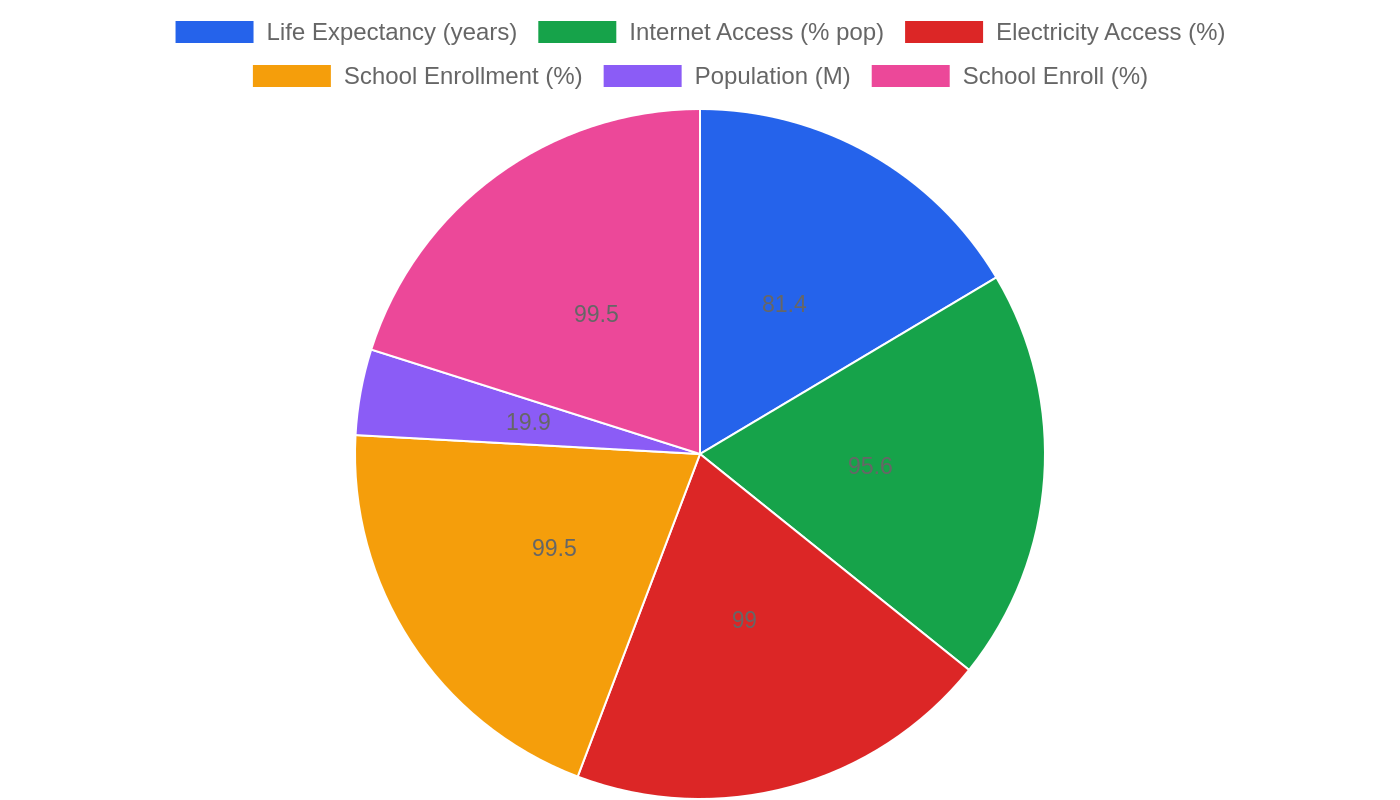
The population of approximately 19.8 million people thus navigates an economy where macro-level indicators show stabilization, yet micro-level realities involve tight budgets and limited job opportunities. Understanding these numbers requires looking beyond the headline growth rate to see how income flows and employment structures interact to shape daily life.
Living Costs: The Daily Economic Reality
For residents and expatriates alike, the cost of living in Chile is shaped by the interplay of moderate inflation and varying sectoral prices. With inflation recorded at 4.21%, households are experiencing gradual increases in the cost of essential goods and services, which impacts discretionary spending and savings rates.
While specific housing indices are not detailed in the current dataset, the broader economic context suggests that rent versus buy decisions are heavily influenced by interest rates and wage stagnation relative to asset prices. The gap between GDP per capita PPP and GNI per capita hints that while assets and property values may be high in certain urban centers, the actual income available to service mortgages or rent payments remains constrained for many.
Daily expenses, from food to transportation, are likely absorbing a larger share of household budgets due to the persistent inflationary environment. Consequently, financial planning for both locals and foreign investors must account for these friction points, where nominal income gains may be offset by rising operational costs. The overall affordability landscape is therefore one of cautious management, requiring careful budgeting to maintain quality of life amidst steady price adjustments.
Investment & Business Climate: Corporate Giants and Sector Shifts
The business environment in Chile is characterized by a mix of established conglomerates and specialized technology firms, offering diverse investment avenues. Major players such as Antofagasta PLC dominate the basic materials sector, leveraging Chile’s rich mineral resources to drive export revenue and attract foreign direct investment.
In the consumer services space, companies like Aerocardal, AeroEjecutiva, and Aerovías DAP illustrate the importance of logistics and aviation infrastructure in connecting remote regions and facilitating commerce. Meanwhile, the emergence of technology-focused entities like ACE Team and AmnesiaGames signals a growing digital economy that complements traditional industrial strengths.
Consumer goods manufacturers, including Agrosuper, play a vital role in both domestic supply chains and international trade, benefiting from Chile’s agricultural advantages. Utilities provider AES Andes further underscores the critical need for reliable energy infrastructure to support industrial output. For investors, these top companies represent stable anchors within a market that is gradually diversifying its revenue streams.
However, the business climate also requires navigating regulatory frameworks and ensuring operational efficiency in a region prone to natural disasters, making risk management a key component of any successful corporate strategy.
Safety, Politics & Quality of Life: Navigating Institutional Legacy
Safety metrics present a unique challenge in the current data set, with both Crime and Safety Indices listed as N/A, leaving a void in quantifiable security assessments for potential residents or tourists. However, the political landscape provides critical context for understanding the social fabric and institutional stability of the country.
The current Constitution, drafted by Jaime Guzmán in 1980 under the military dictatorship of Augusto Pinochet and approved via a plebiscite regarded as “highly irregular” by some observers, remains the foundational legal document. Although it entered into force in March 1981 and was amended after Pinochet’s defeat in the 1988 plebiscite to ease future changes, its authoritarian origins continue to influence contemporary political discourse.
President Ricardo Lagos signed several constitutional laws in September 2005, marking a step toward modernization, but the underlying framework still shapes governance and civil liberties. This historical legacy creates a complex environment where political reform debates are frequent and often intense. For quality of life, this means that civic engagement and political awareness are heightened, as citizens navigate a system that is transitioning from its dictatorial past toward a more democratic consensus.
The absence of explicit crime data necessitates relying on general travel advisories and local reports for safety assessments, but the political clarity offers a degree of predictability in long-term institutional behavior.
What’s Happening Now: Policy Adjustments and Market Sentiment
Currently, the focus in Chile is on balancing inflation control with sustained economic growth, as evidenced by the 2.46% GDP projection and 4.21% CPI reading. Policymakers are likely engaged in nuanced monetary strategies to keep inflation anchored without stifling the nascent recovery. The labor market, with unemployment near 9%, suggests that recent government initiatives aimed at job creation are meeting partial success, requiring further targeted interventions.
In the corporate sphere, companies like AntarChile, operating as a conglomerate, are adapting to changing consumer behaviors and supply chain dynamics, reflecting broader economic shifts. The ongoing relevance of the 1980 Constitution means that legislative bodies are constantly evaluating amendments to better suit modern democratic needs, a process that can cause periodic uncertainty but ultimately aims for greater legitimacy.
Investors are watching these political developments closely, as constitutional stability is paramount for long-term capital allocation. Meanwhile, the performance of key sectors like mining and agriculture will dictate export revenues, influencing the national currency and trade balances. The immediate future hinges on how effectively the government can harmonize these economic targets with social expectations, ensuring that growth translates into tangible improvements in living standards.
The Bottom Line
Chile represents a compelling case study in emerging market resilience, offering solid fundamentals despite lingering structural inefficiencies. Investors should monitor the interplay between its strong commodity exports and its evolving digital and service sectors for diversification opportunities. Citizens and expats alike must navigate a political environment deeply rooted in historical complexities, where institutional stability is improving but requires continuous vigilance.
Ultimately, Chile is a country of contrasts—wealthy in aggregate but uneven in distribution—making it a critical watchlist for those interested in Latin American economic evolution.
Sources & Methodology
This article is authored by Economic Pulse Net for informational and research purposes. Economic Pulse Net sources its data from multilateral institutions, national statistics bureaus, and proprietary databases. All data is believed to be current as of the date of publication.
Published: September 30, 2026 | Category: Research — Chile
Use these signals in your own platform
Economic Pulse publishes its live signal feed through a documented, read-only API. Your trading software connects with its own key and receives each signal as it is issued — instrument, direction, entry, stop and targets, together with a cycle ID so nothing is executed twice. The feed is independent of this website and cannot change it.
Signals are informational only and are not financial advice.